Most people assume that with enough time, enough supercomputers, and enough brilliant linguists throwing themselves at a problem, every ancient script eventually cracks open like a rusty safe. Egyptian hieroglyphs fell. Linear B fell. Cuneiform fell. Surely, given a hundred years, everything else falls too.
It doesn’t. There are writing systems sitting in museum drawers right now, fully photographed, fully catalogued, studied by some of the sharpest minds in linguistics for over a century, that remain exactly as silent as the day they were dug out of the ground. No bilingual key. No Rosetta Stone. Sometimes only a few hundred words of text to work with, ever. Here are twelve of them, and the deeper you go down the list, the stranger the silence gets.
#12 – The Vinča Symbols of Neolithic Southeast Europe
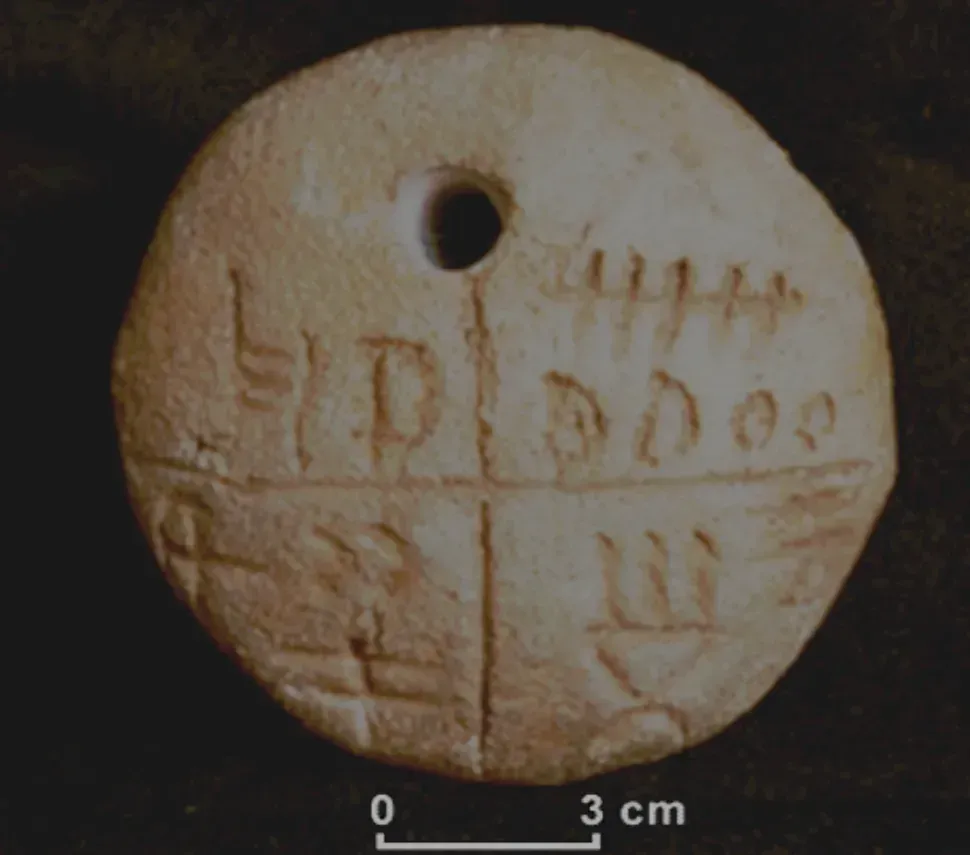
Long before Sumer, before Egypt, before anyone officially “invented” writing, someone in the Balkans was carving the same strange geometric marks onto clay pottery, over and over, for two thousand years. The Vinča culture flourished between roughly 5300 and 3500 BCE and left behind tablets, figurines, and pots covered in abstract signs. The Tărtăria tablets, unearthed in Romania, carry sequences that predate Sumerian proto-cuneiform by more than a millennium, a timeline that quietly upends the tidy story of who got there first.
Scholars have catalogued over 700 distinct symbols and still can’t agree on the basics. Is this a real script, an early proto-writing system, or just ritual decoration repeated out of habit? The signs march in neat rows on some pieces and scatter randomly on others, with no visible evolution across centuries. Every attempt to link them to later European scripts has collapsed, because whatever language once lived behind these marks left no descendants at all.
#11 – The Phaistos Disc That Broke Every Codebreaker Since 1908
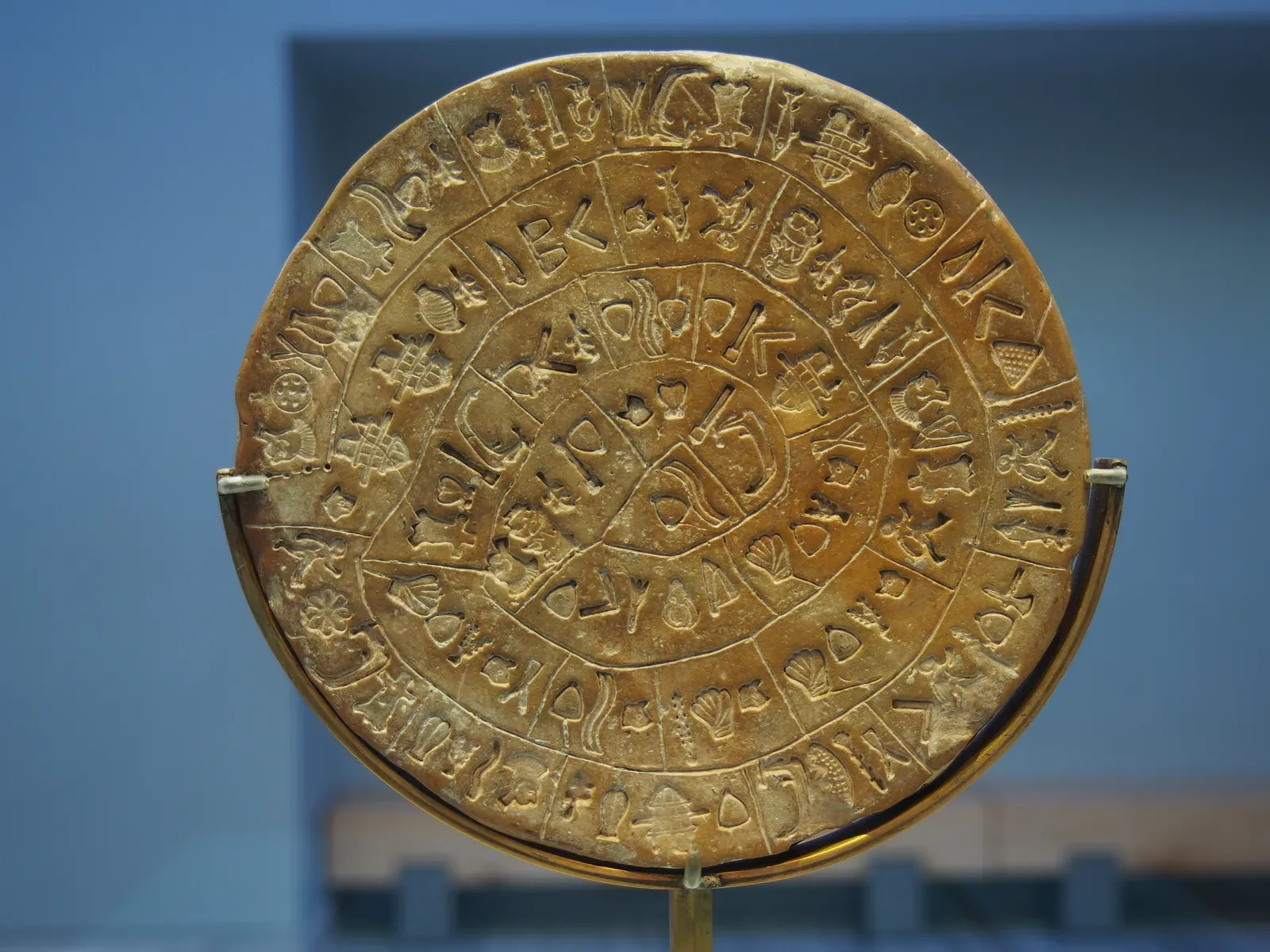
A single fired-clay disc, stamped with 45 unique symbols arranged in a spiral, has humiliated every serious codebreaker who has touched it for over a hundred years. Discovered at the Phaistos palace in Crete in 1908, the disc is barely 15 centimeters across, yet packs in 241 signs arranged in 61 tidy groups. No other artifact anywhere in the ancient world uses this same stamping technique or this same symbol set, which means there’s nothing to compare it against.
The signs resemble neither Linear A nor Cretan hieroglyphs closely enough to borrow known values, and the text is far too short for the kind of statistical pattern-hunting that cracks other mystery scripts. Proposed readings range wildly, from a religious hymn to a calendar to a board game. None has ever gained real acceptance, because the object is one of a kind. It still sits in the Heraklion museum today, message fully intact, having outlasted every theory thrown at it.
Fast Facts
- Discovered in 1908 at the Phaistos palace in Crete
- Diameter: roughly 15 centimeters
- 241 total signs built from just 45 unique symbols
- Text is arranged in 61 groups following a spiral path
- No comparable artifact using the same technique has ever surfaced
#10 – The Proto-Elamite Bureaucracy Nobody Can Read
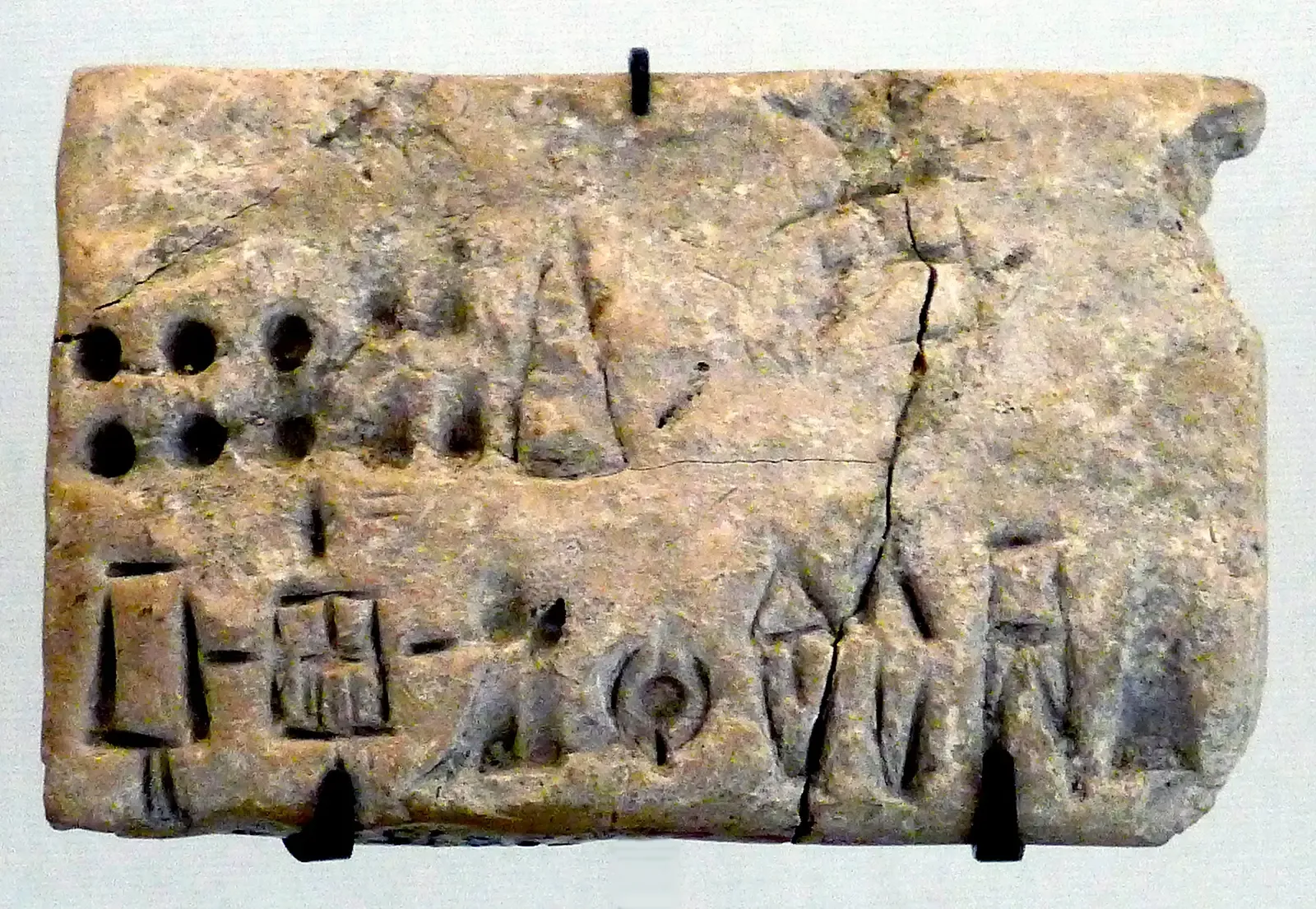
Somewhere around 3100 to 2900 BCE, an entire administrative system sprang up in ancient Iran, generated over 1,600 clay tablets, and then vanished after little more than a century, taking its readability with it. Most of the tablets come from the ancient city of Susa. The roughly 1,000 signs used barely overlap with later Elamite or Sumerian writing, as if the scribes built their own private system and never shared it with the neighbors.
The numerical notations are perfectly clear, which is almost cruel, because it proves these were real, functioning records of grain, animals, and labor. But the non-numeric signs refuse to map onto any known language family. Early excavators assumed a quick decipherment was around the corner; instead, over a century later, the corpus has yielded little more than a handful of isolated personal names. Every claimed breakthrough since has been contested, because there’s no narrative text to anchor a translation to.
#9 – The Cretan Hieroglyphs That Came Before Linear A
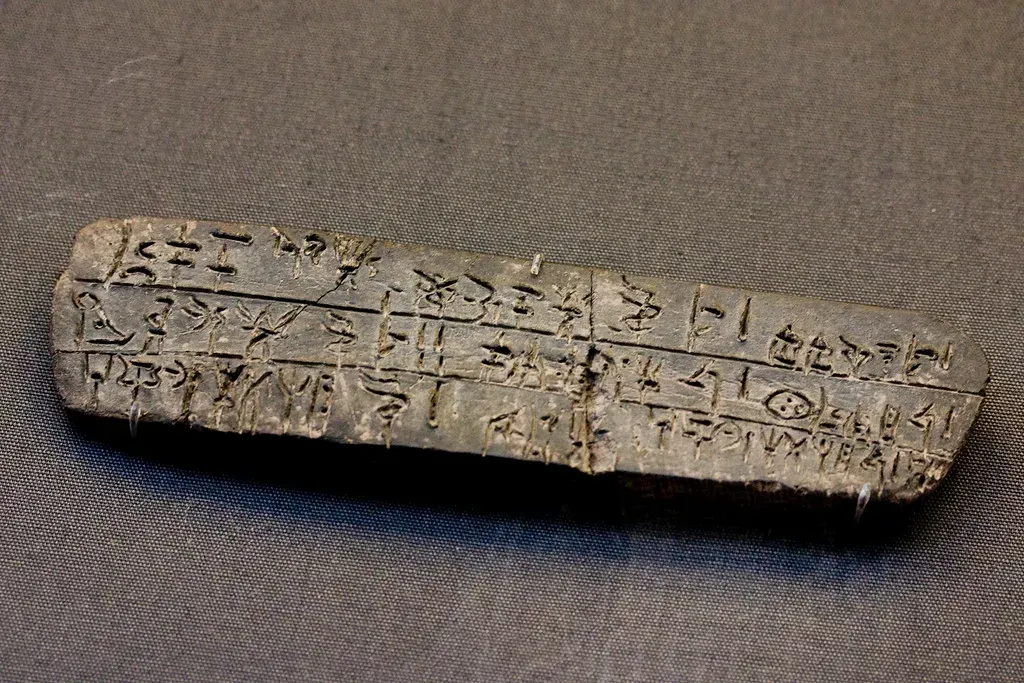
Before Linear A ever appeared on Crete, Minoan scribes were using a more pictorial system on seals, clay bars, and libation tables. Only around 300 inscriptions survive, dated between 2100 and 1700 BCE, and the 100-plus signs have never been pinned down to consistent phonetic values. A few motifs echo Egyptian hieroglyphs, tempting early researchers, but the grammar underneath follows completely different rules.
Scholars can occasionally guess at commodity lists from context clues alone, but the actual language remains a total unknown, unrelated to anything else on record. The system briefly overlapped with Linear A before disappearing entirely, offering no bilingual bridge for later generations to exploit. A hundred years of digging has added only a handful of new examples, and none of them run long enough to break the code open.
#8 – The Cypro-Minoan Texts That Look Familiar But Aren’t
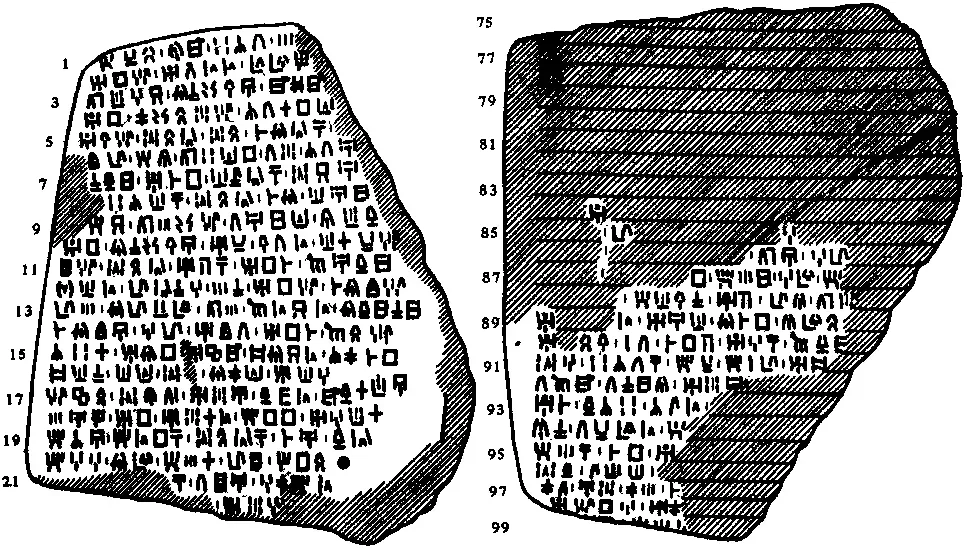
This script shows up on clay balls, tablets, and pottery across Bronze Age Cyprus between 1550 and 1050 BCE, and at first glance it looks like a close cousin of Linear A. It isn’t. Fewer than 250 inscriptions exist, many of them frustratingly short, and the sign inventory hovers around 100 characters that simply won’t behave like any proposed syllabary.
Several tablets come from Enkomi and other trading hubs, hinting at everyday administrative use rather than sacred ritual. But the underlying language has no known relatives anywhere on the island or the nearby mainland. Attempts to force-fit it into early Greek or a Semitic language collapse almost immediately under inconsistent sign values. The script died out before the classical Cypriot syllabary arrived, slamming the door on any future Rosetta Stone.
#7 – The Olmec Glyphs Behind the First Writing in the Americas
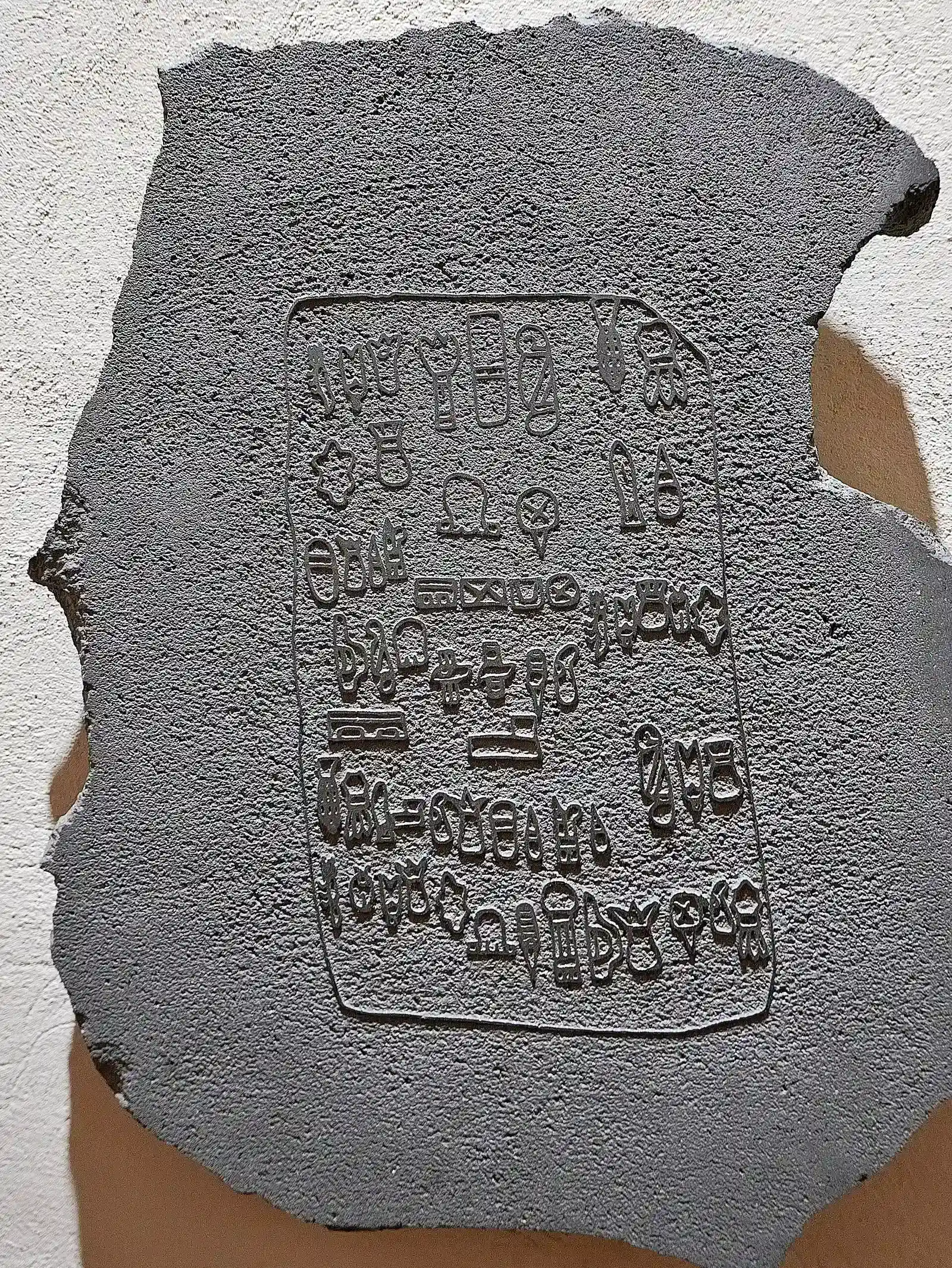
The earliest known writing in the Western Hemisphere shows up on monuments and portable objects from the Gulf Coast Olmec heartland, dating back to around 900 BCE. It’s a tiny corpus, fewer than two dozen credible inscriptions, most just a handful of glyphs long. Some of the calendrical elements clearly passed down to the later Maya, but the core vocabulary and grammar behind them stay completely locked.
Zapotec and Isthmian examples from the same era add a few dozen more texts, but not nearly enough repetition to make decipherment realistic. Researchers still argue over whether these systems were fully phonetic or partly logographic symbols standing in for whole ideas. Without a single long bilingual text to lean on, every proposed reading remains educated guesswork. A full century of fieldwork hasn’t produced the volume needed for a real statistical breakthrough.
#6 – Rongorongo, the Rapa Nui Script Nobody Lived Long Enough to Explain
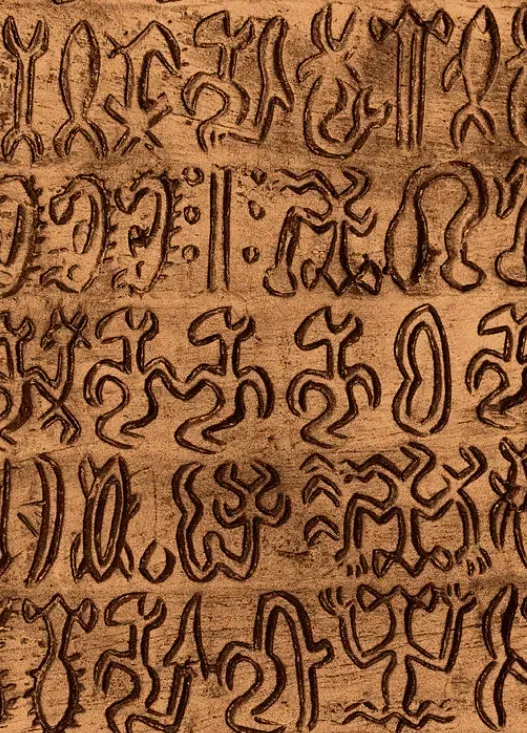
Carved into wooden tablets by the Rapa Nui people of Easter Island, Rongorongo was already a total mystery by the time Europeans arrived in the 19th century. Only about two dozen authentic tablets survive today, and many are damaged or incomplete. The glyphs depict birds, human figures, and geometric shapes arranged in alternating directions, line by line, yet no sequence repeats often enough to even confirm there’s a grammar in there.
Radiocarbon dating places some of the wood as far back as the 15th century, but the oral knowledge that once explained the symbols had already died out before serious study began. Proposed links to Polynesian languages fall apart because the phonetic patterns just don’t hold up across such a tiny surviving corpus. Missionaries and later researchers collected the tablets decades too late to ever capture the living knowledge behind them, and that knowledge is now gone for good.
Worth Knowing
- Only about two dozen authentic Rongorongo tablets survive worldwide
- Some surviving wood dates back to the 15th century
- Glyphs alternate direction line by line, a style known as reverse boustrophedon
- The oral tradition explaining the symbols vanished before scholars arrived
#5 – The Indus Valley Script With a Million-Dollar Bounty on Its Head
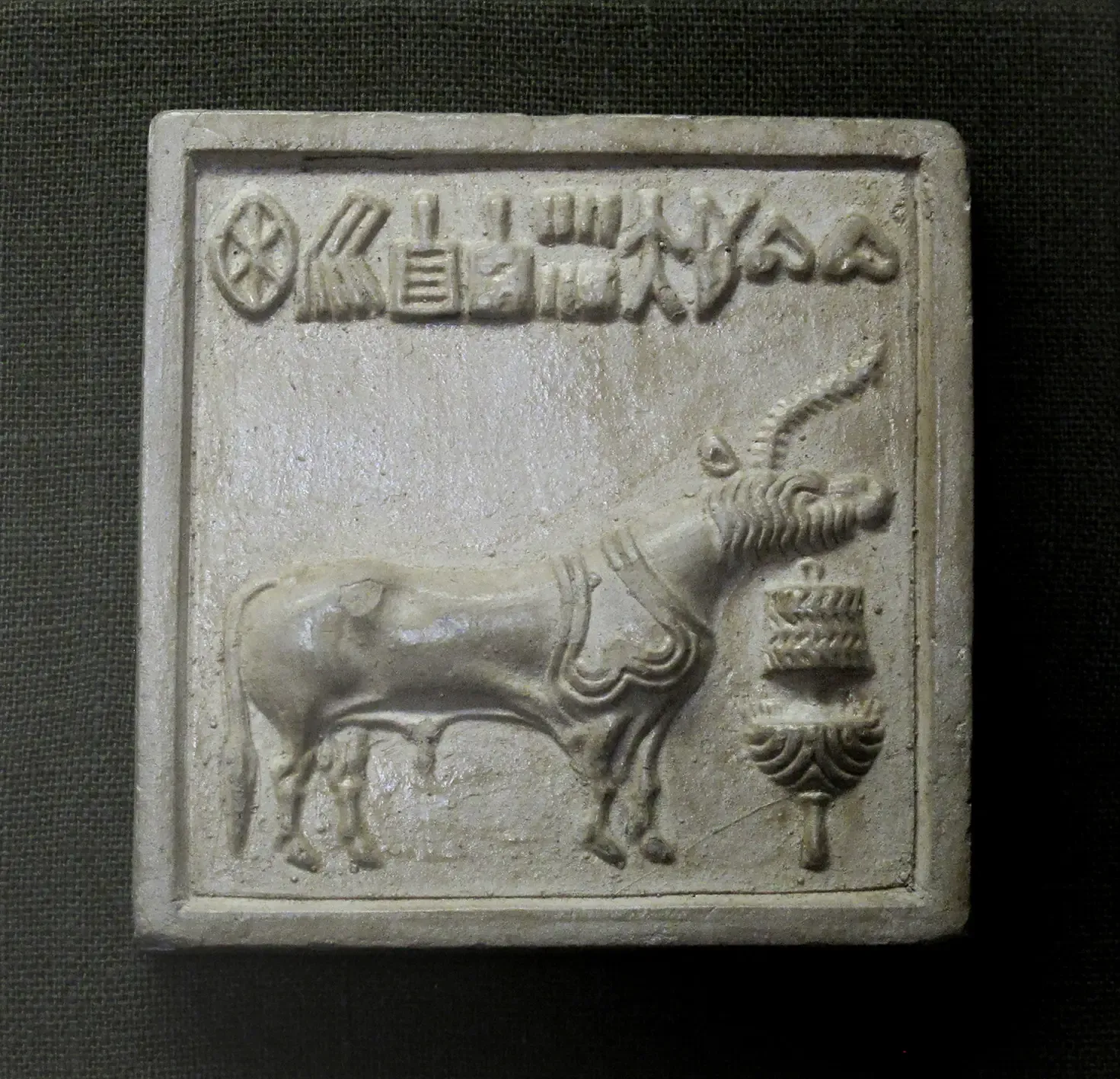
More than 4,000 short inscriptions survive from the Harappan civilization, stamped onto seals, pottery, and tools across sites in modern Pakistan and northwest India between 2600 and 1900 BCE. The catch: most of these texts contain fewer than five signs each, which is nowhere near enough for the kind of pattern analysis that cracks other scripts. The famous “unicorn” seals carry short sequences that never line up across the corpus in a way that would reveal actual sentence structure.
The frustration runs so deep that a cash prize has been offered in recent years for anyone who can crack it, and it remains unclaimed. Researchers have worked out that the script generally reads right to left, and numerals appear to exist, but the language behind it has no confirmed descendants anywhere on Earth. When the Harappan civilization collapsed, it took with it any chance of a future bilingual inscription ever turning up.
#4 – Linear A, the Script That Deciphered Its Own Successor Couldn’t Save
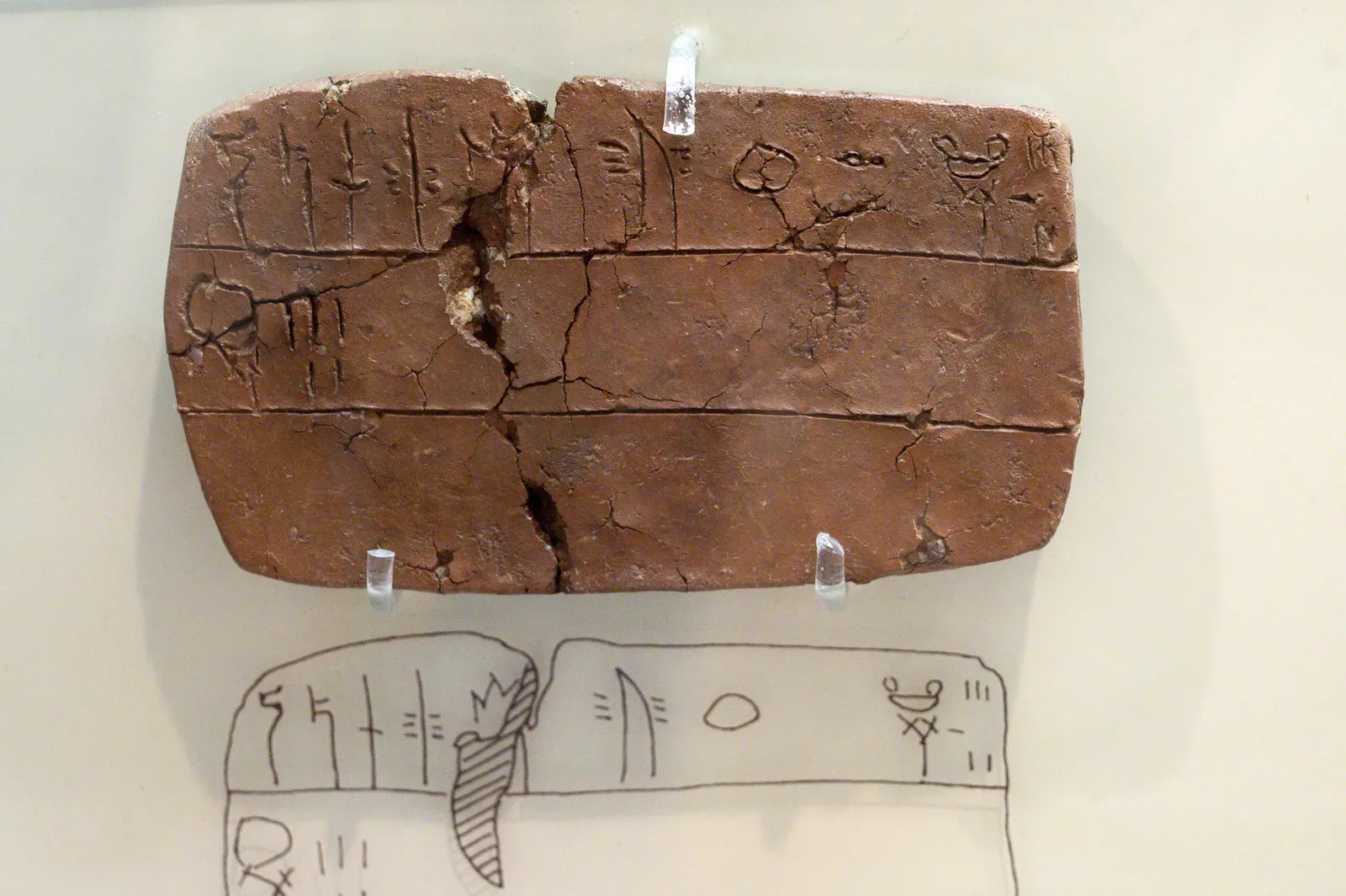
Over 1,500 clay tablets and objects carry this script across Crete and the Aegean between 1800 and 1450 BCE. Here’s the maddening part: its successor, Linear B, was fully deciphered back in 1952 and turned out to be an early form of Greek. Researchers assumed the same signs would unlock Linear A too. They don’t. Applying Linear B’s phonetic values to Linear A produces nothing but gibberish.
Administrative lists dominate the surviving corpus, but personal names and place names simply refuse to align with any known Bronze Age language. The script appears on both humble storage jars and formal offering tables, suggesting literacy was surprisingly widespread across Minoan society. Widespread, and still completely unreadable. A century of digging has only added more volume to the pile, not a shred more clarity.
Quick Compare
- Linear B: Deciphered in 1952 and confirmed as an early form of Greek
- Linear A: Similar signs, same region, still fully unreadable today
- Surviving corpus: Over 1,500 Linear A tablets and objects recovered
- The trap: Borrowing Linear B’s sound values only produces gibberish
#3 – The Even Older, Even Stranger Iranian Markings Before Proto-Elamite
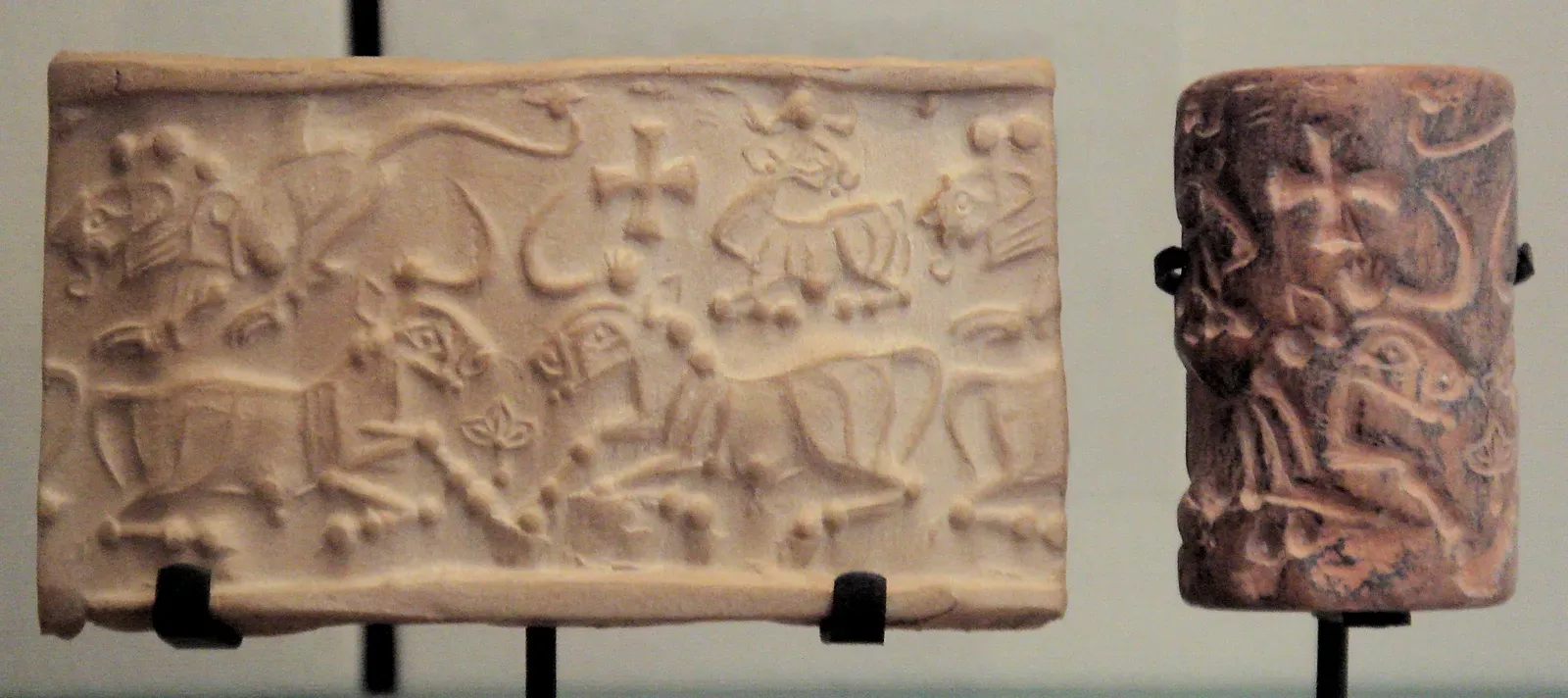
Proto-Elamite itself is already a dead end, but geometric markings that predate it in the same region make the puzzle worse, not better. These signs appear on a small handful of objects from before 3100 BCE and share almost nothing in common with the writing systems that came after them. There simply isn’t enough surviving material to even build a reliable sign list, let alone attempt a grammar.
Researchers assume these marks recorded economic activity, following the pattern of everything else from the region, but nobody can actually prove it. When Proto-Elamite emerged and abruptly took over, these earlier experiments were left in permanent shadow, footnotes to a footnote. It’s one of the quietest dead ends in the entire history of writing.
#2 – The Forgotten Mesoamerican Scripts Beyond the Olmec Core
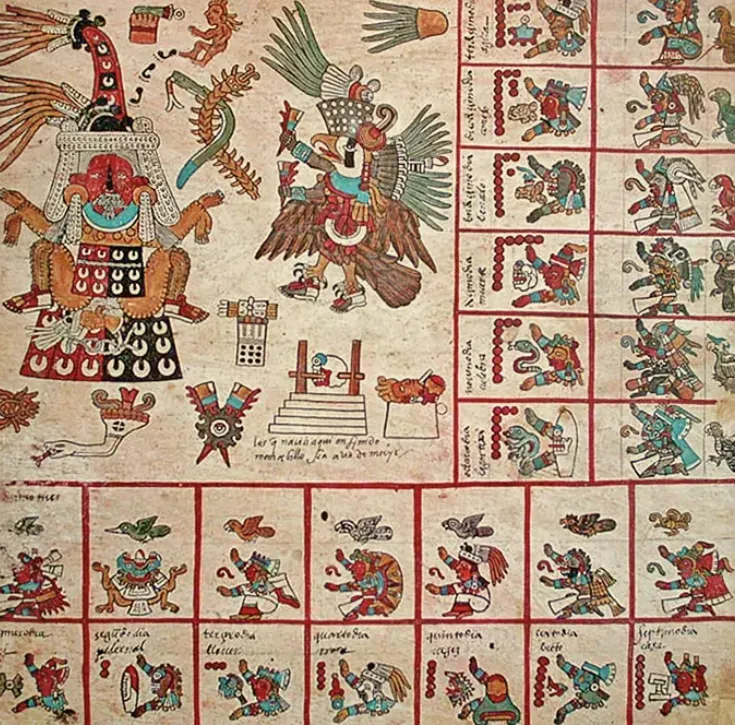
Beyond the famous Olmec heartland, scripts from the Isthmus of Tehuantepec and the Mexican highlands add a whole additional layer of undeciphered writing that rarely makes headlines. Short monumental texts and portable inscribed objects survive in small, scattered numbers. Calendrical information is sometimes legible, since numeral systems tend to be easier to crack than full language, but everything else stays locked behind an unreadable wall.
These scripts likely recorded local languages that vanished without leaving any written descendants, which removes the comparative anchor scholars would normally lean on. Fieldwork keeps turning up isolated new examples, but they’re rarely long enough to move the needle. It’s a slow trickle of evidence that never quite reaches critical mass.
#1 – The Issyk Inscription and the Lost Writing Experiments of the Steppe
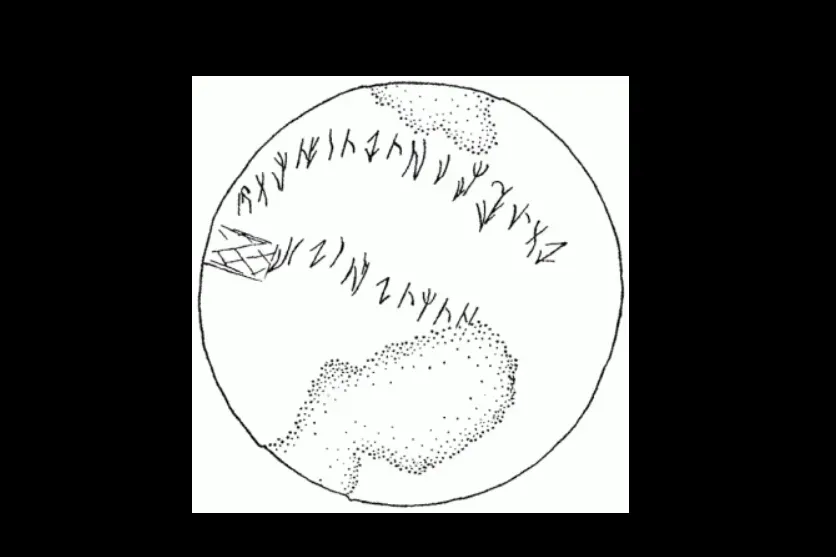
The final entry isn’t one script but a scattering of one-off inscriptions from Central Asia and the Eurasian steppe that have outlasted every analytical tool ever pointed at them. The Issyk kurgan silver cup, discovered in a Scythian-era burial mound, carries roughly 20 signs that match no known alphabet or syllabary from any neighboring culture. It stands almost entirely alone.
Similar isolated finds scattered across Eurasia suggest that writing experiments were far more common in the ancient world than the surviving record lets on, yet nearly every single one vanished without leaving heirs. With no repetition across sites, there’s no statistical foothold for researchers to even begin. These outliers are a quiet reminder that the twelve major undeciphered systems on this list might only be the visible tip of a much larger graveyard of lost human experiments.
At a Glance
- The Issyk silver cup surfaced inside a Scythian-era burial mound
- It carries roughly 20 signs matching no known script
- Similar isolated inscriptions turn up scattered across Eurasia
- None show enough repetition to allow statistical decipherment
The Bottom Line
After more than a century of trying, the pattern is impossible to ignore: scripts without long texts, without bilingual keys, and without living descendant languages simply do not talk, no matter how many computers or careers get thrown at them. The Indus corpus, the Linear A tablets, and the Rongorongo boards have each swallowed hundreds of failed proposals while giving back almost nothing in confirmed vocabulary.
Here’s my honest take: I don’t think all twelve of these will ever be read, and I think that’s the actual story worth sitting with. We like to believe knowledge is permanent once it’s written down, but these scripts prove the opposite. A civilization can build a fully functioning writing system, use it for generations, and still lose it completely the moment nobody’s left alive to explain it. That’s not a technology problem. It’s a reminder that literacy has always been fragile, borrowed, and temporary, even when it’s carved in stone.