
You know that feeling when ten tabs are open in your browser, your phone lights up, your thoughts are racing, and somehow you still end up staring at the wall doing… nothing? That is your brain in a quiet kind of chaos, trying to decide what deserves your attention and doing some very weird things along the way. It is not just a willpower problem; it is actually your nervous system wrestling with limited mental resources and a world that keeps screaming for more of them.
What surprised me, when I first learned more about this, is that the brain is not a calm CEO at the top making rational decisions. It is more like a crowded committee, full of competing voices, shortcuts, and emotional alarms all arguing about what matters right now. When that internal debate gets heated, your brain starts showing some odd, almost illogical behaviors. Let us walk through ten of them so the next time your mind feels scattered, you can say, “Oh, I know exactly what this is.”
1. Your Brain Starts “Task-Hopping” To Avoid Committing
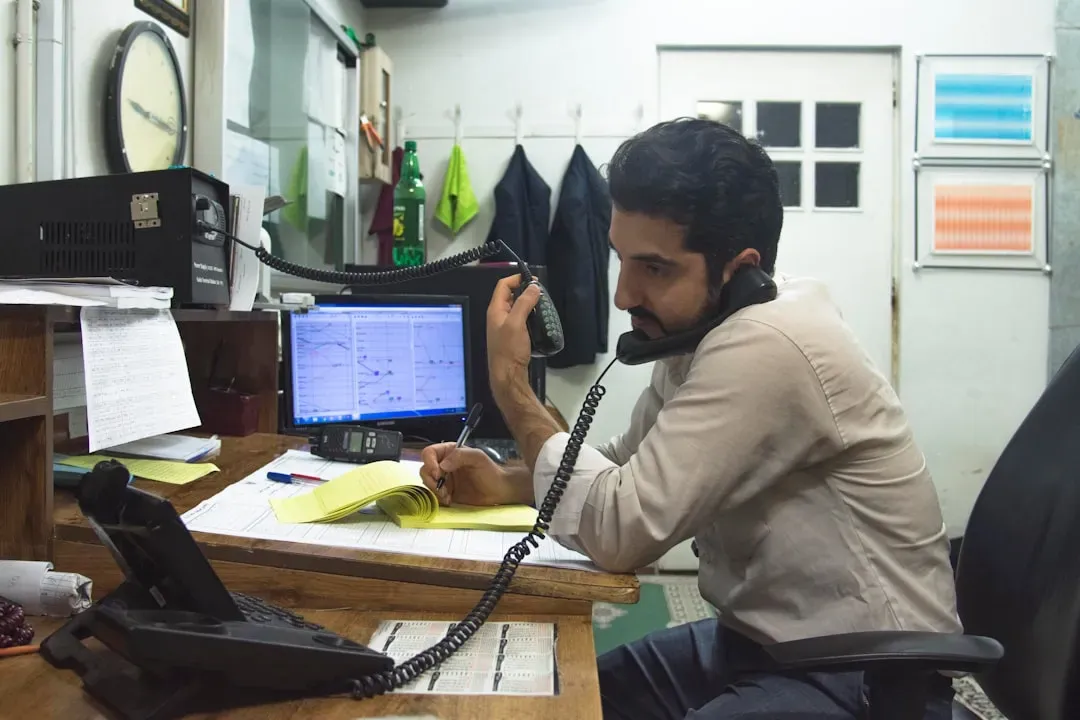
Ever noticed how, when you are overwhelmed, you suddenly find yourself answering a message, then checking a random website, then opening a new note, then remembering the laundry? That constant task-hopping is your brain stalling for time. Instead of choosing one priority and locking in, it tries to sample everything at once, hoping something will feel clearly “right” or urgent enough to commit to.
This happens because attention is expensive. Focusing deeply on one thing means ignoring everything else, and your brain hates shutting doors when it is not sure what is most important. So it keeps bouncing, like a shopper walking up and down the aisles, comparing items but never putting anything in the cart. The downside is obvious: you feel busy, but nothing meaningful gets done, and the sense of being scattered only grows stronger.
2. You Suddenly Feel Tired And “Foggy” For No Clear Reason

One of the strangest effects of attention overload is how quickly your energy can crash. You might sit down to start something important and suddenly feel sleepy, mentally foggy, or weirdly drained. It is not that your body is exhausted; it is that your brain is hitting a decision fatigue wall. Every unresolved “Should I do this or that?” silently consumes mental fuel.
When your brain cannot decide where to point your focus, it often responds by downshifting everything. Think of it like a system going into low-power mode because too many apps are running at once. Instead of picking one window to maximize, your brain dims them all. It feels like laziness or lack of motivation, but underneath, it is really a protection mechanism against total overload.
3. You Get Hyper-Focused On Something Trivial

Here is a weird one: when your brain cannot decide what really matters, it may latch onto something that absolutely does not. You might get lost reorganizing your desktop icons, rewriting a simple email five times, or obsessively comparing tiny details of a product you barely need. It looks like focus from the outside, but it is really a kind of escape from real decisions.
This happens because your brain craves closure. When the big, meaningful tasks feel heavy, ambiguous, or emotionally loaded, the mind looks for something smaller and more controllable. Spending twenty minutes choosing a playlist or perfecting a color in a presentation gives you a sense of progress without the risk of failure. It is like cleaning the crumbs in your car instead of deciding which direction to drive.
4. Your Emotions Get Louder Than Your Logic

When attention is up for grabs, emotions tend to grab the microphone first. If your brain is weighing multiple options and none of them clearly wins, even a small feeling of anxiety, guilt, or excitement can tip the balance. Suddenly, the thing that triggers the strongest emotion gets your focus, not the thing that is actually most important for your long‑term goals.
Neurologically, this makes sense: the brain areas that react to threat and reward are wired to act quickly and forcefully. So if one email feels scary, or one notification feels instantly rewarding, your attention swings there disproportionately. It is the emotional equivalent of someone shouting in a quiet room; they may not be right, but they are hard to ignore. Over time, this can train you to chase whatever feels urgent instead of what truly matters.
5. Your Brain Starts Inventing “Fake Urgencies”

When your mind struggles to choose, it often does something sneaky: it starts inflating the urgency of certain tasks just to break the tie. That is when you find yourself thinking, “I have to reply to this message right now,” or “If I do not check this app, something important might happen,” even though nothing actually depends on it. Your brain does this because urgency is an easy way to win the attention lottery.
This is especially common in a world full of alerts, deadlines, and countdowns. Your brain gets conditioned to treat almost everything as time‑sensitive, because that is how a lot of digital tools are designed to hook you. The result is that low‑value tasks sneak past your mental filters wearing a costume labeled “urgent.” Meanwhile, the slow, deep, important work sits quietly in the corner, never ringing an alarm loud enough to compete.
6. You Replay The Same Thoughts On A Loop

When your brain cannot decide, it often falls into mental replay mode. You run through the same scenarios again and again, repeating the same pros and cons, revisiting the same worries. It feels like thinking, but often it is just looping. This kind of rumination uses up attention without moving you closer to clarity or action.
What is happening here is a mismatch between your brain’s need for certainty and the messy reality that most choices are ambiguous. Instead of tolerating that uncertainty, the mind keeps cycling, hoping that one more pass will magically reveal a perfect answer. Unfortunately, the more you loop, the more anxious and stuck you tend to feel. It is like walking the same circle in the sand until the path is deep, but you are still standing in the same spot.
7. Your Sense Of Time Gets Distorted

Undecided attention does not just affect what you focus on; it changes how you experience time. Minutes can evaporate while you bounce between tiny tasks or scroll aimlessly, and you only realize later that half an hour disappeared. Other times, you stare at a task you are avoiding, and a few minutes feel painfully long, like watching a buffering symbol on a slow connection.
This distortion happens because your sense of time is closely tied to how engaged you are. When your brain keeps jumping, it does not consolidate a clear memory of what you just did, so the time feels like a blur. When you are stuck in indecision, on the other hand, your attention zooms in on discomfort, stretching every second. The strange part is that both of these experiences come from the same problem: your brain is struggling to anchor itself to one meaningful focus.
8. You Over-Value Whatever Is Already On Your Screen

When your mental bandwidth is scrambled, your brain gets lazy in an oddly specific way: it tends to assume that whatever is right in front of you is what deserves attention. That could be the email you last opened, the app that is already running, or the tab that happens to be visible. This is sometimes called a “status quo” bias for attention – sticking with what is already active instead of consciously choosing what really matters.
It is a bit like walking into a party and only talking to the first person you bump into, not because they are the most interesting, but because they are there. This habit quietly shapes your day: you deal with the loudest or most recent input, not the truly important one. The more tired or overloaded you feel, the more likely you are to just follow the path of least resistance and stay exactly where your attention already landed by chance.
9. You Start Seeking Quick Hits Of Stimulation

When your brain cannot decide which serious thing deserves attention, it often defaults to chasing quick, shallow bursts of stimulation. That is when social media, short videos, constant refreshing, or jumping between chats suddenly feel irresistible. None of those things demand a big decision; they simply offer a drip feed of novelty that soothes the discomfort of not knowing what to focus on.
Underneath, this is your attention system bargaining with itself. Deep work feels heavy and uncertain; quick hits offer immediate reward with no real commitment. Your brain knows that every notification, every new post, every small update might contain something emotionally relevant, so it keeps checking. Over time, this can train your mind to expect constant micro‑rewards, making it even harder to sit still long enough to choose and stick with one worthy focus.
10. You Confuse Mental Noise With Genuine Signals

One of the strangest things your brain does, when it is overloaded and undecided, is blur the line between what is truly important and what is just mentally loud. Passing worries, random ideas, old memories, and new distractions all start to feel like they have equal weight. It becomes hard to tell the difference between a thought that just wandered in and a thought that actually deserves action.
This can leave you feeling pulled in ten directions at once, without any clear sense of hierarchy. In my own life, I have caught myself treating a random fear about a future event and a concrete task due tomorrow as if they were the same kind of problem. They are not. But when attention is scrambled, your brain stops labeling thoughts clearly. Learning to pause, notice, and sort that mental noise – instead of reacting to every single thing – might be the most powerful attention skill of all.
Conclusion: Your Attention Is Not Broken – It Is Overloaded

When you look at all these strange behaviors together – the task-hopping, the fake urgencies, the mental loops, the weird crush on trivial tasks – it is tempting to conclude that your attention is broken or that you just lack discipline. In reality, most of this is your brain trying to protect you from overload, uncertainty, and emotional risk using crude, imperfect tactics. The system is not evil; it is just outdated for a world that bombards you constantly.
My opinion is that being “bad at focusing” is often less about character and more about environment and habits. If you reduce the number of competing inputs, make your next step embarrassingly small, and allow yourself to choose something imperfect instead of endlessly searching for the perfect choice, a lot of these strange brain behaviors calm down. Your attention is one of the most precious things you have; the real question is not whether it is strong enough, but whether you are willing to design a life where it does not have to fight this hard just to decide where to land. So, the next time your brain feels scattered, will you blame yourself – or start adjusting the world you are asking your mind to survive in?