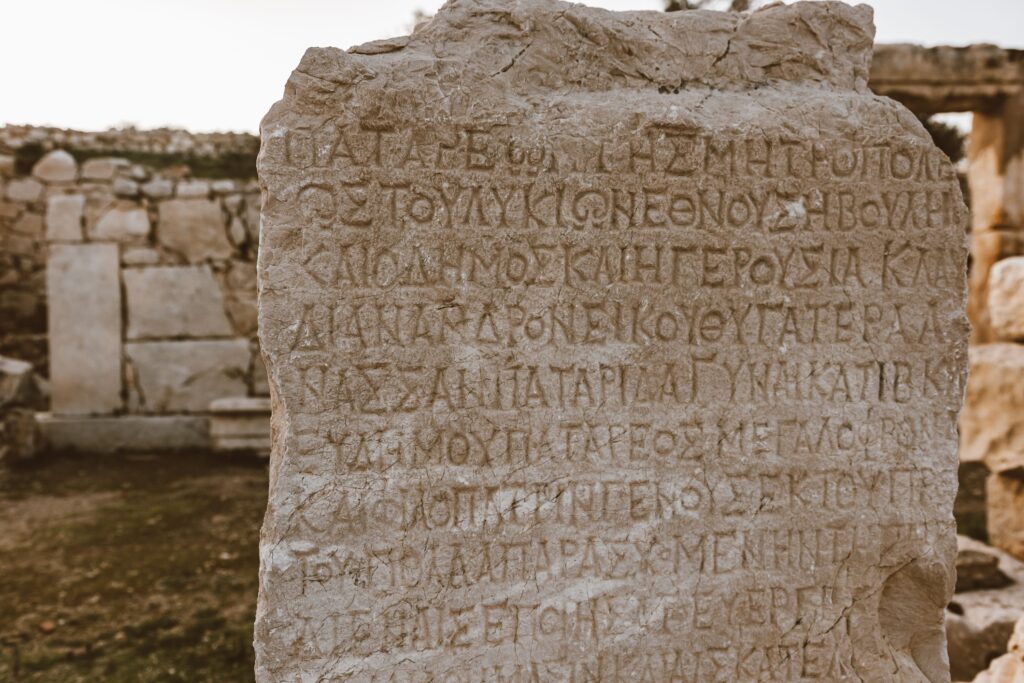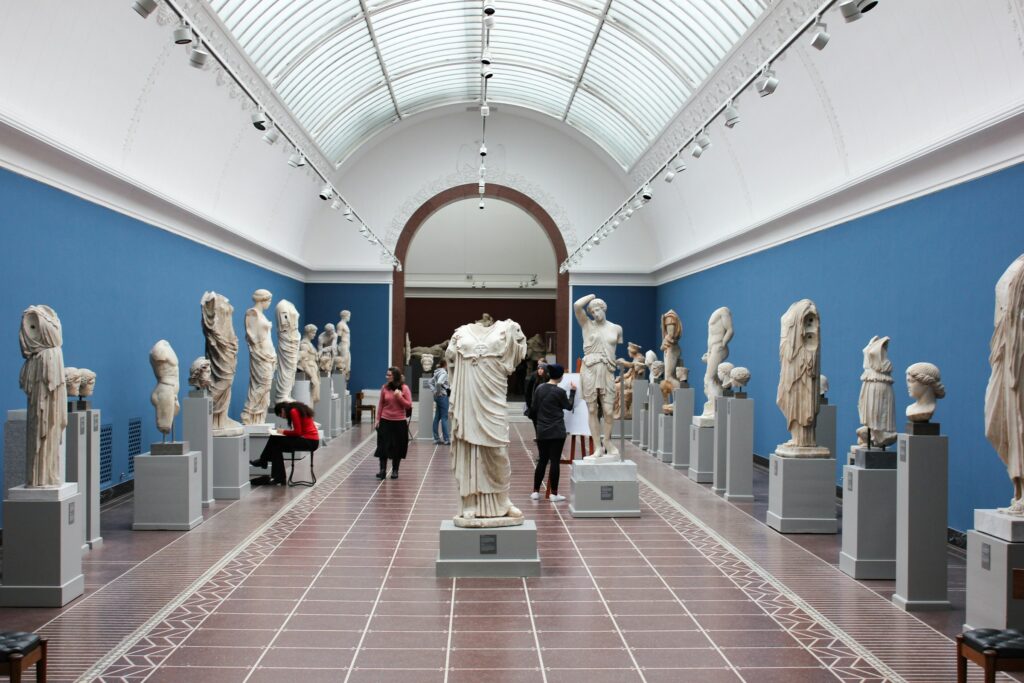
Somewhere in a museum gift shop right now, someone is buying a postcard of a “3,000-year-old original” that was actually carved by hands born in the Roman Empire, the Renaissance, or the 1880s. That’s not a conspiracy theory – it’s printed quietly on the museum’s own wall label, if you bother to read the fine print.
For generations, these objects were sold to the public as untouched relics, the actual chisel strokes of legendary hands. But curators have started admitting something stranger: several of the most iconic “originals” you’ve seen in textbooks, travel photos, and postcards are reproductions of works that vanished long ago. The list of confessions is longer than you’d think, and it starts with a discus thrower everyone assumed was Greek.
#10 – The Discobolus: Every “Greek Original” You’ve Seen Is Actually Roman
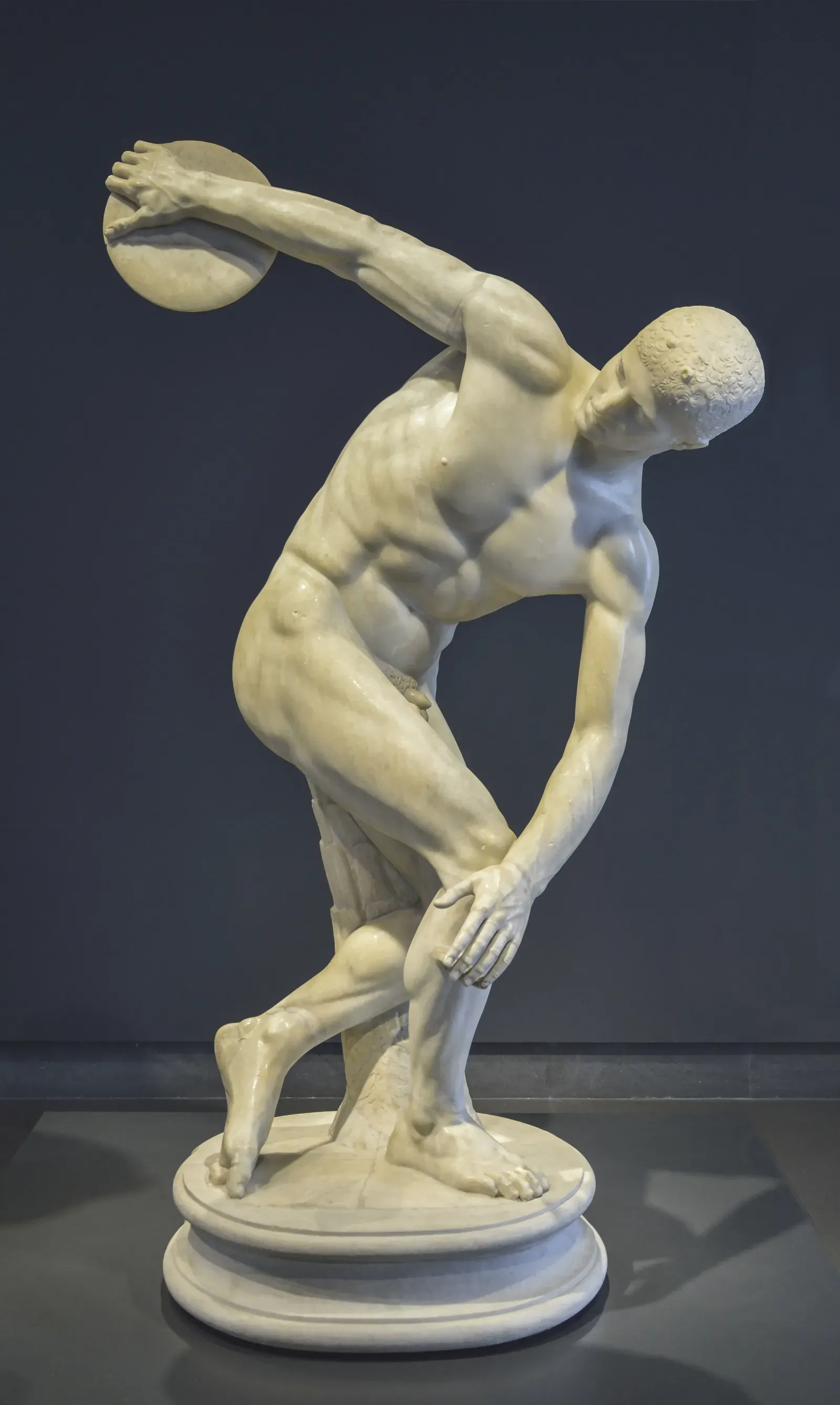
For over a century, visitors have stared at the marble Discobolus (Discus Thrower) in museums from Rome to London, assuming they were looking at genuine Greek sculpture. Here’s the twist: every famous Discobolus you’ve ever seen is a Roman copy. The actual bronze by the classical sculptor Myron, made around the 5th century BCE, has never been found.
Roman patrons loved Greek athletics and aesthetics so much that they commissioned marble replicas of Greek bronzes for their villas and bathhouses, turning copies into status symbols of cultured taste. The Lancellotti Discobolus in Rome and the Towneley Discobolus in the British Museum were treated for years as “the real thing,” until closer study of the chisel marks, marble supports, and proportions made it impossible to deny: these match Roman workshops, not Myron’s lost masterpiece.
Fast Facts
- Original bronze credited to Myron, sculpted around 460-450 BCE, never recovered
- Best-known survivors are the Lancellotti Discobolus (Rome) and the Townley Discobolus (London)
- All surviving versions are Roman marble copies, not Greek bronze
- Missing limbs on several copies were reconstructed by later restorers using guesswork
What we call “Greek art” in many galleries is often Roman memory theater. Every restoration choice, every missing limb filled in by a later sculptor, is modern guesswork layered on top of an ancient guess.
#9 – The Townley Venus: A Roman Mashup Standing In For A Lost Greek Goddess
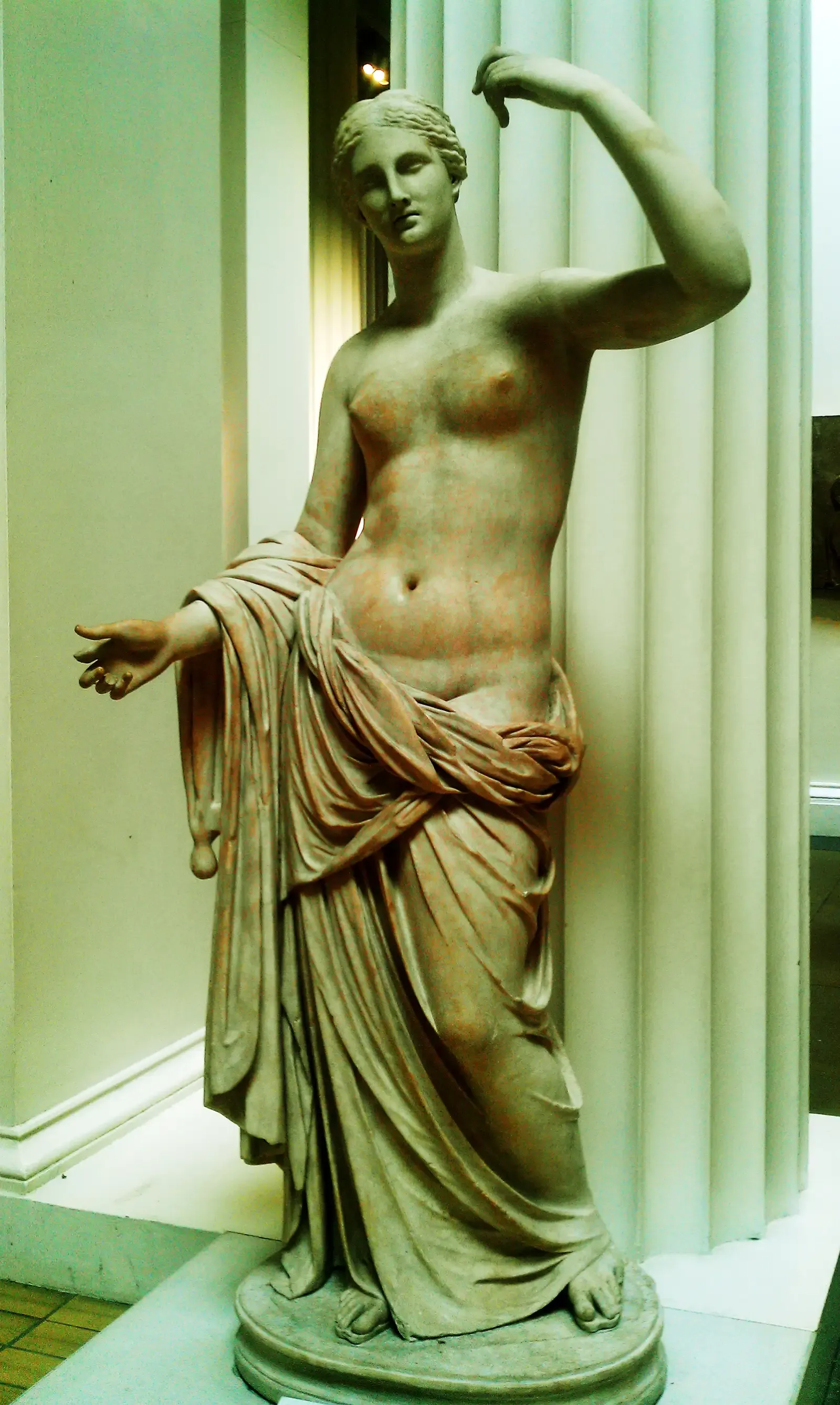
Walk into a big European museum, spot a serene marble goddess, and the label often reads “Roman copy after Greek original.” The Townley Venus in the British Museum is a perfect example – a graceful, draped female figure long assumed to channel the spirit of legendary sculptors like Praxiteles. In reality, the original Greek bronze or marble it was based on is gone, probably melted down or shattered centuries ago.
What survives are Roman reinterpretations, cleaned up by 18th- and 19th-century restorers who had no problem adding missing arms or drapery. Scholars now admit that in many cases, we don’t even know which lost Greek statue a given Roman Venus is copying – the Romans mixed motifs like a Pinterest board, one pose here, a hairstyle there.
So when visitors say “I finally saw Greek art in person,” they’re usually looking at Roman mashups of Greek prototypes. Some art historians argue these copies tell us more about Roman taste than about the Greek originals they supposedly preserve, which raises an uncomfortable question: are museums selling us Greece when we’re really looking at Rome?
#8 – The Laocoön: Renaissance Icon, Possibly A Roman Knockoff
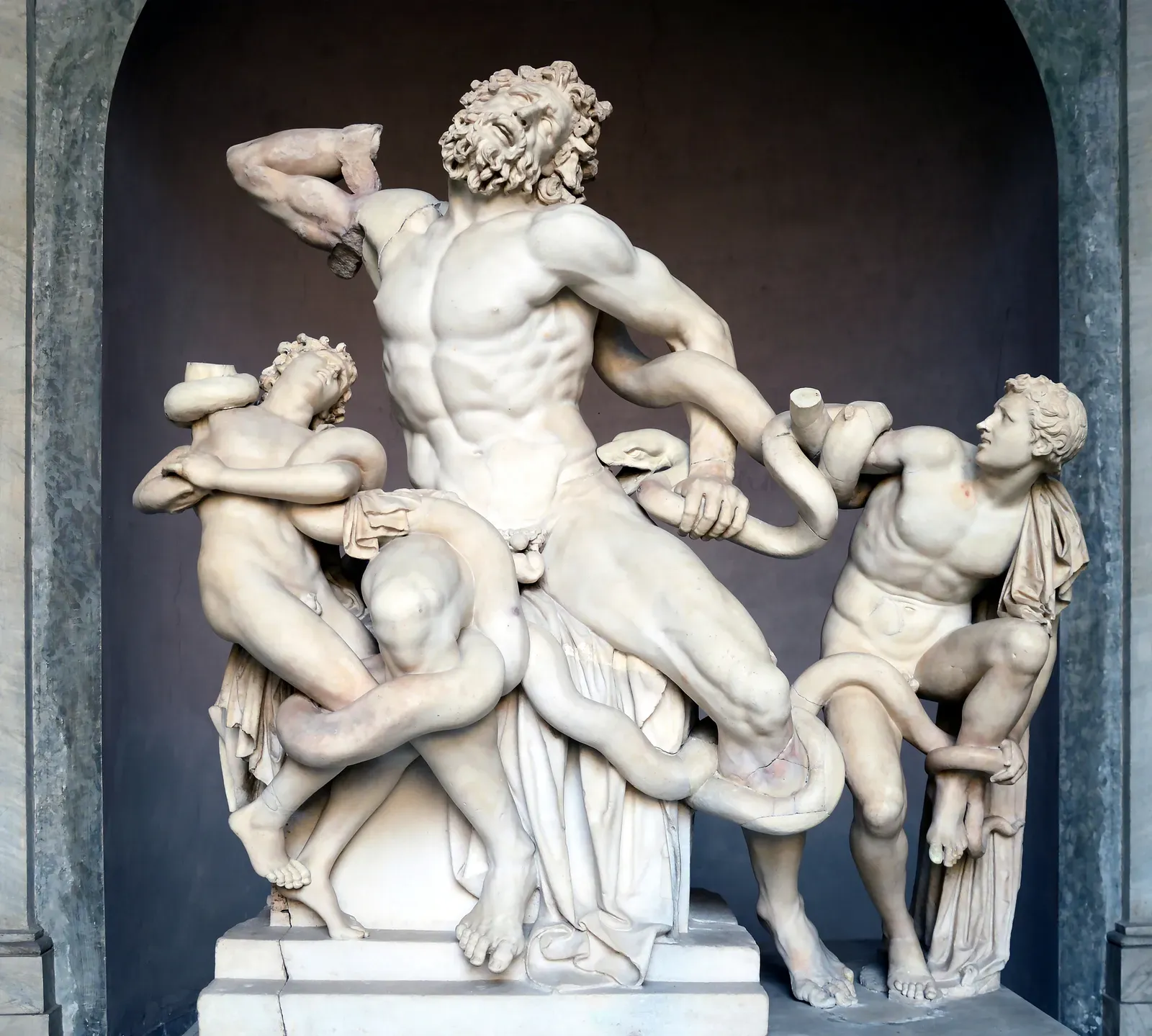
The Laocoön and His Sons in the Vatican is often presented as the face of Hellenistic drama – twisting bodies, contorted agony, serpents coiling around a doomed priest. For centuries it was hailed as an authentic Greek original, discovered in 1506 and instantly embraced by Renaissance artists as a living link to antiquity.
Now many experts quietly concede a messier story: the Laocoön we see may be a Roman imperial copy of a Greek bronze, or at least a heavily Romanized adaptation. The inscription naming its sculptors doesn’t settle anything – stylistic analysis, tool marks, and the marble itself point toward a high-quality Roman workshop, probably from the 1st century CE, echoing a Greek composition that no longer exists.
Parts of the sculpture, like Laocoön’s extended arm, have been repeatedly removed and reattached as tastes changed, with each restoration based on theory rather than proof. So the most famous “Greek” sculpture in the Vatican might actually be a Roman art-history essay on something we’ll never actually see.
#7 – The Farnese Hercules: The Gym-Meme Statue That’s A Copy Of A Lost Bronze Hero
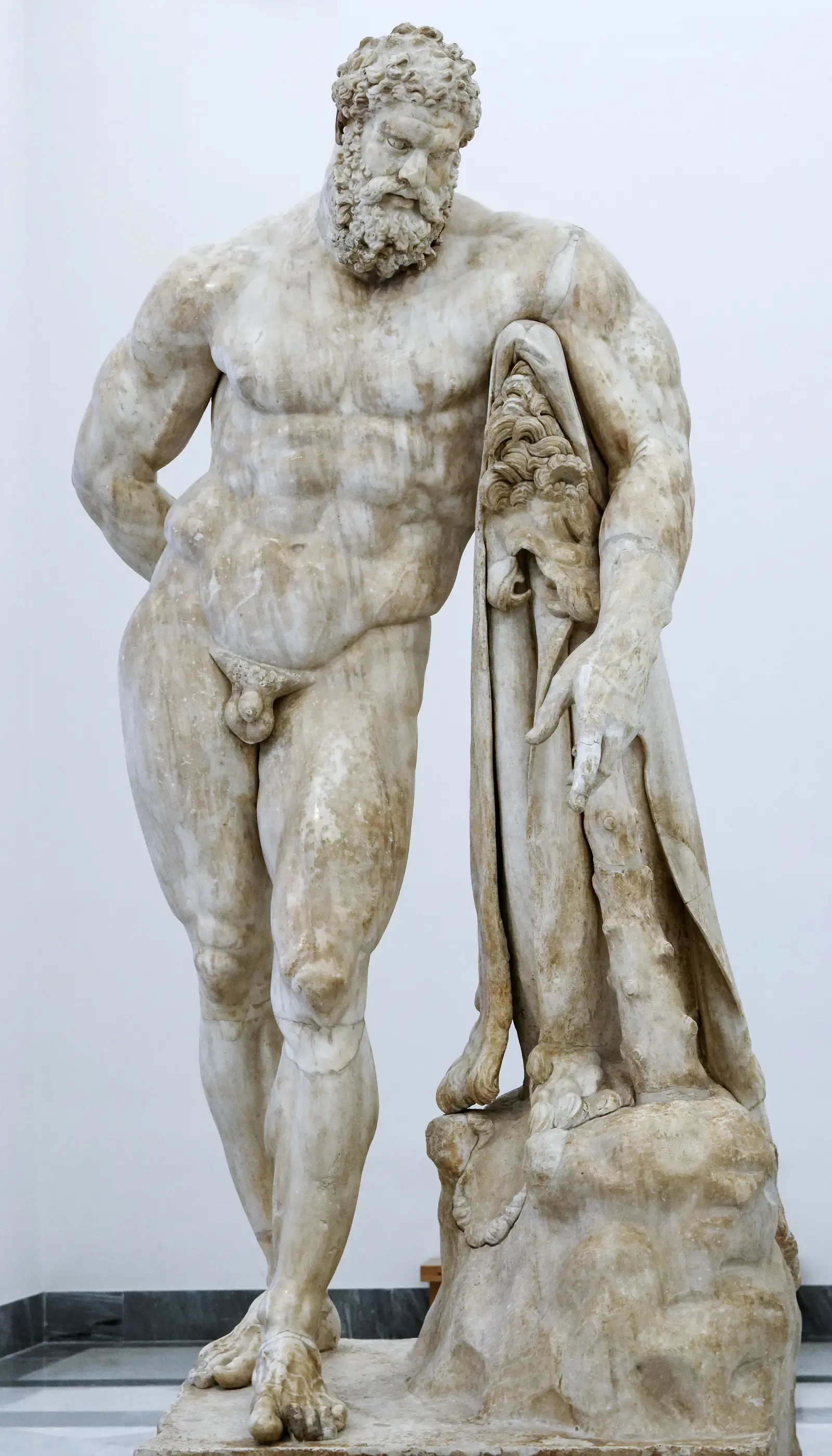
Most people are stunned by the Farnese Hercules in Naples – massive, muscled, leaning on his club like he just finished the world’s hardest workout. He’s become the meme version of “ancient gains.” But almost no one realizes this huge marble colossus is itself a Roman copy of an even more famous Greek bronze by Lysippos, court sculptor to Alexander the Great.
The original, made in the 4th century BCE, is gone. We only know its design because Romans couldn’t stop reproducing it. The Farnese version, carved in the 3rd century CE, was found in the Baths of Caracalla, where elite Romans literally bathed under a forest of copied Greek heroes.
Why It Stands Out
- Lost Greek bronze original attributed to Lysippos, 4th century BCE
- Surviving Farnese marble copy is signed by the Athenian sculptor Glykon
- Unearthed in 1546 amid the ruins of Rome’s Baths of Caracalla
- Now displayed in Naples’ Museo Archeologico Nazionale, still shaping how artists depict heroic muscle
The proportions – small head, absurdly overbuilt torso – match Lysippos’ known style, but the material and carving techniques are pure Roman. In a strange twist, this copy became more influential than the original ever could have been, shaping Renaissance and Baroque ideas of male strength for centuries. Some scholars argue our entire mental image of “Hercules” is based not on Greek creativity, but on a Roman cover version.
#6 – The Doryphoros: The “Perfect Body” Textbooks Teach Is A Reverse-Engineered Guess
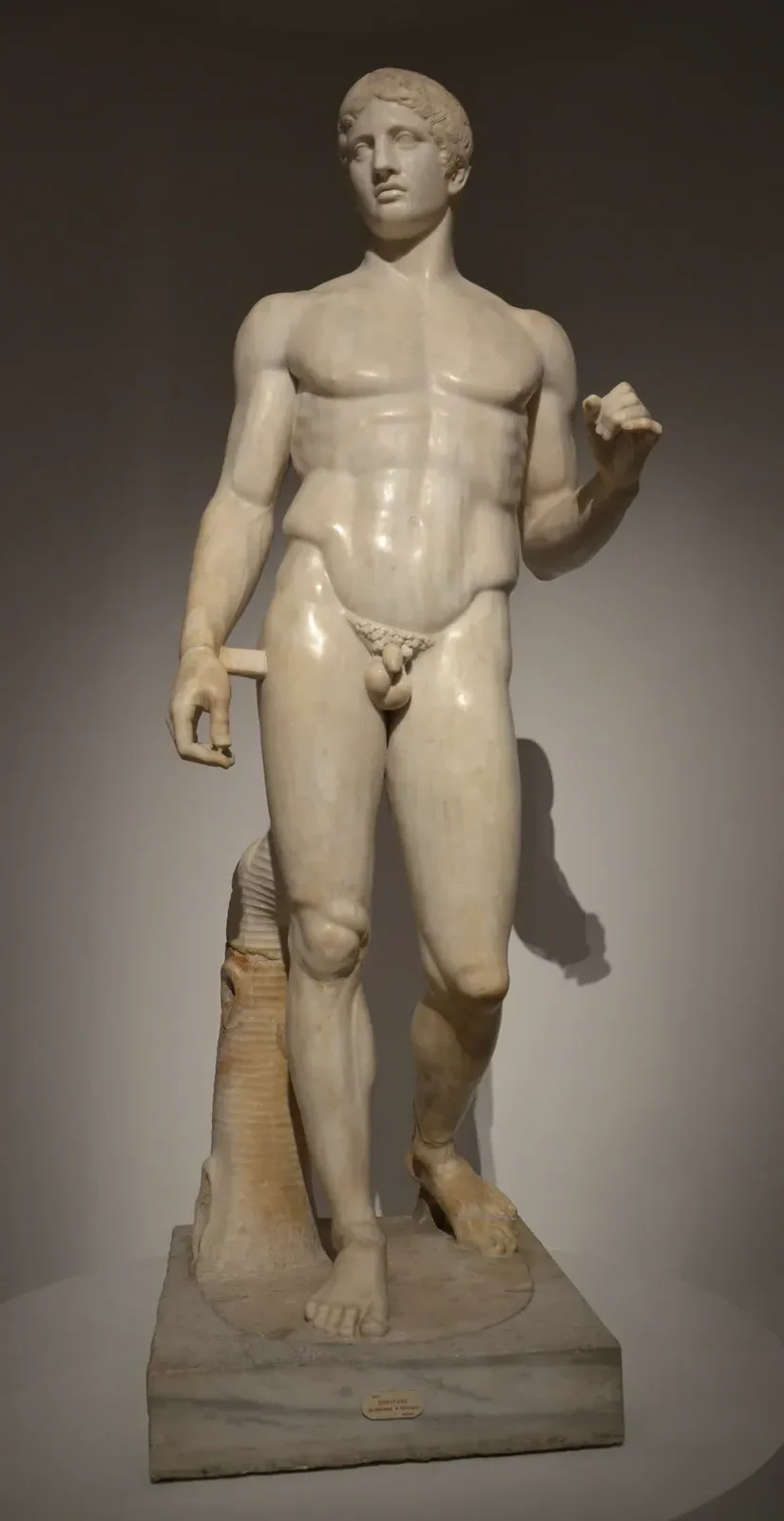
Art history textbooks worship the Doryphoros, or Spear Bearer, as the blueprint of the “ideal male body,” citing the sculptor Polykleitos and his treatise, the Canon, as if we’re looking at his actual handiwork. We’re not. The most intact Doryphoros we have, in Naples, is a Roman marble copy, probably 400 years younger than the lost Greek bronze original created around 440 BCE.
The bronze vanished, like most ancient bronzes, likely melted down and recycled for weapons or coins. Curators now openly acknowledge that the Naples statue and scattered fragments elsewhere are our best attempt to reverse-engineer Polykleitos’ idea from Roman evidence alone.
Even the famous contrapposto pose – weight on one leg, relaxed hip – is filtered through Roman stone, not Greek metal. Crucial details like the exact facial expression, bodily softness, and surface finish of the original are pure guesswork, yet millions of students memorize this copy as the Greek ideal. It’s like judging a lost symphony from a much later piano arrangement.
#5 – The Apollo Belvedere: From “Greatest Sculpture Ever” To Roman Knockoff
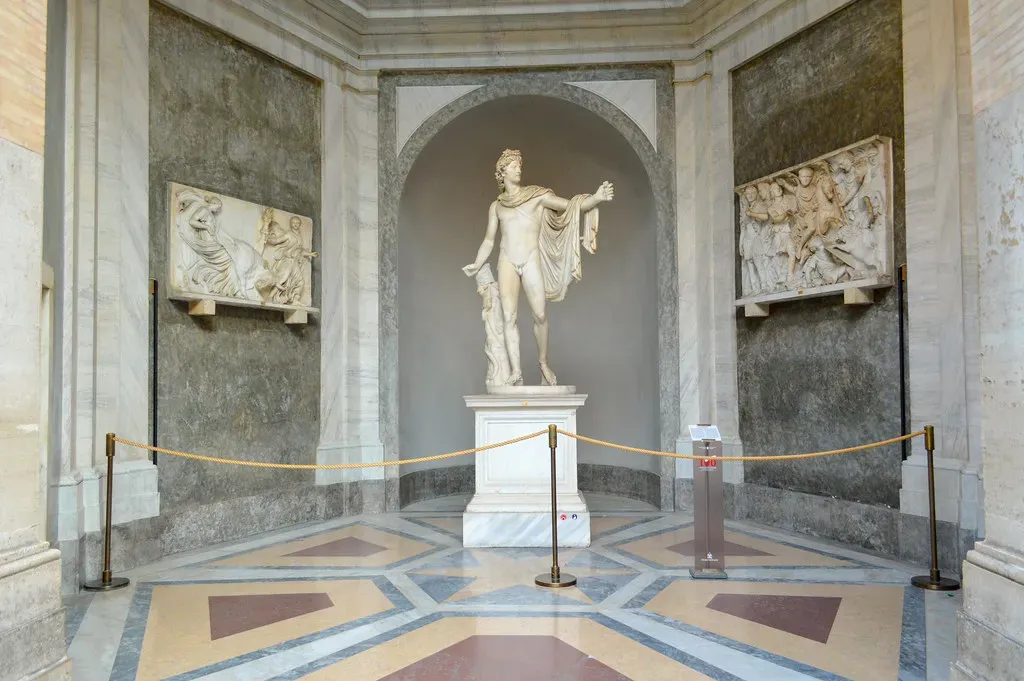
In the 18th century, critics called the Apollo Belvedere in the Vatican “the highest ideal of art,” worshipped as the purest expression of Greek genius. Fast-forward to today, and the verdict has flipped: the Apollo is now widely accepted as a Roman copy of a lost Greek bronze, and a heavily restored one at that.
Its missing parts were “completed” by early modern sculptors who tried to guess what the god’s limp hand, fingers, and attributes should look like. Scholars argue the statue’s icy perfection has more to do with Neoclassical taste than with ancient Greek reality – we don’t know what color the original was, how dynamic the pose really felt, or even precisely when it was made.
Modern research suggests a date in the Roman imperial period, not classical Greece at all. The sculpture that once defined “Greek beauty” in European education turns out to be a Roman pastiche, polished by 18th-century ideology, and some historians now use it as a case study in how museums turn elegant reproductions into untouchable myths.
#4 – The Bronze Horses Of St. Mark’s: The “Originals” Outside Aren’t Even Real
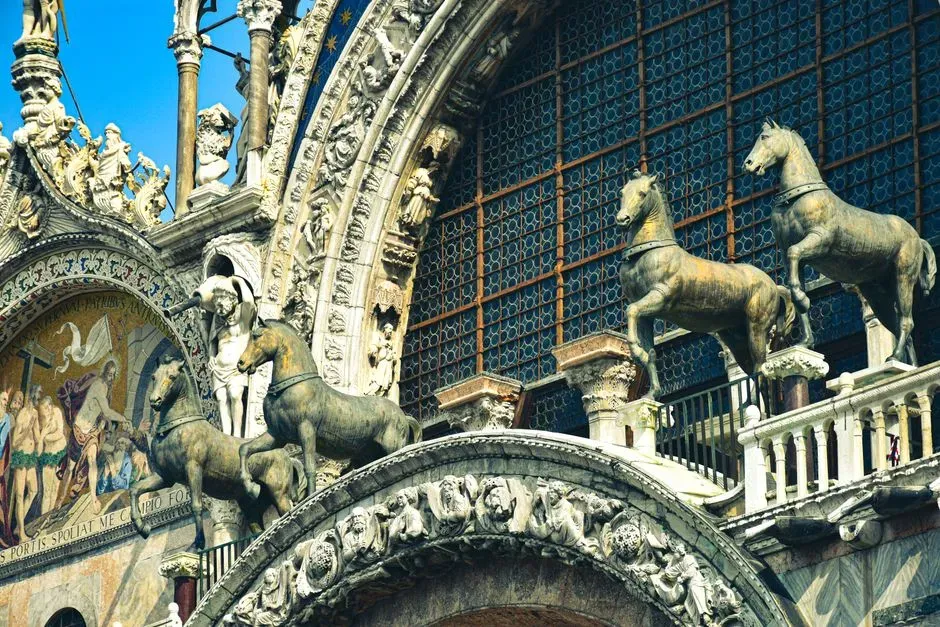
The four bronze horses over the entrance of St. Mark’s Basilica in Venice look like escaped survivors from a Roman chariot race. For centuries, some claimed they were classical originals from ancient Greece or Rome, hauled to Constantinople, then looted by the Venetians in 1204. The romance is irresistible, but modern analysis paints a different picture.
Metallurgical studies now indicate a probable late Hellenistic or even early medieval manufacture, and there’s increasing agreement that what we see today are heavily restored versions, not untouched antiquities. On top of that, the “originals” are now kept inside the basilica; the horses standing outside, facing the piazza, are modern replicas made to protect the real ones from pollution and weather.
Quick Compare
- Outside on the facade: modern replicas, installed to shield the real bronzes from weather and pollution
- Inside the basilica: the actual restored bronzes, viewable in a dedicated museum space
- Origin story: seized from Constantinople during the Fourth Crusade of 1204
- True age: still debated, ranging from classical antiquity to early medieval workmanship
Tool marks, joining techniques, and alloy composition all suggest multiple phases of modification and reworking over the centuries. Visitors are looking at copies of heavily altered sculptures that may themselves only loosely echo a lost ancient prototype – a layered reproduction, not a museum time machine. Ironically, that messy history makes the horses more interesting, not less.
#3 – The Pergamon Altar: A Museum-Sized Jigsaw Puzzle Pretending To Be Intact
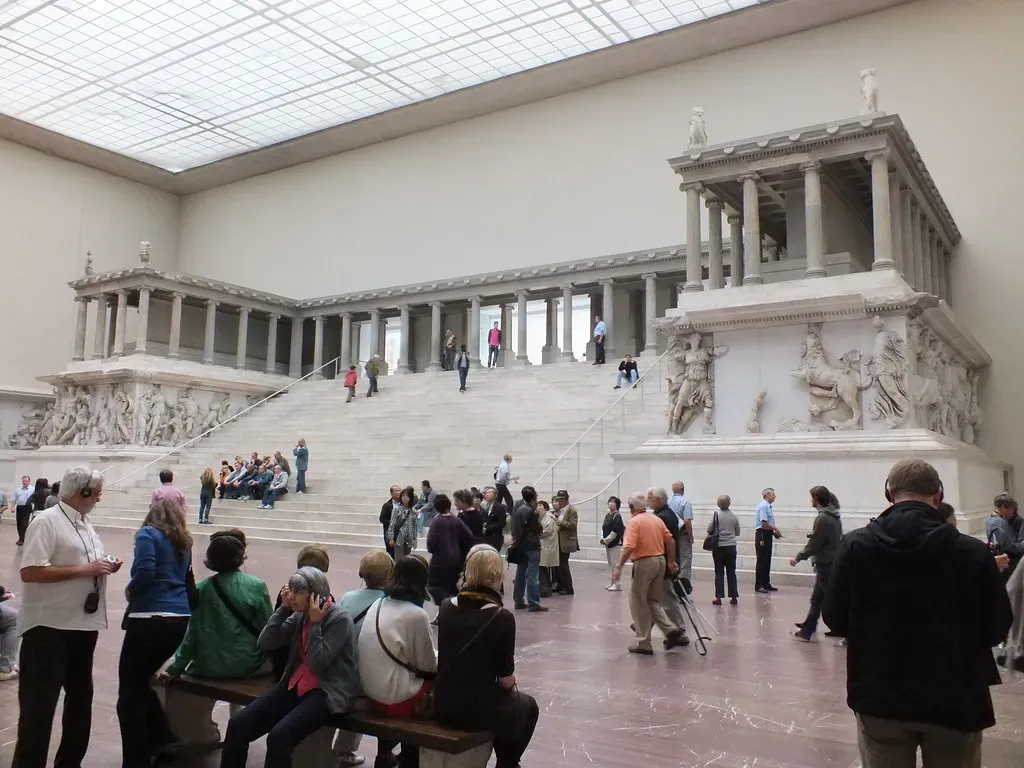
The Pergamon Museum’s Great Altar frieze in Berlin is one of the most dramatic ancient displays in Europe – giants and gods locked in a stone brawl across massive walls. Officially, it’s a 2nd-century BCE Greek masterpiece from the city of Pergamon in modern Turkey. Here’s the uncomfortable part: what you walk around in Berlin is a reconstruction, stitched together from original fragments, missing pieces, and educated guesses.
The original structure is gone; only parts of the sculpted frieze and architectural elements survived excavation. German archaeologists in the late 19th century brought these fragments back, then arranged them into a monumental installation that fits a modern museum hall, not the ancient acropolis it came from.
Worth Knowing
- Excavated by German archaeologists starting in the late 1870s at Pergamon, in present-day Turkey
- Large sections of the frieze are filled with plaster casts, not original stone
- The reassembled altar sits inside a purpose-built Berlin museum hall, not its original acropolis setting
- Scholars still dispute whether some relief blocks are displayed in the correct order
Entire sections are filled out with plaster casts, and some narrative sequences are reconstructed from partial evidence alone. Scholars still argue over the original layout and even whether certain relief blocks are in the right order, which means the Pergamon Altar as experienced by visitors is a hybrid: part original sculpture, part 19th-century museum imagination, standing in for a sanctuary that no longer exists.
#2 – The Nefertiti Bust: Is The World’s Most Famous Face Just A Studio Sample?
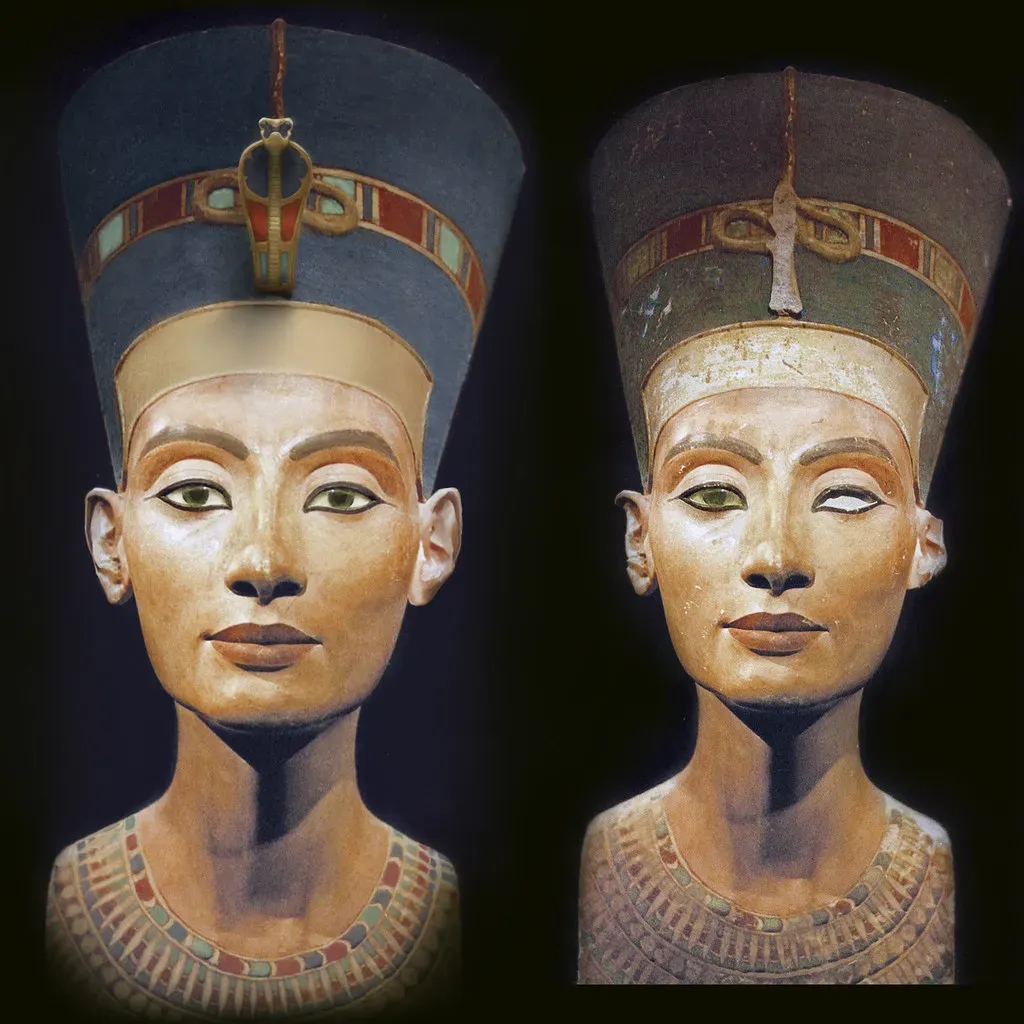
Few objects in any museum carry the aura of the Nefertiti bust in Berlin. She’s become the global face of ancient Egypt – smooth features, elegant neck, iconic blue crown. Official labels present her as a painted limestone bust from around 1345 BCE by the sculptor Thutmose.
But among Egyptologists, a persistent theory refuses to die: the bust might be a carefully finished model or “reproduction” used inside the sculptor’s workshop, not the final official portrait made for the royal palace. The eyes – one inlaid, one left blank – along with the absence of inscriptions and certain surface marks, suggest a teaching or reference piece rather than a completed royal display.
Worth Knowing
- Unearthed in 1912 by archaeologist Ludwig Borchardt at Amarna, Egypt
- Attributed to the workshop of the sculptor Thutmose, around 1345 BCE
- Left eye has no inlay – a detail central to the “unfinished workshop model” theory
- Now displayed in Berlin’s Neues Museum, one of the most photographed artifacts on Earth
In that reading, the “original” Nefertiti would have been a fully completed, now-lost version, while the Berlin bust is the sculptor’s working template – a kind of 3D prototype. Some even argue the colors and symmetry are idealized beyond what a lifelike royal likeness would show, meaning the world’s most famous ancient face might literally be a studio sample, an internal copy of a portrait that never survived.
#1 – The Parthenon Marbles: Copies Of Copies Of A Monument That No Longer Exists
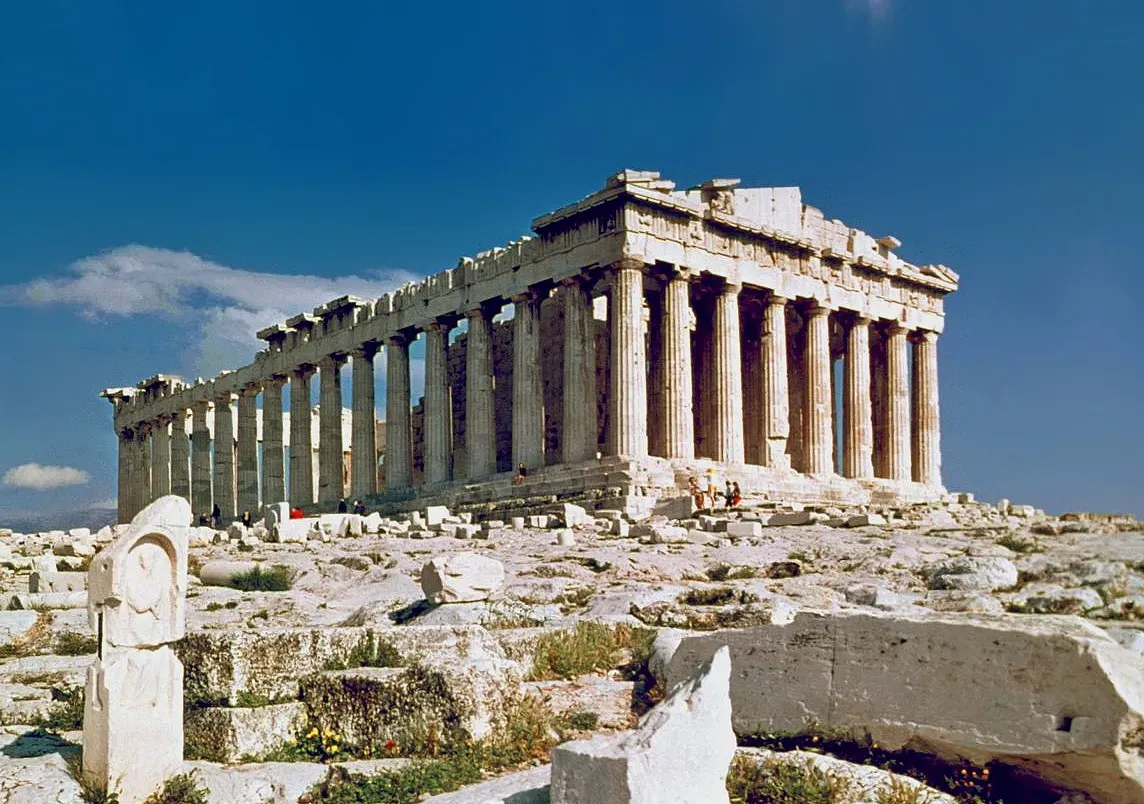
Ask people to name a pure, unquestioned ancient original, and many will say the Parthenon marbles. Here’s the layered reality: the Parthenon sculptures displayed in London, Athens, and plaster-cast rooms worldwide are often reproductions of reproductions of a design that has already been heavily eroded, broken, and reassembled.
The original 5th-century BCE marble reliefs and statues were damaged by explosions, weathering, Christian-era iconoclasm, and later “cleaning” that stripped their surfaces. What visitors see in many museums are 19th- and 20th-century plaster casts taken from stones that were already damaged when the molds were made.
That which withers in the age of mechanical reproduction is the aura of the work of art.
Walter Benjamin
In some galleries, you’re looking at casts of casts – second- or third-generation copies that preserve details already lost on the original by the time the mold existed. Modern restorations in Athens have even reconfigured some blocks and figures based on scholarly reconstructions that are still debated today. A “Parthenon room” in a university museum may display white plaster panels that were never arranged that way in antiquity, and these didactic replicas are now the main way many students “see” the Parthenon at all – de facto stand-ins for a monument that can no longer be fully recovered.
The Bottom Line
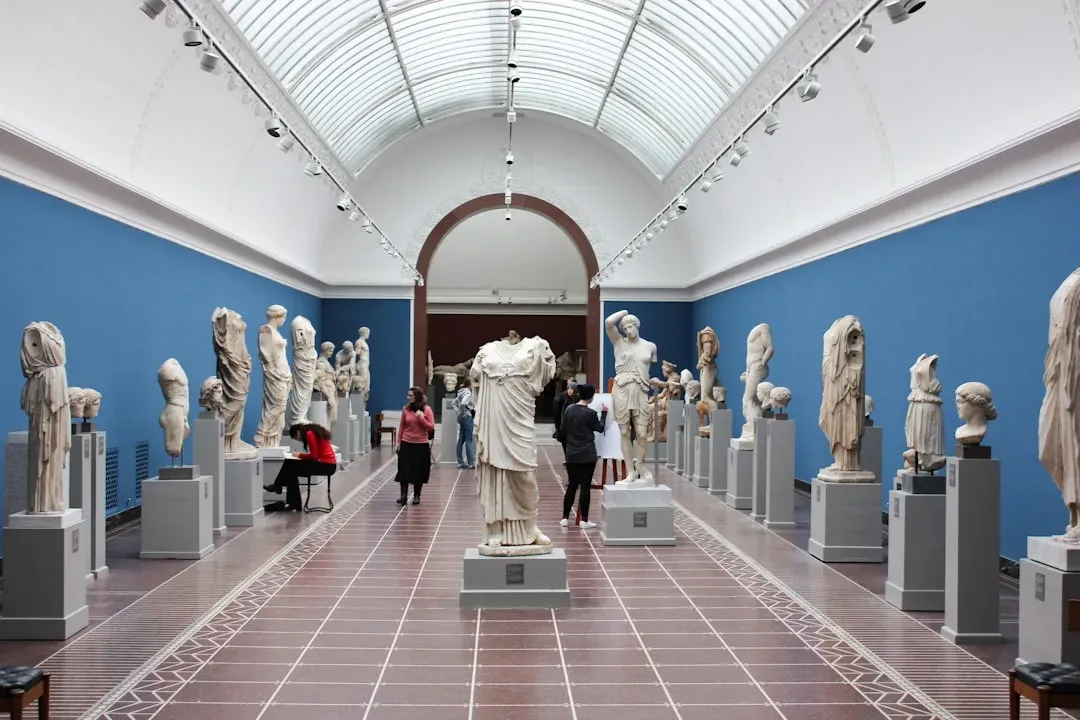
Once you start looking closely, a pattern jumps out: some of the most celebrated museum “masterpieces” are openly admitted to be reproductions, reconstructions, or workshop copies of originals we’ll probably never see again. Far from being a scandal, this exposes a bigger myth – that museums are time capsules of untouched antiquity.
They’re more like laboratories, constantly rebuilding the past from fragments, guesses, and highly skilled replicas. In my view, pretending these pieces are untouched originals is far more misleading than simply admitting their copied status.
The Roman Discobolus, the Farnese Hercules, even the Nefertiti bust – these aren’t fakes. They’re evidence of how different eras re-imagined greatness, filtered through Roman taste, Renaissance restorers, and modern display habits.
That doesn’t cheapen the objects. It forces a better question than “Is this the original?” – the real question is whose version of the past you’re actually looking at. Did we miss a reproduction you think deserves a spot on this list? Share it in the comments.