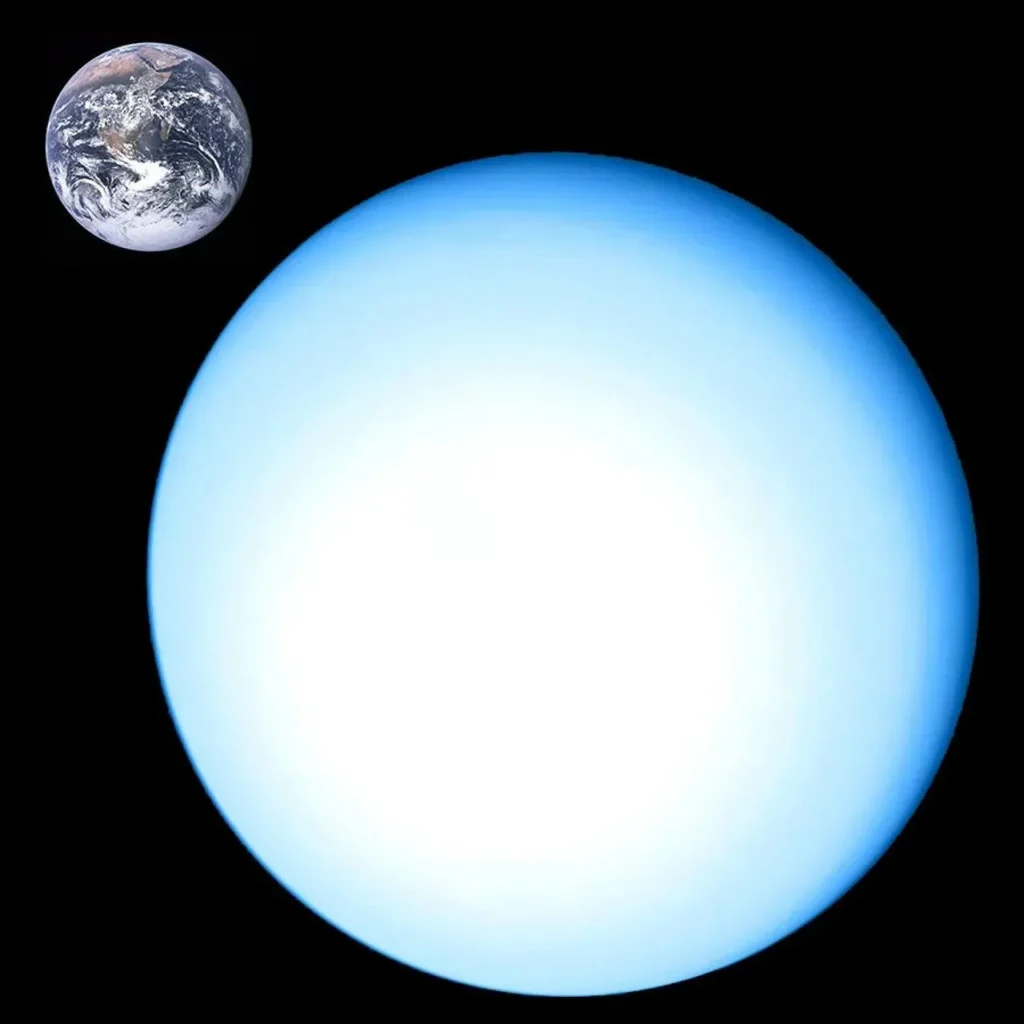

When you think of planetary oddities, Uranus might not immediately spring to mind. Yet this ice giant, lurking in the outer reaches of our solar system, holds more surprises than nearly any other world we’ve discovered. It’s a place where the rules seem bent, where physics plays tricks you wouldn’t believe possible.
What makes this distant world so captivating isn’t just its unfortunate name. It’s the way nearly everything about it defies what we expect from planets. From the angle it spins to the behavior of its magnetic field, Uranus keeps astronomers scratching their heads. Let’s dig into what makes this cyan colored giant one of the strangest objects orbiting our sun.
The Planet That Rolls Instead of Spins
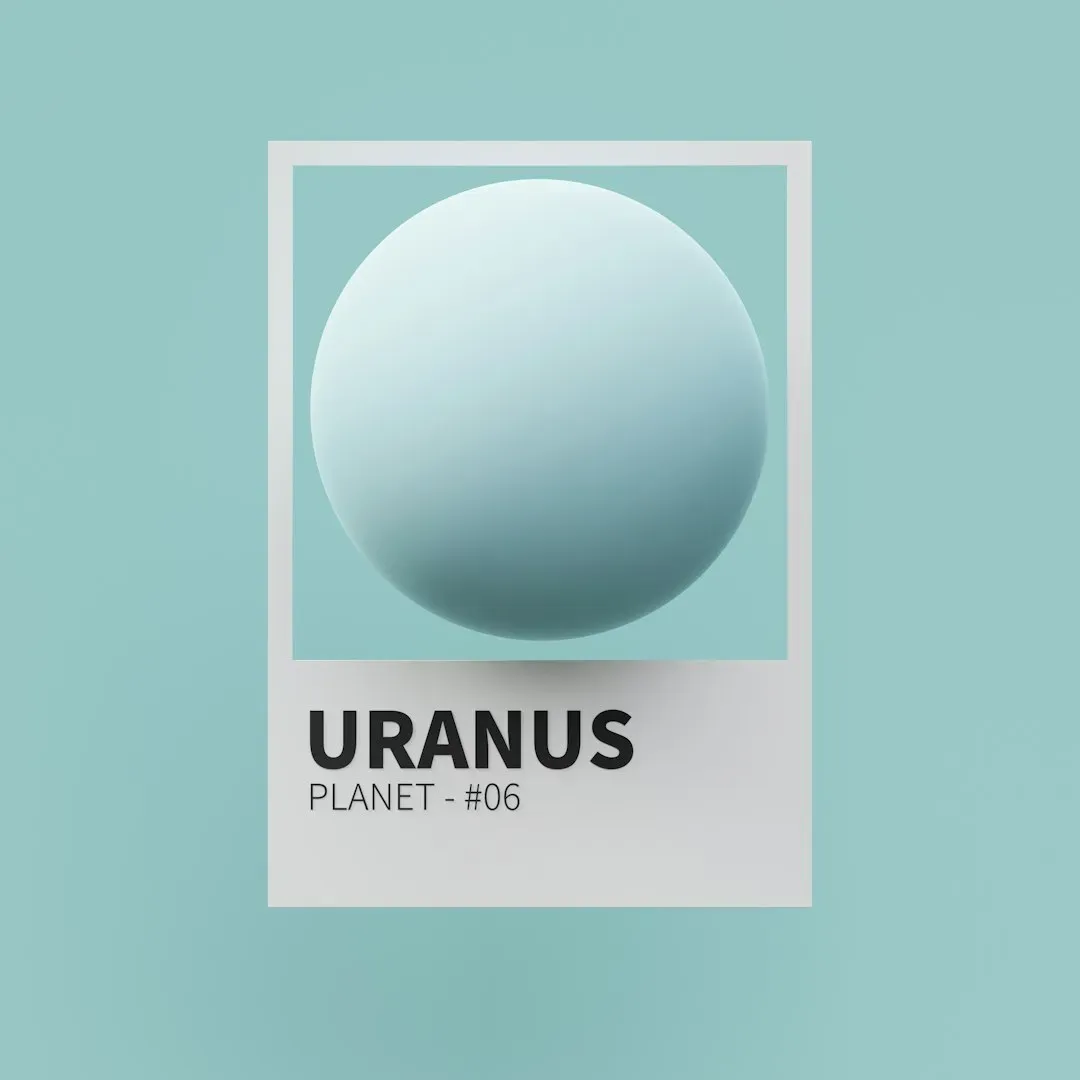
Uranus is the only planet whose equator is nearly at a right angle to its orbit, with a tilt of 97.77 degrees, making it appear to spin sideways, orbiting the Sun like a rolling ball. Think about that for a second. While Earth tilts at a modest angle that gives us seasons, Uranus essentially lies on its side.
Because Uranus orbits the Sun once every 84 years, the poles of Uranus each experience forty-two years of sunlight, followed by forty-two years of darkness. Imagine living through a winter that lasts longer than most human lifetimes. Each pole gets around 42 years of continuous sunlight, followed by 42 years of darkness. This creates the most extreme seasonal variations in the entire solar system.
It Was Nearly Named After a British King
Uranus was the first planet found with the aid of a telescope, discovered in 1781 by astronomer William Herschel, although he originally thought it was either a comet or a star, and it was two years later that the object was universally accepted as a new planet. The discovery itself was somewhat accidental, which honestly makes it even cooler.
Here’s where it gets interesting. William Herschel tried unsuccessfully to name his discovery Georgium Sidus after King George III, but instead, the planet was named for Uranus, the Greek god of the sky, as suggested by Johann Bode. Can you imagine calling it “George’s Star” today? The astronomical community thankfully chose mythology over monarchy.
A 29th Moon Just Revealed Itself in 2025
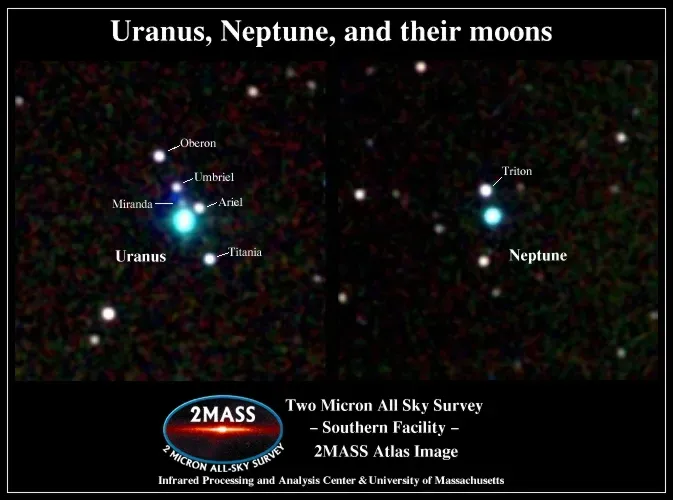
Using NASA’s James Webb Space Telescope, a team led by the Southwest Research Institute has identified a previously unknown moon orbiting Uranus, expanding the planet’s known satellite family to 29, with the detection made during a Webb observation in February 2025. This discovery happened just months ago, showing how much we still have to learn.
The newly discovered moon is estimated to be just six miles in diameter, assuming it has a similar reflectivity to Uranus’ other small satellites, and that tiny size likely rendered it invisible to Voyager 2 and other telescopes. No other planet has as many small inner moons as Uranus, and their complex inter-relationships with the rings hint at a chaotic history that blurs the boundary between a ring system and a system of moons.
Its Atmosphere Is the Coldest in the Solar System
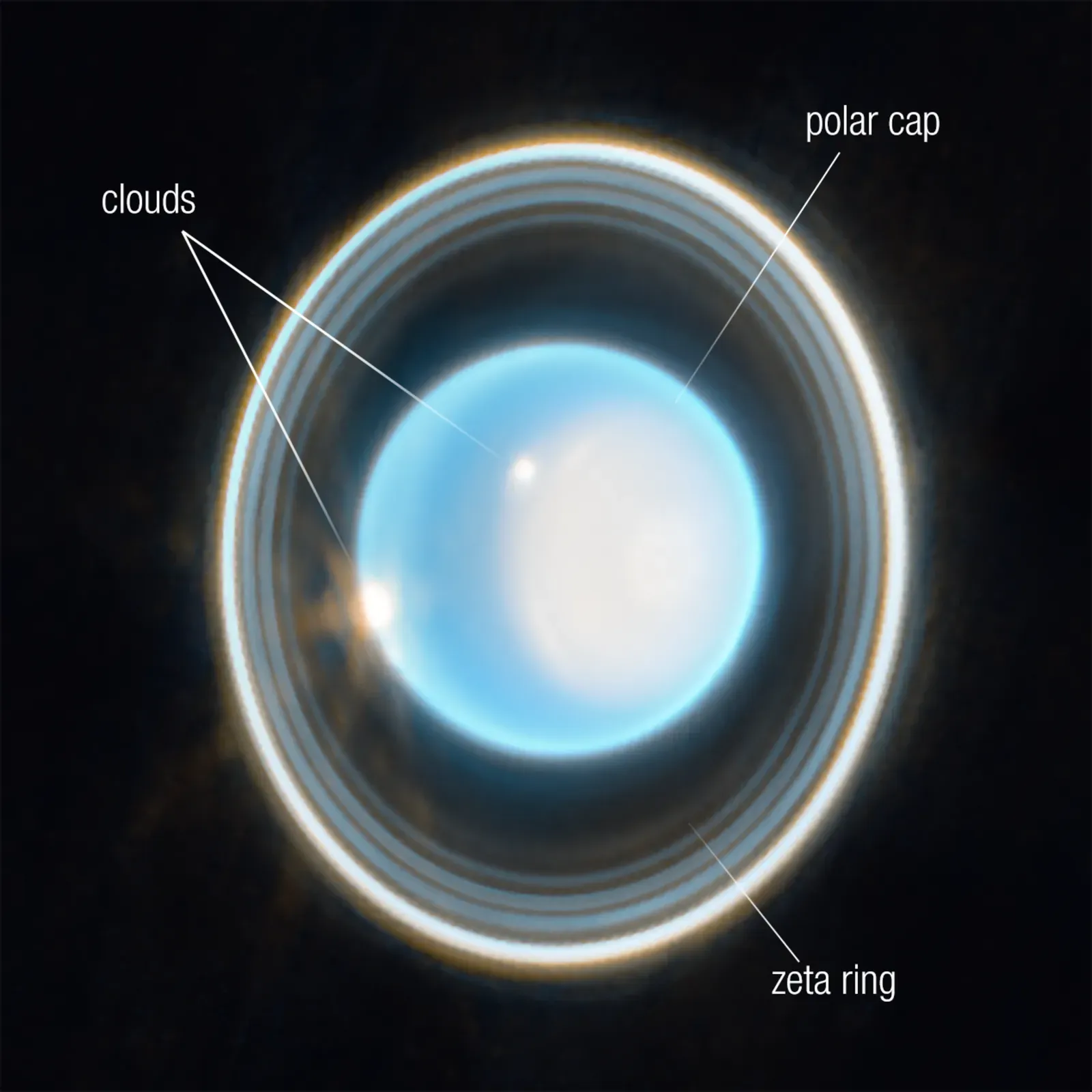
Let’s be real, Uranus is absolutely freezing. The planet’s atmosphere has a complex layered cloud structure and has the lowest minimum temperature of all the Solar System’s planets, reaching as low as 49 K. That translates to roughly minus 224 degrees Celsius, or minus 371 degrees Fahrenheit.
Uranus’ planetary atmosphere makes it even colder than Neptune in some places, with wind speeds reaching up to 560 miles per hour. What’s bizarre is that Neptune, farther from the Sun, actually releases more heat than Uranus does. Scientists still debate why Uranus holds onto so little internal warmth, making it the coldest planetary atmosphere we know of.
Methane Gives It That Signature Blue Color
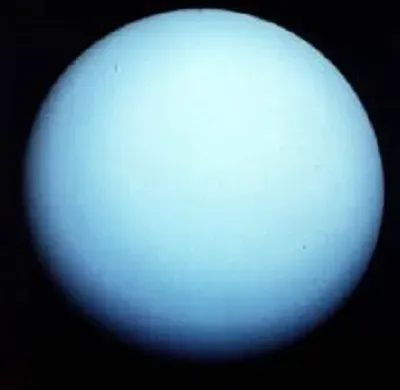
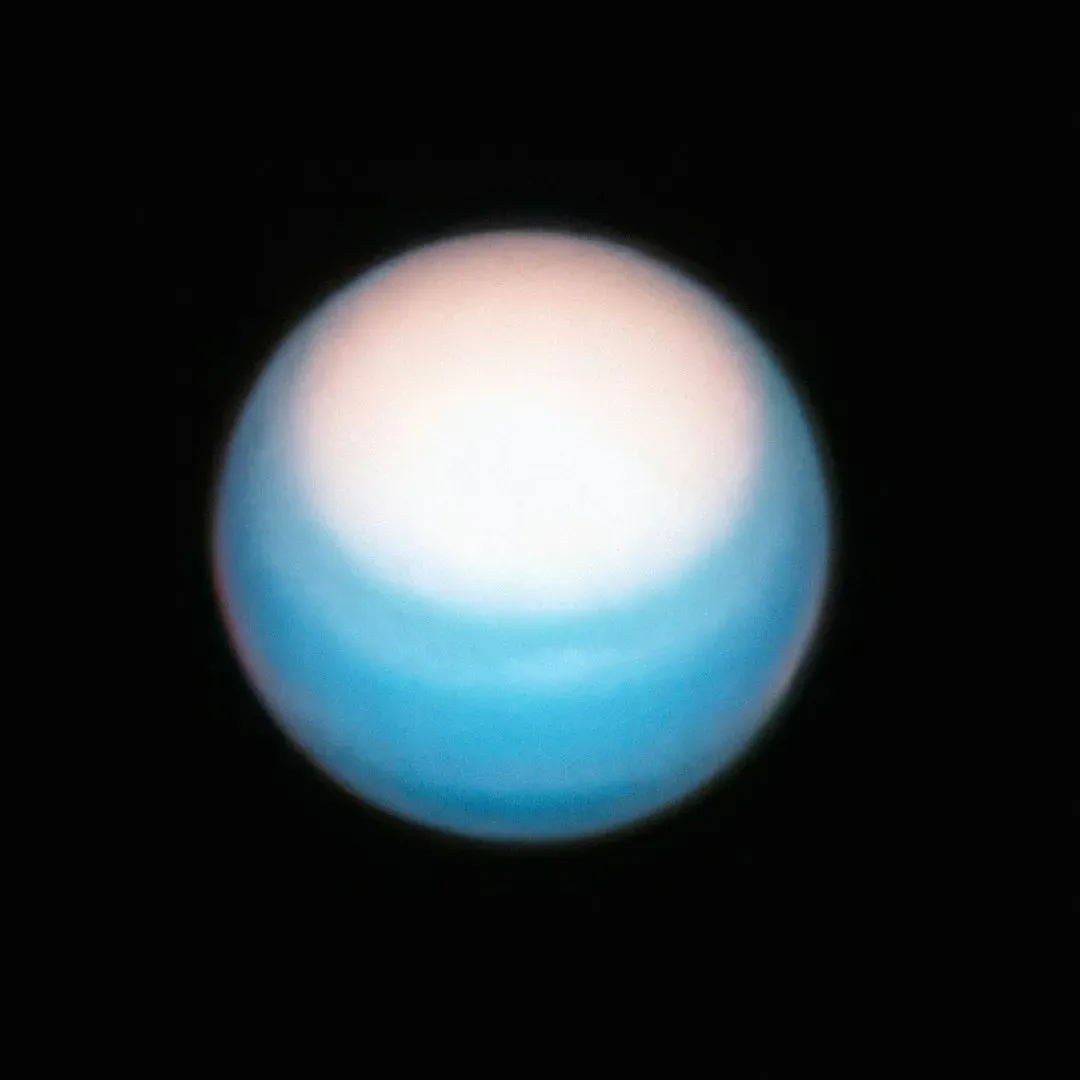
You might wonder why Uranus looks like a pale turquoise marble. Uranus gets its blue-green color from methane gas in the atmosphere, as sunlight passes through and is reflected back by cloud tops, with methane gas absorbing the red portion of the light, resulting in a blue-green color.
Methane possesses prominent absorption bands in the visible and near-infrared, making Uranus aquamarine or cyan in color, and methane molecules account for about 2.3% of the atmosphere by molar fraction below the methane cloud deck. It’s kind of like wearing colored sunglasses. The methane filters out warm colors, leaving only the cool blues and greens visible to our telescopes.
Thirteen Rings Circle This Ice Giant
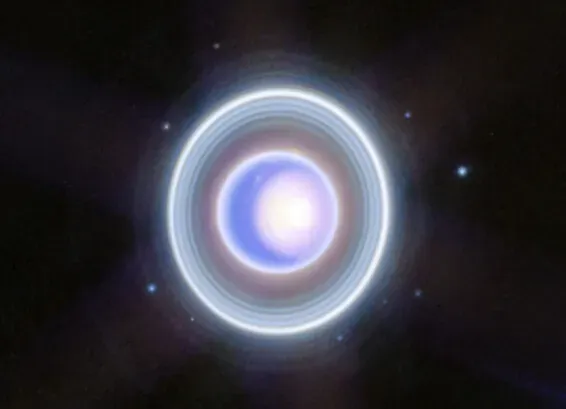
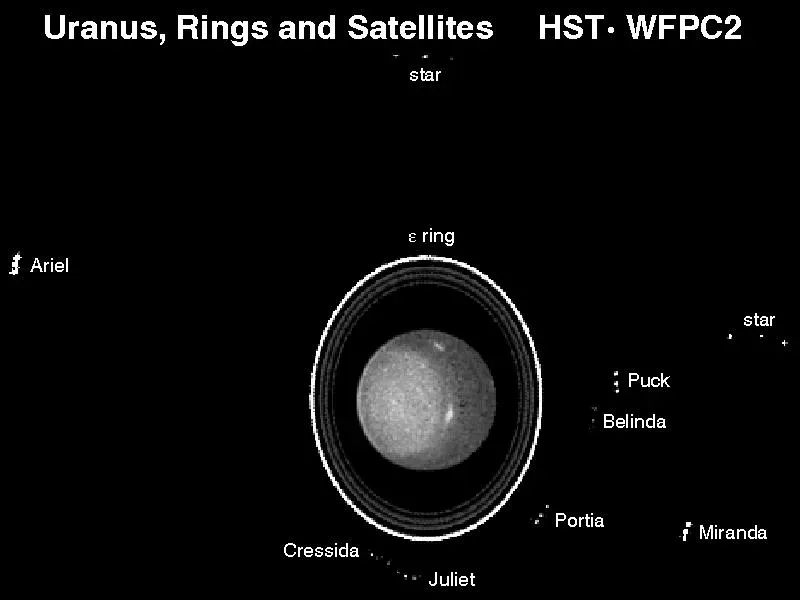
Saturn might get all the glory for its rings, but Uranus has its own impressive collection. The rings of Uranus were discovered on March 10, 1977, by James L. Elliot, Edward W. Dunham, and Jessica Mink, and by 1977, nine distinct rings were identified, with two additional rings discovered in 1986 by Voyager 2, and two outer rings found in 2003 to 2005 in Hubble Space Telescope photos.
Scientists are flummoxed by the chemical makeup of the shards that make up the rings, given that they’re unusually dark and are the darkest material in the solar system. These rings aren’t bright and showy like Saturn’s. They’re narrow, dark, and mysterious. Some scientists think they formed from moon collisions, constantly being recycled and reformed.
A Magnetic Field That Makes No Sense
Most planets have magnetic fields that align roughly with their rotation axis. Not Uranus. Uranus’ magnetic field is tipped over, with the magnetic axis tilted nearly 60 degrees from the planet’s axis of rotation, and is also offset from the center of the planet by one-third of the planet’s radius.
Uranus’s magnetic field is peculiar because it does not originate from its geometric centre and is tilted at 59 degrees from the axis of rotation, with the magnetic dipole shifted from Uranus’s centre towards the south rotational pole by as much as one-third of the planetary radius, resulting in a highly asymmetric magnetosphere. Scientists think this strange field might be generated in the planet’s slushy mantle rather than its core, completely different from how Earth’s magnetism works.
Voyager 2 Caught It During a Cosmic Storm
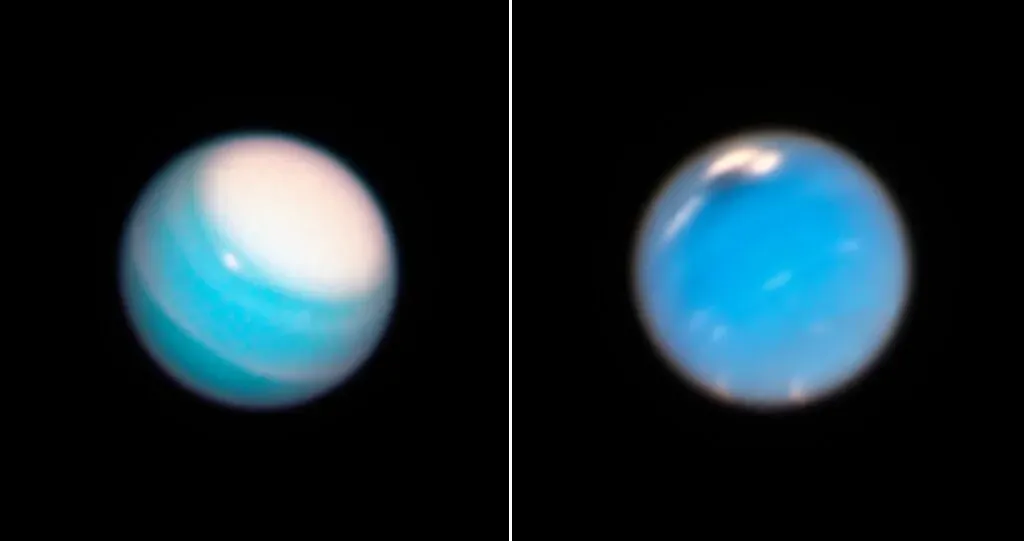
For nearly four decades, scientists based their understanding of Uranus on a single visit. When NASA’s Voyager 2 spacecraft flew by Uranus in 1986, it provided scientists’ first and only close glimpse, but new research analyzing the data collected during that flyby 38 years ago has found that in the days just before Voyager 2’s flyby, the planet had been affected by an unusual kind of space weather that dramatically compressed Uranus’ magnetosphere.
Voyager 2 observed Uranus’s magnetosphere in an anomalous, compressed state estimated to be present less than 5% of the time, and if the spacecraft had arrived only a few days earlier, the upstream solar wind dynamic pressure would have been around 20 times lower. It’s hard to say for sure, but everything we thought we knew about Uranus might be based on catching it at its absolute weirdest moment. Talk about bad timing.
Its Moons Are Named After Literary Characters
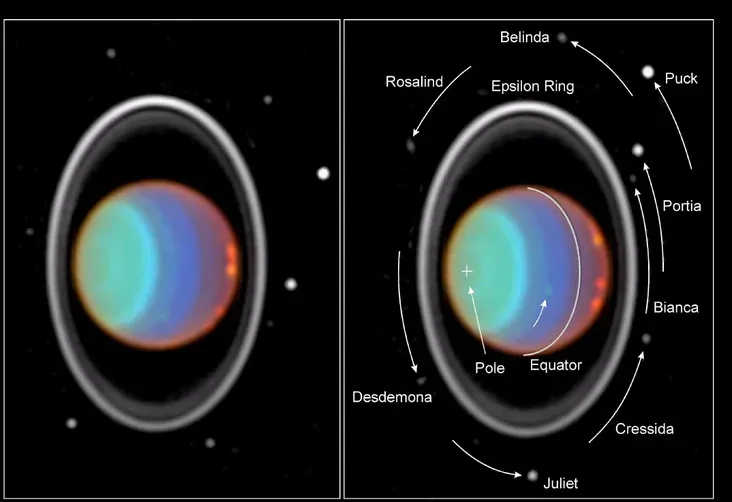
Here’s something delightfully quirky. While most of the satellites orbiting other planets take their names from Greek or Roman mythology, Uranus’ moons are unique in being named for characters from the works of William Shakespeare and Alexander Pope. You’ve got Titania and Oberon from A Midsummer Night’s Dream, Ariel from The Tempest, and many others.
William Herschel discovered the first two moons, Titania and Oberon, in 1787, while the other three ellipsoidal moons were discovered in 1851 by William Lassell and in 1948 by Gerard Kuiper. This naming convention continues today with each new moon discovery, making Uranus the most poetic planet in terms of its satellite system. It adds a touch of culture to cold celestial mechanics.
Diamond Rain Might Fall Inside Its Core
This sounds like science fiction, but it could be reality. Uranus’s core has a pressure of 8 million bars and a temperature of about 5000 K, and the extreme pressure and temperature deep within Uranus may break up methane molecules, with the carbon atoms condensing into crystals of diamond that rain down through the mantle like hailstones.
Think about that. Actual diamonds, potentially the size of hailstones, constantly falling through the interior of this ice giant. Scientists have recreated similar conditions in laboratories and found that under such intense pressure and heat, carbon from methane can indeed form diamond crystals. Uranus might be the wealthiest planet in the solar system, at least in terms of gems you can never reach.
Conclusion
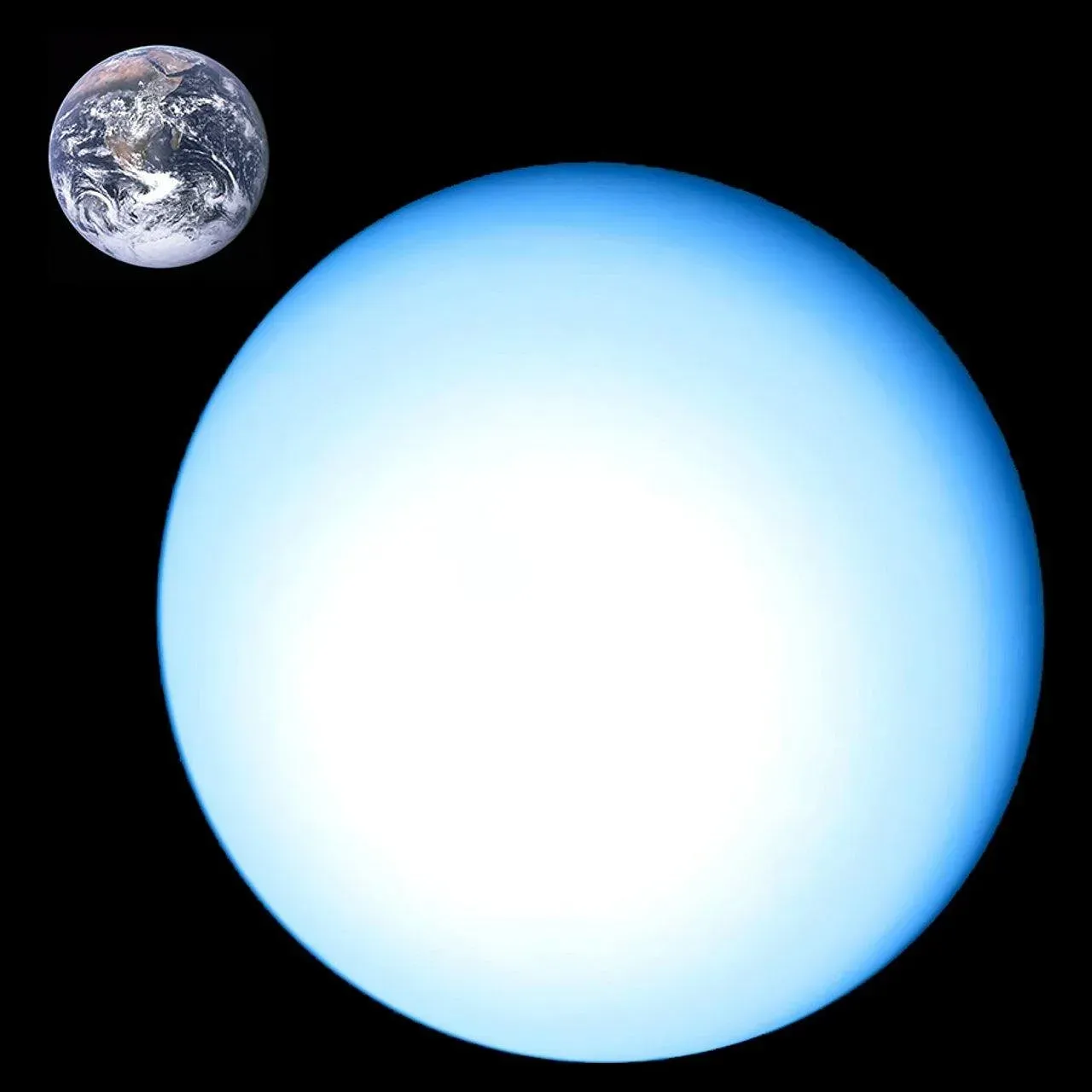
Uranus stands as one of the most fascinating and puzzling worlds in our cosmic neighborhood. From its sideways rotation to its frigid atmosphere, from mysterious rings to a magnetic field that breaks all the rules, this ice giant challenges everything we think we understand about planetary formation and behavior.
The recent discoveries keep piling up, whether it’s that newly spotted 29th moon or the revelation that Voyager 2 caught the planet during an unusual event. Every answer seems to generate three more questions. What do you think is the most incredible fact about Uranus? Which mystery would you most want scientists to solve next?
Hi, I’m Andrew, and I come from India. Experienced content specialist with a passion for writing. My forte includes health and wellness, Travel, Animals, and Nature. A nature nomad, I am obsessed with mountains and love high-altitude trekking. I have been on several Himalayan treks in India including the Everest Base Camp in Nepal, a profound experience.