
You are literally bathed in ancient light right now, and you cannot see it. Every second of your life, a faint glow from the newborn universe passes through you, quietly carrying a 13‑billion‑year‑old story. That invisible glow is the cosmic microwave background, and once you see what it really is, it changes the way you think about everything: time, space, even your own place in the cosmos.
Instead of being just an obscure term from astrophysics, the cosmic microwave background is more like the universe’s baby picture. When you learn how to read that picture, you discover clues about how everything began, why the universe looks the way it does today, and how it might evolve. You are about to walk through that story, piece by piece, like someone slowly turning up the lights on the biggest mystery you will ever live inside.
The Moment the Universe Became Transparent
Imagine standing in a room so full of fog that you cannot see your own hand, and then, in an instant, the fog disappears and everything becomes clear. In the early universe, you would have been inside that fog: a hot, dense soup of particles and light all crashing into each other so often that light could not travel freely. You would not have been able to see anything, because photons were constantly scattered by free electrons, bouncing around like pinballs in a cosmic arcade.
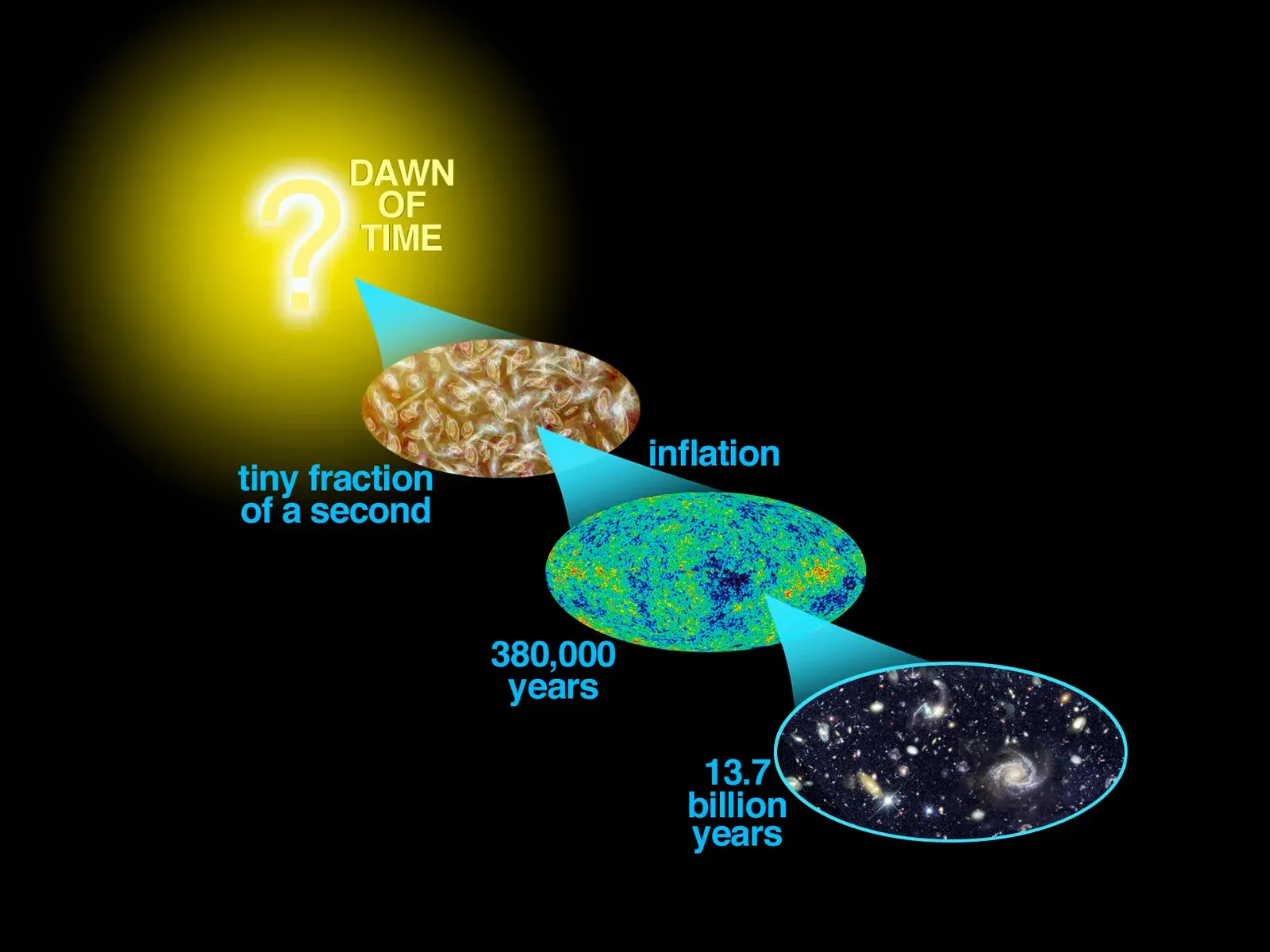
About three hundred eighty thousand years after the Big Bang, the universe had cooled enough for protons and electrons to combine into neutral hydrogen atoms. As that happened, the fog lifted: light decoupled from matter and finally streamed freely through space. If you could have watched this moment unfold, you would have seen the universe go from an opaque glowing plasma to a transparent vastness in a cosmic blink. The light released then is exactly what you detect today as the cosmic microwave background, stretched and cooled by billions of years of expansion.
Why This Ancient Light Glows in Microwaves Today
When that primordial light first set off, it blazed in a much hotter, shorter‑wavelength form, closer to what you would think of as visible or even ultraviolet light. Back then, the universe was far smaller and denser, and space itself was more compressed. As the universe expanded over billions of years, it dragged the light along with it, stretching the wavelengths like a rubber band pulled between your fingers. What started as a bright glow has been redshifted into the microwave part of the spectrum, far beyond what your eyes can see.
If you could somehow tune your senses to microwave frequencies, you would notice that the entire sky shines almost perfectly uniformly with a temperature of just under three degrees above absolute zero. You would feel surrounded by a cold, ever‑present bath of radiation that fills every direction you look. That low temperature is not a sign of weakness but of age; it is a fossil imprint of how much the universe has expanded and cooled since its fiery beginning. You are essentially measuring how far the universe has come from its hot start to its present, much cooler state.
How You Would “See” the Cosmic Microwave Background
With your normal vision, you will never see the cosmic microwave background, no matter how clear or dark the night sky becomes, because your eyes are tuned to much shorter wavelengths. But if you could build yourself a special pair of microwave goggles, you would be amazed at what appears. The night sky would no longer look like a black canvas with scattered stars; instead, it would light up as a nearly uniform fog of faint radiation, the same in almost every direction.
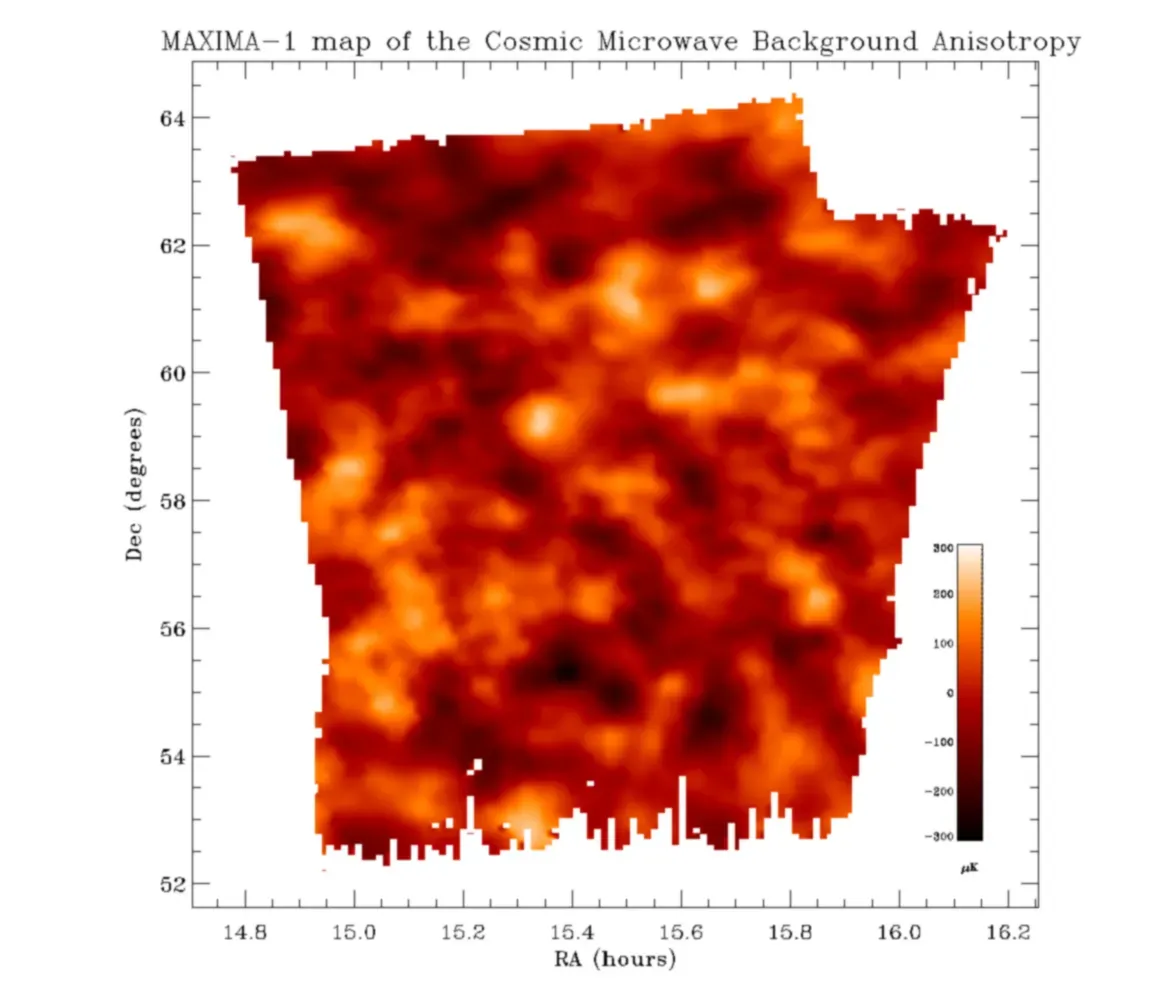
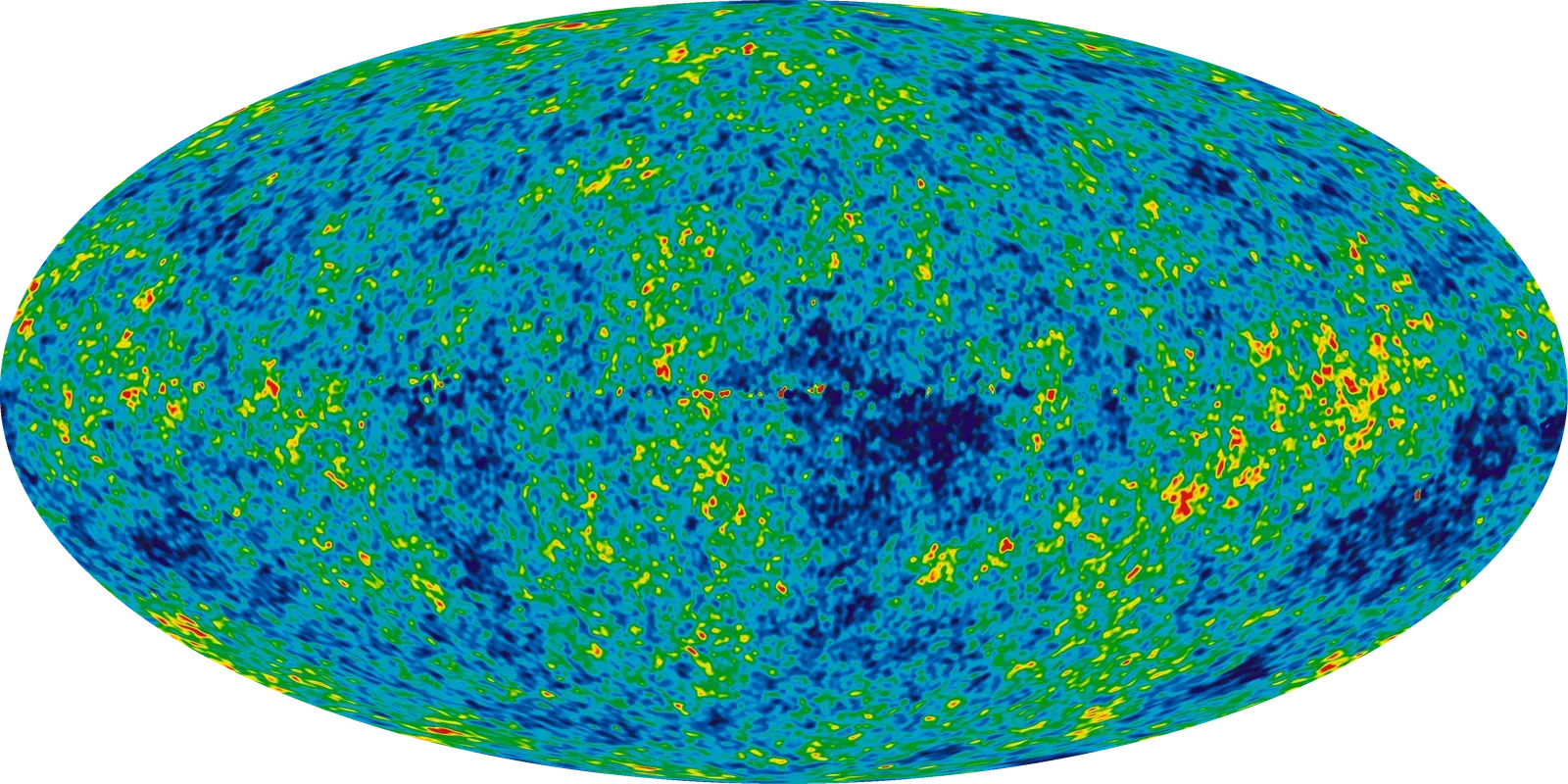
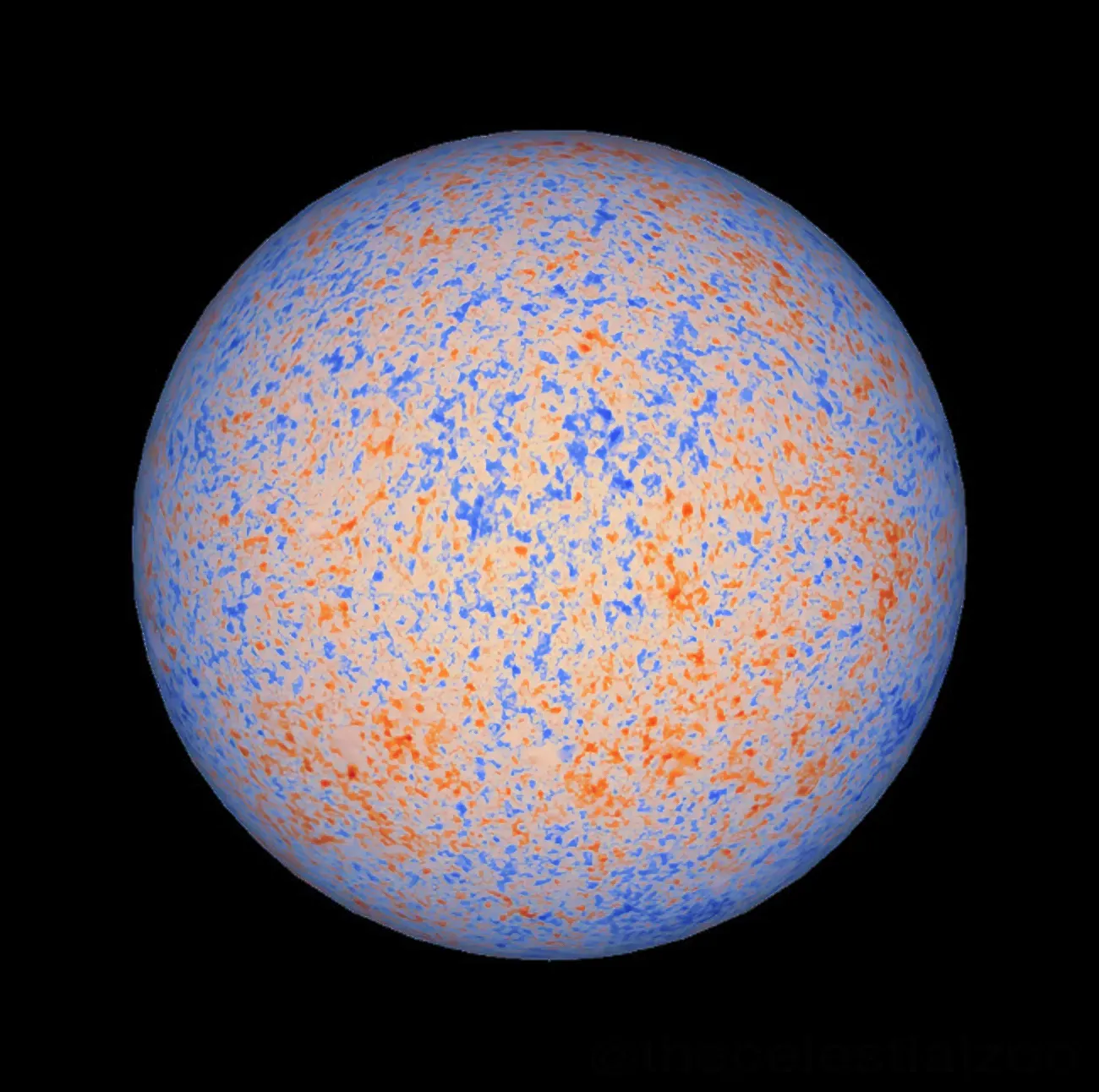
Space telescopes and satellites act like those imaginary goggles for you. Instruments on missions such as COBE, WMAP, and Planck have mapped this glow with extraordinary precision, turning tiny temperature variations into detailed sky maps. When you look at those colored maps, you are not seeing clouds or galaxies, but microscopic hot and cold spots in the radiation itself. Each tiny patch on the map shows you what the universe looked like when it was less than a million years old, long before any star, planet, or galaxy you know ever existed.
The Almost Perfect Uniformity – and the Crucial Tiny Fluctuations
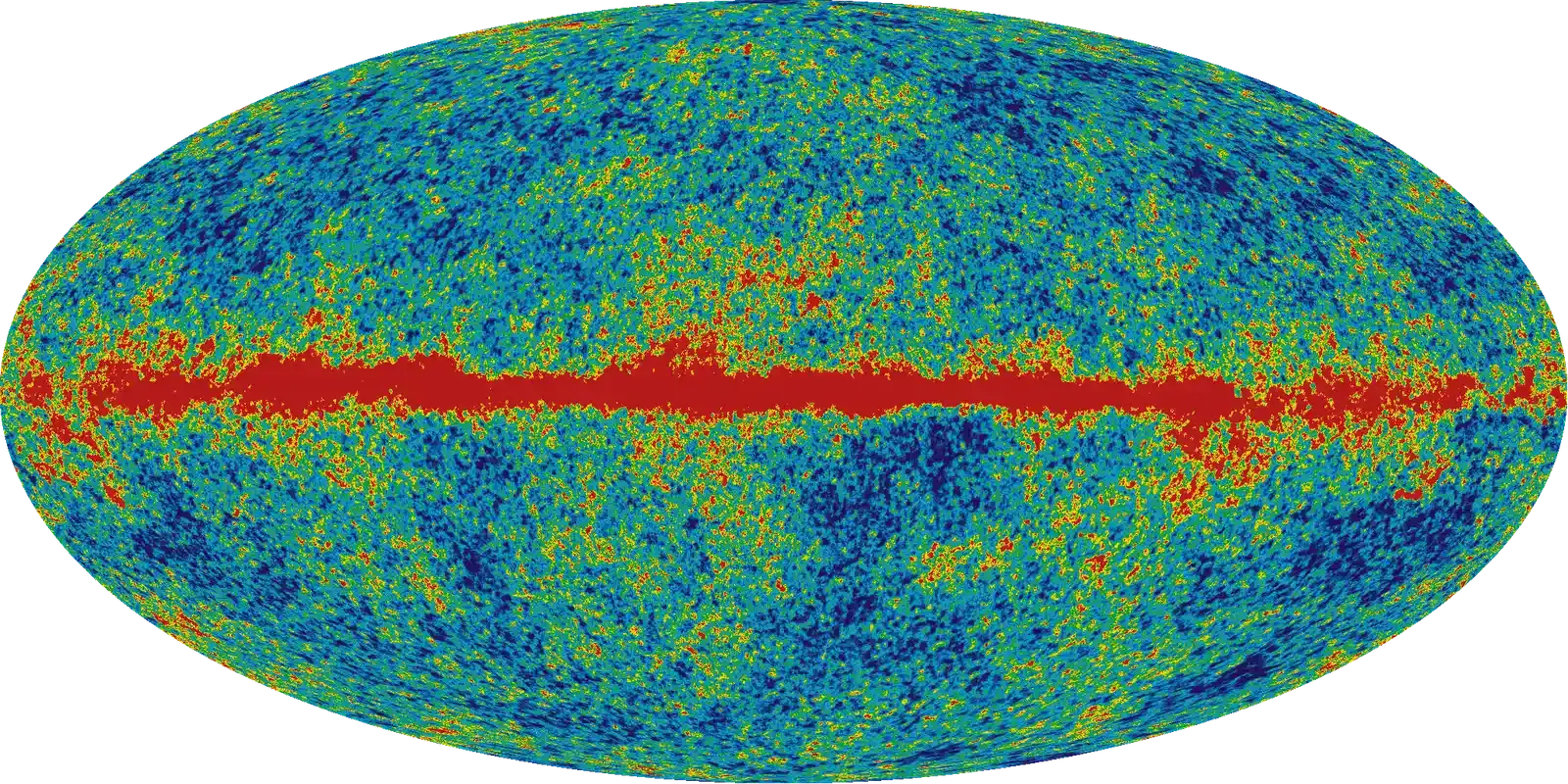
One of the strangest things you discover when you study the cosmic microwave background is how eerily uniform it is. No matter where you point a sensitive microwave detector, you measure nearly the same temperature, with only minute differences of a few parts in one hundred thousand. If you were expecting a chaotic early universe filled with wild variations, this calm sameness might surprise you. It tells you that on large scales, the young universe was astonishingly smooth and well mixed.
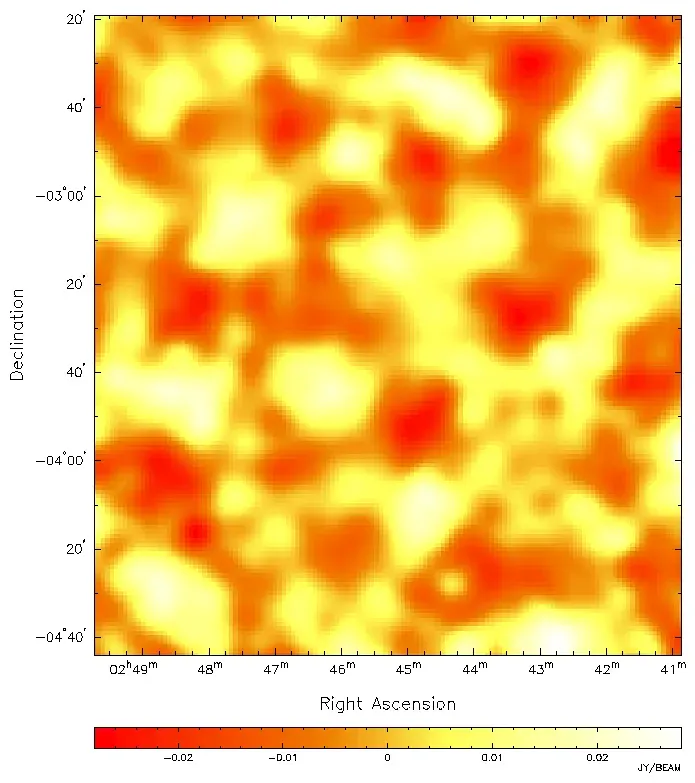
But those tiny deviations from perfect smoothness are the true treasure. When you zoom in on the data, you see faint splotches, slightly hotter or cooler patches scattered across the sky. Each of those patches corresponds to a region where the density of matter was just a little higher or lower than average. You can think of these as the universe’s first fingerprints: subtle seeds of structure that, over billions of years, grew under gravity into galaxies, clusters, and the cosmic web. Without those tiny wrinkles in the microwave background, you would not have stars, planets, or a place to stand and wonder about any of this.
What This Fossil Light Tells You About the Universe’s Ingredients
By carefully analyzing the pattern of hot and cold spots in the cosmic microwave background, you can actually weigh the universe. Not by putting it on a scale, of course, but by seeing how different types of matter and energy affect those patterns. Ordinary matter, the stuff that makes you, planets, and stars, leaves a particular signature in how large and small fluctuations are distributed. Dark matter, which does not interact with light, shapes the pattern differently by contributing extra gravity without adding light of its own.
When you fit the data, you discover a startling story: only a small fraction of the universe is made of ordinary matter, while a much larger portion is dark matter, and an even bigger piece is something called dark energy, which drives the accelerated expansion of the cosmos. The cosmic microwave background acts like a cosmic ledger, letting you read off these proportions from a snapshot taken when the universe was still a baby. In other words, by studying this ancient glow, you are learning not just how the universe began, but what it is mostly made of today, even when most of those components remain invisible in daily life.
The Cosmic Microwave Background as a Test of the Big Bang
If you ever wondered whether the Big Bang is just an attractive story or a theory backed by hard evidence, the cosmic microwave background is one of the strongest answers you can examine. Long before this radiation was discovered, physicists working with the Big Bang model predicted that the universe should be filled with a relic glow, cooled down but still present everywhere. When that background was accidentally detected in the nineteen sixties, it was like stumbling across the smoking embers of a long‑ago fire you had only modeled on paper.
Since then, increasingly precise measurements have confirmed not only that this background exists, but that its properties match what the Big Bang predicts with remarkable accuracy. The temperature, the spectrum, the pattern of fluctuations, all line up within tight margins. When you look at that evidence, you are seeing the universe itself acting as a laboratory, replaying its own childhood for you to analyze. The cosmic microwave background does not just support the Big Bang idea; it locks in many of its key details and makes alternative explanations work very hard to compete.
The Mystery of Cosmic Inflation Hidden in the Background
When you stare deeply into the data from the cosmic microwave background, you are not just looking at a quiet, static picture. You are peeking at hints of a dramatic, almost wild event that might have happened in the first fraction of a second after the Big Bang: cosmic inflation. This idea suggests that the universe expanded at an unbelievably rapid rate, stretching tiny quantum fluctuations to cosmic scales. If inflation happened, you would expect certain patterns in the microwave background, especially in how fluctuations appear on different angular scales across the sky.
So far, what you see in the data fits many of the broad predictions of inflation, such as the almost but not perfectly scale‑invariant distribution of fluctuations. Researchers are also hunting for a more specific signature: a particular pattern of polarization in the cosmic microwave background that would point directly to primordial gravitational waves. If you could find that, you would be holding a clue not only to inflation, but to physics at energies far beyond any experiment on Earth. When you follow this trail, the cosmic microwave background becomes less like a baby picture and more like a coded message from an era you can never otherwise touch.
How You Connect Personally to This Ancient Light
It is easy to treat all of this as something abstract, floating far above your day‑to‑day life, but you are physically tied to this background radiation in a very real way. The atoms in your body descended from stars and gas that formed because of those tiny fluctuations imprinted on the microwave sky. If those early density variations had been slightly different in strength or scale, your galaxy might never have formed, or it might have formed so differently that a planet like Earth would not have been possible. You are, in a quiet sense, a direct outcome of the unevenness of the cosmic microwave background.
There is also something humbling about knowing that the same ancient light passes through you, your neighbors, and every living creature, every moment, without stopping. No matter where you stand on Earth, what language you speak, or what you believe, you share this invisible bath of radiation with everyone else. When you look at a map of the cosmic microwave background, you are looking at a common origin story that unites you with every star, every galaxy, and every person who has ever lived. It is a reminder that, beneath all the noise of daily life, you are part of a single, unfolding cosmic history.
In the end, the cosmic microwave background is not just a technical detail in cosmology; it is your universe’s first clear memory, faint but enduring. By learning to read it, you give yourself a way to reach back across almost the entire age of the cosmos and see how everything you know began. The next time you hear about that cold glow at just under three degrees above absolute zero, you can recognize it as a quiet echo of your own beginnings as well. Knowing that, how could you ever look at the dark night sky the same way again?