
Every time we think we’ve pinned down how the universe works, reality pulls a plot twist worthy of a science-fiction epic. Telescopes peer deeper into space, quantum experiments probe smaller scales, and brain scanners map living thought – yet the biggest questions stay stubbornly out of reach. Cosmologists, particle physicists, and philosophers of mind are all circling the same mystery: what kind of universe produces matter, life, and consciousness, and why does it look the way it does? Instead of a neat, finished picture, we’re left with puzzle pieces that almost fit and gaps that feel both maddening and exhilarating. Here are ten of the most mind-bending questions that modern science still can’t answer – and why those open questions might be the most exciting thing about living in 2025.
1. Why Did Anything Exist In The First Place?
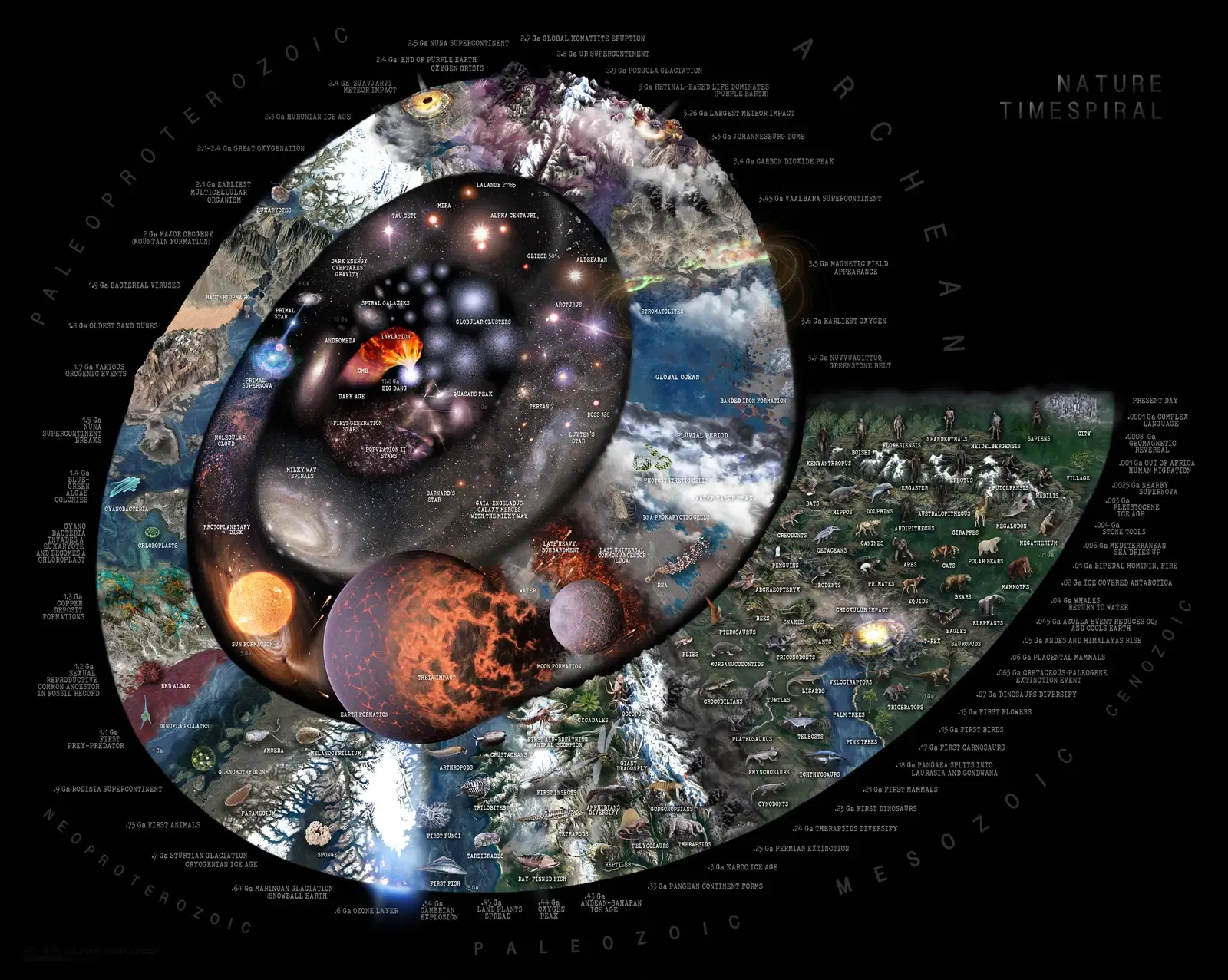
It’s hard to overstate how strange it is that there is something rather than nothing at all. According to the laws of physics as we know them, the Big Bang should have produced matter and antimatter in equal quantities, which would have annihilated each other in an instant, leaving behind only a sea of light. Instead, there was a tiny excess of matter – just a few particles per billion – that survived to form stars, planets, and eventually people asking awkward questions about existence. Physicists call this imbalance baryon asymmetry, and while experiments at particle colliders have revealed hints of processes that favor matter over antimatter, they fall far short of explaining the observed universe.
Some speculative ideas reach for answers in new physics beyond the Standard Model, such as undiscovered particles or exotic early-universe processes that tipped the scales. Others flirt with more philosophical territory, suggesting that “nothing” might not be a simple empty state but a special configuration of fields that is unstable. Still, none of these ideas has decisive evidence, and that leaves an unsettling gap just beneath our everyday lives: the fact that you can drink coffee, read this sentence, and think about your own existence is rooted in a cosmic imbalance that we do not yet understand. In some ways, every sunrise is a daily reminder that the universe broke its own apparent symmetry for reasons that remain mysterious.
2. What Happened Before The Big Bang – If “Before” Even Makes Sense?
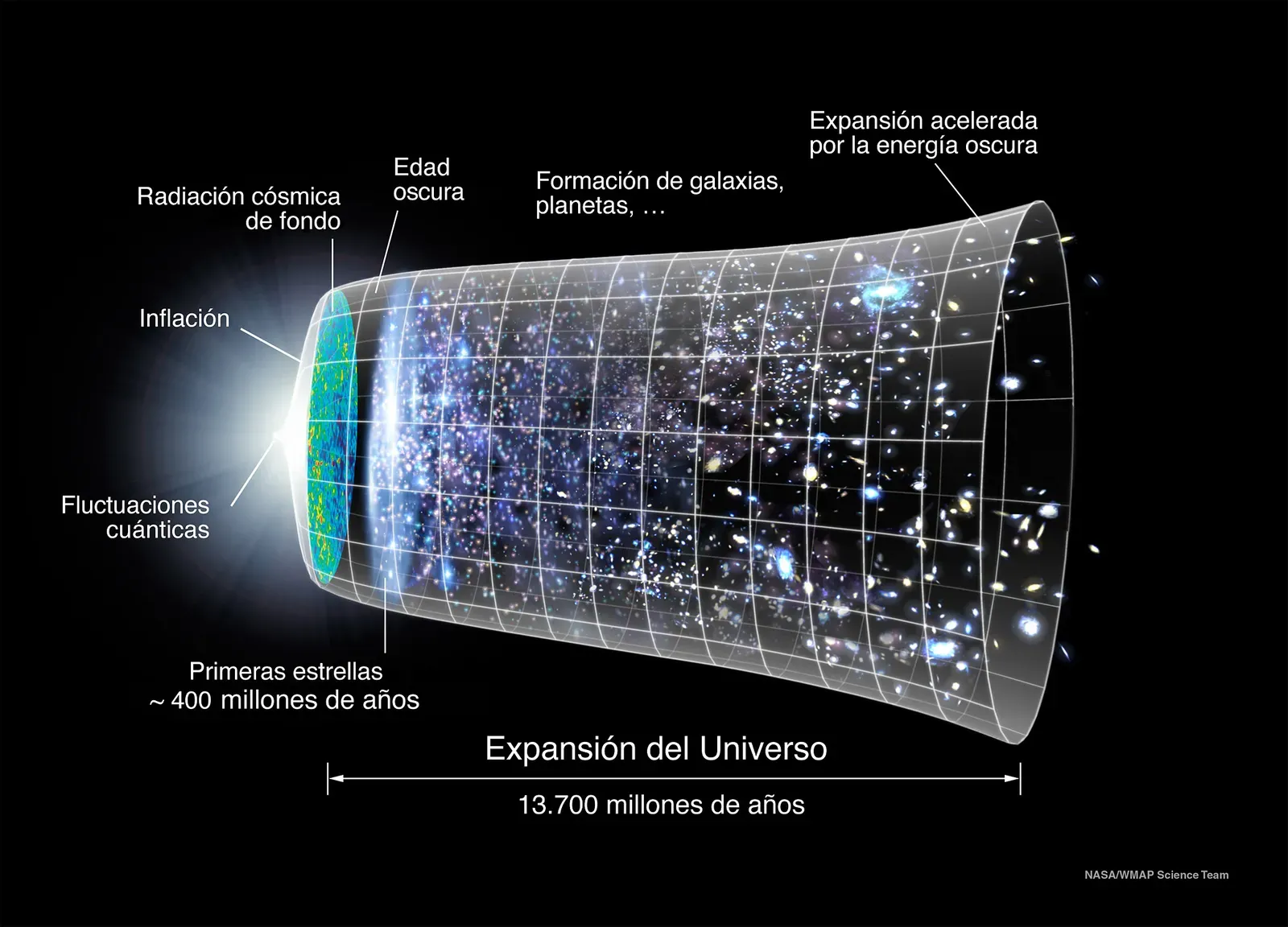
The Big Bang is often described as the beginning of time and space, but that’s more of a placeholder than a satisfying explanation. Our current models can rewind the cosmic clock back to a fraction of a second after the Big Bang, when the universe was an incredibly hot, dense soup of particles and radiation. Push farther, though, and our equations stop behaving; general relativity predicts a singularity, a point where densities and curvatures go to infinity and the theory itself breaks down. That “bang” starts to look more like a wall of ignorance than a clear physical event. Asking what happened before the Big Bang might be like asking what is north of the North Pole: a perfectly understandable question that the current map simply doesn’t support.
Still, cosmologists are not shy about drawing new maps. Some quantum gravity ideas imagine a bounce, where a prior universe contracted and then rebounded into our expanding one. Others invoke eternal inflation, in which our visible cosmos is just a bubble in a vast multiverse that has no single beginning. Then there are models where time itself emerges from more fundamental, timeless ingredients, which is as unsettling as it sounds. The unsettling part, at least to me, is how each of these possibilities would rewrite our sense of origin, yet all live at the very edge of what observations can test. For now, the pre-Big Bang story is an open chapter that we know must exist but can barely see the opening lines of.
3. Why Is The Universe So Uncannily Fine-Tuned For Life?
Shift a few cosmic dials – just slightly – and our universe might have been sterile and dark instead of sprinkled with galaxies and life. If the strength of gravity were a little different, stars might burn too quickly or never ignite at all. If the cosmological constant, which drives the accelerated expansion of space, were significantly larger, matter would have been ripped apart before galaxies could form; if it were much smaller or negative, the universe might have collapsed on itself. Even the masses of fundamental particles and the mix of forces seem to sit in ranges that allow heavy elements, stable atoms, and complex chemistry to develop. It is hard to ignore how eerily “just right” this cosmic recipe appears.
Physicists have tried to tame this discomfort with various frameworks. One is the anthropic principle: we observe a universe compatible with life simply because only such universes contain observers at all, so it’s no surprise we find ourselves in a tiny hospitable corner of a much larger possibility space. Another relies on the multiverse: if there are unimaginably many universes, each with different laws or constants, then it’s not shocking that at least one looks friendly to life. Yet these explanations, while clever, can feel more like philosophical bandages than testable science, and they stir strong reactions even among cosmologists. When you stare at the equations long enough, the line between physics and existential reflection starts to blur, and that makes this question both scientifically thorny and personally disorienting.
4. What Is Dark Matter Really Made Of?
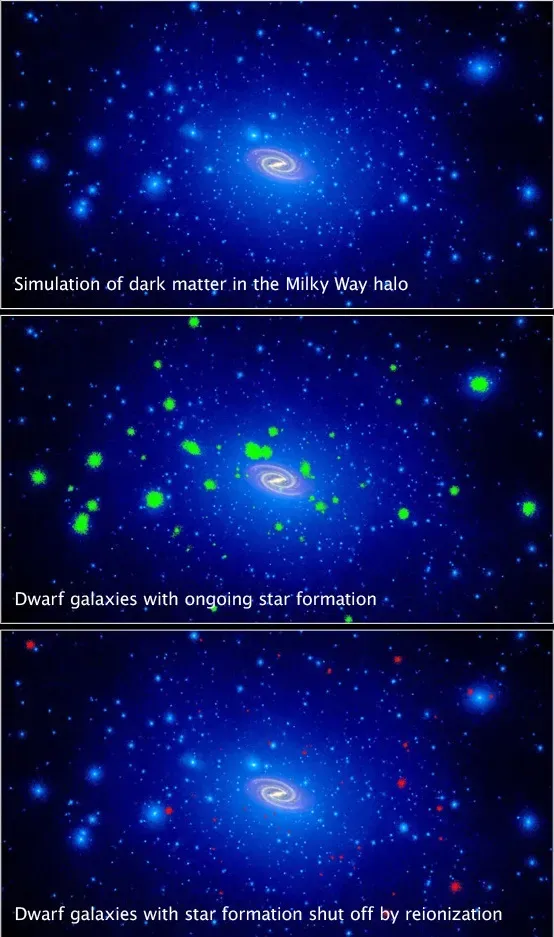
Roughly about five sixths of the matter in the universe is invisible, and that is not poetic license – astronomers really cannot see it. Galaxies spin too fast, galaxy clusters bend light too strongly, and the large-scale web of cosmic structure forms in a way that simply does not work with visible matter alone. The missing mass, dubbed dark matter, behaves like a gravitational ghost: it pulls on everything but does not emit, absorb, or reflect light. For decades, the leading candidates were weakly interacting massive particles, or WIMPs, that would occasionally bump into atomic nuclei in ultra-sensitive detectors buried deep underground.
Those detectors, however, have stayed stubbornly quiet. That silence has pushed researchers to explore lighter candidates such as axions, as well as more exotic ideas like dark sectors with their own forces and interactions. A few physicists even question whether we are dealing with unseen matter at all, proposing instead that gravity itself changes behavior on large scales. The open secret is that our universe-building models rely heavily on dark matter to match observations, yet we still do not know if we are chasing a new particle, a new force, or a new theory of gravity. It feels a bit like discovering a hidden city from its gravitational footprint but having no clue what its buildings are made of.
5. What Is Dark Energy Doing To Our Cosmic Fate?
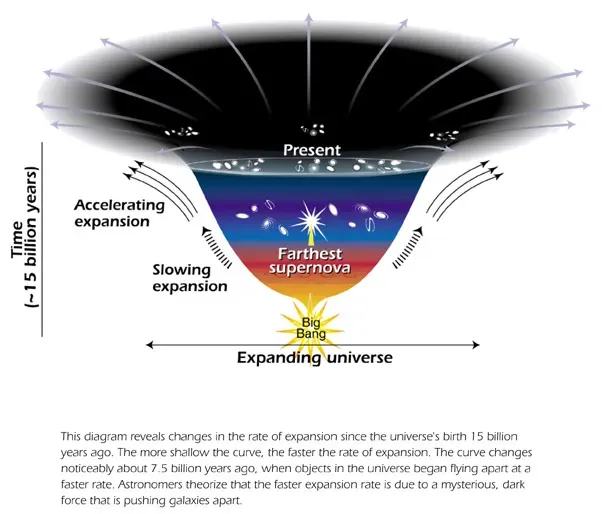
If dark matter was not enough, the cosmos also seems filled with an even stranger ingredient: dark energy. Observations of distant supernovae in the late nineteen nineties revealed that the expansion of the universe is not slowing down under gravity, as once expected, but speeding up. The simplest explanation is a built-in energy of empty space, often modeled as the cosmological constant in Einstein’s equations. That tiny energy density adds up over cosmic volumes and acts like a repulsive pressure, pushing galaxies apart faster and faster. Dark energy now appears to make up roughly about two thirds of the total energy budget of the universe.
The trouble is that when physicists try to calculate the vacuum energy from quantum field theory, they get a value wildly larger than what we actually infer – off by a factor that defies ordinary language. This “worst prediction in physics” hints that something is deeply missing in the way we connect quantum fields, gravity, and the structure of spacetime. Is dark energy truly constant, or is it evolving slowly over time, pointing toward some dynamic new field? The answer matters not just for abstract theory but for our future: depending on its properties, the universe could coast gently forever, tear itself apart in a distant “big rip,” or behave in ways we have not yet imagined. It is hard not to feel a mild chill when you realize that the ultimate destiny of everything we know hinges on a quantity we cannot yet explain.
6. How Does Consciousness Emerge From The Stuff Of The Universe?

Among all the questions we can ask about the universe, this one might be the most intimate: how does subjective experience arise from matter? Neuroscientists can trace electrical signals through the brain, map networks of neurons, and correlate patterns of activity with perceptions, thoughts, or decisions. Yet that still leaves the “hard problem” of consciousness wide open: why should certain complex patterns of information processing feel like something from the inside? You can describe the wavelength of red light and the firing rates in the visual cortex, but that does not capture the raw sensation of redness itself. This gap between physical description and lived experience has pushed some researchers to the edges of traditional science.
Some theories, such as integrated information theory, propose that consciousness is tied to the way information is structured and unified in a system, while others focus on global broadcasting of information across brain networks. A few more radical ideas suggest that consciousness might be a fundamental feature of reality, akin to space and time, and that brains simply organize or amplify it. At the same time, advances in brain-computer interfaces and neural decoding are making the once-fantastical idea of reading or even writing certain mental states more plausible, which raises new ethical and philosophical questions. I still remember standing in an fMRI lab years ago, watching colorful brain activation maps flicker on a screen, and thinking how absurd it was that these blobs of activity somehow contained entire worlds of feeling. Until we can connect those worlds to the fabric of physics in a satisfying way, our picture of the universe will remain incomplete.
7. Are We Living In A Multiverse Or A One-Of-A-Kind Cosmos?
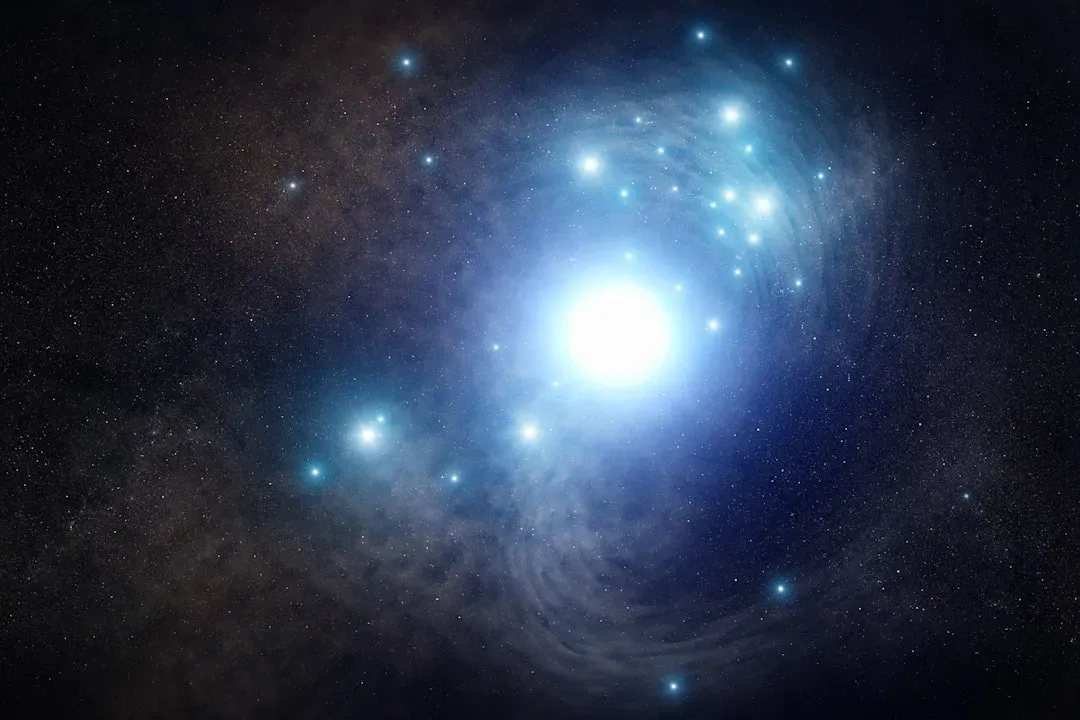
The multiverse used to sound like a fringe idea, but it has quietly crept into the mainstream of cosmological speculation. In some versions of inflation theory, the rapid early expansion of space never switches off everywhere, only in patches, giving rise to bubble universes with potentially different physical constants or particle content. Other multiverse scenarios emerge from string theory, which seems to allow an enormous number of possible vacuum states, each with its own effective laws. Suddenly, the oddities of our universe – its fine-tuned constants, its low early entropy, its particular mix of forces – could be just one draw from an almost endlessly varied cosmic lottery. That shift changes how we interpret coincidences in physics, but it also shifts the goalposts for what counts as an explanation.
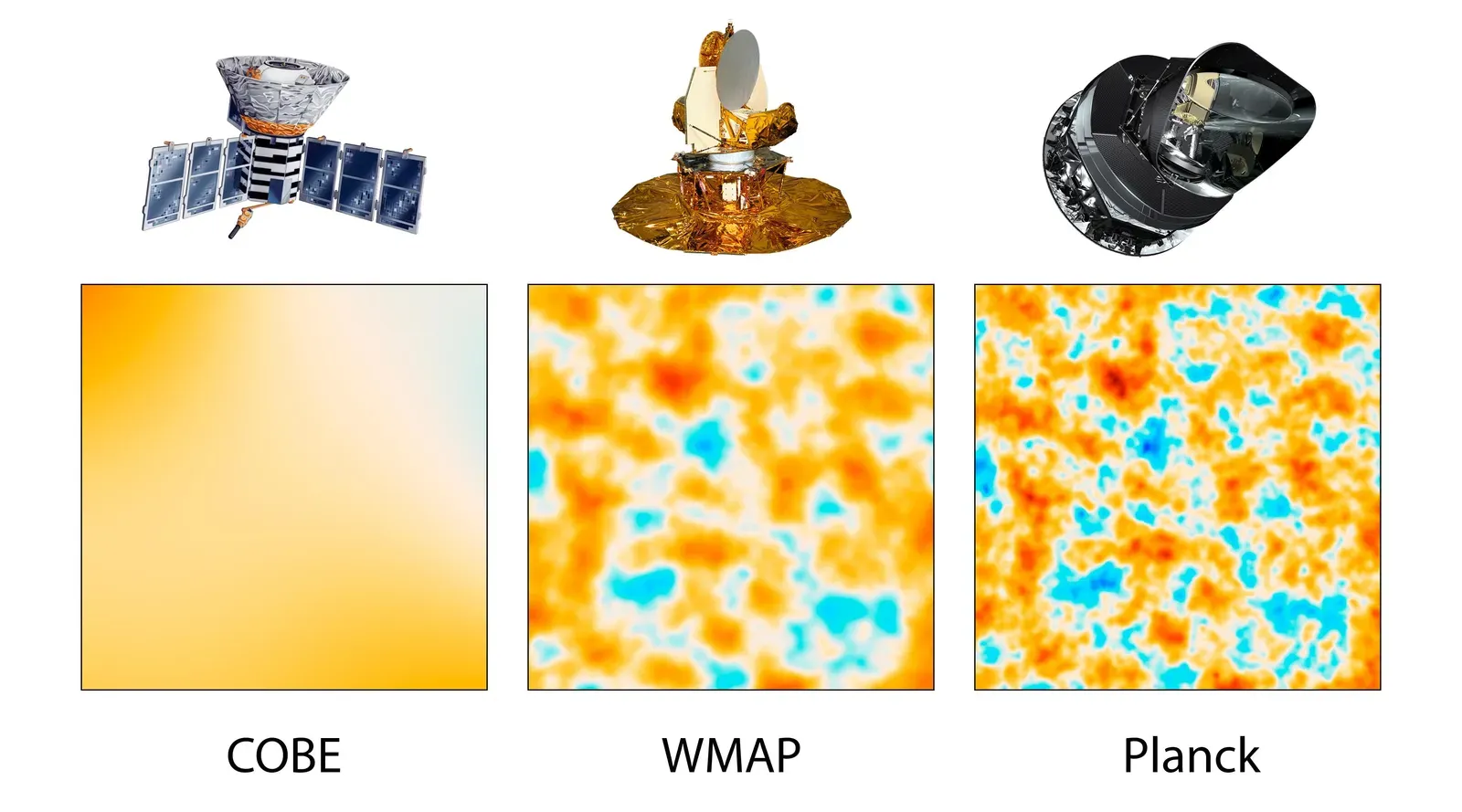
The harsh reality, though, is that many multiverse models sit far beyond our current ability to test directly. We might search for subtle signatures, such as collisions between bubble universes imprinted in the cosmic microwave background, but nothing conclusive has turned up so far. Critics argue that if a theory makes no observable predictions within any reachable horizon, it risks sliding out of science and into metaphysics. Supporters counter that the multiverse may be an unavoidable consequence of theories that are otherwise testable and useful. Wherever you land on that debate, the question lingers in the background: is our universe a rare, isolated island, or just one wave in an endless cosmic ocean?
8. Do Space And Time Have A Smallest Building Block?
Einstein taught us to think of space and time as a smooth, flexible fabric, warping around mass and energy. Quantum mechanics, however, insists that energy and fields come in discrete packets, and that combination makes many physicists suspect that spacetime itself might be quantized at unimaginably tiny scales. Candidates for a quantum theory of gravity – like loop quantum gravity or certain versions of string theory – often suggest there is a fundamental length scale, linked to the Planck length, beyond which the very notion of distance or duration breaks down. If that is true, what we experience as continuous space could be more like a digital image: fine-grained enough to feel smooth, but ultimately made of tiny pixels. It is a radical shift in perspective, and it collides with our intuitions about geometry and motion.
Testing this idea is a formidable challenge because the relevant scales are so far removed from direct experiment. Researchers are probing for indirect hints, such as tiny violations of Lorentz invariance or subtle noise in gravitational-wave detectors that might betray an underlying graininess. Some approaches propose that spacetime emerges from entanglement patterns in a deeper quantum system, making geometry a kind of large-scale illusion woven from information. I find that metaphor both exhilarating and disorienting: it suggests that the stage on which all cosmic drama unfolds may itself be a derivative construct, not a fundamental entity. Until we can unify general relativity and quantum mechanics convincingly, the true nature of space and time will remain one of the most profound open questions in physics.
9. Are We Alone In The Universe – And If Not, Where Is Everybody?

On paper, the odds seem to favor company. Our galaxy alone contains hundreds of billions of stars, and over the past decade, exoplanet surveys have revealed that planets are not rare quirks but common companions. A significant fraction of stars appear to host Earth-sized worlds in temperate zones where liquid water could exist. If even a tiny slice of those planets develop life, and an even smaller slice evolve intelligence and technology, you might expect the galaxy to be buzzing with signals, probes, or other telltale artifacts. Yet every careful search so far has come up empty, leaving us with the classic Fermi paradox: where is everybody?
The potential answers range from comforting to deeply unsettling. Maybe complex life is extraordinarily rare, bottlenecked by unlikely steps such as the transition from single-celled to multicellular organisms or the emergence of language and culture. Maybe technological civilizations tend to self-destruct on timescales that are short compared with cosmic history, burning out before they can spread. Or perhaps advanced beings deliberately stay quiet, practicing a kind of galactic non-interference that leaves us in a cosmic quarantine. The growing field of astrobiology is trying to ground these speculations in data, looking to Mars, icy moons, and distant exoplanets for even the faintest hint of microbes. Any confirmed sign of life beyond Earth – no matter how simple – would instantly reshape our understanding of our place in the universe.
10. Is The Universe Ultimately Knowable – Or Are There Built-In Limits?
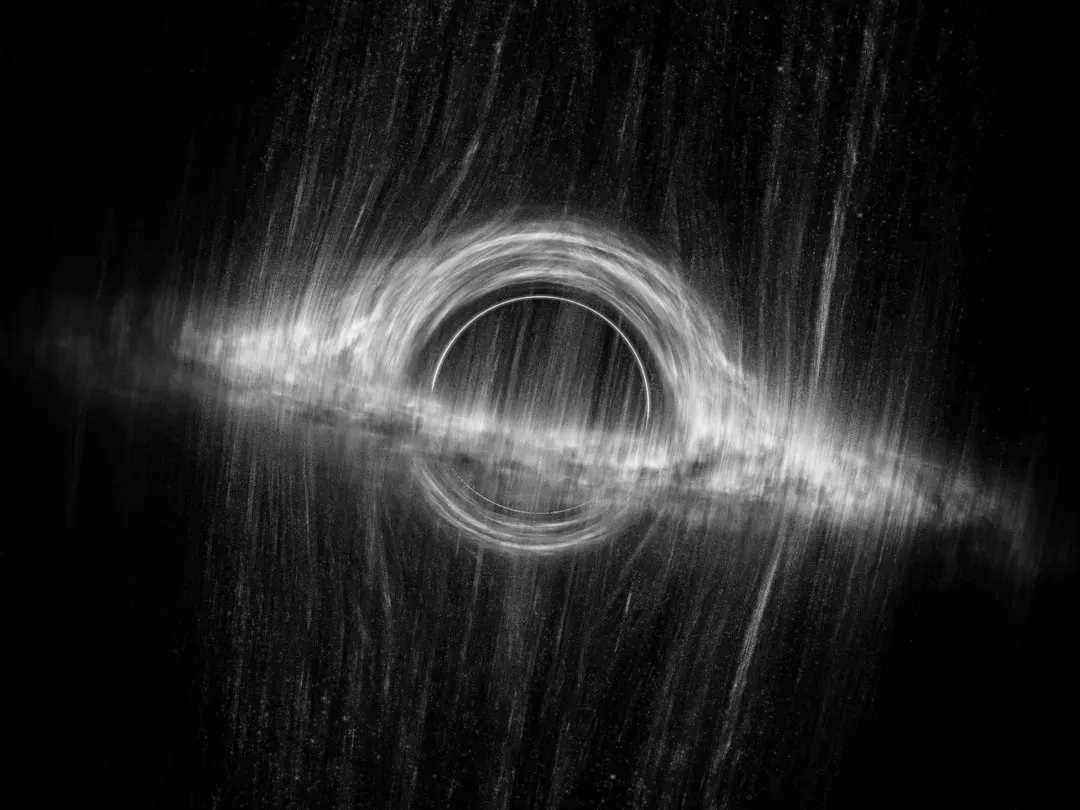
Lurking beneath all these mysteries is a meta-question: do we live in a universe that is, in principle, fully knowable, or are there hard limits baked into the structure of reality? Physics already comes with some built-in boundaries, such as the speed of light and the uncertainty principle, which tell us there are things we cannot measure with arbitrary precision. Cosmology adds its own horizon: regions of space receding from us faster than light that we will never observe directly, no matter how long we wait. If some crucial details of the universe’s origin or global structure lie beyond that horizon, then parts of the ultimate cosmic story might be permanently out of reach. For scientists who are used to thinking of ignorance as a temporary condition, that is a difficult possibility to swallow.
At the same time, history offers a humbling counterpoint. Ideas that once felt hopelessly speculative – atoms, curved spacetime, genes, even black holes – eventually yielded to new tools, fresh insights, and sometimes sheer stubborn curiosity. I remember being told as a student that measuring gravitational waves from merging black holes might remain science fiction for generations, only to watch those ripples become routine data less than two decades later. That does not guarantee every mystery will crack, but it does suggest that distinguishing between practical and absolute limits is itself an evolving project. Maybe the universe is like a book with a few missing pages, or maybe it is more like a library we have only just stepped into. Either way, the open questions are invitations to keep asking, probing, and wondering how far our small corner of consciousness can go.
Suhail Ahmed is a passionate digital professional and nature enthusiast with over 8 years of experience in content strategy, SEO, web development, and digital operations. Alongside his freelance journey, Suhail actively contributes to nature and wildlife platforms like Discover Wildlife, where he channels his curiosity for the planet into engaging, educational storytelling.
With a strong background in managing digital ecosystems — from ecommerce stores and WordPress websites to social media and automation — Suhail merges technical precision with creative insight. His content reflects a rare balance: SEO-friendly yet deeply human, data-informed yet emotionally resonant.
Driven by a love for discovery and storytelling, Suhail believes in using digital platforms to amplify causes that matter — especially those protecting Earth’s biodiversity and inspiring sustainable living. Whether he’s managing online projects or crafting wildlife content, his goal remains the same: to inform, inspire, and leave a positive digital footprint.