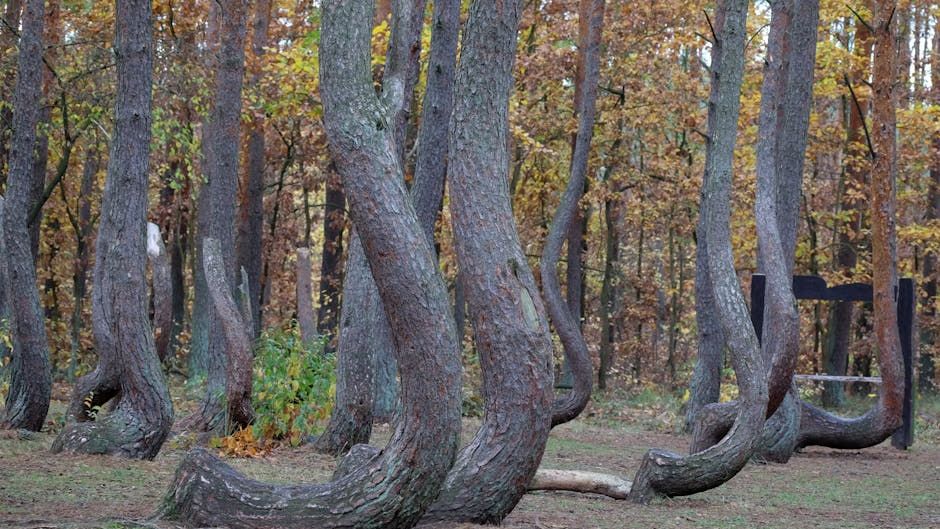
If you picture a forest in your mind, you probably see straight, proud trunks rising like columns in a quiet green cathedral. So it can be genuinely unsettling to walk into a grove where every single tree is bent, twisted, or leaning at the same angle, as if nature itself glitched. These so‑called crooked forests feel wrong in a way that’s hard to explain, yet they’re completely real, scattered around the world from Europe to Asia and the Americas.
Scientists, foresters, and locals have been arguing for decades over what shapes these strange stands of trees. Is it the soil, the wind, a quirk of gravity, human meddling, or something more mysterious? The honest answer is: we still do not fully know. That uncertainty makes crooked forests one of those rare natural puzzles that sit right on the edge between hard data and wild speculation, and that’s exactly why they’re so fascinating to explore.
The Unsettling Beauty of Crooked Forests
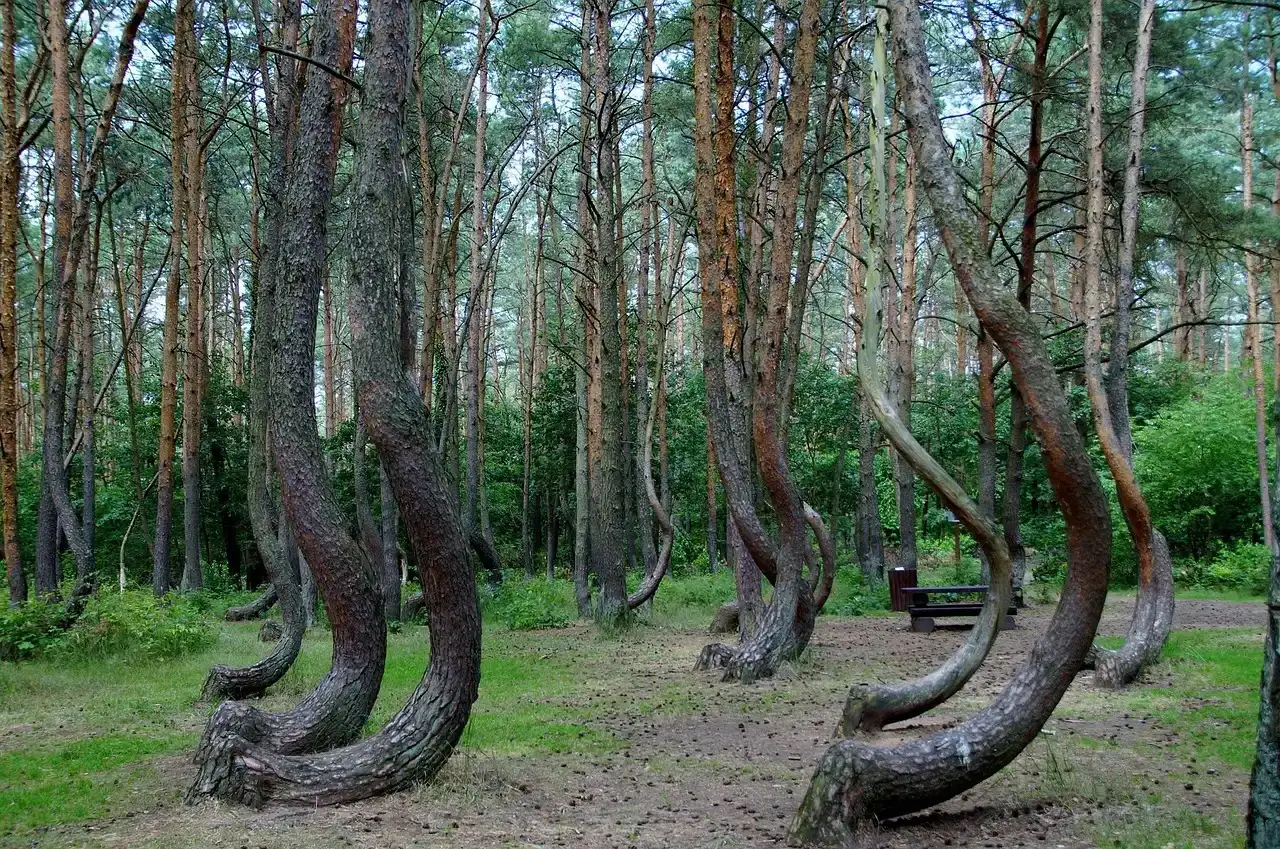
Walk into a crooked forest for the first time and your brain instantly throws up a red flag: this is not what trees are “supposed” to look like. Instead of rising vertically, trunks bend into arcs, hooks, elbows, and sweeping curves, sometimes all leaning in a single direction like a green wave frozen in time. There is often an eerie sense of choreography, as if the trees agreed on a pattern that no one told us about.
Part of what makes these places so gripping is how familiar and alien they feel at the same time. You still have birds, moss, pine needles underfoot, the smell of resin and damp soil. But the geometry is off; it feels like walking into a funhouse version of a forest. I remember the first time I saw photos of Poland’s famous Crooked Forest, with its neatly curved pines, and my first reaction was not scientific at all – it was a simple, gut‑level: that can’t be real, can it?
The Most Famous Example: Poland’s Crooked Forest
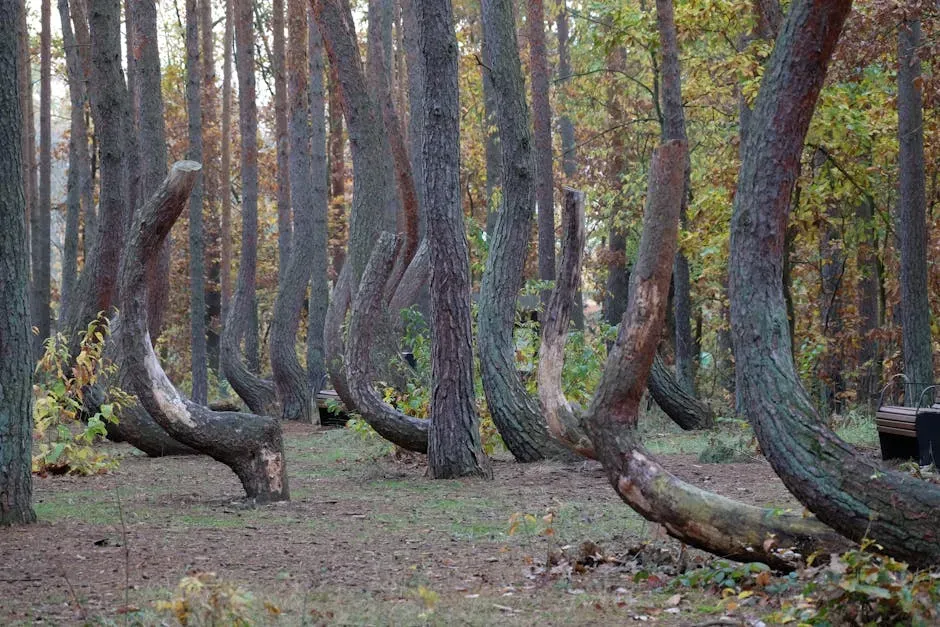
When people talk about mysteriously bent trees, they almost always end up at the same place: a small grove near Gryfino in western Poland, usually just called the Crooked Forest. There, a few hundred pine trees all curve sharply near the base, forming a smooth hook before they continue growing upward. The curves are so consistent that they look almost manufactured, like a factory line of living question marks planted in military rows.
Despite being photographed endlessly and featured in travel shows and science articles, the exact cause of these shapes is still not firmly settled. The trees were planted around the early 1930s, then bent sometime when they were young, and later continued to grow vertically as if nothing strange had happened below. Many foresters suspect deliberate human intervention for timber shaping, while others argue for snow load or mechanical damage. The frustrating reality is that we simply do not have definitive records from the time to close the case.
Natural Forces: Wind, Snow, Gravity, and Soil
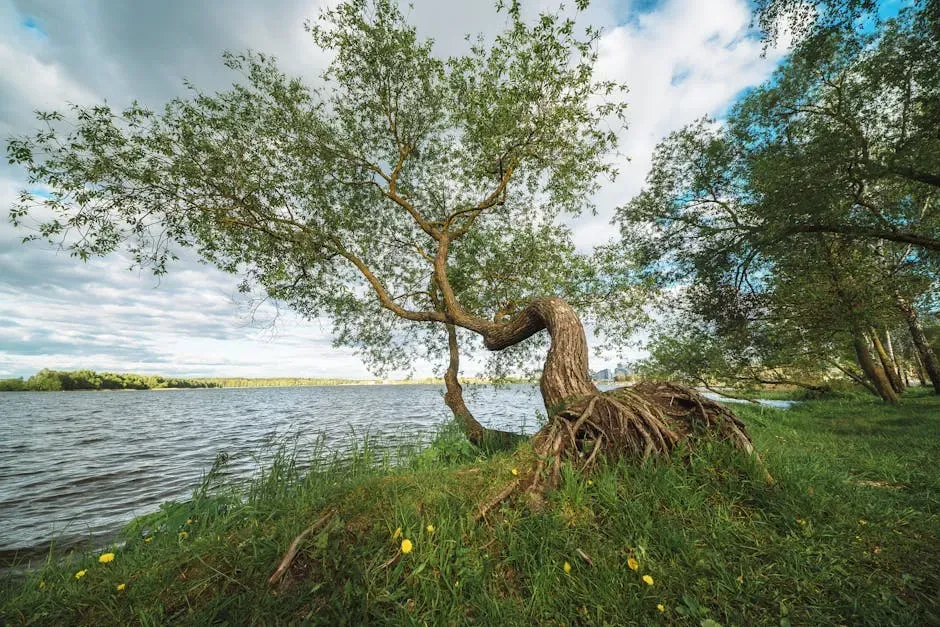
Before jumping to exotic theories, scientists usually start with the boring but powerful stuff: physics and weather. Strong prevailing winds can push young, flexible trunks in one direction so consistently that, over years, they end up permanently leaning or curved. Heavy, wet snow that piles up repeatedly on saplings can also deform them while the wood is still soft, leaving permanent kinks once they harden and grow thicker.
Then there’s the subtle influence of soil and gravity. Trees growing on unstable slopes, near landslides, or on shifting peat can keep tilting as the ground moves beneath them, forcing the trunk to constantly adjust its growth direction. The result can be S‑shaped or zigzag trunks that look bizarre but are simply the plant trying to chase vertical light while its foundation slides away. From a distance, that looks like a crooked pattern, but up close, it is really a series of desperate course corrections written in wood.
Genetics and Plant Physiology: Are Some Trees “Born Crooked”?
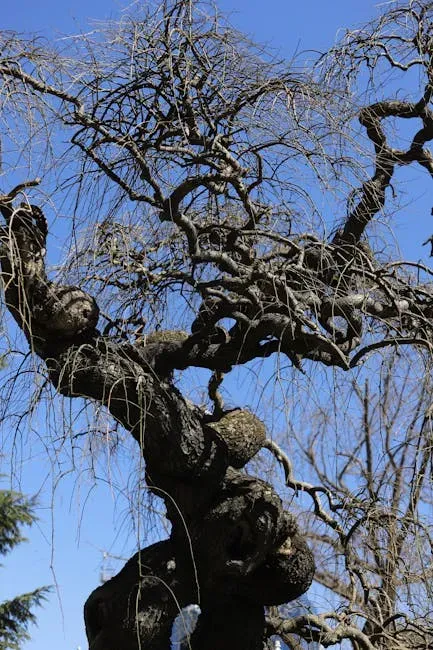
Another angle researchers explore is whether certain species or genetic lines are simply more prone to bending. Trees are not rigid poles; they are living structures with growth hormones that tell them which way is “up,” mainly through gravity and light sensing. If that internal signaling is slightly off, you can end up with trunks that spiral, lean, or curve more than usual, even without any dramatic outside force.
There are known genetic variants in some tree species that cause unusual forms, like naturally weeping branches or corkscrew patterns. While most crooked forests probably owe their shapes to environmental factors, scientists do not rule out that a small fraction could be amplified by heritable quirks. The trouble is that it is hard to go back in time and run controlled experiments on how those particular stands were planted, which leaves genetics as an intriguing, but still incomplete, piece of the puzzle.
Human Intervention: Timber Tricks and Historical Mysteries
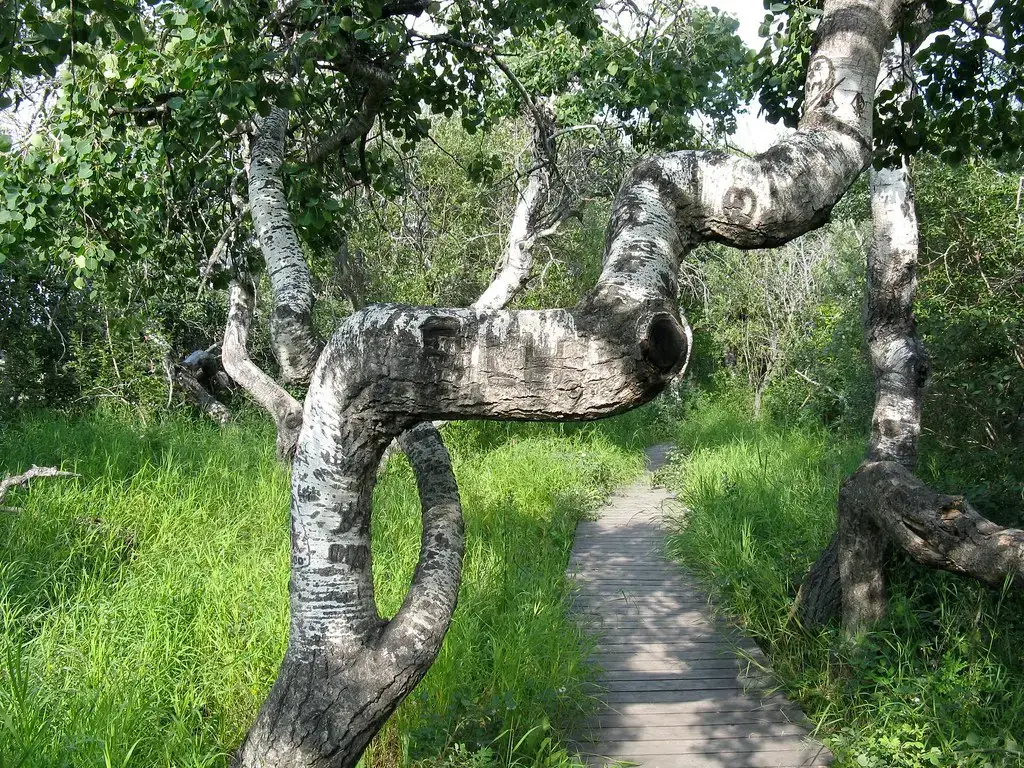
Probably the most grounded and unromantic explanation for many crooked forests is simple: people did it. Historically, foresters and craftsmen sometimes shaped young trees on purpose to produce naturally curved timber for boats, sleds, furniture, or specialized construction. A pre‑bent beam can be much stronger than a straight piece that gets artificially bent later, so training trees like living scaffolding actually made practical sense.
In the case of Poland’s Crooked Forest and a few similar stands, one very plausible idea is that local foresters bent saplings mechanically, perhaps using frames or weights, then left the project unfinished when war or economic shifts intervened. Over time, the story of why they started doing this got lost, while the trees quietly kept growing and turned into a modern mystery. This explanation is not as thrilling as magnetic anomalies or secret rituals, but in my view it fits uncomfortably well with how messy human history actually is.
Extreme Events: War Damage, Animal Browsing, and Accidents
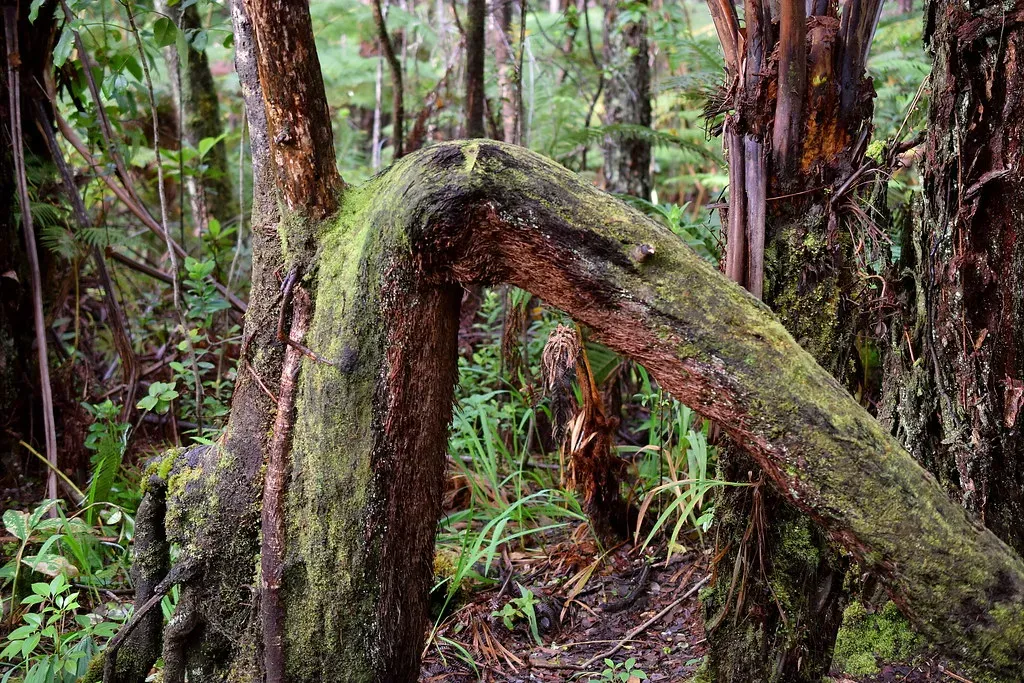
Some crooked patterns might not be the result of long‑term planning, but of one‑off trauma. In regions that experienced intense warfare, shells, tanks, or heavy machinery could have knocked over young trees without killing them. When a sapling is pushed or partially broken yet survives, it tends to curve back toward the light, leaving a scarred, bent base with a straighter upper trunk – exactly the shape seen in several mysterious groves.
Animals can also play a quiet, persistent role. Repeated browsing by deer, elk, or livestock can force a tree to resprout from odd angles, especially when it is small and vulnerable. A whole area with heavy grazing pressure might therefore end up with many trunks starting out sideways or kinked before they finally escape above nibbling height. From a distance, that can look like a coordinated crooked design when it is really just a record of countless small attacks over several growing seasons.
The Allure of Wild Theories: Magnetism, Anomalies, and Myths
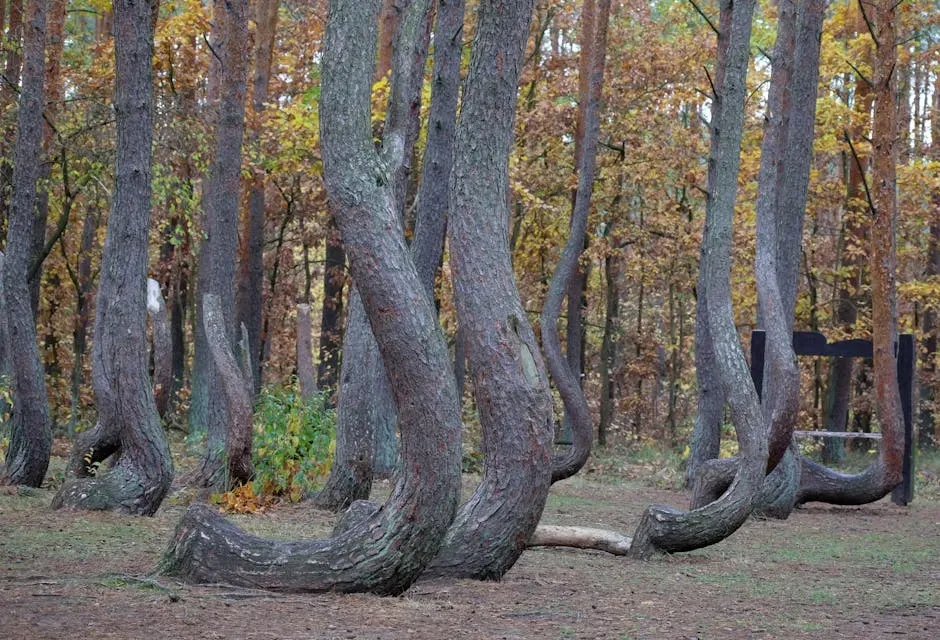
Of course, whenever nature throws out a pattern that feels too neat or too weird, humans rush in with more dramatic explanations. Crooked forests have sparked stories about strange magnetic fields, underground energy lines, or even secret experiments. While those ideas sound tempting and make for catchy headlines, they almost always fall apart under basic scrutiny: compasses work normally, nearby trees grow straight, and there is no solid physical mechanism offered beyond vague talk of “energies.”
At the same time, it is easy to understand why these theories spread. Crooked forests feel like nature’s crop circles, and places that bend our expectations practically invite folklore. Personally, I think we underestimate how satisfying uncertainty can be; a mystery that resists easy answers helps people project their own fears, hopes, or cultural stories onto the landscape. The risk is that the loudest myths drown out the careful, slower work of ecologists and historians who are trying to piece together more grounded explanations.
Why This Mystery Still Matters for Science and Imagination
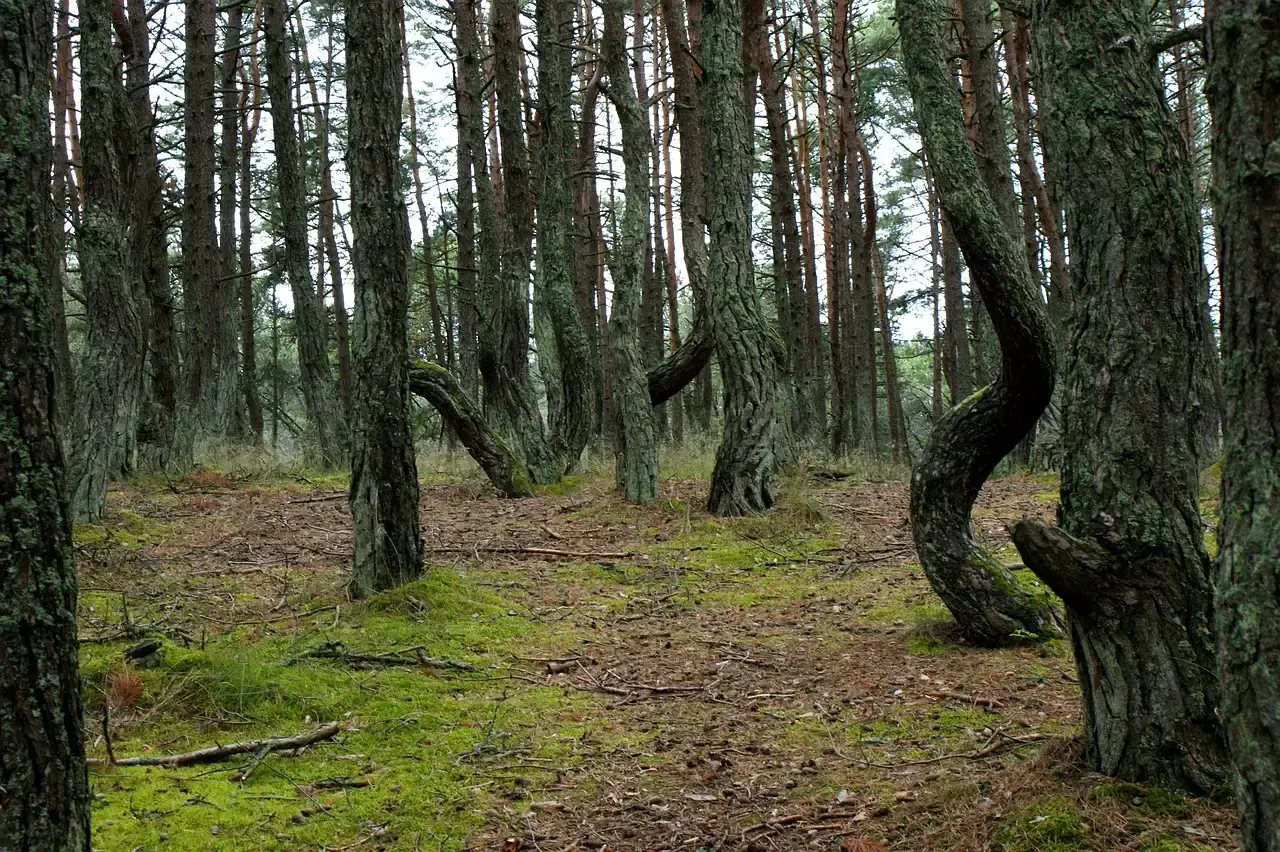
You might ask: if we can mostly explain crooked forests with weather, soil, timber shaping, and random accidents, does the mystery really matter? It does, because these places sit at a crossroads where ecology, history, and human imagination all collide. When researchers investigate a crooked stand, they are not just studying trees; they are also digging into land‑use history, local economies, climate patterns, and how stories evolve over generations.
On a more personal level, crooked forests remind us that not every puzzle in nature gets neatly resolved, even in an age of satellites and big data. There are still pockets of the world where our explanations are educated guesses rather than final verdicts, and that humility is healthy. To me, the most honest answer about many of these forests is a blend: mostly ordinary causes, partly human decisions, and a thin, stubborn layer of “we still don’t fully know.” That last layer is where curiosity lives.
Conclusion: Embracing the Crooked Truth
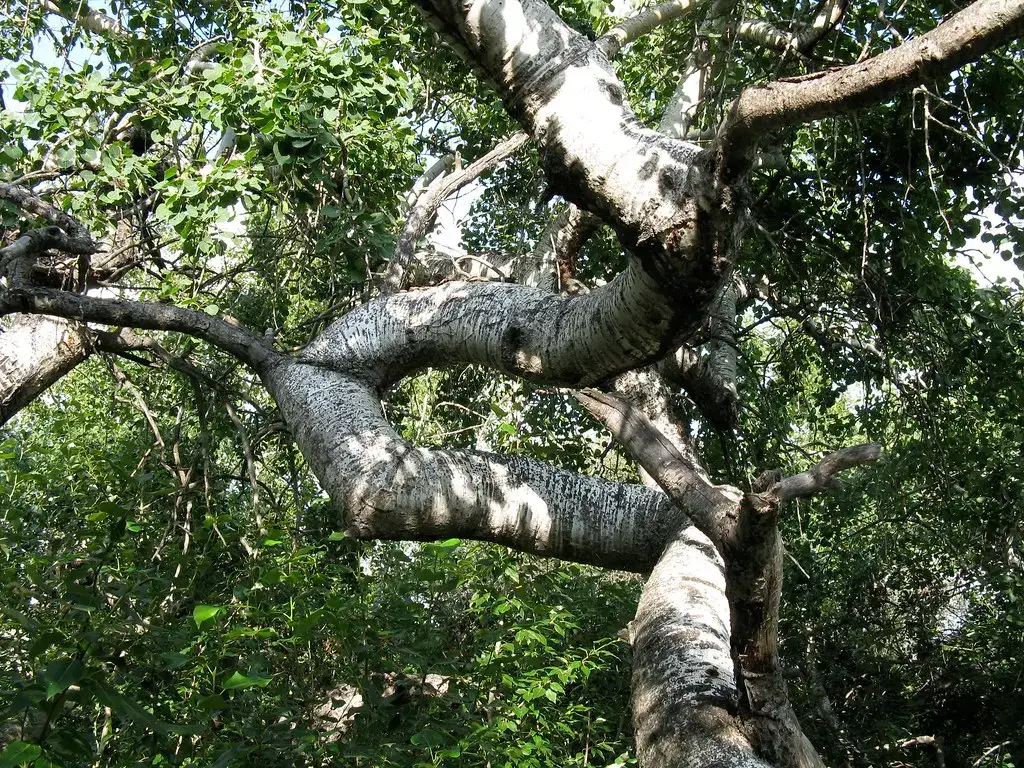
If you force me to take a stance, I land firmly on the side that says most crooked forests are not supernatural, but they are also not boring. The evidence leans toward a mix of deliberate shaping, harsh weather, shifting ground, and historical accidents, with genetics and animal activity adding some flavor around the edges. The fact that we cannot pin every single case down with courtroom‑level certainty does not mean we need to reach for exotic forces; it just means our records and memories are incomplete.
At the same time, I think it would be a mistake to strip these places of their mystery entirely. Part of their power comes from that moment when you first see all those trunks bending in concert and feel a small jolt of unease, as if the forest is hinting at a story you are not quite allowed to read. In a world obsessed with straight lines, efficiency, and quick answers, crooked forests are a quiet rebellion in wood form, reminding us that not everything needs to line up neatly to be meaningful. The next time you walk through a stand of trees, will you notice the ones that refuse to grow straight?