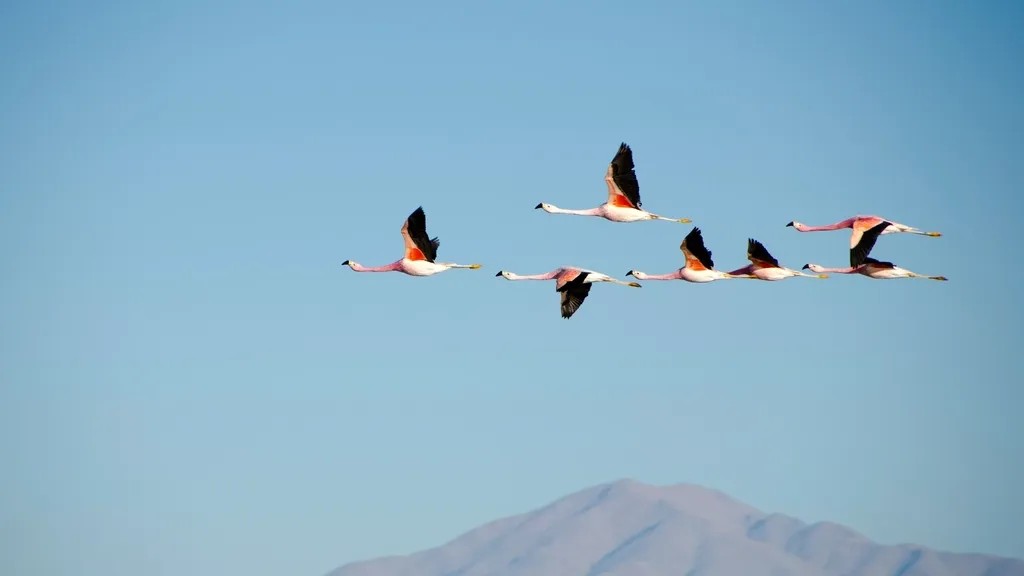
Imagine stepping outside on a foggy night with no phone, no GPS, no map, and somehow still knowing exactly which way to walk to reach a city hundreds of miles away. For most of us, that sounds impossible. Yet for many birds, this is just a normal Tuesday during migration season. They cross oceans, deserts, and continents with a level of precision that still makes engineers and neuroscientists raise their eyebrows.
What makes this even more jaw‑dropping is that birds do it with brains smaller than a walnut and zero software updates. Meanwhile, our most advanced navigation systems can be thrown off by a bad signal, solar storms, or a single mistyped digit. As we get better at building satellites and sensors, it’s becoming clearer, not less, that some of nature’s original “navigation hardware” quietly runs circles around our smartest devices.
The Stunning Precision Of Avian Navigation

One of the most surprising facts in animal behavior is just how far and how accurately some birds travel. Tiny songbirds that weigh less than a slice of bread can fly thousands of miles between breeding and wintering grounds, often returning to the same patch of forest or even the same backyard tree year after year. Seabirds like albatrosses can loop around entire ocean basins and still home in on a remote island no larger than a dot on a map.
When you look at this through a human lens, it’s almost unsettling. We celebrate when a navigation app can get us to a new café across town without a wrong turn, while birds are crossing hemispheres with no visible tools at all. Their “devices” are built into their bodies and brains, and they never run out of battery, need a software patch, or lose their signal in a tunnel. The more closely researchers study their migration paths, the more it feels like watching a perfectly calibrated, self-correcting guidance system that just happens to be covered in feathers.
The Mystery Of The Magnetic Compass In Their Bodies
One of the wildest pieces of this puzzle is that many birds seem to sense Earth’s magnetic field in a way we simply cannot. Evidence from experiments suggests they have an internal magnetic compass that helps them keep a general heading even when visual cues, like the sun or stars, are blocked. It is as if they carry a subtle, built‑in compass needle, constantly pointing them along their migration routes.
Scientists are still working out exactly how this works, but the leading ideas involve special light‑sensitive molecules in the eye or tiny particles of iron in some tissues that respond to magnetic fields. What’s fascinating is that this magnetic sense appears to be deeply integrated with their brains, not just acting as a crude direction finder, but feeding into complex decisions about route, timing, and course correction. Compared with our metal-and-silicon compasses that can be scrambled by interference or placed upside down by accident, the bird version feels almost annoyingly elegant.
Star Maps, Sun Clocks, And A Sky Full Of Clues

Birds do not rely on only one “tool.” They read the sky the way an experienced sailor reads the sea. Many species use the position of the sun during the day and the pattern of polarized light in the sky, even when the sun is behind clouds, to keep track of direction. At night, some birds navigate by the stars, learning the rotation of specific constellations in the sky as a kind of cosmic compass rose.
Think of it as stacking multiple navigation apps that all cross‑check one another. If the magnetically based sense is slightly off, the sun’s position can help; if the sky is cloudy, the internal compass and landscape cues take over. Human-made systems often depend on a single signal, like GPS satellites, which makes them powerful but also vulnerable. Birds, by contrast, seem to run a layered, redundant navigation network built from light, magnetism, and memory, and they fuse all of it without ever consciously “checking” a map.
Brain Wiring: Why Small Bird Brains Can Outperform Big Computers
It is tempting to assume that big brains always mean better performance, but navigation is one of those humbling counterexamples. Many birds have highly specialized brain regions devoted to spatial memory and orientation, especially those that migrate long distances or store food in many locations. These neural circuits allow them to create rich internal maps of both global directions and local landmarks, then compress and recall that information efficiently.
From a tech perspective, what birds are doing looks very much like advanced sensor fusion and pattern recognition – except it happens with organic neurons running at low power, not massive data centers. Their brains learn routes, adapt to shifting winds or landscapes, and still hit the same sites year after year. In a way, bird brains are like ultra‑optimized, task‑specific chips, while our navigation technology is more like a powerful but clunky general‑purpose computer that still needs very clear input to stay on course.
Redundancy And Resilience: What Birds Have That Our Systems Lack
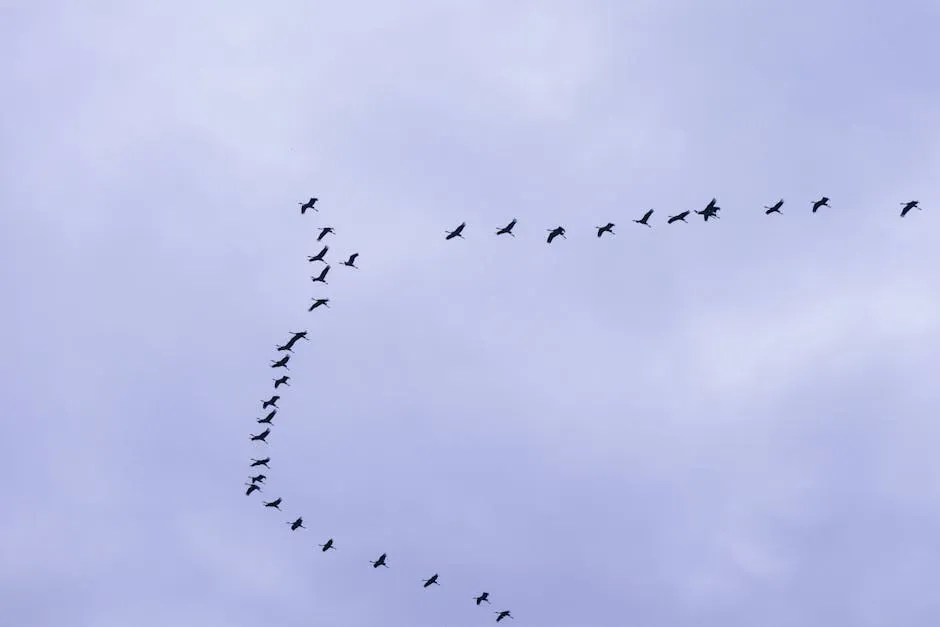
One reason birds often outperform us is not because they never make mistakes, but because their systems are naturally redundant and resilient. They do not rely on a single cue or sensor. Instead, they combine magnetic information, celestial cues, olfactory signals, wind patterns, and familiar landmarks. If one channel is blocked – say, a cloudy sky or a magnetic disturbance – others can partially compensate.
By comparison, human navigation technology can be surprisingly fragile. Turn off GPS, scramble a signal, or remove a satellite from the system, and even very advanced devices can become close to helpless. Birds, on the other hand, evolved under constant uncertainty: weather changes, landscapes shift, and environmental noise is the norm, not the exception. Their navigation had to be robust from the start, so what we see today is the end result of countless generations of natural “stress testing” that most of our technology simply has not endured yet.
Millennia Of Evolution Versus A Few Decades Of Engineering
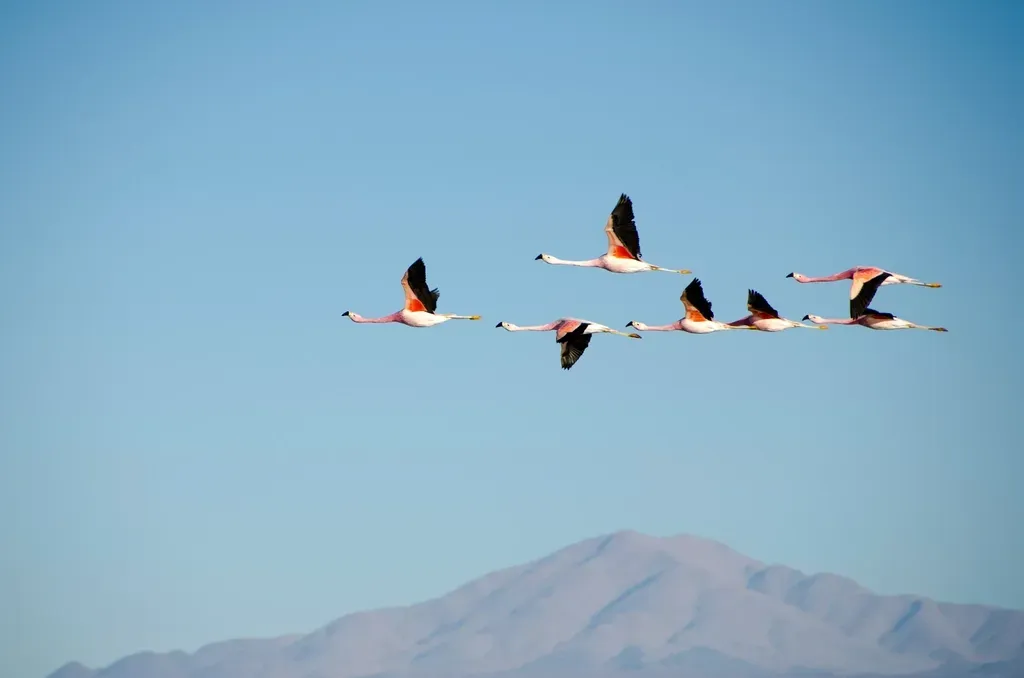
When we brag about modern navigation, it is easy to forget our tech is very young. GPS only became widely used in daily life in the last few decades, while long-distance bird migration has existed for far longer than humans even understood that Earth is round. Birds have had immense spans of evolutionary time to refine every piece of their navigation machinery, from their eyes and inner ears to their brain circuits and flight muscles.
I sometimes think about it like comparing a brand‑new sports car to an ancient, perfectly worn‑in hiking trail. The car is fast, flashy, and impressive, but it is also untested in many conditions. The trail, carved and recarved by countless footsteps, is subtle and efficient. Birds are walking that “trail” of evolution, carrying invisible navigation upgrades that no engineer designed, but that nature has selected again and again for performance. In that sense, it is not shocking that they sometimes outperform us – it would be shocking if they did not.
When Our Tech Fails And Birds Keep Going

There are plenty of situations where human navigation tech struggles: deep canyons, tunnels, urban “concrete forests,” or high solar activity that disrupts satellite signals. In those scenarios, devices can lose accuracy or fail outright. Yet birds routinely fly over mountain ranges, across cityscapes, and over open oceans with no visible panic or confusion. They adjust their flight paths, change altitude, or wait out tough conditions, and then continue on course.
In the real world, what matters is not just pinpoint accuracy in perfect conditions, but graceful failure and smart recovery when things go wrong. Birds shine here. They can recalibrate using backup cues, delay migration during storms, or detour around obstacles they have never seen before. When our tech fails, we stand still, literally and figuratively. When their “natural tech” is challenged, birds improvise. To me, that gap in adaptability is where they truly leave us behind.
What Birds Can Teach Us About Building Smarter Navigation
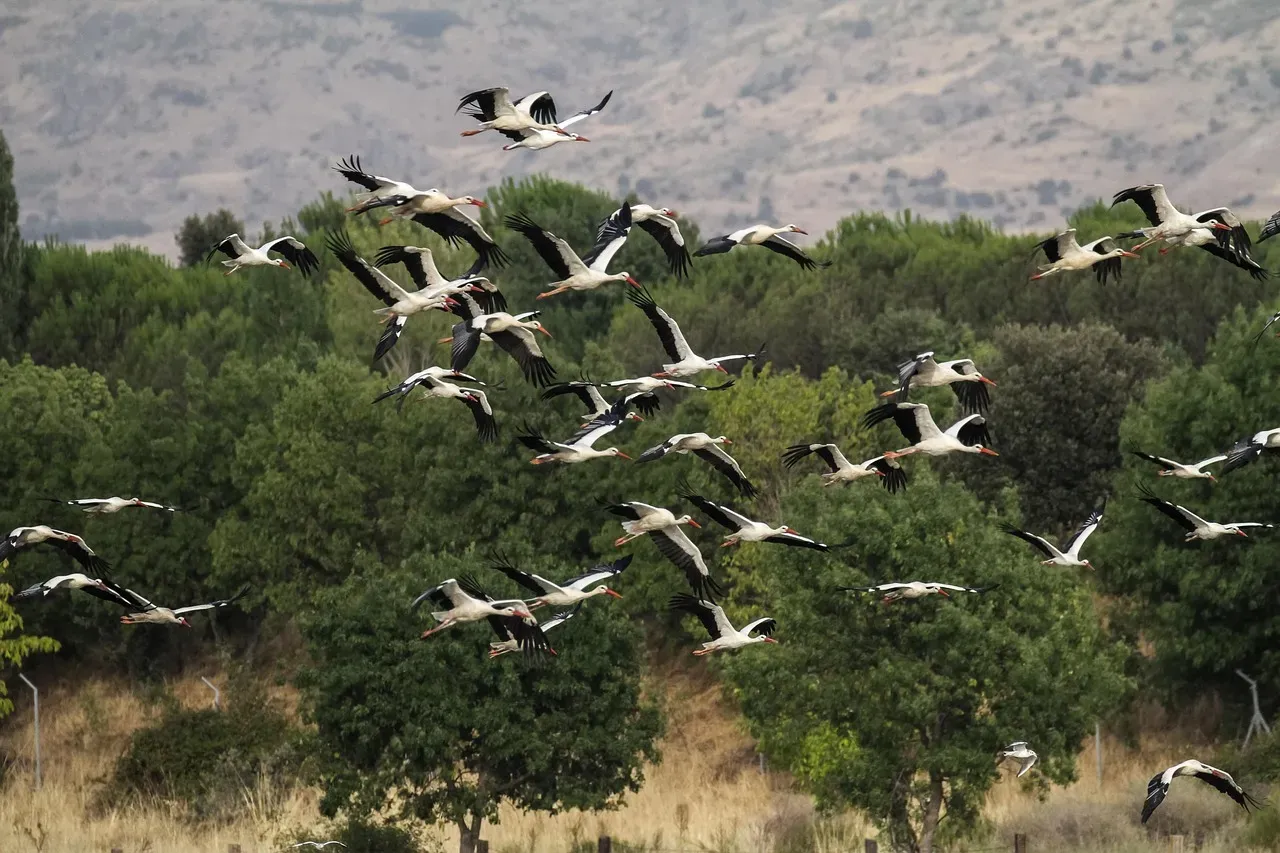
Engineers and neuroscientists have started to look more closely at birds not just out of curiosity, but for inspiration. The idea is that by studying how birds combine multiple imperfect signals into a reliable sense of direction, we might design navigation systems that rely less on a single point of failure. For example, a future drone might use a mix of magnetometers, star tracking, environmental sensing, and learned visual landmarks to stay oriented, much like a migrating bird does.
There is also a philosophical lesson here: our obsession with constant connectivity and high‑resolution mapping can make us forget the value of built‑in, local intelligence. Birds are not streaming data from a cloud server; they are making decisions on the fly, with limited but well‑integrated information. If we took that approach seriously, we might aim for navigation tools that are smaller, more energy‑efficient, and more autonomous – less like a dependent phone app, more like a self‑reliant traveler that can still find their way when the network goes dark.
Why Birds Still Beat Our Best Tools – And Why That’s A Good Thing

In my view, the fact that certain birds navigate better than our smartest technologies is not a failure of engineering; it is a reminder of just how deep and sophisticated nature really is. We like to tell ourselves that satellites and algorithms mean we have “mastered” navigation, but birds quietly prove there is another level, one built into living bodies and sharpened by countless journeys. When a tiny warbler, running only on fat reserves and instinct, crosses an entire ocean and lands within a few miles of where it needs to be, it is hard not to admit that we are still playing catch‑up.
At the same time, that gap is oddly comforting. It means there are still mysteries worth chasing, still reasons to be humbled and inspired by the wild world. Instead of feeling threatened by the fact that birds out‑navigate us, we can treat it as a challenge and an invitation: to build systems that are more resilient, more integrated, and more patient, and to protect the creatures who carry this ancient knowledge in their bones. The next time your GPS glitches and a bird streaks overhead on an invisible highway in the sky, it is worth asking yourself: who really has the better map?