

You have probably heard the line that in quantum physics “the observer changes reality,” usually delivered with a mystical wink. It gets thrown around in self-help books, spiritual TikToks, and late-night dorm debates as if wanting something hard enough can bend the universe. Somewhere in that game of telephone, the real story from physics got twisted into something it never actually said.
The true picture is stranger, sharper, and in some ways more unsettling than the pop-psych version. Physicists really do mean that observation changes what is being observed, but not in the vague, wishful sense of “your thoughts manifest your destiny.” They mean something brutally concrete: when you gain information about a quantum system, you disturb it in a quantifiable way. The universe literally behaves differently once you have forced it to answer a yes-or-no question. That sounds abstract now; by the end of this article, it will feel uncomfortably real.
Why Classical Intuition Fails the Moment You Go Quantum

In everyday life, we are used to the idea that looking at something does not change it. You can check the speedometer in your car without slowing the car down, or read the time on a wall clock without aging the clock. This is the classical mindset: objects have definite properties whether or not anyone is paying attention, and measurement just reveals what was already there. Our brains were tuned by evolution to operate in this regime, so it feels like common sense.
Quantum physics lives in a very different neighborhood. At atomic and subatomic scales, particles do not behave like tiny billiard balls waiting to be inspected. Instead, they exist in superpositions: mathematically, they are described by a spread-out wave of possibilities rather than a single, definite state. Asking a question such as “Where exactly are you?” is not like checking a box on a form; it is more like forcing a vague, blurry sketch to suddenly become a crisp ink drawing in one stroke, with the shape of the sketch and your choice of stroke affecting the final drawing.
Measurement As a Physical Interaction, Not a Magic Glance

Here is the first key correction to the pop culture myth: in physics, an “observer” is not a person with opinions; it is any physical system that interacts in a way that records information. A Geiger counter, a camera sensor, or a single atom in a trap can all be observers. You are optional. What matters is that the system being measured couples to something else and leaves a trace that could, in principle, be read out. That interaction moves energy and momentum around, and it cannot be undone like simply closing your eyes.
Think of trying to check the air pressure in a very small balloon by poking it with a needle. The very act of measuring will puncture it. On quantum scales, the instruments we use are effectively very sharp needles: to see an electron, we scatter light or other particles off it, and those collisions physically jostle the electron. This is not a philosophical statement; it shows up in precise calculations. The laws of quantum mechanics tell you exactly how much you must disturb a system to extract a given amount of information about it. The observer effect is literally built into the math of how interactions work.
The Double-Slit Experiment: Where Observation Kills Possibility
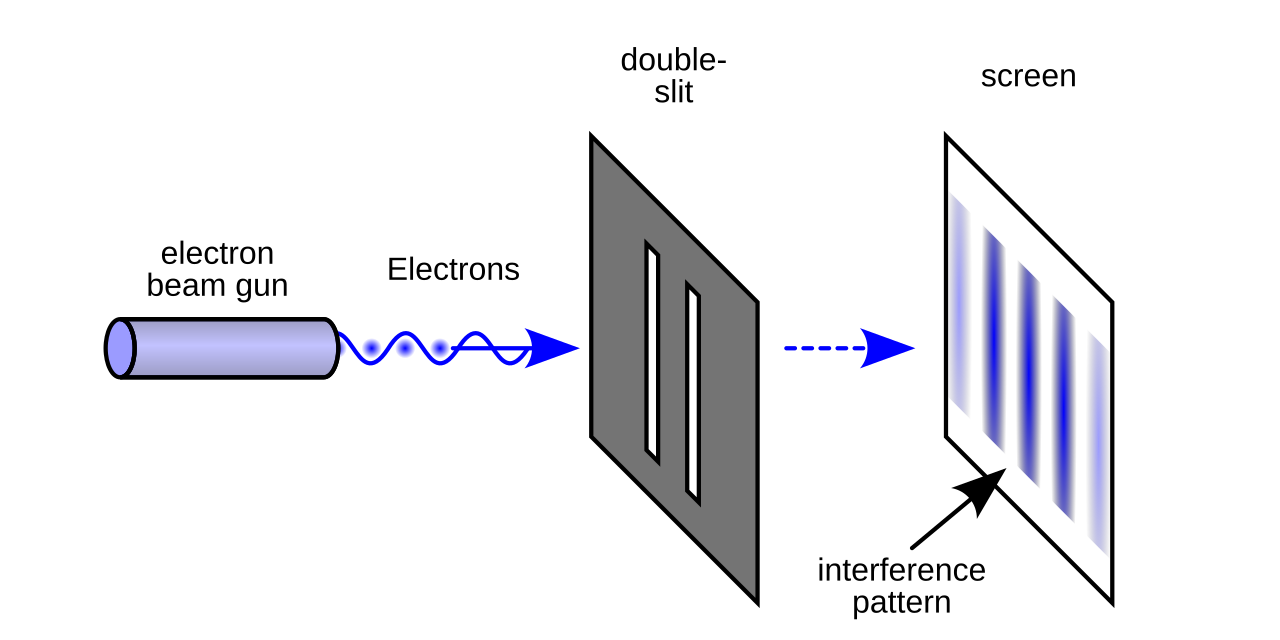
Nowhere is this more vivid than in the famous double-slit experiment. When you let particles like electrons or photons pass through two slits with no which-path detector watching, they land on the screen in an interference pattern, as if each particle went through both slits as a wave and interfered with itself. You are not just missing information about which slit it used; that question does not even have a definite answer in this setup. The particle behaves like possibility itself, spread out over both paths.
As soon as you install a detector to find out which slit each particle goes through, the pattern on the screen changes radically. The interference disappears and you get two clumps, as if the particle chose one route or the other like a little classical bead. The only thing you changed was whether the setup allowed which-path information to be recorded. You did not need a human staring at a monitor; the mere capability of the apparatus to store that path information is enough. In this strict and literal sense, the observer changed what was being observed: it turned a wave-like, both-paths reality into a particle-like, single-path reality.
Uncertainty: How Much You Know Dictates How Much Exists to Be Known
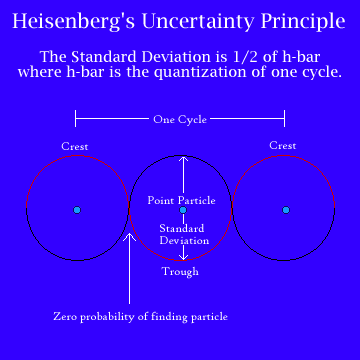
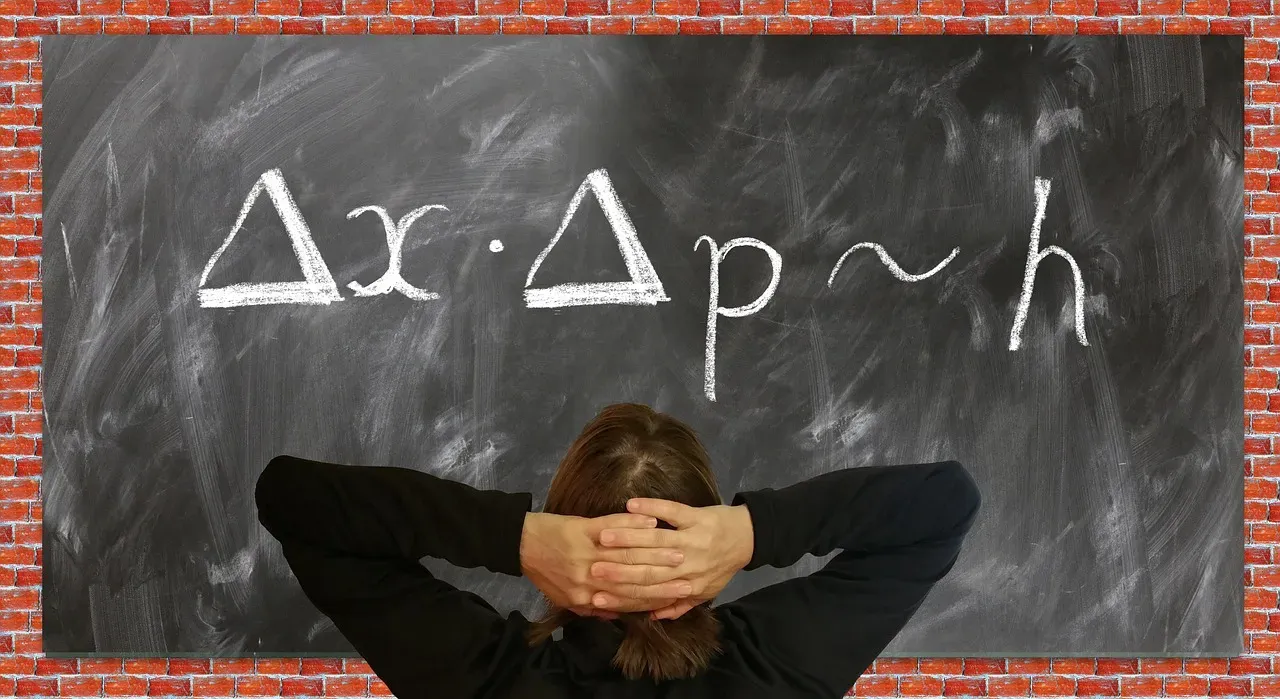
People often summarize Heisenberg’s uncertainty principle by saying that measuring position “disturbs” momentum, but that makes it sound like clumsy instrumentation is the problem. The deeper truth is harsher: the universe does not even allow a state with both perfectly sharp position and perfectly sharp momentum for a quantum particle. The more precisely one property is defined, the more spread out its complementary property must be. This is not a technological limitation; it is a structural rule of the theory.
When you perform a measurement to nail down one of these quantities, you are not merely uncovering a hidden value. You are actively forcing the system into a new, more definite state for that particular property, at the unavoidable cost of making its partner property fuzzier. It is a trade: information in exchange for disturbance. If that feels abstract, compare it to taking a high-zoom photo of a fast-moving object. The more you crank up the zoom to see its precise position, the more motion blur sneaks in, hiding the details of its speed. Except in quantum mechanics, that trade-off is not about camera quality; it is a hard, quantitative rule about reality itself.
Decoherence: When the Environment Becomes the Ultimate Observer

A big misconception is that measurement only “counts” when a conscious mind looks at a result. Modern quantum theory takes a different, far more down-to-earth angle through what is called decoherence. Any time a quantum system interacts with its environment in a way that leaks out information – through stray photons, vibrating atoms, or background fields – it becomes entangled with that environment. The system’s delicate superpositions get rapidly smeared out into classical-looking mixtures, long before any human shows up to peek.
You can picture this a bit like trying to keep a secret in a room full of microphones. As soon as your words scatter into hundreds of recordings, the possibility of pretending you never said them is gone in practice. In a similar vein, once a quantum state has splashed its information into the environment, the interference effects that signal pure superposition become essentially impossible to recover. In this view, “the observer” is often just the rest of the universe, constantly measuring and recording. The literal change to what is being observed comes from that vast, relentless web of microscopic interactions.
Interpretations: Does Observation Create Reality or Just Update Our Story?
Here is where the philosophical fireworks start. Different interpretations of quantum mechanics try to answer what is really going on underneath the measurement rules. In the Copenhagen-style view, the act of measurement causes a collapse: the wave of possibilities shrinks to a single outcome when a definite result is obtained. In other pictures, like many-worlds, the wave never collapses; instead, reality branches and the observer simply finds themselves in one branch where a particular outcome is realized. Both approaches agree on the statistics of experiments but differ on what they think the word “reality” should mean.
From a practical, laboratory point of view, the common thread is that once you arrange an interaction that counts as a measurement, you cannot then observe interference between the alternatives you just distinguished. Whether you call that collapse, branching, or something else, the operational fact is the same: by forcing the universe to answer a question in a specific basis – “this or that?” – you make certain alternative possibilities unavailable for future interference. In that operational sense, the observer does not just update a personal belief; they help fix which aspects of the quantum blur are allowed to matter going forward. Philosophically, you can take different sides, but physically, the disturbance is not negotiable.
Where People Go Too Far: Mind Power, Manifestation, and What Physics Actually Supports

This is where I get opinionated. The real quantum observer effect is already wild enough without pretending it says that your thoughts alone shape external events. The equations of quantum mechanics say that gaining information through physical interactions changes the state of a system. They do not say that wishful thinking, unconnected to any measurement apparatus, reaches into an atom and rearranges it. Conscious experience might eventually play some role in a fuller theory of reality, but using half-understood jargon about “energy” and “vibration” to justify magical thinking seriously misrepresents what we actually know.
That does not mean there is nothing personally profound here. Quantum mechanics really does demolish the comfortable idea that the world has a single, definite story written down in advance, independent of how we choose to interact with it. Our experimental choices matter in a literal, physical way: set up one type of measurement and you get one kind of reality; set up another and you get a different one. To me, the grown-up takeaway is not that you can manifest a parking spot with your mind; it is that our questions are not neutral. The way we choose to interrogate the world becomes part of the script the world is forced to follow. That is stranger, subtler, and ultimately more unsettling than any feel-good meme.
Conclusion: The Observer Effect Is Literal, But Not the Way You Were Sold

By now, the phrase “the observer changes what is being observed” should sound less like a mystical slogan and more like a hard-nosed summary of how quantum measurements actually work. The observer is any system that can record information, not a special human mind. The change is a concrete, calculable disturbance in the quantum state, not a vague cosmic response to your mood. And the drama plays out in real experiments: interference patterns vanish, uncertainties trade off, and superpositions dissolve into classical outcomes when and because information is extracted.
If anything, the literal truth here is more radical than the pop-science caricature. We are not passive spectators watching a prewritten film; every time we design an experiment, we are choosing which version of reality is allowed to show up on the screen and which possibilities are forever exiled to the what-if bin. I think that is both humbling and empowering in a very down-to-earth way. The universe will not bend to our wishes, but it will respond to the questions we dare to ask and the tools we dare to build. The real mystery is not whether your mind can magically reshape atoms, but how far our curiosity-driven interactions with the world can go in revealing – and reshaping – the structure of reality itself. Did you expect the literal story to be this strange?