
A Giant in Rapid Motion (Image Credits: Cdn.mos.cms.futurecdn.net)
High in the Chilean Andes, the Vera C. Rubin Observatory has revealed a colossal space rock that challenges previous understandings of asteroid dynamics.
A Giant in Rapid Motion
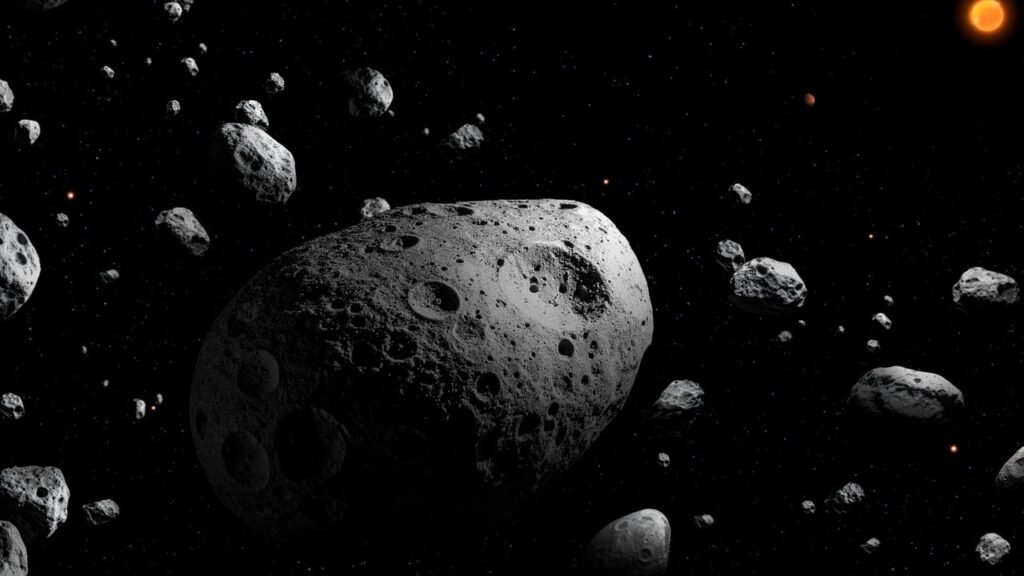
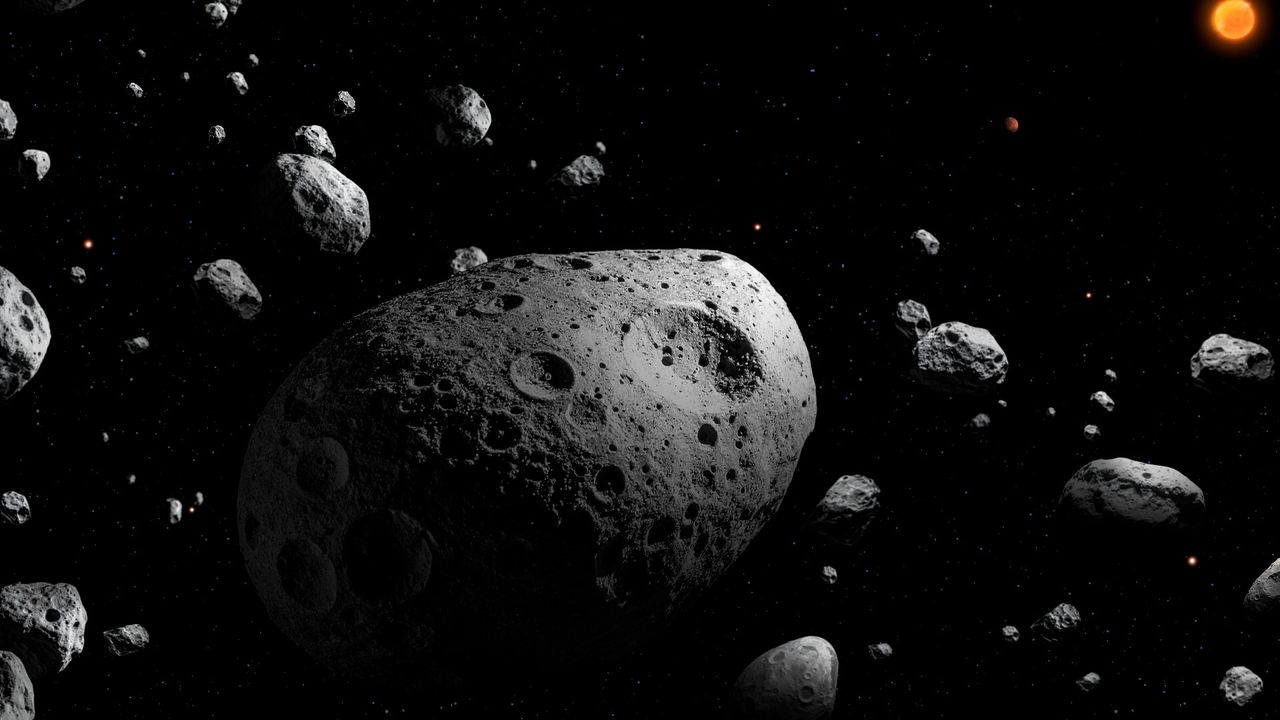
Researchers have identified an asteroid that rotates faster than any known object of its size, completing a full turn every 1.88 minutes. Designated 2025 MN45, this main-belt asteroid measures approximately 710 meters across, roughly the height of several skyscrapers stacked together. The discovery emerged from early observations conducted by the observatory, highlighting the instrument’s ability to detect subtle variations in brightness that indicate spin rates.
Astronomers analyzed light curves from the asteroid’s surface to confirm its extraordinary speed. Such rapid rotation raises questions about the body’s structural integrity, as centrifugal forces could theoretically tear it apart. Yet 2025 MN45 holds together, suggesting a cohesive composition possibly reinforced by internal friction or rubble-pile structure. This finding marks it as the quickest spinner among asteroids larger than 500 meters, surpassing prior records set by smaller objects.
Early Triumphs from a Cutting-Edge Telescope
The Vera C. Rubin Observatory, perched on Cerro Pachón, achieved first light in June 2025 and quickly demonstrated its prowess. In just seven nights of preliminary data collection, it spotted thousands of solar system objects, including 1,900 previously unseen asteroids. Among these, 19 qualified as super- or ultra-fast rotators, with periods under 2.2 hours – a category that includes the standout 2025 MN45.
Sarah Greenstreet, an assistant astronomer at NOIRLab and lead of the observatory’s solar system working group, presented the results at the American Astronomical Society’s winter meeting. “This is now the fastest-spinning asteroid that we know of, larger than 500 meters,” she noted. The observatory’s LSST Camera, the largest digital camera ever built, captured these details through repeated imaging of the night sky, enabling precise measurements that ground-based telescopes previously struggled to achieve.
Unveiling Secrets of Asteroid Composition
Fast-spinning asteroids like 2025 MN45 offer a window into the early solar system’s violent history. Their rotation likely stems from collisions or gravitational interactions that imparted angular momentum over billions of years. By studying these objects, scientists gain insights into material strengths and evolutionary processes that shaped the asteroid belt.
The discovery underscores the diversity within the main belt, where most asteroids reside between Mars and Jupiter. Unlike slower rotators, these speed demons may represent primordial remnants less altered by impacts. Observations also revealed the asteroid’s colors, hinting at surface materials such as silicates or carbonaceous compounds, though further spectral analysis will clarify these traits.
- Size: Approximately 710 meters in diameter.
- Rotation period: 1.88 minutes, the shortest for large asteroids.
- Location: Main asteroid belt.
- Discovery method: Light curve analysis from Rubin data.
- Significance: Provides data on asteroid cohesion and spin limits.
Charting the Path for Future Surveys
As the observatory prepares for its decade-long Legacy Survey of Space and Time, expectations run high for more such revelations. The survey will image the entire visible sky every few nights, accumulating data on millions of asteroids and potentially uncovering thousands of fast rotators. This systematic approach will map the solar system’s small bodies in unprecedented detail.
Greenstreet emphasized the observatory’s unique capabilities: “As this study demonstrates, even in early commissioning, Rubin is successfully allowing us to study a population of relatively small, very-rapidly-rotating main-belt asteroids that hadn’t been reachable before.” Future findings could inform planetary defense strategies and models of solar system formation.
Key Takeaways
- The Vera C. Rubin Observatory’s initial observations have already doubled the known count of super-fast rotating asteroids.
- 2025 MN45’s spin rate pushes the boundaries of what large bodies can withstand.
- Upcoming surveys promise to transform our knowledge of the asteroid belt’s hidden dynamics.
This breakthrough not only expands the catalog of known solar system objects but also reminds us of the untapped mysteries orbiting our cosmic neighborhood. What other rapid wonders might the Vera C. Rubin Observatory reveal next? Share your thoughts in the comments.