
Imagine waking up tomorrow to a push notification that calmly says: time is cancelled. Your calendar apps still work, your coffee still brews, your heart still beats – but physicists now insist that time, as a basic ingredient of reality, is not actually there. It sounds like the plot of a trippy sci‑fi movie, yet this is a serious possibility many researchers are wrestling with today.
For more than a century, physics has been steadily chipping away at the comforting idea that there is a single, universal clock ticking in the background. Now some are going further, arguing that time itself might be a kind of cosmic illusion or an emergent side effect of something deeper and more abstract. If that’s true, then what replaces it? And what does it even mean to say the universe exists without time, when our entire lives feel like they are built out of moments slipping away?
The Cracks in Our Everyday Idea of Time

The first shock to our everyday sense of time came with relativity. In Einstein’s picture, there is no single master clock that all observers agree on; how fast time passes depends on how fast you move and how close you are to massive objects. Two twins can age differently if one spends years traveling near the speed of light while the other stays on Earth. This is not just storytelling; it has been confirmed by particle experiments and the tiny but measurable differences in atomic clocks flown on airplanes or orbiting in GPS satellites.
Once you accept relativity, your intuitive idea that there is a universal “now” shared by the whole cosmos starts to crumble. What counts as “simultaneous” for one observer may not be simultaneous for another moving at a different speed or sitting in a different gravitational field. Instead of a flowing present, physics talks about a four‑dimensional spacetime “block” where past, present, and future are all part of the same static geometric structure. That picture already hints that our felt experience of a moving present could be something the brain is constructing, not a fundamental feature written into the fabric of the universe.
The Problem of Time in Quantum Gravity
Things get even stranger when you try to combine quantum mechanics with general relativity, the big open challenge known as quantum gravity. General relativity treats time as flexible and dynamical – it bends and stretches with matter and energy. Quantum mechanics, on the other hand, usually treats time as a fixed external parameter, a kind of background stage that never changes. When you attempt to merge these two frameworks into a single theory, that mismatch turns into a crisis often called “the problem of time.”
In some approaches to quantum gravity, the equations that are supposed to describe the entire universe end up having no time variable at all. The most famous example is a central equation used in canonical quantum gravity that looks eerily like a standard quantum equation but with the time derivative removed. Instead of something evolving in time, you get a static object that encodes all possible configurations at once. If you take that equation literally, the universe is not evolving in some external time; time, as we experience it, has to show up in a different, more subtle way.
Timeless Foundations: The Universe as Relations, Not Events in Time
One radical line of thought says that the universe at its most basic level is not made of things happening one after another, but of static relations between physical quantities. Instead of imagining a cosmic movie playing frame by frame, picture an enormous, tangled web of connections: who is entangled with whom, which field strengths go with which particle properties, what patterns of correlation exist between different parts of the world. In this picture, nothing “moves” because there is no background time for it to move through; there is simply an atemporal structure of relations.
Our sense of time could then arise because certain sequences of relational patterns can be ordered in a way that looks like a story with a before and after. You can think of it like shuffling photos in a giant, timeless gallery: there is no built‑in timeline, but some arrangements of the photos make obvious narrative sense. In a relational or timeless approach to physics, the universe “just is” as a vast block of interrelations, and what we call the passage of time is a way conscious systems navigate through, compress, and interpret that relational information.
Emergent Time from Entanglement and Quantum Information
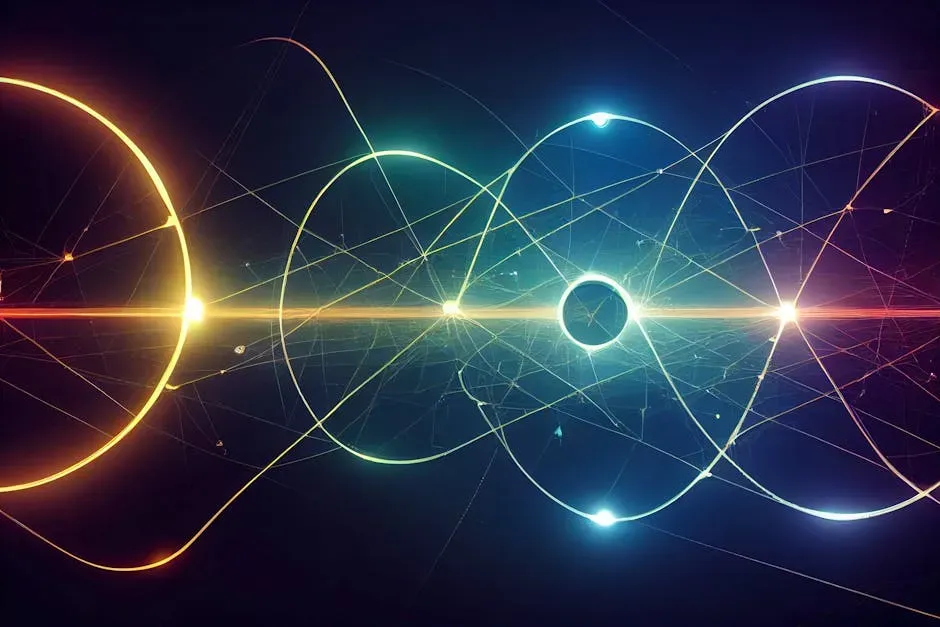
Another influential idea is that time might emerge from quantum entanglement and information, rather than being a basic coordinate. Entanglement links particles so tightly that you cannot describe one without the other; their properties are deeply correlated. In some modern approaches to quantum gravity, spacetime geometry itself, including what we call distances and durations, is thought to arise from patterns of entanglement in an underlying quantum state. In a rough sense, where there is more entanglement, there is more “connectedness” in spacetime.
Within that framework, a notion of time can show up when you look at how parts of a quantum system effectively act as clocks for other parts. You pick a subset of degrees of freedom and treat them as a reference – like the hands of a watch – while the rest of the system plays the role of “the thing evolving.” Even though the total quantum state may be static, correlations between subsystems give you a relational sense of before and after. Time becomes less an absolute river and more a bookkeeping device for tracking changing correlations in a fundamentally timeless quantum web.
Thermodynamic Time: The Arrow from Entropy, Not from a Cosmic Clock
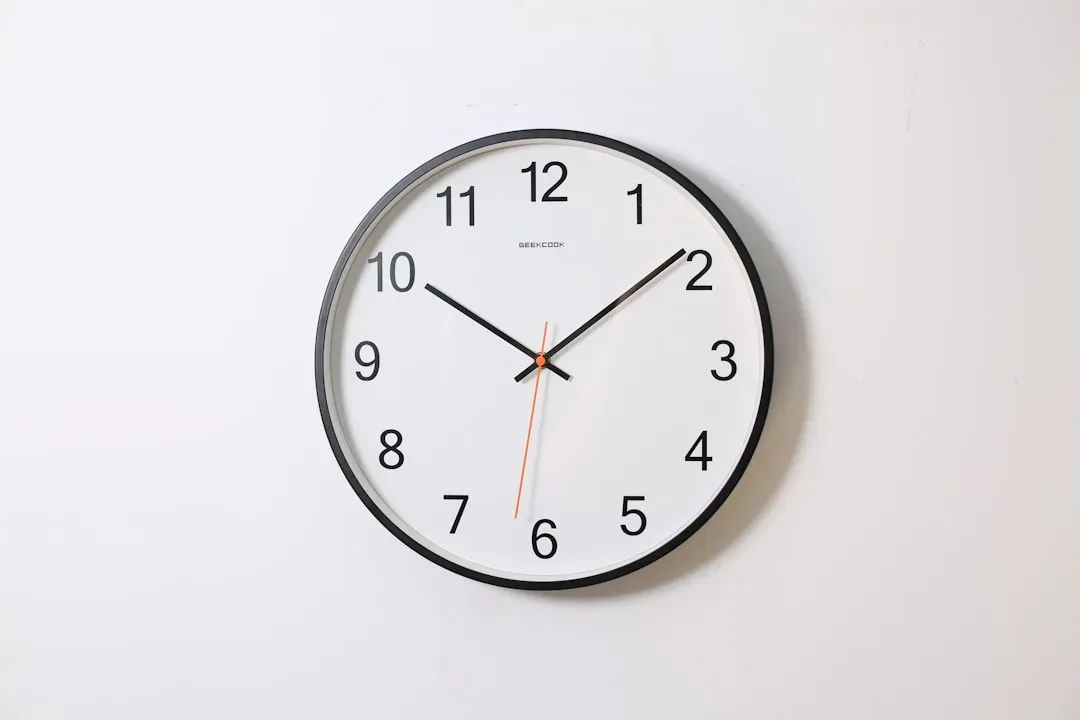
There’s another twist: when we talk about time in everyday life, we usually mean not just duration, but direction. We remember the past but not the future. Eggs break but do not spontaneously reassemble. Ice cubes melt in hot tea but do not randomly form from lukewarm water. Physics explains this arrow of time through entropy, a measure of how many microscopic ways a system’s particles can be arranged while still looking the same on a large scale. Systems almost always move from lower entropy to higher entropy because there are vastly more disordered configurations than orderly ones.
Some physicists argue that this thermodynamic arrow is the only real arrow of time we have, and that it might be enough to explain why time feels like it flows even if the underlying laws are reversible or timeless. On that view, what fundamentally exists could be a giant, static structure that, when sliced in a certain way, shows regions where entropy is low on one “side” and higher on the other. Beings like us can only exist in those low‑entropy pockets, and we naturally perceive the direction of increasing entropy as the future. The sense of time’s one‑way flow could be more about statistics and initial conditions than about a built‑in cosmic time parameter.
What Physicists Are Actively Proposing Instead of Fundamental Time
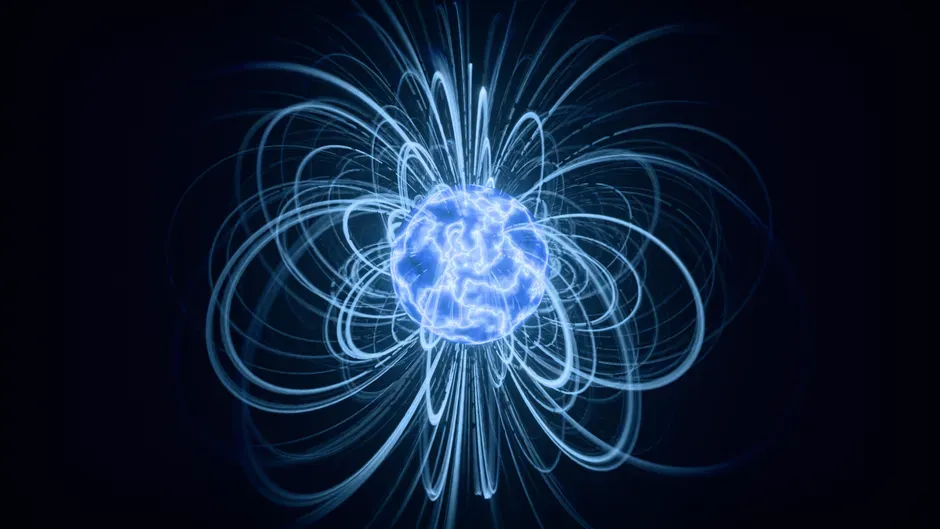
So if time might not be fundamental, what are researchers actually putting on the table as its replacement? One cluster of ideas focuses on “timeless” fundamental equations where the universe is described by a static quantum state or a set of constraints, and what we call history comes from internal correlations and conditional probabilities within that state. Instead of a wave function evolving in time, you get a giant object from which you can extract statements like “if this reads as a past record, then that subsystem has that configuration.” Time becomes a language for talking about consistent slices through a static mathematical object.
Another cluster centers on emergent spacetime from quantum information: the idea that geometry and time arise from networks of entanglement and computational‑like structures. In these views, basic reality might look more like a giant data structure or graph than like a smooth spacetime arena. A further family of proposals leans into relationalism, where only relationships between physical systems are primary; there is no absolute time, only change of some things relative to others. In all of these pictures, “time” is replaced by deeper notions such as correlation, constraint, entanglement structure, and informational order, with our familiar seconds and minutes showing up only in special approximations where the universe behaves smoothly enough.
How a Timeless Universe Can Still Look So Deeply Temporal to Us
At this point it is natural to ask: if time is not fundamental, why does it feel so overwhelming real? The short answer is that our brains are pattern‑recognition engines built to survive in a very particular regime of the universe – warm, messy, and roughly classical. In that regime, cause‑and‑effect relationships line up neatly, entropy reliably increases, and certain physical processes unfold with remarkable regularity. It makes practical sense to compress all of that into the idea of a flowing timeline, just like it makes sense to talk about solid chairs even though we know they are mostly empty space.
I remember the first time I tried to seriously grasp a “timeless” view of the universe; it felt like someone had quietly removed the floor. But after wrestling with it, I started to see it more like learning that a movie is made of individual frames. The emotional punch of a scene is still there, even if you know, technically, nothing is moving in the projector at any given instant. Our inner sense of becoming, of days passing and lives unfolding, might be a high‑level feature generated by brains tracking stable regularities and rising entropy in a particular corner of a much stranger, more static underlying reality.
Conclusion: Why I Think Time Is Probably Not Fundamental – and Why That Matters

Looking across modern physics, I think the weight of evidence leans toward time not being a fundamental ingredient of the universe. Relativity already demolishes the idea of a universal now, quantum gravity hints at timeless master equations, and our cherished arrow of time seems to come from entropy and initial conditions rather than any deep cosmic clock. When multiple major theories independently push you away from a simple, intuitive notion, it is usually a sign that intuition has to give way. To me, the cleanest way to reconcile all this is to accept that what we call time is a powerful, emergent story the universe tells about itself, not part of the bare bones of reality.
That view is unsettling, but it is also oddly liberating. If time is not fundamental, then the universe is less like a rigid railway track and more like a vast, intricate map of relations and possibilities, with “history” as one way of reading that map. It does not make our experiences fake; it just means they are higher‑level patterns, like waves on the surface of a deep ocean. I find that kind of humility about our place in the cosmos healthy, even hopeful: it reminds us that reality is always richer than our first picture of it. And honestly, would a universe where time was simple, rigid, and obvious really be more interesting than one where it might not exist at all in the way we think?