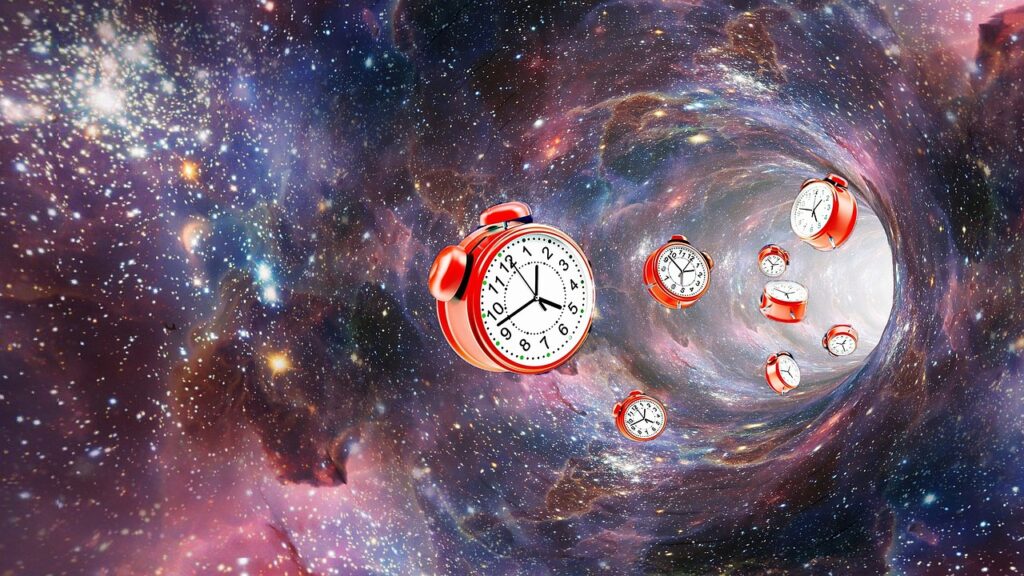

You are used to thinking of time as a single, invisible river that carries you from your past to your future. Now imagine being told that this river might secretly have three different channels, all flowing at once. That is the unsettling idea behind a set of theoretical models that add extra time dimensions to the universe, and it is forcing you to question what you thought you knew about reality.
Physicists themselves are torn between excitement and discomfort. On one hand, more dimensions of time could help patch some of the deepest cracks in modern cosmology and particle physics. On the other hand, it threatens to upend decades of intuitions about causality, space, and the way the universe fits together. You are not just tweaking a detail here; you are poking at the foundations.
Why You Were Taught There Is Only One Time Dimension

From school onward, you are given a simple picture: three dimensions of space (length, width, height) and one dimension of time that always moves forward. This four‑dimensional spacetime, introduced by relativity, has worked incredibly well to explain gravity, black holes, GPS satellites, and even how light bends around galaxies. In that framework, your timeline is like a line drawn through a vast cosmic fabric, with every event having a unique place in space and a single spot in time.
This single time dimension keeps cause and effect clean and intuitive. One event happens, then another, and you can order them neatly from earlier to later. Your everyday experience reinforces this picture: the coffee cools, you age, broken glass does not reassemble itself. When a theory claims there might be more than one time dimension, it is not just adding a little extra structure; it is asking you to rethink this basic ordering of reality that you rely on every day.
What It Even Means To Have Three Dimensions of Time

When you hear “three dimensions of time,” it is tempting to imagine three separate clocks ticking on your wrist. Instead, you should think of it more like three independent directions you could move along in a kind of time‑space, the way you can walk north–south, east–west, and up–down in ordinary space. Your usual single time is like walking only in one direction along a vast field, even though in principle more directions might exist.
Mathematically, you can describe this by extending the geometry of spacetime so that, instead of one time coordinate and three space coordinates, you have three time coordinates and three space coordinates. You still label every event with numbers, but now the “when” of an event becomes a three‑component object, not just a single value. For you, that means the path of your life might be one thin curve inside a much richer, largely hidden temporal landscape.
Why The Idea Freaks Out Many Physicists
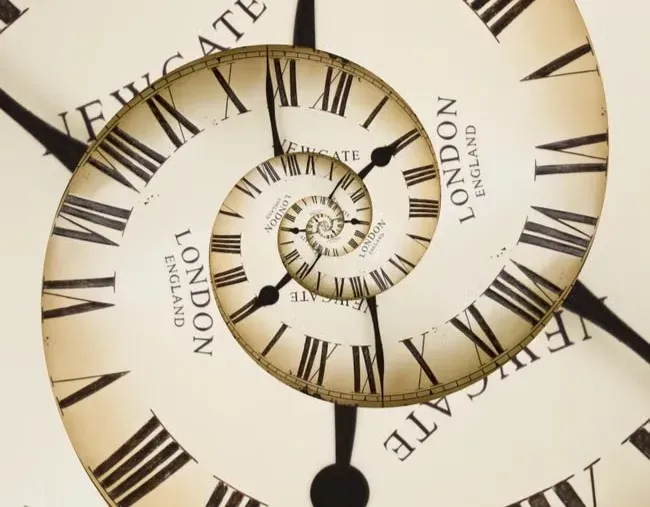
Once you add more time dimensions, your clean sense of before and after starts to wobble. With a single time dimension, two events can be ordered: one is earlier, one is later, or they are simultaneous. With three time dimensions, there are many more ways they can be related, and it becomes much harder to guarantee that causes always come before effects in a simple, universal way. You suddenly have to worry about bizarre paths through time that might loop back and create paradoxes.
On top of that, extra time dimensions can make the equations of physics unstable if you are not extremely careful. Energies can run off in strange directions, particles can behave in ways that violate basic expectations, and the whole structure can fall apart. When you hear that scientists feel this theory “messes with their knowledge of the cosmos,” it is partly because it threatens the hard‑won consistency of relativity and quantum theory that you have relied on for more than a century.
How Multiple Time Dimensions Could Help Fix Deep Cosmic Puzzles
For all the discomfort, you might still be tempted by three‑time theories because your current models leave some gaping questions unanswered. You live in a universe whose large‑scale structure, dark matter, and dark energy still refuse to fit neatly into a single, unified picture. The geometry of spacetime at the smallest scales also clashes with gravity, leaving you without a complete theory of everything.
Adding extra time dimensions gives theorists new mathematical tools to play with. In some models, the extra temporal directions can help smooth out infinities that plague quantum gravity, or offer new ways to think about symmetry and unification of forces. For you, that means this wild idea is not just philosophical fluff; it is part of a serious attempt to reconcile the deep mismatch between how you understand the very large (cosmology) and the very small (particle physics).
What Your Everyday Experience Says – And Why It Might Be Misleading

You might feel strongly that you only ever experience one time. Your heart beats in a rhythm, your watch ticks along, and your memories stack up in a single line. But your senses already mislead you in many other ways: you cannot see radio waves, feel neutrinos, or notice the curvature of spacetime even though all of those are real. Your direct experience turns out to be a poor guide to the full range of what physics can describe.
In most multiple‑time scenarios, you would not notice the extra time dimensions, at least not directly. They could be hidden, constrained, or only accessible at extremely high energies or exotic conditions you never encounter. From your point of view, you still move along a single effective time direction, while the extra temporal structure works quietly behind the scenes, shaping the underlying laws without announcing itself in your daily life.
How You Could Still Have Causality With More Than One Time

One of your first worries is that extra time dimensions mean chaos: messages from the future, paradoxes, and stories that never resolve. But the math does not have to work out that way. In some carefully built models, the allowed paths through this multi‑time spacetime are restricted so strongly that you still get a consistent sense of cause and effect along the timeline you actually inhabit. The extra times are there in the background, but they do not let you freely loop back and rewrite history.
Think of it like living on a single, well‑marked trail inside a dense forest. The forest has many possible directions, but the path you are allowed to walk on still only goes forward. In these theories, your physical laws and initial conditions can be arranged so that, although the geometry includes more temporal directions, any physically possible motion for you respects a single arrow of time, preserving the basic logic you depend on to make sense of events.
What This Means For Your Picture of the Big Bang and the Fate of the Universe
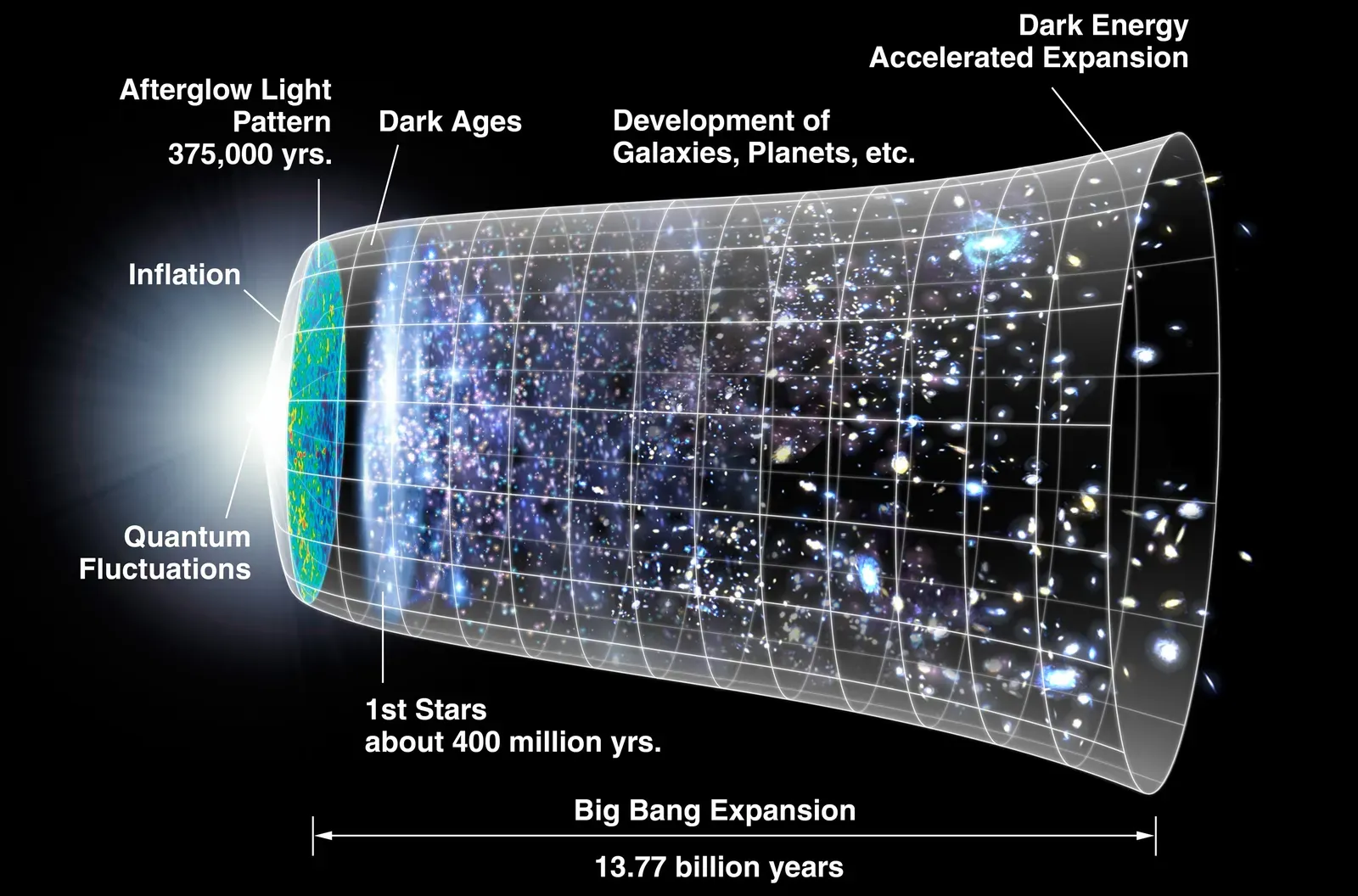
If you accept the possibility of three time dimensions, your story about the universe’s origin and fate starts to look very different. Right now, you think of the Big Bang as a single instant from which time began and expanded like a line stretching out. With extra time directions, that “moment” might actually be a richer structure in multi‑time space, with different temporal components evolving in their own ways, possibly smoothing out some of the singular, infinite behavior that troubles standard models.
The future could also become more complicated. Instead of a single timeline heading toward heat death, a big crunch, or some other simple fate, the universe might evolve along patterns shaped by these hidden temporal dimensions. For you, this does not necessarily mean that you will notice some dramatic extra ticking in your life. It means that your cosmic history could be embedded in a much more intricate temporal geometry than your usual one‑dimensional story suggests.
Where You Stand Now: Speculation, Skepticism, And Open Curiosity
Right now, you should see three‑time‑dimension theories as bold speculation, not established fact. They live mostly on paper and in computer simulations, not in confirmed experiments. You do not yet have clear observational signatures that prove extra time directions are real, and many physicists remain skeptical because of the technical and conceptual problems they introduce. Your best‑tested theories still work extremely well using only one time dimension.
At the same time, you know that science moves forward by entertaining uncomfortable ideas, testing them, and discarding the ones that fail. Exploring multiple time dimensions forces you to sharpen your understanding of causality, stability, and the structure of laws themselves. Whether these ideas survive or not, they push you to think more deeply about what it really means to say that time passes and that the universe has a history.
Conclusion: Rethinking Your Place In A Stranger‑Than‑Expected Cosmos

When you hear that the universe might have three dimensions of time, your first instinct might be to dismiss it as science fiction. But underneath the shock value, you find serious attempts to grapple with real gaps in your understanding of the cosmos. You are invited to imagine that your familiar flow of time is just one narrow current inside a wider, hidden temporal ocean, and that your best theories might only be approximations to a richer underlying reality.
You do not need to believe in extra time dimensions to appreciate what this line of thinking does for you: it reminds you that even your most basic assumptions about reality are up for revision if the evidence demands it. The universe has already surprised you with relativity, quantum mechanics, and dark energy; adding new directions to time might be the next twist in that story. If time itself can be more than you feel it is, what else about the cosmos are you still only seeing in one dimension?