
You know those photos that look so edited you’re sure they came out of a video game or a movie set? Then you find out they’re real places… and you can actually go there. The US is full of those “no way that’s natural” landscapes, shaped quietly over millions of years until they ended up looking like art installations or sci-fi backdrops. Here, you’re going to walk through eight of the strangest, most surreal formations in the country. Some look carved by a giant 3D printer, some look painted by hand, one was even started by a human mistake that nature ran with. By the end, you might have a new bucket list – and a totally different appreciation for what slow, patient geology can do.
The Wave, Arizona: Sandstone That Looks Like Liquid
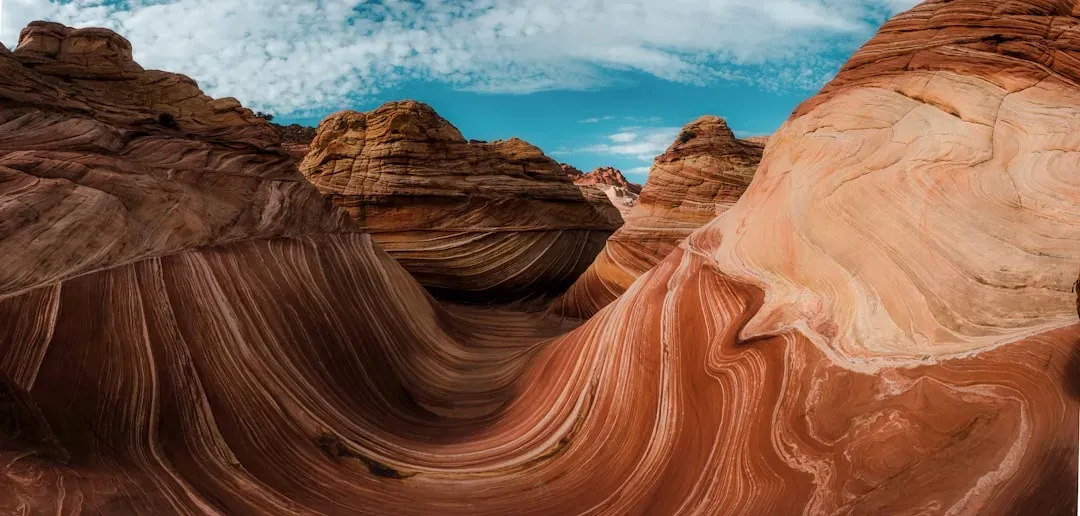
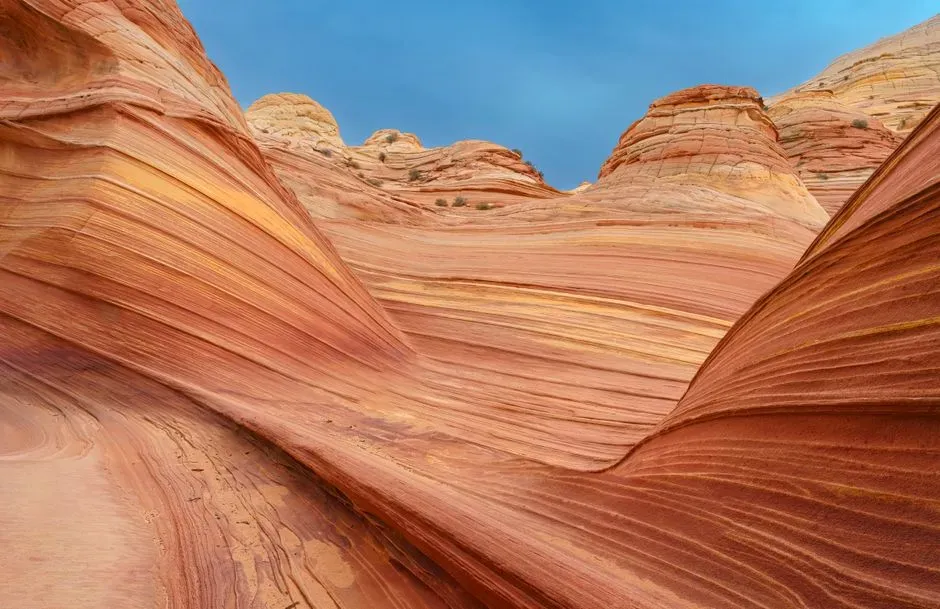
The first time you see a picture of The Wave, your brain probably tells you it has to be digital art. Long, flowing bands of red, orange, and cream sandstone curve like frozen ocean swells, as if someone melted the desert and let it harden mid-ripple. You’re actually looking at ancient sand dunes, laid down roughly in the Jurassic period, later compressed into Navajo Sandstone and then carved by wind and rare runoff into those smooth, intersecting troughs. Over time, wind became the main sculptor, polishing tiny steps and ridges that make the surface look almost brushed by hand. ([en.wikipedia.org](https://en.wikipedia.org/wiki/The_Wave_%28Arizona%29?utm_source=openai)) If you ever hike there, you notice something strange: it feels small and intimate, but also overwhelming, like walking through the inside of a seashell. Because the rock is so fragile and footprints can scar it for years, access is tightly controlled with a daily permit lottery and strict limits on visitors. That limitation keeps it from turning into a trampled mess and helps the lines and layers stay crisp, like a painting that never quite fades. Standing inside The Wave, you get this uneasy sense that one big storm or a surge of careless tourism could damage it – and that tension is part of what makes it feel so unreal.
Fly Geyser, Nevada: A Happy Accident in the Desert
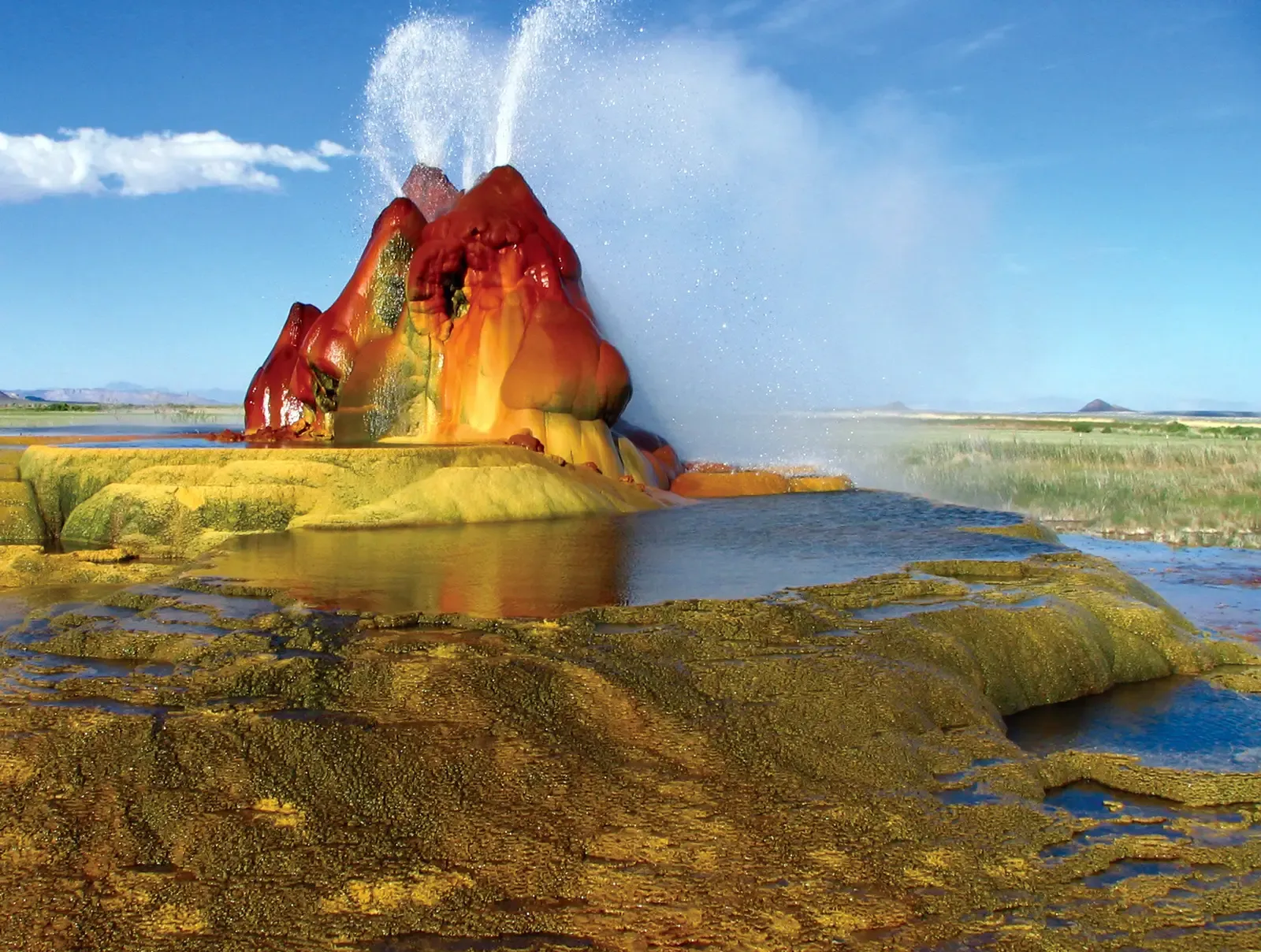
If you designed a geyser for a fantasy movie, you might end up with something that looks suspiciously like Fly Geyser: a knobby cone of vivid reds, greens, and yellows, spraying hot water into the air like a broken fire hydrant on an alien planet. The wild part is that you’re looking at a collaboration between human error and geothermal chemistry. In the mid‑1900s, a well drilled on Fly Ranch pierced a hot water source and was left improperly sealed, allowing mineral-rich water to leak out continuously. As that water sprayed, dissolved minerals like silica and calcium carbonate slowly built a travertine mound, while heat-loving algae painted the surface in neon colors. ([en.wikipedia.org](https://en.wikipedia.org/wiki/Fly_Geyser?utm_source=openai)) When you see photos, the formation almost looks like fiberglass or sculpted foam, something you’d expect to see on a theme park ride rather than in the Black Rock Desert. Today, Fly Geyser sits on private land owned by the nonprofit behind Burning Man, and access is carefully managed through guided visits. That controlled access matters because the terraces and pools around the geyser are as delicate as they look; each thin lip of sediment grew layer by layer from constant mineral deposition. Even though humans kicked off the process, nature has been in charge ever since, turning an industrial mistake into one of the strangest, most artificial-looking landscapes in the country. ([visitrenotahoe.com](https://www.visitrenotahoe.com/articles/fly-geyser-one-of-nevadas-little-surprises?utm_source=openai))
Devils Tower, Wyoming: A Perfect Stone Monolith
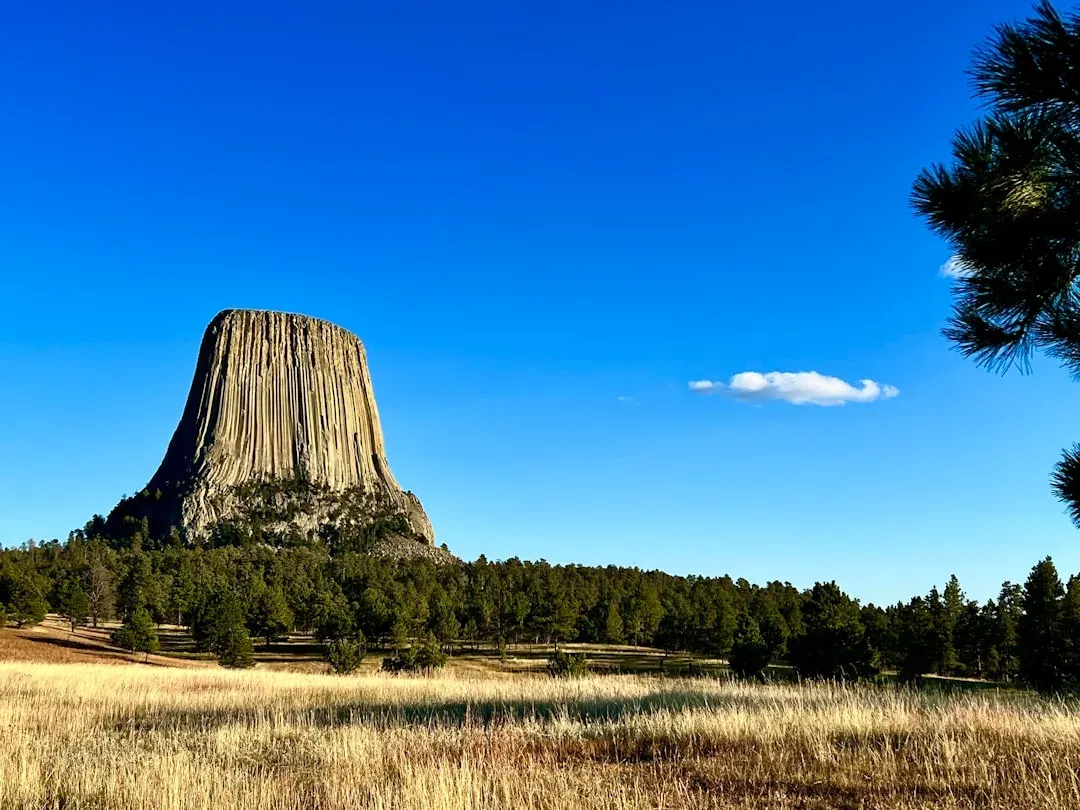
When you first spot Devils Tower rising out of the Wyoming prairie, it looks suspiciously like a giant concrete cooling tower or some impossible fortress from a fantasy novel. The sheer rock columns run so straight and vertical that they resemble the fluted sides of a skyscraper, all fused together into one massive block. Geologically, you’re seeing the cooled remains of magma that pushed up into surrounding rock and then solidified underground; over time, softer layers around it eroded away, leaving the harder igneous core standing alone. The tall, geometric columns form naturally as hot rock cools and contracts, cracking into long polygonal shapes that look more engineered than organic. ([ksl.com](https://www.ksl.com/article/29951942/americas-weirdest-rock-formations?utm_source=openai)) Up close, that sense of artificial neatness only gets stronger. The cracks between columns look almost like seams in pre-cast panels, and climbers scale the Tower using those joints as routes, as if they were ready-made ladders. The surrounding landscape – rolling grasslands and low hills – only emphasizes how out of place this monolith feels, like someone just dropped it there. It’s easy to see why it became the first US national monument and why it has deep cultural significance to Native nations in the region; when a rock formation looks this intentional, you naturally feel like it means something bigger than just frozen magma.
The Painted Hills, Oregon: Striped Like an Oil Painting
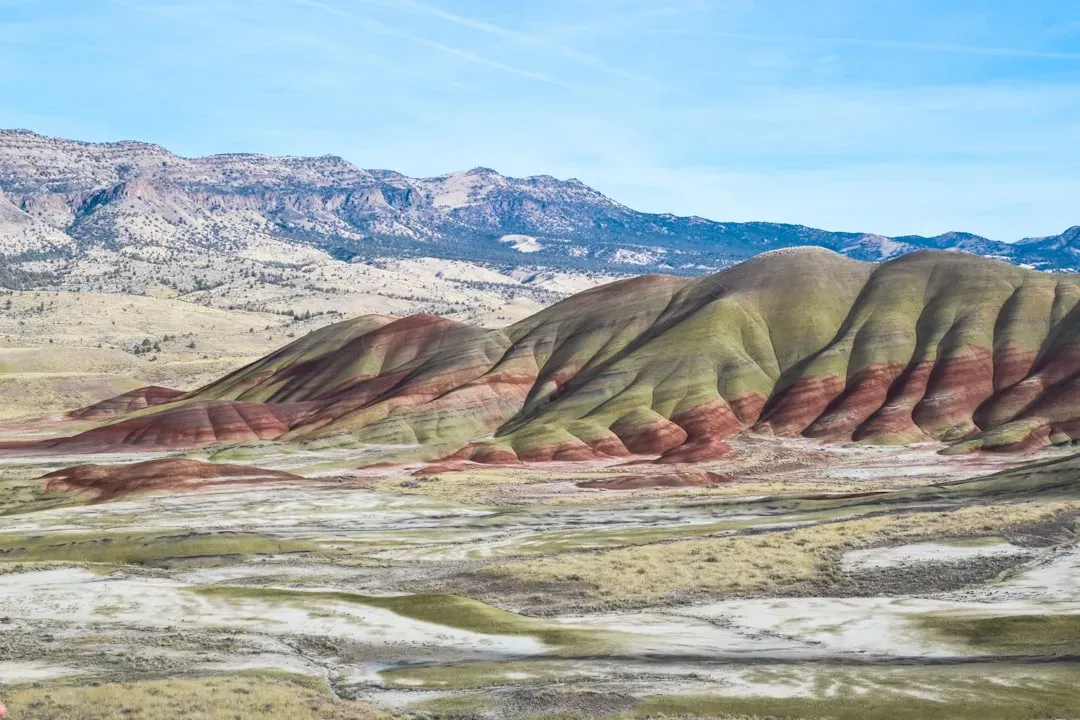
If you stand in front of the Painted Hills in central Oregon, it almost feels like you’re staring at a massive canvas someone leaned against the horizon. Gentle mounds are banded with soft reds, golds, blacks, and olive greens, all laid out in horizontal stripes that look like careful brushwork. Those colors actually come from different ancient soils and volcanic ash layers that formed under shifting climates over millions of years – red from iron-rich, well‑oxygenated soils, yellows and golds from different mineral mixes, darker bands from periods with more organic material or manganese. Erosion simply peeled them open so you can read the story line by line. ([en.wikipedia.org](https://en.wikipedia.org/wiki/Painted_Hills?utm_source=openai)) You’re walking through one unit of John Day Fossil Beds National Monument, a place that holds an enormous record of ancient plants and animals buried among those layers. The hills look smooth and soft, but they’re incredibly fragile; stepping off trail can leave scars that last for years because the fine clay-rich sediments don’t bounce back. On an overcast day, the colors seem subtle and unreal, like muted pastels; under evening light after a rain, they suddenly intensify and glow. It is the kind of place where your photos look filtered even when they aren’t, and your eyes keep telling you someone must have painted those stripes on.
Grand Prismatic Spring, Wyoming: A Boiling Rainbow
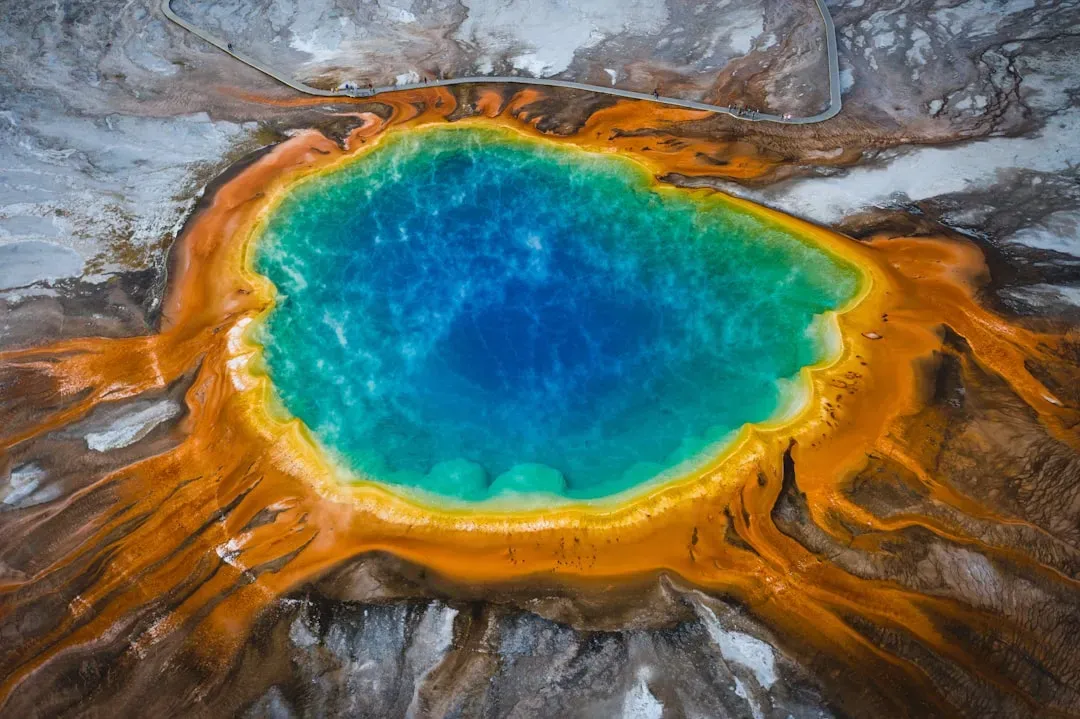
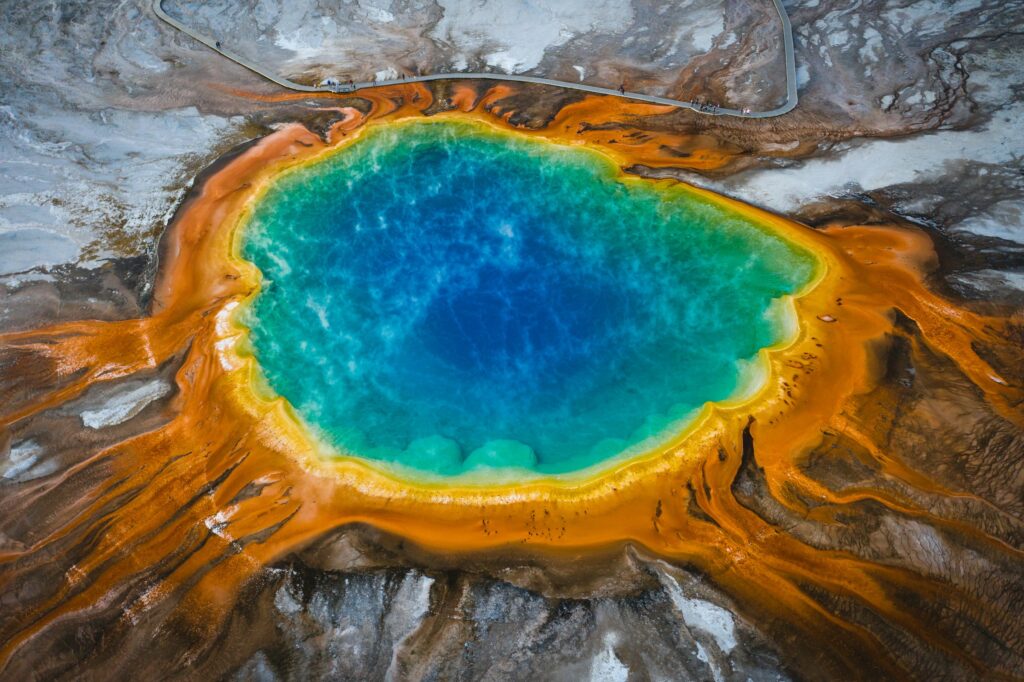
At Grand Prismatic Spring in Yellowstone, you’re looking at a color palette so precise it feels computer‑generated: a deep, unreal blue at the center, fading out through turquoise, then rings of yellow, orange, and rusty red. From above, the symmetry and saturation look almost like a logo or a special‑effects shot. The science is cooler than any filter – you’re seeing how heat-loving microorganisms sort themselves by temperature. The ultra‑hot center is too extreme for most life, so the water stays clear and intensely blue; as the water cools toward the edges, different microbial communities thrive, each producing pigments that paint a different color band. ([azgs.arizona.edu](https://azgs.arizona.edu/natural-hazards/volcanism?utm_source=openai)) The shape of the spring adds to that artificial vibe: nearly circular, ringed with delicate, terraced mineral crusts that seem too thin and sharp to be natural. Walk the boardwalk and you notice how steam breathes across the surface, briefly blurring and revealing those colors like a slow-motion light show. It feels slightly unsettling to realize that if you stepped off the path you’d be in genuine danger; beneath this perfect rainbow lies boiling, acidic water and unstable crusts. You’re literally watching life push itself to the edge in one of the planet’s harshest, yet most photogenic, environments.
Antelope Canyon, Arizona: A Stone Corridor of Light
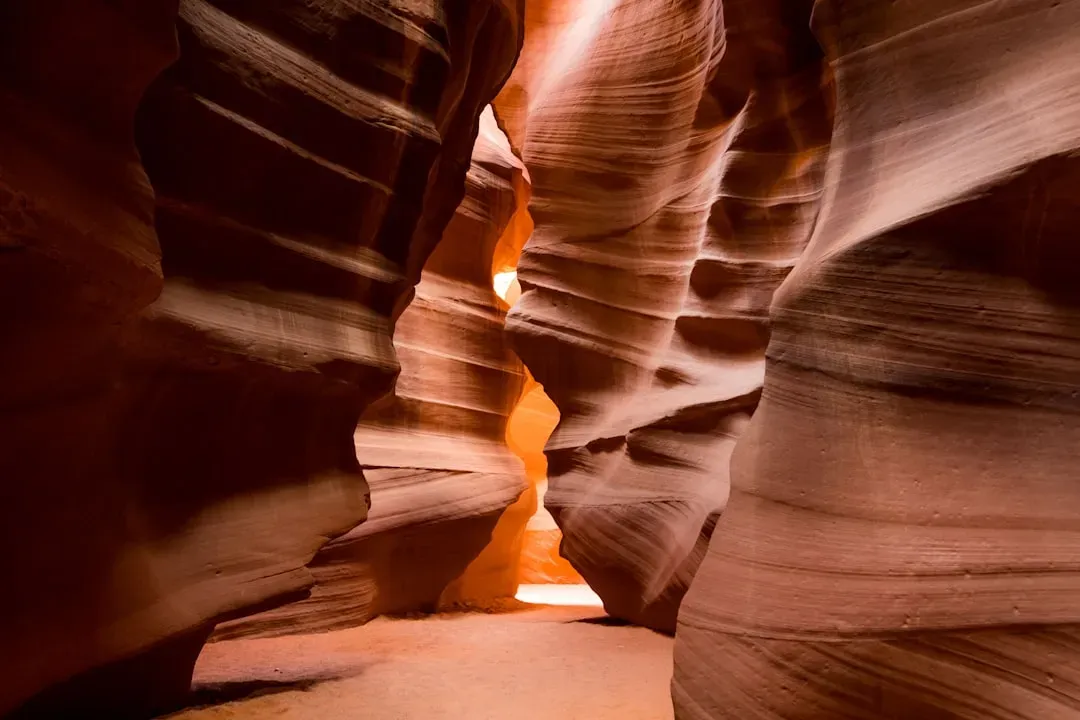
When you first step into Antelope Canyon, it feels like you walked inside a sculpture. The walls curl and twist overhead in smooth, flowing waves of orange and red sandstone, so polished and contoured they could almost be molded clay. You’re in a slot canyon carved primarily by flash floods; when rare desert downpours roar through the narrow crack, they sandblast the Navajo Sandstone, smoothing sharp corners into sinuous curves. Over countless floods, those curves deepened, and the canyon floor was scoured lower and lower, leaving you with a winding, narrow passage barely wide enough to walk in some spots. ([geomapaz.azgs.arizona.edu](https://geomapaz.azgs.arizona.edu/?utm_source=openai)) The lighting is what really sells the illusion that you’re in a designed space. Sunbeams filter down through narrow openings above, bouncing off the colored walls and turning them into glowing ribbons that shift from gold to magenta as the day goes on. Photographers chase specific hours when beams angle perfectly into the canyon, making it look like someone installed theatrical lighting. You have to move carefully here; the same floods that created the canyon can still be deadly, which is why tours are tightly managed and timed with weather. As you shuffle through, you feel like you’re sneaking through the backstage area of Earth’s own art gallery.
Bisti/De-Na-Zin Badlands, New Mexico: A Stone Sci‑Fi Set
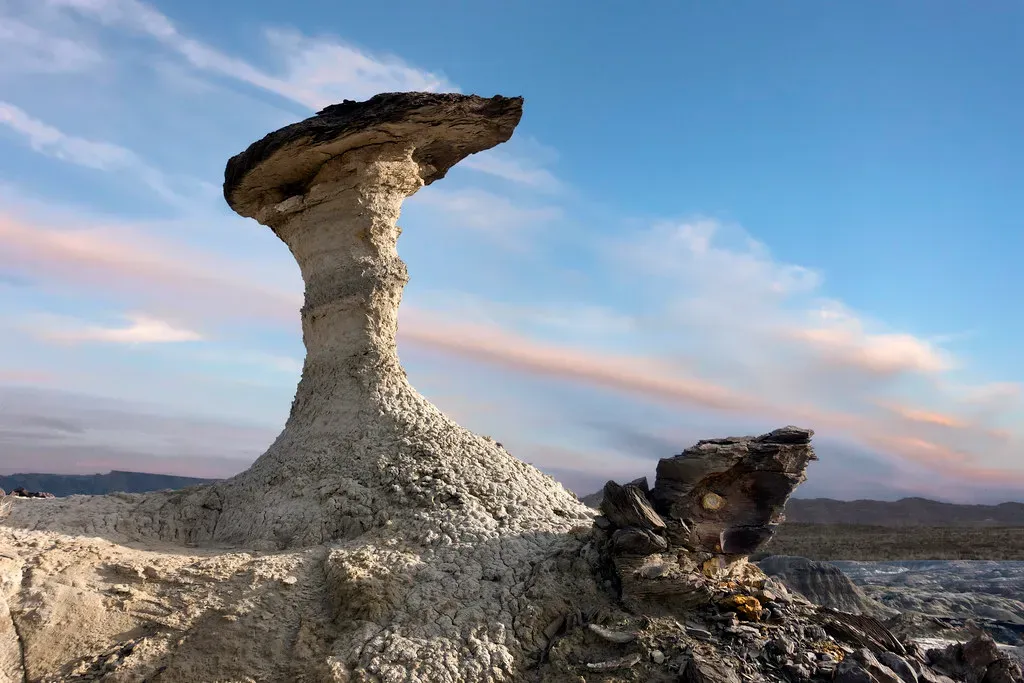
Wander into the Bisti/De‑Na‑Zin Wilderness in northwestern New Mexico, and you might honestly feel like props for a science fiction movie were left behind. The landscape is full of thin rock pedestals with balanced caps, delicate fins, and oddly shaped mounds that could pass for crashed spaceships or fossilized mushrooms. These hoodoos and formations grow from layers of soft mudstone and shale that erode quickly, while slightly harder sandstone or limestone layers on top erode more slowly, leaving caps that protect the narrow columns beneath. Rain, frost, and wind all work together to chip away the weak layers and accentuate the bizarre shapes. ([blm.gov](https://www.blm.gov/programs/national-conservation-lands/oregon-washington/oregon-badlands?utm_source=openai)) The colors add to the surreal effect: ash gray, chocolate brown, and pale cream are streaked with rusty reds and blacks, hinting at volcanic ash and ancient swamp deposits. You’re walking over ground that once supported lush forests and strange prehistoric creatures, and fossils still turn up in the area’s rocks. Because it’s a designated wilderness with few facilities, you often feel like you have the place to yourself, which makes it even easier to imagine you’ve wandered onto another planet. Every turn reveals something that looks sculpted: an arch so thin it seems like it should shatter, or a cluster of “eggs” that could be props from an alien nest.
Mono Lake Tufa Towers, California: Underwater Castles Revealed
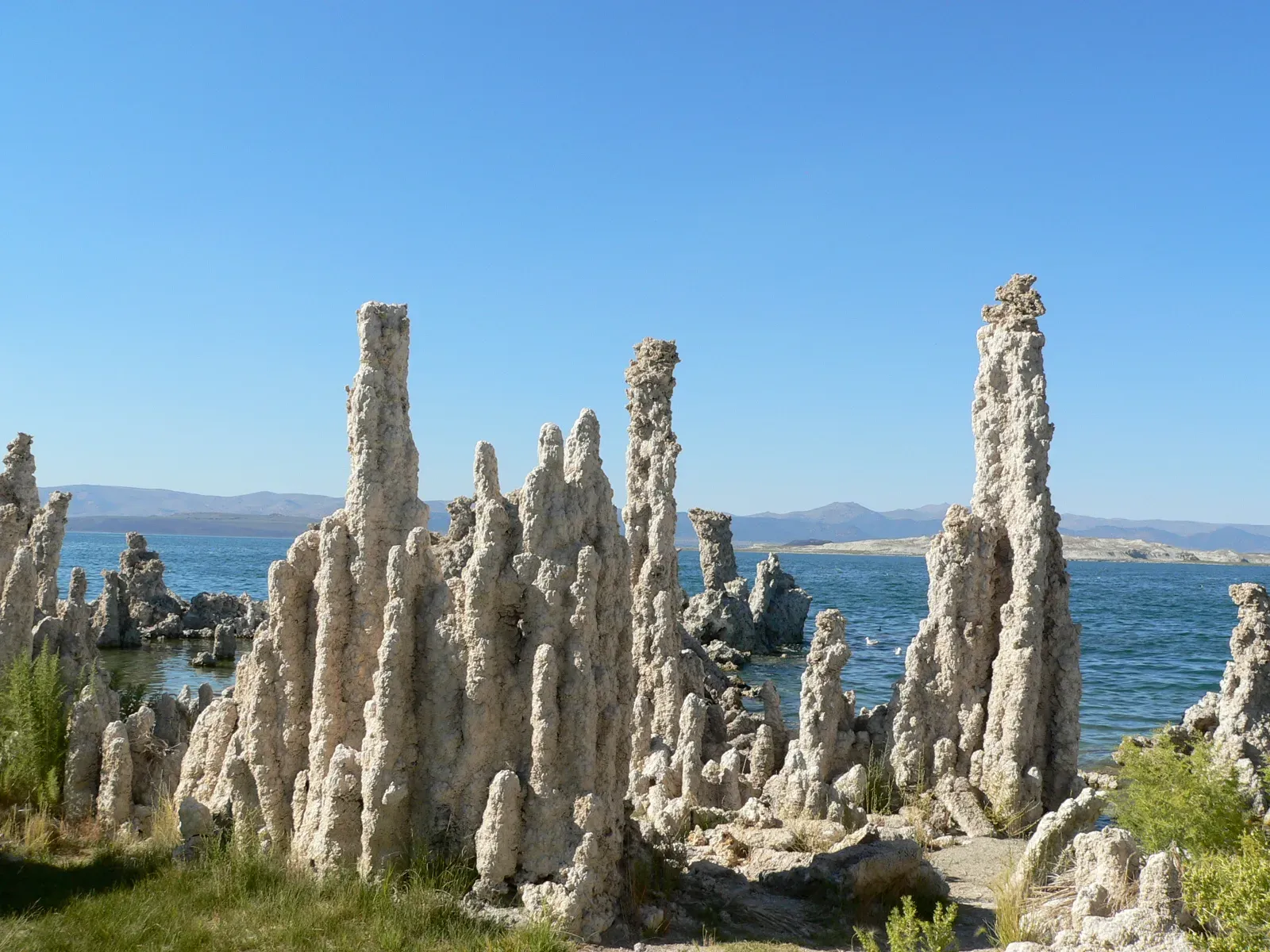
At Mono Lake on the eastern side of the Sierra Nevada, you see what look like clusters of crumbling stone towers rising right out of the water – a lacework of turrets, spires, and knobs that could pass for the ruins of a flooded city. Those strange formations are tufa towers, built underwater over centuries as freshwater springs rich in calcium bubbled up through the lake’s naturally carbonate‑rich, alkaline waters. When the two mixed, calcium carbonate precipitated out and coated the spring outlets, layer by layer, forming porous stone chimneys that slowly grew taller. ([pubs.usgs.gov](https://pubs.usgs.gov/of/1984/0741/report.pdf?utm_source=openai)) For most of their existence, these towers were hidden below the lake’s surface. In the twentieth century, water diversions lowered the lake level dramatically, exposing the once‑submerged formations along the shore and in shallow bays. Now, when you walk the tufa groves, it genuinely feels like you’re meandering through the skeleton of some abandoned miniature metropolis, with narrow alleys and spires overhead. The lake’s unusual chemistry also creates a stark, almost monochrome palette that makes the towers look even more like concrete than natural limestone. It is one of those places where geology and human water use intersect in a way that’s both unsettling and oddly beautiful.
Conclusion: When Nature Looks Like Design
By the time you mentally walk through all these places – the swirling sandstone of The Wave, the neon mistake of Fly Geyser, the rainbow pool of Grand Prismatic, the cavernous curves of Antelope Canyon – you start to realize something humbling. Your first instinct is to assume that anything this precise, colorful, or geometric must be designed, yet these landscapes come from processes that never hurried and never planned. Wind, water, magma, microbes, and minerals just followed the rules of physics and chemistry for long enough, and the results accidentally look like art, architecture, or special effects. If you ever visit any of them, you feel a subtle shift in how you see more ordinary places too. A cracked sidewalk suddenly looks like the start of basalt columns; a rust stain on concrete feels like the beginning of a Painted Hill. You realize that the planet is always sculpting and painting, mostly too slowly for you to notice, occasionally fast enough to shock you. The real question is not whether these wonders look artificial – it is whether your idea of what “natural” looks like has been too small all along.