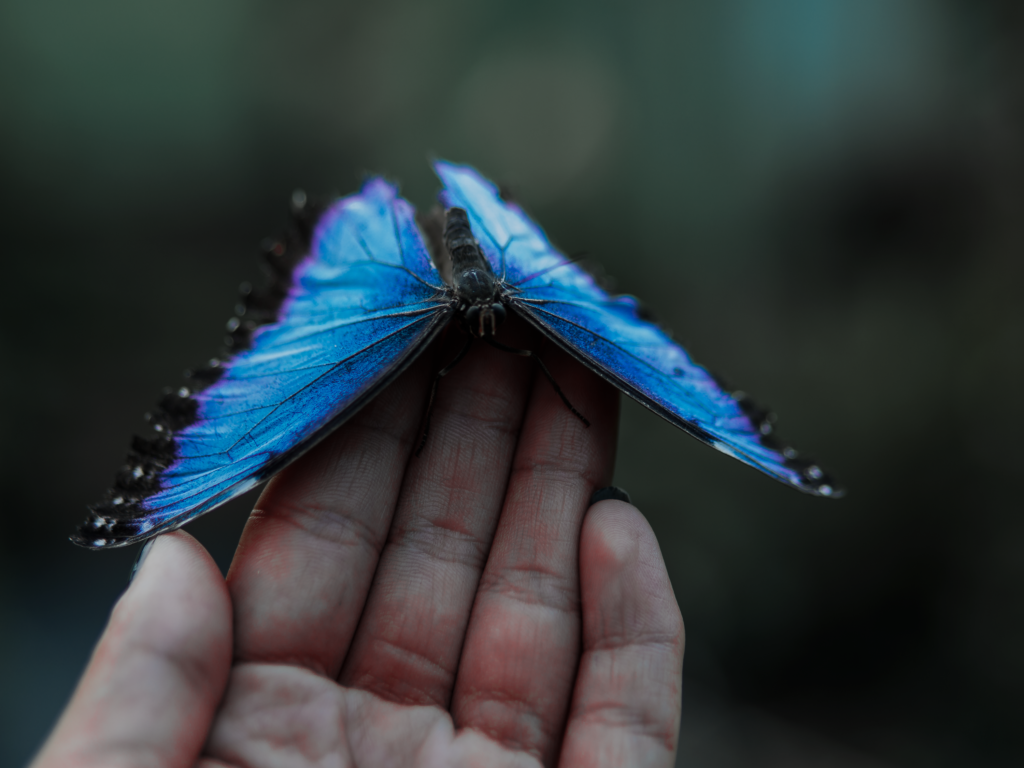

Imagine you’re outside on a warm afternoon and, out of all the people around you, a butterfly drifts, circles, and chooses to land on you. It feels magical, almost like a tiny appointment with the universe. Many people instantly look for symbolic meaning, and some even wonder if their zodiac sign has anything to do with it. At the same time, scientists who actually study insects have a very grounded, practical view of why butterflies approach certain humans more than others.
This mix of hard science and soft symbolism is exactly where things get interesting. While there’s no scientific proof that butterflies prefer certain zodiac signs, there is real evidence that they are drawn to specific types of scent, color, movement, and temperature. Those physical traits can overlap in surprising ways with how different signs tend to move through the world. Let’s walk sign by sign through the energies that would hypothetically be most “butterfly‑friendly,” and what entomologists would say is really going on beneath the spiritual vibe.
Libra: The Calm, Gentle Presence Butterflies Drift Toward

Butterflies are easily rattled by sudden movements, loud noises, or aggressive gestures, and this is where Libra energy quietly shines. People who embody that peaceful, balanced vibe often move more gracefully, sit still longer, and create a soothing, low‑threat presence without even trying. From a scientific angle, that kind of slow, fluid body language simply gives a butterfly time to approach and explore without being scared off.
Libra is also associated with an aesthetic sense, which tends to show up in clothing choices and color palettes. Butterflies see color differently than humans and are particularly sensitive to bright, clear tones and patterns. A person who loves soft florals, pastels, or garden‑party outfits is basically turning themselves into a mobile bouquet, and that visually friendly “energy” can easily be interpreted as spiritual magnetism, even though an entomologist would simply call it a smart combination of color, contrast, and stillness.
Cancer: The Soft, Safe Harbor That Feels Like A Flowering Bush

Cancer energy is often nurturing, gentle, and very in tune with its surroundings, which can translate into quiet, observant behavior outdoors. Instead of charging through a park, many Cancers are the type to sit on a bench, linger by a pond, or lean against a tree and just listen. That stillness and patience creates the perfect landing pad for a butterfly that’s scanning for safe, unmoving surfaces to rest on between flights.
On top of that, Cancer’s love of cozy, comforting details can mean flowy fabrics, soft textures, and sometimes floral or lightly sweet fragrances. Entomologists have shown that butterflies are drawn to certain sweet or fruity scents and even to the minerals found in human sweat, especially on warm days. So when a Cancer is relaxed, slightly warm from the sun, and wearing a gentle scent, the “emotional softness” they’re known for ends up aligning neatly with the biological cues that signal a safe, interesting spot for a butterfly to land.
Taurus: The Steady, Earthy Energy That Makes You A Natural Perch
Taurus is famous for being grounded and unhurried, and from a butterfly’s point of view, that’s a huge advantage. Quick, jerky movements are one of the fastest ways to spook a butterfly, whereas a Taurian tendency to lounge, sunbathe, or simply plant themselves in one place for a long time is exactly what an insect needs to feel secure. Entomologists note that butterflies often prefer stationary objects when they need to bask, and a calm human can just become another warm, stable surface in the environment.
Many Taureans are also drawn to nature, gardens, and lush, green spaces where butterflies are already plentiful. If you are the person who chooses the shady spot under a tree or the bench next to a flower bed, you’re increasing your odds without realizing it. From a symbolic standpoint, Taurus energy says “I’m solid and safe,” and from a scientific standpoint, your body heat, stillness, and proximity to nectar plants are the precise, practical reasons those delicate wings might find their way to you.
Pisces: The Dreamy, Drifting Aura Butterflies Don’t Feel Threatened By
Pisces often moves through the world a bit like water: flowing, meandering, and rarely in a straight, rushed line. That softer, less linear way of walking and gesturing can feel less alarming to a creature whose survival depends on spotting predators quickly. Entomologists emphasize that butterflies have a very different visual system from ours, tuned to motion and contrast. Slow or gently rhythmic movements are far less likely to trigger a flight response.
There’s also something about Pisces’ love of daydreaming and lingering that unintentionally lines up with butterfly behavior. People with strong Pisces energy can easily lose track of time sitting in a park, by a lake, or on a balcony, gazing at the sky. The longer you occupy a sunny spot in nature without breaking the spell with sudden gestures, the more you match the conditions butterflies look for when they pause to bask, sip minerals from skin, or briefly rest on a non‑threatening surface that just happens to be your arm or shoulder.
Leo: The Bright, Sun‑Soaked Magnet For Curious Wings

At first glance, Leo’s bold, radiant energy might seem too loud for delicate butterflies, but in practice, it often works in their favor. Leo tends to gravitate toward sunshine, bright colors, and bold outfits, all of which make you highly visible in an outdoor setting. Butterflies rely heavily on vision, and strong color contrasts or vivid tones can stand out against a background of greens and browns, prompting them to investigate.
There is also the warmth factor. Leo is a fire sign associated with the sun, and many people with this energy love basking in direct light longer than others. Entomologists know that butterflies are ectothermic, meaning they rely on external heat sources to regulate their body temperature. A sun‑worshipping Leo who sits still, soaking up rays, effectively becomes part of the warm microclimate butterflies seek out, making any “attention” from them feel like a tiny, sparkling spotlight, even though it’s really just physics and thermoregulation in action.
Virgo: The Quiet Observer Whose Clean, Natural Energy Stands Out

Virgo is often associated with attentiveness, subtlety, and a preference for natural surroundings over chaos, which can look surprisingly inviting to a butterfly. Someone who enjoys quiet walks, pauses to inspect plants, or kneels down to look at tiny details is automatically more in tune with insect‑level life. That attentiveness usually means slower, more deliberate movements, which, from an entomologist’s perspective, reduce the risk of startling nearby butterflies.
There is also the way Virgo energy often expresses itself through simplicity: neutral tones, minimal heavy fragrance, and a generally “clean” aesthetic. Strong synthetic scents, heavy aerosols, or erratic colors and flashing patterns can be confusing or repellent to some insects. A Virgo‑style approach – light products, breathable fabrics, and a practical, grounded presence – creates a more neutral sensory field. Spiritually, people might call it pure or clear energy; scientifically, it is a low‑disturbance, low‑irritant environment that a butterfly can glide through without overload, making a gentle landing more likely.
Sagittarius: The Outdoor Explorer Who Goes Where The Butterflies Are
Sagittarius is the sign most likely to be out on the trail, in the field, or halfway up a hill at any given moment, and this lifestyle alone boosts butterfly encounters dramatically. Entomologists consistently find the greatest butterfly activity in specific habitats: sunny clearings, meadows, forest edges, and areas rich in wildflowers. A Sagittarian love of adventure naturally steers them straight into these exact environments, increasing their chances of close contact even if their movements are a bit more energetic.
What helps Sagittarius despite their restlessness is their tendency to pause in awe. The same curiosity that sends them exploring also makes them stop to take in a view, examine a plant, or watch the sky. During those still, wonder‑filled moments, they unintentionally become part of the scenery, offering the warmth, surface, and relative stability a butterfly needs to land. To a spiritual eye, it can look like the universe affirming their wanderlust; to an entomologist, it is a perfectly predictable overlap between human behavior and insect habitat preferences.
Conclusion: Your “Butterfly Energy” Is Part Magic, Part Microbiology
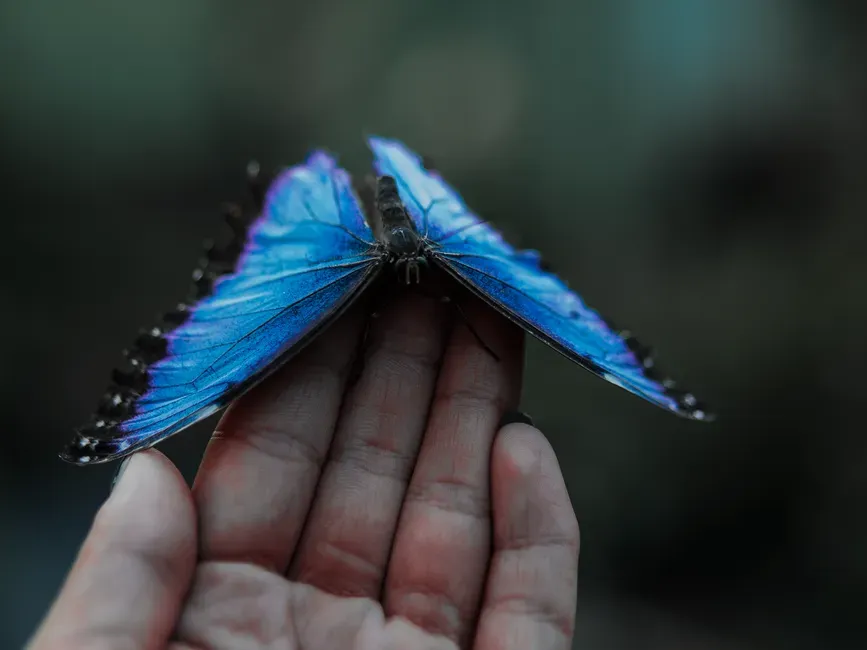
When a butterfly lands on you, it is incredibly tempting to see it as a cosmic message tailored to your zodiac sign, and there is nothing wrong with savoring that feeling. Each of the signs we walked through – Libra, Cancer, Taurus, Pisces, Leo, Virgo, and Sagittarius – describes a style of moving, dressing, and spending time outdoors that can, in very real and physical ways, line up with what butterflies search for in their environment. In that sense, your “energy” is not just an abstract vibe; it is how your habits create a tiny ecological moment that an insect can either tolerate or avoid.
Entomologists, for their part, will always bring the conversation back to scent molecules, temperature, color perception, and motion sensitivity, and they are right to do so; that is how we understand what is actually happening. But I think there is room for both views: the scientific explanation tells us why the landing happens, while astrology gives us a poetic language for how it feels when it does. Maybe the real magic is that a brief touch of wings can remind you that your everyday behavior – how still you sit, where you wander, what colors you wear – links you, literally, to another species for a heartbeat. The next time a butterfly chooses you, will you see only the biology, or will you let yourself enjoy a little stardust too?