
You stand on warm limestone in southern Mexico, maybe hearing birds, maybe traffic, with no clue that just a few meters beneath your feet a hidden river glides through the dark. For you, it might just be vacation country or a spot on a map; for ancient Maya communities, this underground water world was nothing less than the road your soul would take on its way to the afterlife.
Once you start to see the landscape the way they did, the Yucatán Peninsula turns into something astonishing: not just jungle and ruins, but a kind of stone veil laid over a vast, secret, watery underworld. You are walking, quite literally, above a myth. And the entrances to that myth still gape open all around you – cool blue pools called cenotes that were believed to be the first steps on the journey to the land of the dead.
The Hidden Water World Beneath Your Feet
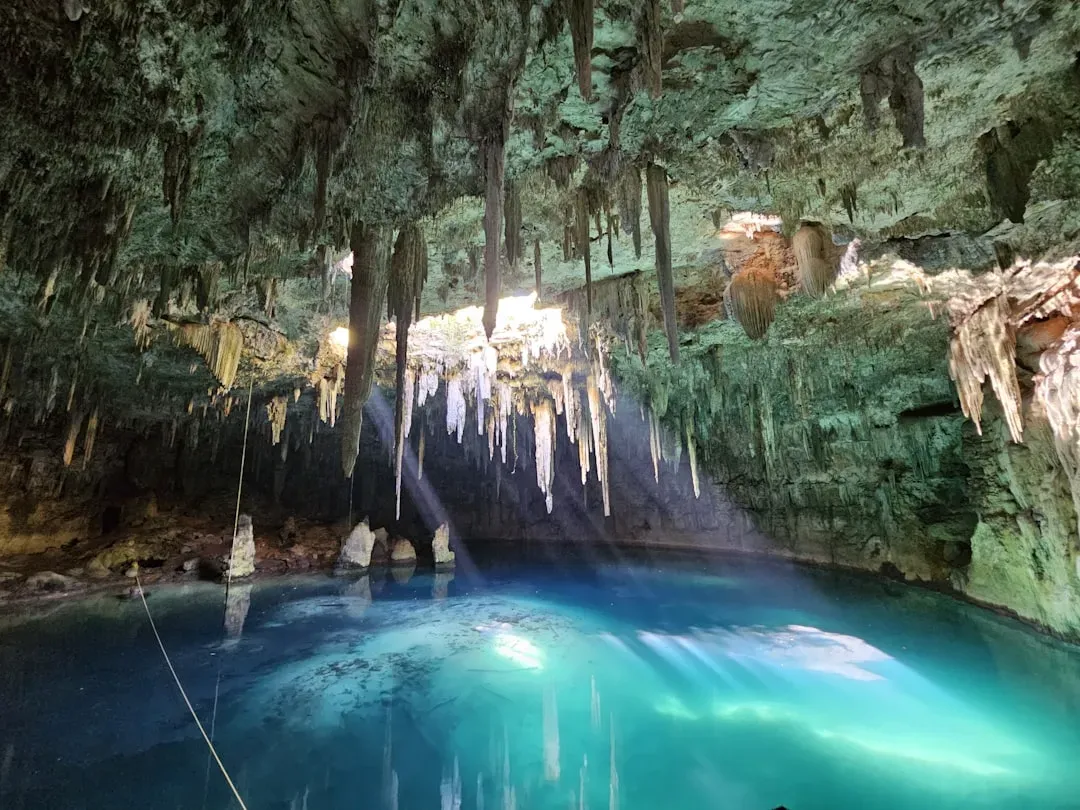
If you ever look at a map of the Yucatán Peninsula, you notice something strange: there are almost no rivers drawn on it. Yet you know millions of people have lived there, from ancient Maya cities to modern tourist hubs, and they all needed fresh water. The solution is that the rivers did not vanish – they simply moved underground, carving their way through soft limestone in a colossal hidden plumbing system that stretches for thousands of kilometers beneath the jungle and towns.
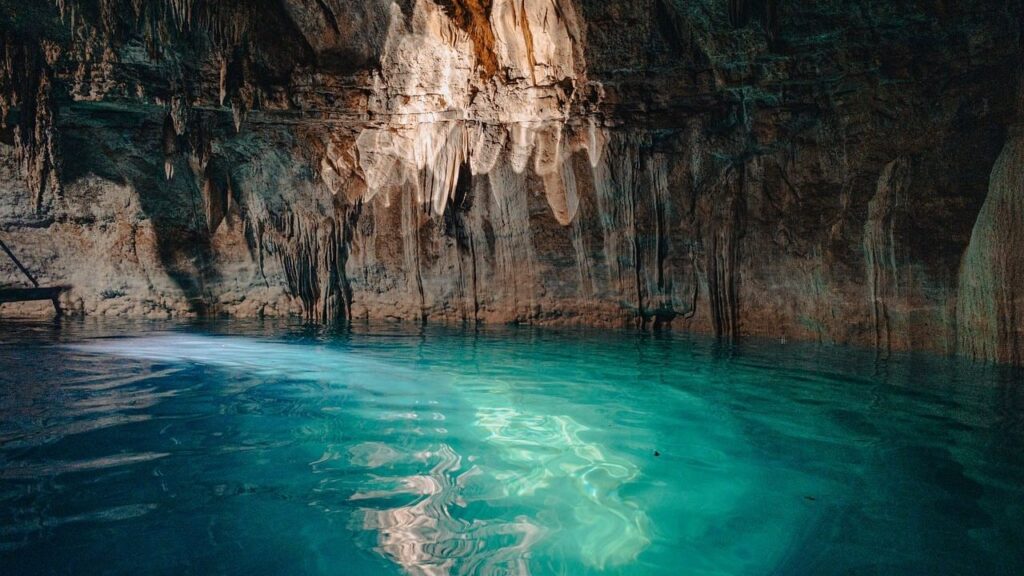
Picture the ground beneath you like a giant block of Swiss cheese: porous limestone riddled with tunnels, chambers, and flooded caves. In many places, the ceiling of those caves has collapsed, opening circular blue windows into the water table that you now know as cenotes. When you swim in one of these pools, you are not just in a pond; you are dropping into the top layer of a huge underground river network that threads its way toward the sea through the dark.
Why the Maya Saw Rivers to the Afterlife, Not Just Holes in the Ground
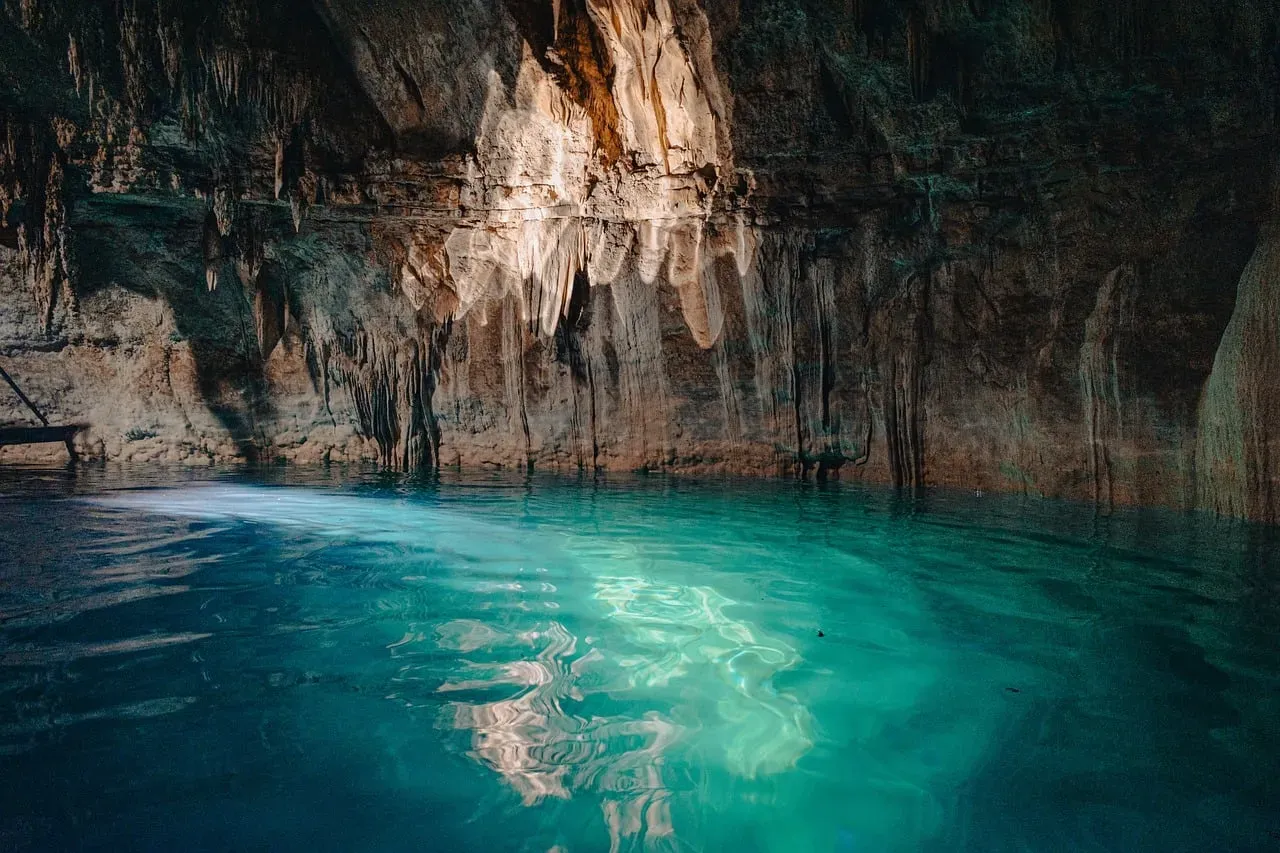
Now imagine you are a Maya villager over a thousand years ago, standing at the edge of a cenote. There are no surface rivers around you, only jungle and flat rock, and yet here is a deep, vertical shaft filled with cool, drinkable water that seems to come from nowhere and disappear into black tunnels. You cannot see the full extent of the underground river system, but you can feel its presence in the echoes, the currents, and the way it never seems to dry up.
In that world, it makes complete sense to see this place as a doorway, not a simple pool. You would have been taught that beneath the earth lies Xibalba, a watery, fearsome, sacred underworld where the dead travel and powerful deities reside. Caves and cenotes are the cracks between realms, and the subterranean rivers are like the cosmic pathways your soul must follow after death. When you lower an offering – or in some periods, even human remains – into the depths, you are not just dropping something into water; you are sending it down the road your spirit is destined to walk.
Cenotes: The Front Doors to Xibalba
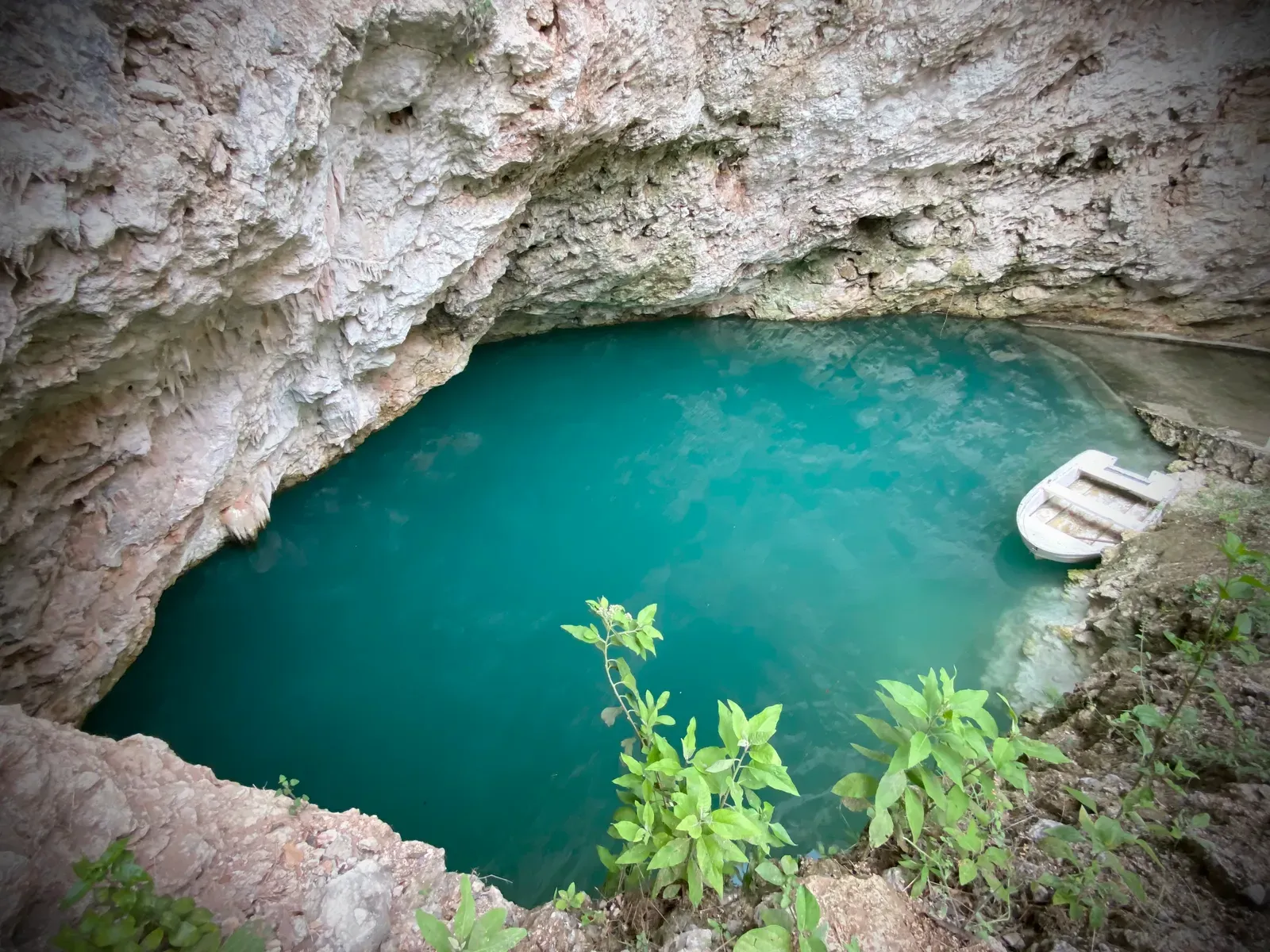
When you visit a famous cenote today, it might look like a natural swimming hole with Instagram angles and a ticket booth. For ancient Maya communities, that same spot was closer to a shrine built on the edge of eternity. They saw cenotes as the literal beginning of the journey to Xibalba, places where the boundaries between your world and the underworld went thin and porous, just like the rock itself.
Archaeologists have pulled up pottery, jade, obsidian blades, copal resin, animal bones, and human remains from cenotes across the Yucatán, especially at sacred sites like Chichén Itzá. For you, this evidence tells a clear story: people came here on purpose, with ceremony, to interact with the powers believed to live below. When you stand at one of these rims, you are standing on the threshold where ancient pilgrims once asked for rain, fertility, protection – or safe passage after death – by sending precious things into the underground river that carried them away.
The Subterranean River Under Chichén Itzá’s Pyramid
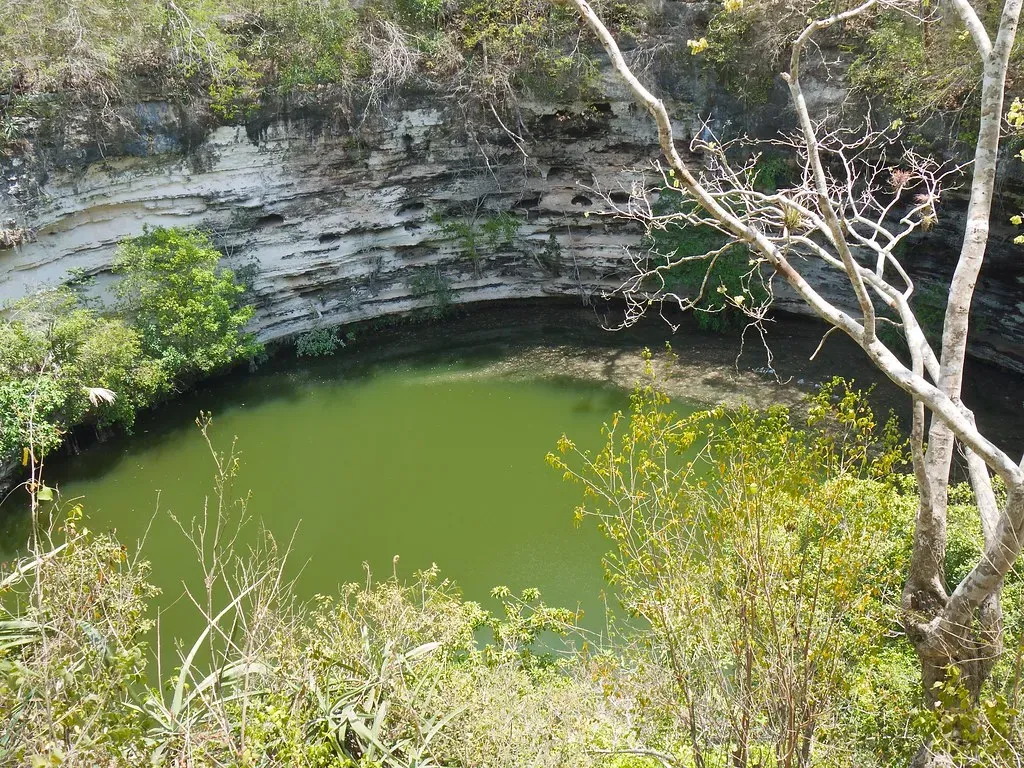
If you have ever seen a photo of El Castillo, the iconic step pyramid at Chichén Itzá, you might think of it as a mountain of stone rising proudly into the sky. What you probably do not picture is the opposite: water flowing in the dark beneath it. Modern surveys have revealed that the pyramid sits above a complex of natural cavities and water-filled spaces, including cenotes connected by underground channels that behave like sections of a buried river system.
For you, this is where myth and geology start to line up in an eerie way. Ancient builders placed a massive temple right over a watery void tied to the underworld in their belief system, and they aligned that sacred architecture with cenotes at the edges of the site. From your perspective today, it feels as if the whole city was deliberately anchored between sky and underworld: pyramids and observatories pointing upward, cenotes and subterranean rivers pulling downward, with human life and ritual balanced in between.
Walking (and Swimming) the Same Path Today
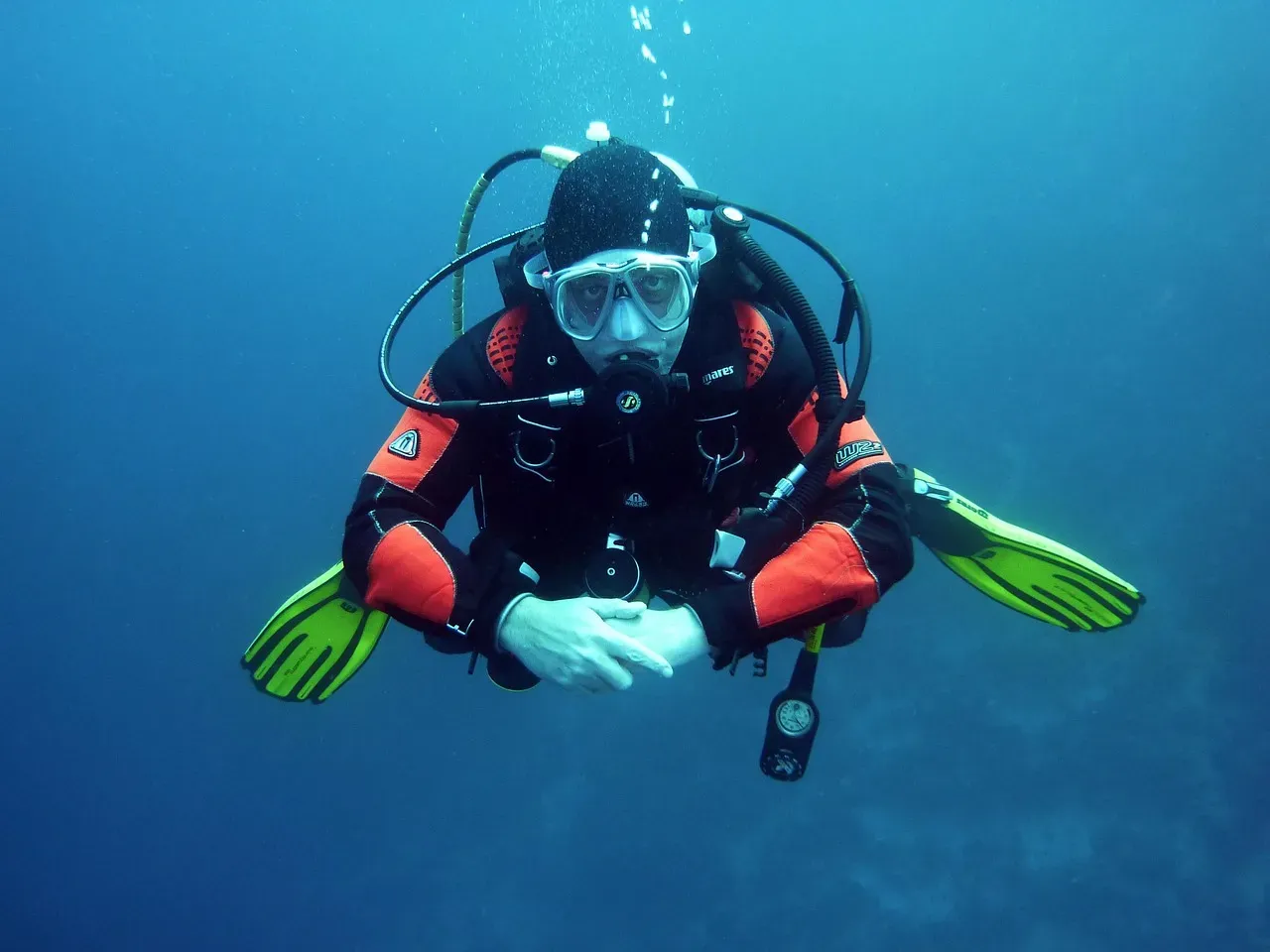
When you strap on a life jacket or scuba tank and slip into a cenote in Quintana Roo or Yucatán, you are, in a very real sense, tracing the outline of that ancient afterlife road with your own body. The moment you leave daylight behind and float into a cavern, the temperature drops, sound changes, and shafts of light cut through the water like something out of a dream. It is easy to see why earlier generations felt they were entering a different world and not just another part of this one.
As a visitor, you might be there for adventure or photos, but you cannot escape the presence of older layers of meaning. You are gliding through the same passages that once existed only in stories about souls crossing watery thresholds. If you pause, turn off your light, and just float, you might feel a flash of what those stories tried to express: that death is not a cliff you fall off, but a long, dark river you travel through, guided – if you are lucky – by those who know the way.
How Modern Science and Ancient Belief Meet Underground
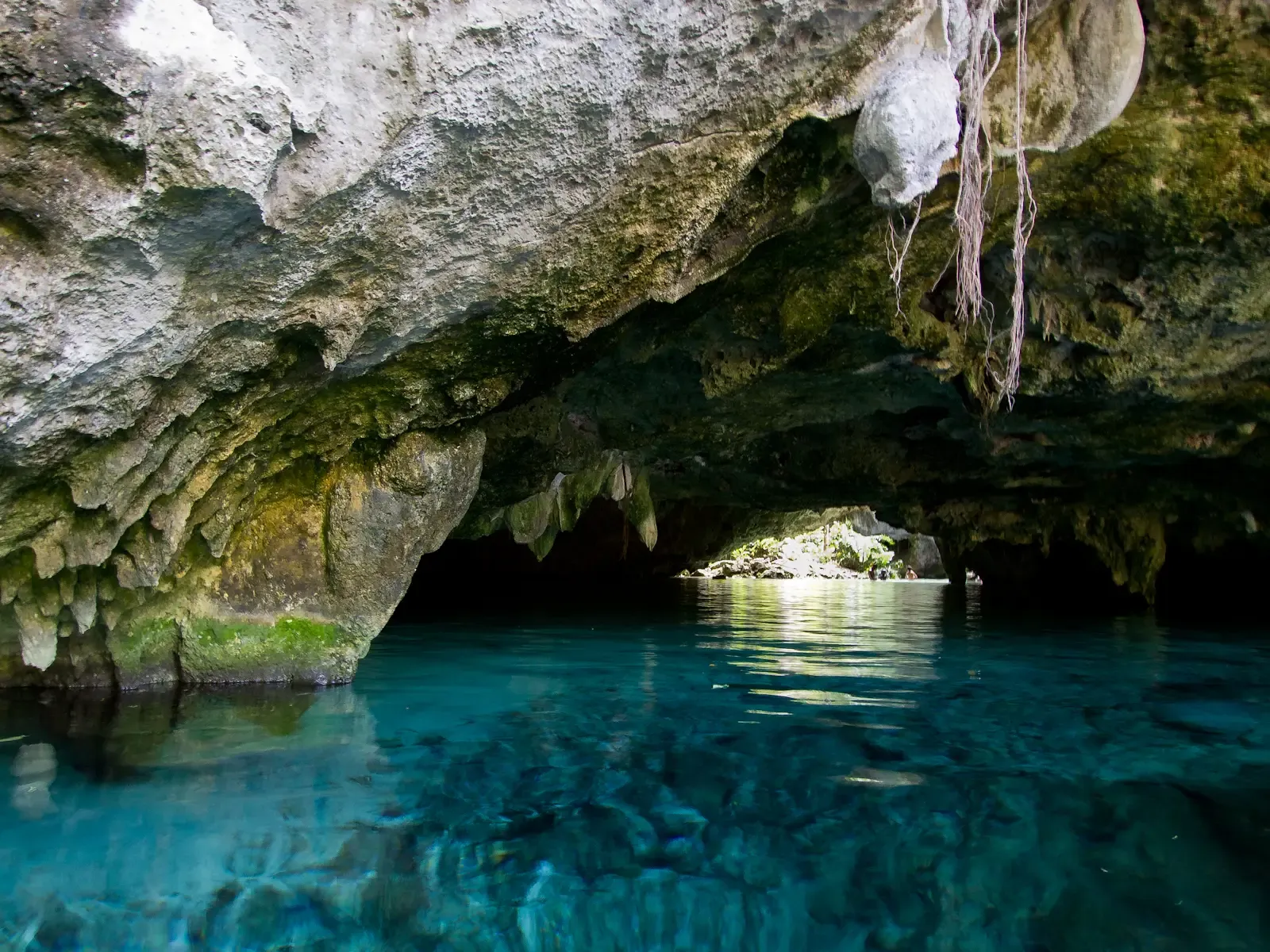
From your twenty‑first‑century vantage point, you get to see this underground river system through satellite images, lidar scans, dye tracing, and cave-diving maps. You know that it formed because slightly acidic rainwater dissolved limestone over millions of years, that water follows gravity and pressure gradients, and that cenotes mark spots where the roof collapsed into the aquifer below. You can read reports listing lengths of cave systems like Ox Bel Ha and Dos Ojos, turning mystery into measurements.
Yet, as you compare that data with ancient beliefs, you notice something humbling: without your instruments, Maya observers still read the landscape in a way that captured its essence. They understood the peninsula as a place where water lived below, not above, and they imagined that unseen flow as a cosmic river linking life, death, and rebirth. When you stand at the edge of a cenote today, you are standing at the intersection of two ways of knowing – the scientific and the sacred – both trying to answer the same question: where does the water, and where do you, really go?
Keeping the Underground Road Alive – for Culture and for Survival
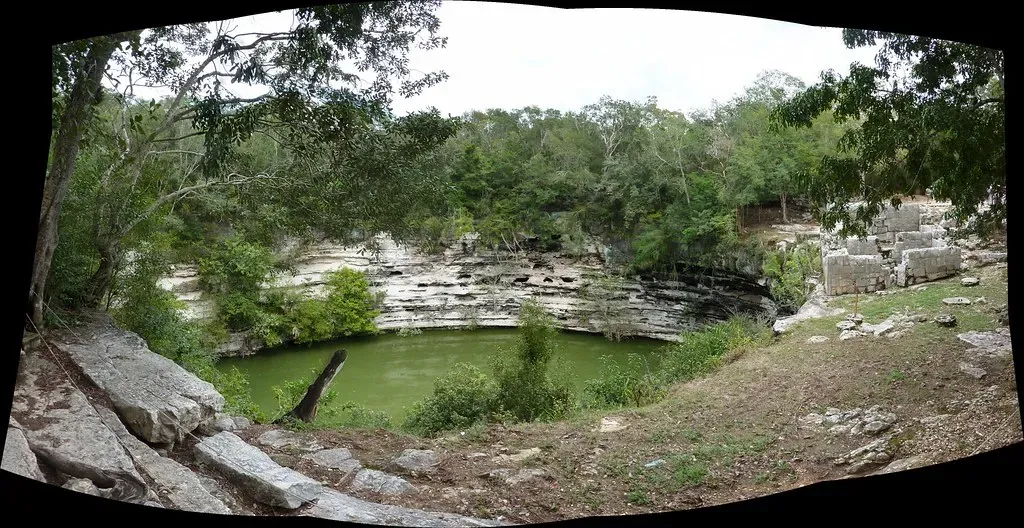
Because you live now, not a thousand years ago, the underground river beneath Mexico means something new as well: it is a fragile water source under serious pressure. Pollution, overpumping, deforestation, and careless tourism can all damage this hidden system that once sustained entire civilizations. When contaminants seep through the porous rock, they do not just disappear; they ride the same currents that once carried offerings to Xibalba, spreading silently beneath the surface.
If you choose to care, every decision you make as a traveler or consumer in the region becomes part of the story. You can support cenote conservation projects, choose operators who respect local communities and safety, and treat these places less like theme‑park rides and more like shared sacred spaces. In doing that, you are not reviving old beliefs wholesale, but you are honoring something they got profoundly right: that the underground river is more than just water in a tunnel – it is a lifeline that shapes how you live, how you imagine death, and how you connect to the land itself.
In the end, when you think about , you are really thinking about how humans everywhere try to map the invisible. Beneath your feet lies a network of stone and water; above it, people have drawn maps of souls, gods, and journeys through the dark. The next time you peer into a cenote or even look at a photo of one, ask yourself: if you did not know the science, would you be so sure it is not also the first bend in the river you will one day have to follow?