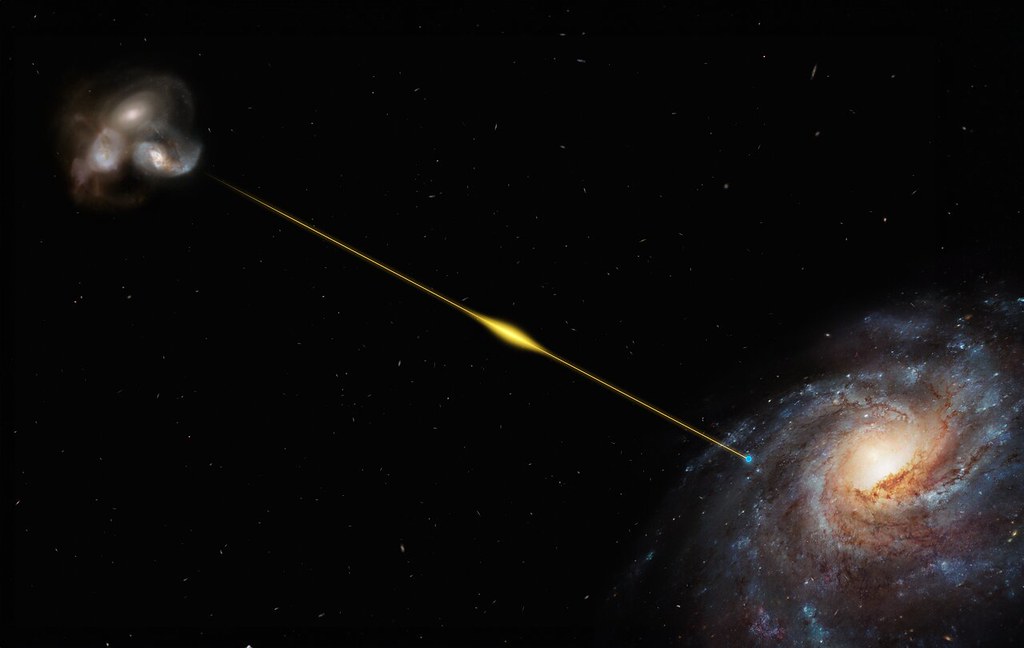

Imagine trying to count every atom in the observable universe – every particle in every star, every planet, every drifting cloud of gas. Now imagine a number so huge that even that cosmic atom-count looks small next to it. That is the kind of wild territory you step into when scientists start talking about how many possible conscious moments could, in principle, exist.
This idea sounds almost mystical at first, like something from a sci‑fi movie or a late‑night dorm conversation. But it actually springs from hard questions in neuroscience, physics, and philosophy of mind: What is a conscious moment? How many different ways can a brain or brain‑like system be arranged to produce one? And if we add up all those possibilities across cosmic history, what does that say about you, sitting here, reading these words right now?
What On Earth Is a “Conscious Moment” Anyway?

A conscious moment is not some official scientific unit, but it is a surprisingly useful idea. Roughly, it means a single, fleeting “snapshot” of your awareness – what it feels like to be you in this exact slice of time: the color of the screen you are reading, the faint background noise, the memory that just flickered, the mood you are in. A second from now, the contents of your mind will have shifted slightly; that new configuration would be a different conscious moment.
Think of it like the individual frames of a movie. Your life feels smooth and continuous, but under the hood, the brain is constantly updating patterns of neural activity. Each distinctive “pattern plus instant” is one possible conscious state. When scientists try to estimate how many different conscious moments could exist in principle, they are asking: How many different “frames” could ever be shown on the screen of experience, across all possible minds and histories?
From Atoms to Astronomical: How Big Numbers Enter the Story
The observable universe is already mind‑bendingly large. Physicists estimate it contains on the order of ten to the power of eighty atoms – that is a one followed by eighty zeros, a number so huge your brain quietly gives up trying to picture it. This figure comes from combining measurements of matter density with the vast volume of the observable cosmos.
But when cognitive scientists and philosophers look at the space of possible conscious experiences, they are not counting atoms, they are counting configurations. A human brain has roughly about one hundred billion neurons, each connected to thousands of others in intricate networks. Even if you treat each neuron like a simple “on or off” switch (which is an extreme oversimplification), the number of ways those switches can be arranged explodes into numbers that dwarf ten to the power of eighty with almost embarrassing ease.
Why Brain Configurations Blow Cosmic Atom Counts Out of the Water
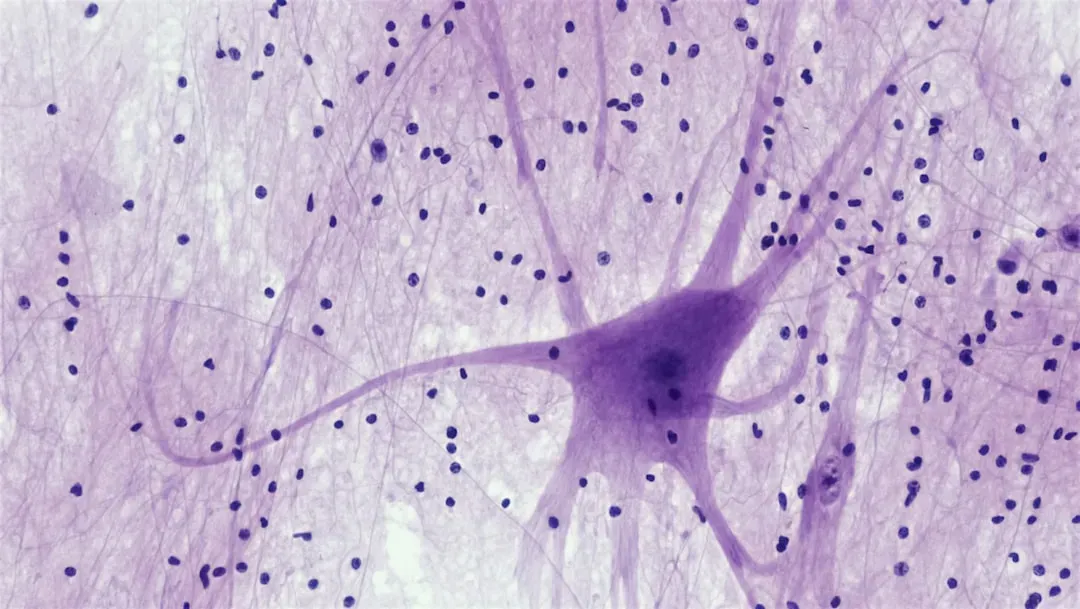
Here is the key move: every distinct conscious moment corresponds, at minimum, to some distinct pattern of physical activity in a brain or brain‑like system. The more components and the more nuanced their states, the larger the number of possible configurations. Combinatorics – the math of “how many ways can things be arranged” – grows faster than our intuitions can keep up with. Give an already complex system like a brain a bit of leeway in time and state, and the number of potential conscious moments shoots into truly extreme territory.
When you factor in that neurons are not just “on or off” but can fire at different rates, in different rhythms, and in countless patterns over time, the state space balloons. Add in the fact that you can have many different kinds of minds – human, possibly animal, artificial, or even hypothetical alien systems – and the total number of possible conscious moments across all of them becomes bigger than the number of atoms in the observable universe by a ridiculous margin. The math here is less about pinning down a precise figure and more about recognizing that we are dealing with numbers beyond ordinary cosmological counts.
Why That Wild Number Might Actually Undersell Reality
Strangely, even these astronomical calculations are probably conservative. They usually assume a fixed kind of brain with particular limits on resolution and duration. In reality, there could be variations in brain architecture, technology‑boosted minds, or forms of artificial consciousness that dramatically increase the number of distinct possible experiences. The more flexibility you allow in what counts as a “conscious system,” the more the number of potential moments explodes.
There is also the temporal dimension: conscious moments can unfold over different scales of time, from fractions of a second to extended states that feel more like a unified stretch of experience. If you slice time differently, or allow for different thresholds of what counts as “distinct enough,” you get yet another surge in possibilities. The lesson is not that we know the exact number; it is that almost any reasonable way of counting lands you in a regime so huge that even comparing it with the number of atoms starts to feel modest.
What This Means for Your Sense of Self and Uniqueness

On the face of it, learning that there are more potential conscious moments than atoms could make your own life feel tiny and disposable, like one frame in an endlessly long film reel. That is one way to see it – as if your particular stream of experience is just one microscopic sample out of a hyper‑astronomical library of possible minds and moments, most of which will never be realized. In that light, your consciousness looks less like the main story and more like one paragraph in a library that stretches beyond galaxies.
But you can flip the perspective. The sheer space of possibilities also means your present moment is wildly specific. Out of that incomprehensible ocean of potential experiences, this exact pattern of memories, sensations, worries, hopes, and random thoughts is happening here, now, as you. Far from making you insignificant, the numbers highlight how shockingly particular your existence is. It is like realizing that among all possible books that could be written with the alphabet, your life is one very improbable, constantly unfolding story.
The Strange Comfort (and Discomfort) of Cosmic Probability
Once you appreciate how enormous the space of possible experiences is, some philosophical puzzles start to feel different. Questions about why you are you, and not someone else, or why you find yourself in this era of the universe instead of another, take on an extra layer of weirdness. In a space of so many potential conscious states, any specific life can feel both inevitable in the abstract and impossibly unlikely in the concrete.
There is a kind of existential vertigo here. Some people lean into it as a source of awe and humility: consciousness, on this view, is not a rare jewel in an otherwise dead cosmos, but a massively abundant possibility woven into the fabric of physical arrangements. Others find it unsettling, because it seems to shrink any claim that our particular story is cosmically central. Both reactions are understandable. In my own view, the healthiest stance is to treat these probabilities as a backdrop – fascinating and sobering, but not a scoreboard for how much your life matters.
Why We Should Be Humble About What We Actually Know
For all the seductive drama of these mind‑boggling numbers, there is a critical caveat: we still do not have a complete scientific theory of consciousness. We do not fully understand which physical patterns give rise to experience, or whether there is a sharp boundary between conscious and non‑conscious states. Different theories emphasize information integration, global broadcasting, higher‑order thoughts, or other features, and each way of carving up the problem changes how you might count “possible conscious moments.”
That means any specific numerical claim should be treated cautiously. The core insight – that the space of possible experiences vastly outstrips simple atom counts – is robust because it comes from general facts about complexity and combinatorics. But the exact number, or even its rough order of magnitude, is less important than the direction it points in: consciousness is not just a thing that happens, it is a landscape of possibilities so vast that our usual intuitive tools for thinking about numbers snap in half.
Conclusion: Living Inside an Unthinkably Rare Moment
Here is where I land on all this: the idea that the observable universe contains more potential conscious moments than atoms does not make us small; it makes each moment strange and precious. Your current experience is not just a random blip in a giant statistical soup. It is a razor‑thin slice through an almost endless space of ways a mind could be, and somehow you ended up right here, reading this, with your particular history and future possibilities bundled into the mix.
If anything, these cosmic calculations are a wake‑up call. We love to argue about whether consciousness is just brain chemistry, or whether free will is real, but we rarely stop to feel the sheer improbability that anything feels like anything at all. In my opinion, the smart response is not fatalism or grandiosity, but a kind of grounded awe: you get only a finite handful of conscious moments out of a space that could swallow universes. The real question is not how many more could have existed – it is what you choose to do with the tiny, impossible sliver you actually get.