

You probably think you know the difference between being asleep, being in a coma, and being dead. One you wake up from, one you might not, and one you definitely do not. Simple, right? But once you start looking under the hood of your own brain and body, those clean lines begin to blur in some unsettling ways.
All three states shut you off from the world, silence your awareness, and leave everyone else staring at your body trying to guess what is really going on inside. You go from talking and thinking to lying still, eyes closed, unreachable. In day-to-day life you treat sleep as harmless, comas as terrifying, and death as final. Yet biologically, the boundaries are a lot messier than your instincts suggest – and that is where things get both fascinating and uncomfortable.
The Shared Core: When Consciousness Switches Off

The most striking similarity between sleep, coma, and death is what they all seem to steal from you: consciousness. In all three, your usual sense of “being here” goes offline, at least from the outside. You are no longer responding to your name, reacting to the world, or choosing what to do next. To anyone watching, you look gone, even if it is just for a few hours.
Your brain plays traffic cop for your awareness, and in each of these states that traffic slows to a crawl or shuts down almost completely. During a deep sleep stage, for instance, your brain’s activity patterns shift away from the fast, complex signals linked to active thinking and toward slower, more synchronized waves. In a coma, that shift is even more extreme and more persistent. In death, the activity stops altogether. From the outside, those differences can be hard to see; all anyone really sees is a body that no longer responds.
Stillness and Silence: How Your Body Looks the Same

Think about how you look when you are deeply asleep: sprawled on a bed, breathing slowly, eyes closed, muscles slack. Now compare that to what you picture when you think of someone in a coma or a body in a coffin. The physical image is disturbingly similar – stillness, silence, and the eerie suggestion that the person you know is not “there” in the usual way.
In deep sleep, your muscles are so relaxed that you can barely move; in some dream stages, your brain actually shuts down most muscle activity so you do not act out what you are dreaming. In a coma, muscle tone may be weak, reflexive, or rigid, but voluntary movement is gone. After death, muscles eventually stiffen and then relax again, but the net effect is the same to your eyes: a person who once moved and spoke now lies quiet, unmoving, unreachable. That visual overlap is a big reason humans have always linked sleep and death in myths, poetry, and religion – even before anyone knew what a neuron was.
Brain Waves, Power Levels, and the “Dimmer Switch” of the Mind
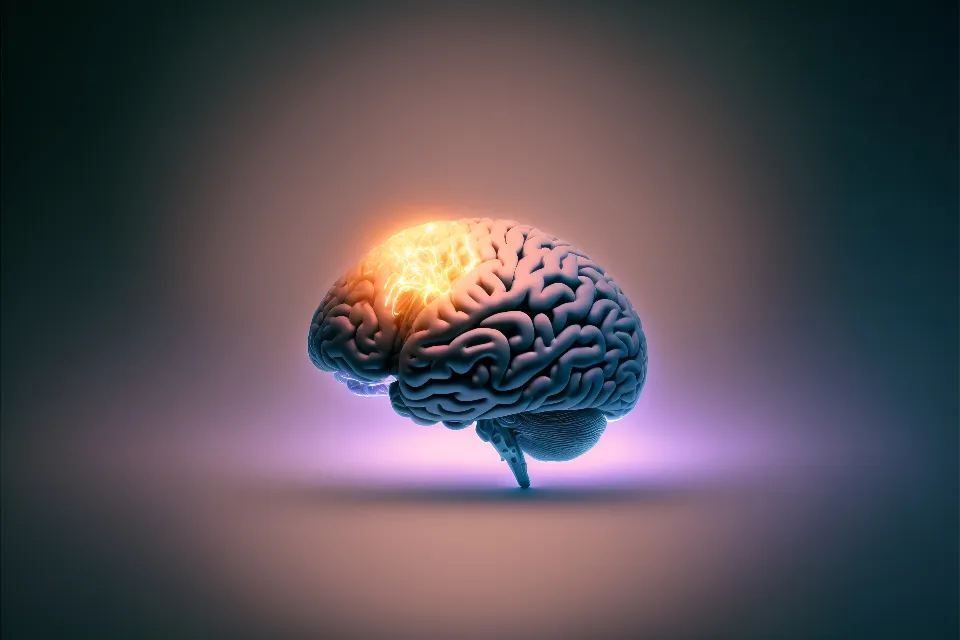
If you could watch your brain on a screen, sleep, coma, and death would look like three different positions on a dimmer switch. When you are awake, your brain activity is fast, varied, and noisy, like a crowded city at rush hour. As you drift into non-REM sleep, those signals slow and start to line up in big waves. In deep sleep, they are slower and more synchronized, like a stadium crowd chanting in unison.
In many comas, brain activity looks even more flattened and monotonous, with fewer bursts of complexity. There can be important differences from case to case, but overall the pattern is less rich and flexible than what you see in normal sleep. With death, the switch goes nearly all the way down: after a brief storm of chaotic firing as oxygen disappears, the electrical activity stops. To you, that progression feels like drifting off, dropping out, and then disappearing – but under the surface, it is really a sliding scale of how much organized energy your brain has left to work with.
Breathing, Heartbeats, and the Thin Line of Autopilot

One of the strangest things about all three states is how much your body can keep doing on autopilot. While you are asleep, your heart keeps beating, your lungs keep pulling in air, and your brainstem quietly manages core tasks like breathing rhythm and blood pressure. You do not have to remember to breathe at three in the morning; that ancient machinery takes care of it for you.
In a coma, that same autopilot often keeps running, although sometimes it needs support from machines. Your heart can still beat, and you may still breathe on your own, but higher brain areas that give you awareness and voluntary control are offline. In death, the system finally fails: the heart stops for good, breathing ceases, and the brain no longer coordinates anything. The eerie part is realizing that in both sleep and coma, the crucial difference from death is not what you see, but whether those invisible automatic systems are still hanging on.
Dreams, Inner Worlds, and the Mystery of Hidden Experience

When you sleep, especially during certain stages, your brain spins up entire worlds behind closed eyes. You may be flying over cities, arguing with people who are not there, or re-living something from years ago. To anyone watching you, it just looks like you are lying there, sometimes with tiny eye movements and twitches. Your rich inner story stays locked behind a calm, unresponsive face.
That raises the unnerving question you might secretly wonder about: could something vaguely like this happen in some comas? In a few rare cases, brain scans have shown signs that a person who cannot move or speak can still respond in subtle ways, like changing their brain activity when asked to imagine certain actions. You cannot assume that everyone in a coma is dreaming or aware; in many cases, key brain networks for consciousness are too damaged. But the fact that any hidden awareness can exist at all makes the similarity to dreaming sleep feel less like poetry and more like a real scientific puzzle.
Time Blackouts: How All Three Erase Your Sense of Duration

When you fall asleep, your sense of time more or less vanishes. You close your eyes, and the next thing you know, your alarm is screaming and hours have disappeared. Even dreams that feel long may only occupy short stretches of actual clock time. You wake up with a blank spot where your conscious life used to be, as if someone cut a chunk out of your personal movie.
People who wake up from comas often describe something surprisingly similar: a blank, a gap, a missing stretch of life. Days, weeks, or months can vanish from their personal timeline. They may have brief, scrambled fragments of memory, or nothing at all. When you zoom all the way out to death, the idea is pushed to its extreme – an infinite blackout, no before-and-after from your own point of view. In all three situations, your inner sense of time simply cannot function, reminding you how much your feeling of “life happening” depends on a conscious brain actively recording it.
Borders and Thresholds: How You Cross In and Out (or Do Not)

You cross the border into sleep every night without thinking about it. Your brain gradually shifts gears: you feel drowsy, your thoughts drift, your muscles relax, and finally you slip over an invisible line where you no longer answer to your name. You move back the other way each morning, often with just as little awareness of how your brain did it. The crossing feels almost magical, even though it is driven by chemicals, circuits, and built-in rhythms.
Comas and death sit at more dangerous edges of that same frontier. A coma can be triggered by severe injury, lack of oxygen, toxins, or serious illness, and crossing back out of it is never guaranteed. Sometimes people gradually climb their way up through stages of brain function; other times the damage is simply too great. With death, the threshold is final: once the brain and body pass a certain point of damage, there is no way back. When you look at it this way, your everyday trip into sleep is a safe, reversible visit to the same borderlands where coma and death live permanently.
Why These Similarities Matter for How You Live

It is tempting to treat all of this as morbid trivia, something you might ponder late at night and then forget. But seeing the strange overlap between sleep, coma, and death can actually change how you value your waking hours. Realizing how easily your awareness can vanish – every single night – makes your conscious life feel more fragile and more precious. You flicker on each morning like a light that does not have to come back.
It can also shift how you think about people in comas or at the end of life. Instead of imagining them as simply “gone,” you start to respect the complexity and uncertainty inside a damaged brain, and to appreciate the delicate systems that keep you on the safe side of that line. And maybe, when you lie down tonight and let your mind slide into darkness, you will feel a bit more awe at the simple fact that you almost always find your way back. Knowing how thin that line really is, what will you do with the time when you are fully, brilliantly awake?