
If you’ve ever heard someone say they watched doctors work on their body from above the hospital bed, it can sound almost unbelievable. Yet reports of out-of-body experiences during cardiac arrest, severe trauma, or near-death situations show up again and again, across cultures and decades. Many of these stories share eerily similar details: a sensation of floating, seeing one’s own body, traveling down a tunnel, or feeling an overwhelming calm at a moment when things should be pure chaos.
So what is actually going on in the brain when this happens? Are we brushing up against something beyond known science, or are these experiences a kind of extreme brain glitch under life-threatening stress? The truth is more nuanced and more interesting than either side usually admits. Modern neuroscience, emergency medicine, and psychology have started to map this strange territory, and while we don’t have all the answers, we know enough to separate wild speculation from what the evidence can realistically support.
The Strange Consistency of Out-of-Body Reports
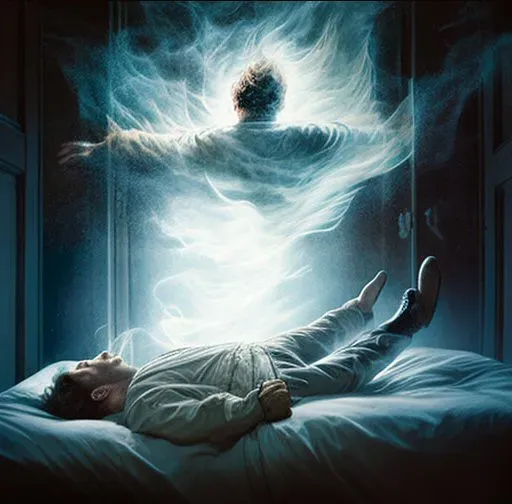
One of the most striking things about out-of-body experiences during medical crises is how similar they sound, even when people have never heard about such experiences before. Patients describe hovering near the ceiling, watching doctors and nurses scramble around their bodies, sometimes reporting details that, at first glance, seem impossible to know. They often mention feeling calm, detached, or oddly at peace, which is the complete opposite of what you’d expect during a cardiac arrest or massive blood loss.
These narratives aren’t just coming from one country, one hospital, or one belief system; they’ve been documented across cultures, medical systems, and decades of case reports. That kind of consistency always makes scientists sit up and pay attention, because repeated patterns suggest common biological roots. At the same time, memory is messy, and people naturally fit overwhelming events into familiar stories. This tension between real pattern and human storytelling is exactly where the science has to tread carefully.
What Happens to the Brain During Cardiac Arrest?

To understand these experiences, you have to start with something brutally simple: during cardiac arrest or severe shock, the brain is starved of oxygen and blood flow. Within seconds, normal electrical activity collapses, and the carefully balanced chemistry that keeps your sense of self intact starts to fall apart. This isn’t a gentle fade-out; it’s more like pulling the plug on a running computer while it’s in the middle of multiple tasks. The result can be brief bursts of disorganized but intense brain activity before things go fully dark.
Animal studies and some human recordings during resuscitation have shown surges of high-frequency brain activity in those early moments, which is surprising given how close the brain is to shutting down. It’s in this unstable window that unusual experiences can arise: distorted time, vivid imagery, a sense of detachment, or a scrambled feeling of being both present and absent at once. When people later recover, they may reconstruct those fragmented sensations into a coherent story, and that story can easily take the form of “I left my body and watched from outside.”
The Brain’s Body Map and Why It Can “Glitch”
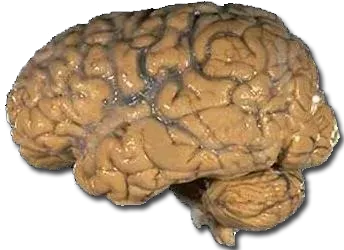
Your sense of being “inside” your body is not automatic or magical; it’s constructed by a network of brain regions constantly integrating signals from your eyes, ears, skin, muscles, and inner organs. Areas near the junction of the parietal and temporal lobes, for example, help create a mental map of where your body is located in space. Under normal conditions, this map is so reliable we never question it. When that system is disturbed, things can get weird in a hurry.
Neurologists have seen patients with seizures, strokes, or electrical stimulation in those areas report feeling like they are floating near the ceiling, looking down at themselves, or shifted slightly outside their bodies. In extreme medical emergencies, when oxygen drops and brain chemistry goes haywire, those same regions can misfire or temporarily disconnect from incoming signals. An out-of-body experience may be the brain’s way of trying to reconcile conflicting or failing information about where “you” are, a bit like a GPS suddenly placing your location a few streets away when the signal is weak.
Vision, Memory, and the Illusion of Watching the Resuscitation
One question people love to ask is whether patients really see their own resuscitation from above, or if they reconstruct the scene later from guesswork and medical dramas. The hard truth is that memory is incredibly suggestible, especially under trauma, sedation, or intense emotion. People can accurately recall some details, like the presence of a defibrillator or the color of crash-cart equipment, simply because these things are now widely known or encountered in everyday life. The brain is brilliant at filling gaps in memory with plausible details that feel completely real.
Still, there are rare cases where patients report quite specific details that are harder to explain away, and these keep the debate alive. However, even those examples don’t prove that a conscious “self” literally floated above the body; they simply show we do not yet fully understand how perception, residual hearing, and fragmented awareness might piece together during and after a crisis. A cautious, scientific stance is to say that extraordinary claims need very strong evidence, and so far, the data suggest powerful subjective experiences rather than proof of the mind floating free of the brain.
Near-Death Experiences vs. Full Out-of-Body Events
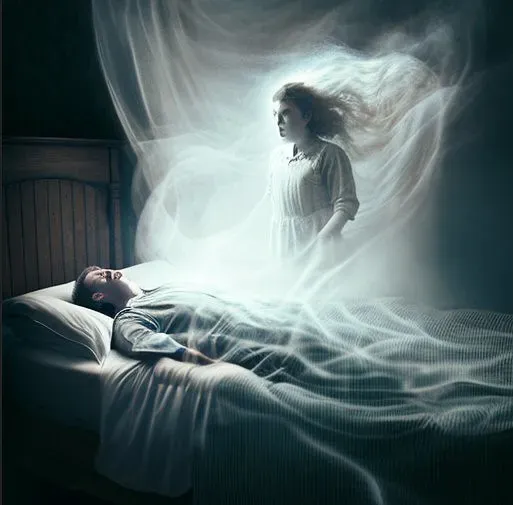
Out-of-body experiences are often lumped together with what people call near-death experiences, but they are not exactly the same thing. A near-death experience can include a whole cluster of sensations: moving through a tunnel, encountering bright light, reviewing one’s life, or feeling overwhelming love and connection. An out-of-body sensation is just one possible piece of that puzzle, focused mainly on the feeling of being separated from the physical body and observing it from outside.
From a scientific perspective, it helps to separate these components instead of treating them as one mysterious package. Some aspects might be linked more to changes in blood flow and brain activity in visual and spatial regions, while others might be tied to emotional and memory circuits in deeper brain structures. When researchers slice the experience into its parts, they can start to match each piece to known brain processes, rather than throwing up their hands and labeling it all as either purely spiritual or purely hallucinated.
The Role of Culture, Belief, and Expectation

Even if the spark for an out-of-body experience comes from the brain’s physiology under stress, the way people describe and interpret it is heavily colored by culture and personal belief. Someone raised with strong religious imagery might speak of leaving the body and entering a realm of light or meeting spiritual figures, while another person might frame it in terms of energy, the universe, or simply say they were “floating” with no religious meaning. The underlying sensations may be similar, but the story wrapped around them can be completely different.
This doesn’t mean people are lying; it means the human mind is built to tell stories, especially after frightening events. Our brains hate loose ends, so we try to stitch scattered impressions, emotions, and half-formed perceptions into something that feels complete. That narrative process kicks in after the medical emergency has passed, and it can shift over time as people repeat the story or hear others share similar experiences. In that sense, every out-of-body story is both a neurological event and a personal, cultural creation.
Why These Experiences Can Feel More “Real” Than Reality
One of the most baffling parts of these reports is how often people insist the experience felt “more real than real life.” From a neuroscience standpoint, that intensity is a clue. When the brain is under extreme threat, stress chemicals surge, and attention systems can lock onto whatever internal imagery or sensations are active in that moment. With normal sensory input weakened or disrupted, the brain may amplify internal signals, making them feel vivid, sharp, and unforgettable.
Later, when people compare that crystalline, emotionally charged memory to the foggy blur of the hospital room, the inner experience wins by sheer force. It is like the difference between a grainy security camera clip and a high-contrast movie scene scored with powerful music. The movie scene feels more real, even though both are just representations. In emergencies, the brain sometimes turns inward and ends up creating that movie-like inner world, and that can leave a mark for the rest of a person’s life.
What Science Can Say – And What It Honestly Cannot
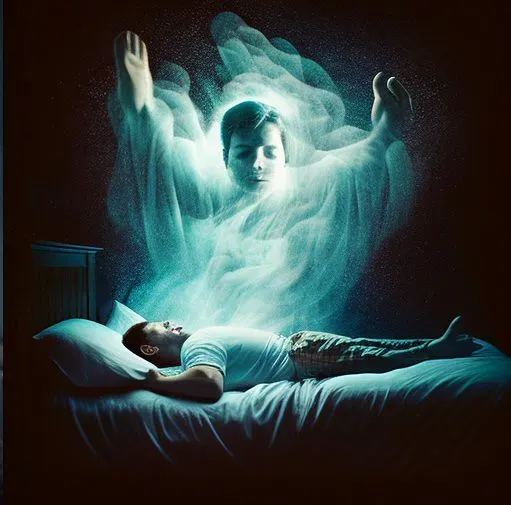
Looking at all the evidence we have in 2026, the most grounded conclusion is that are deeply human, psychologically meaningful, and very likely rooted in how the brain behaves under extreme stress, oxygen loss, and instability. We see related phenomena in epilepsy, in experiments that manipulate body perception, and in other altered states, which strongly suggests a biological foundation rather than a purely supernatural event. Ignoring that evidence in favor of a neat metaphysical story does a disservice to what we’ve actually learned about the brain.
At the same time, science has to be honest about its limits. We cannot play back a perfect recording of someone’s inner world during cardiac arrest, and we cannot completely reconstruct their exact state of awareness second by second. My opinion is that it’s premature to claim these experiences prove that consciousness can exist entirely outside the brain, but it’s also too simplistic to dismiss them as meaningless hallucinations. They sit in a fascinating middle ground: powerful, transformative experiences that most likely arise from a dying or distressed brain, but that still shape how people think about life, death, and identity long after the crisis ends. In the end, maybe the sharper question is not “Did the soul really leave the body?” but “What does it tell us about being human that so many brains, on the edge of failure, create the feeling that we did?”