
Everyday life runs on a simple rule: first you do something, then something happens. You hit the light switch, then the room lights up. You send the text, then your friend replies. Cause comes before effect so reliably that we hardly even think about it. Yet deep in the weird world of quantum physics, experiments are now poking at this rule so hard that some physicists are seriously asking whether “before” and “after” are always as clear as we think.
This sounds ridiculous at first, almost like a science fiction plot twist rather than real research. But over the past decade or so, carefully controlled quantum experiments have shown scenarios where the order of events becomes fuzzy, or where decisions made in the “present” seem to reach back and influence how we describe the “past.” It does not mean we can send lottery numbers to yesterday, but it does mean our everyday idea of a clean, one-directional arrow from cause to effect is starting to look a lot more fragile than we were taught in school.
When Quantum Experiments Make “Before” and “After” Go Fuzzy
One of the key discoveries rattling people’s intuition is something called an indefinite causal order. In normal situations, you can say event A happened before event B or event B happened before event A, full stop. In some quantum setups, though, you can engineer a situation where it is literally meaningless to say which came first. The events are put into a superposition of orders, almost like a “both at once” version of who-caused-what. This isn’t just philosophical hand-waving; it comes from actual mathematical frameworks in quantum theory and experiments designed to test them.
The simplest way to picture it is to imagine two operations, like pushing two buttons in a lab, that affect a quantum particle. Classically, you either push button 1 then button 2, or button 2 then button 1, and you can tell which happened first by looking at the outcome. In these quantum experiments, however, the order of these “button pushes” is entangled with a quantum system so that, until you measure, the process behaves as if both possible orders are happening together. Asking which was the cause and which was the effect becomes like asking which side of a coin landed up before you actually flip it.
The Quantum Switch: A Circuit Where the Order of Events Is in Superposition
The most famous tool for studying indefinite causal order is something called the quantum switch, which sounds like marketing for a sci‑fi gadget but is a real, implemented protocol. In a quantum switch, two operations A and B are applied to a quantum system, but the control over which order they happen in is itself a quantum system. That control system can be in a superposition of “A then B” and “B then A,” so the overall evolution is not fixed to a single causal sequence. The upshot is that you literally build a process where “cause then effect” and “effect then cause” are merged into a single quantum object.
What makes this even more wild is that the quantum switch is not just a mind game; it can give practical advantages. In some theoretical and experimental studies, using indefinite causal order can let you perform certain communication or computing tasks more efficiently than would be possible if you had to commit to a definite order of operations. That means this strange blurring of causality is not just a curiosity; it is a resource, like quantum entanglement or superposition, that you can exploit. When something becomes a resource in physics, scientists start taking it very seriously.
Delayed-Choice Experiments: When Present Decisions Reshape the Past Story
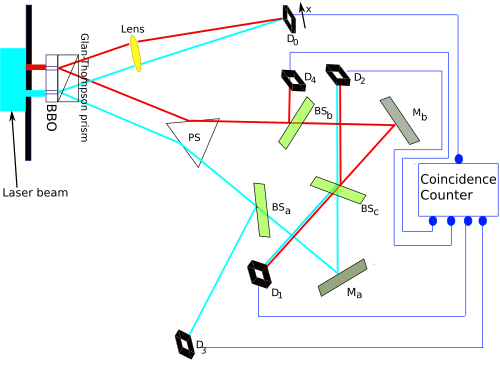
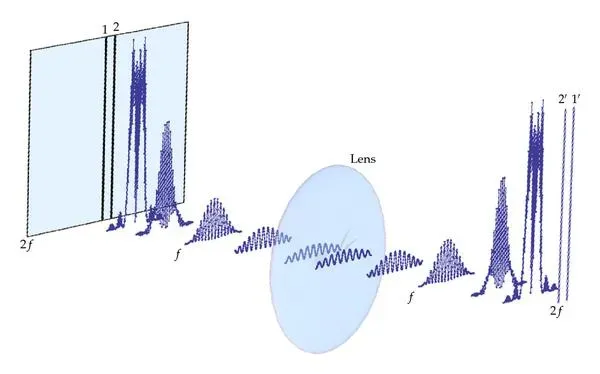
Indefinite causal order is not the only place quantum physics pokes at cause and effect. Delayed-choice experiments, inspired by ideas originally proposed in the twentieth century, do something just as unsettling. In these experiments, you send a quantum particle, like a photon, through an apparatus where it could behave either like a wave or like a particle depending on what measurement you perform. The twist is that you choose what kind of measurement to make only after the photon has already entered – or even effectively passed through – the setup.
When you look at the data, it appears as if your late choice determines whether the particle behaved like a wave or a particle all along. Of course, it is not literally that your decision is reaching backwards through time in some cartoonish way. Physicists usually explain it by saying the quantum description of the system does not assign a definite “wave” or “particle” story until the measurement is made. But psychologically, it feels as though the effect – your measurement choice – has dictated what you are allowed to say about the cause – the particle’s earlier behavior. At the very least, it shows that our classical habit of describing continuous, well-defined histories can fall apart at the quantum level.
Why This Does Not (Yet) Let You Send Messages to the Past
Whenever people hear about experiments that seem to scramble cause and effect, the first instinct is to imagine time-travel messages or paradoxes where you warn your past self. Quantum physics stubbornly refuses to give us anything that dramatic. Even with indefinite causal order and delayed-choice setups, you cannot use these phenomena to send a controlled signal to the past or change an outcome that has already been recorded. The statistics of the measurements always line up in a way that preserves a consistent story when all the information is taken into account.
The key point is that while some descriptions of events become fuzzy or order-independent, the overall theory still respects a deeper version of causality that rules out contradictions. In practice, that means the universe seems to protect us from the classic time-travel paradoxes, even as it plays surprisingly loose with what we can say about intermediate steps. Personally, I find that tension fascinating: at the human level, cause and effect feel hard and clean; at the quantum level, they are more like a web of constraints that only fully snaps into focus when you look at the whole process at once.
How Space, Time, and Gravity Complicate the Causality Story Further
As if quantum weirdness were not enough, relativity has its own ways of complicating causality. In Einstein’s picture, space and time blend into spacetime, and what counts as “simultaneous” depends on how you are moving. Two events that look like they happen at the same time for one observer may happen in a different order for someone zipping by at a high speed. Relativity does keep a strict notion of cause and effect by using light cones – signals cannot travel faster than light – but it already shows that “before” and “after” are not as absolute as our everyday intuition suggests.
Now imagine mixing that relativity picture with quantum indefinite causal order, and you can see why theorists get excited. There are active research programs probing whether spacetime itself could have an indefinite structure at the tiniest scales, so that not only quantum operations but the very geometry that defines “here” and “there,” “before” and “after,” might be in some kind of superposition. We do not have solid experimental evidence for that yet, but even the possibility is enough to make traditional ideas about causality feel more like a useful approximation than an unshakeable law.
Everyday Intuition vs. Quantum Reality: Why This Feels So Wrong
It is no surprise that talk of effects not clearly following causes makes people uncomfortable. Our brains are evolutionarily tuned to spot causal patterns: the rustle in the bushes caused by a predator, the illness that follows bad water, the crash after hitting the brakes too late. This wiring is so deep that we tend to project simple, linear cause-and-effect chains onto everything from our relationships to the economy. Quantum physics comes along and says, in effect, that our neat little arrows of causality are local stories that do not always apply at the most fundamental level.
When I first learned about the quantum switch and delayed-choice experiments, my gut reaction was to look for some hidden loophole that would let me keep my comfortable picture of time. The more I read, the more I had to accept that the real loophole was my intuition. The universe is under no obligation to cater to how human brains like to organize events. In a strange way, I find that liberating: it reminds me that our deepest assumptions – even about something as basic as cause preceding effect – are working theories, not sacred truths carved into the fabric of reality.
Why This Discovery Matters for the Future of Technology and Thought
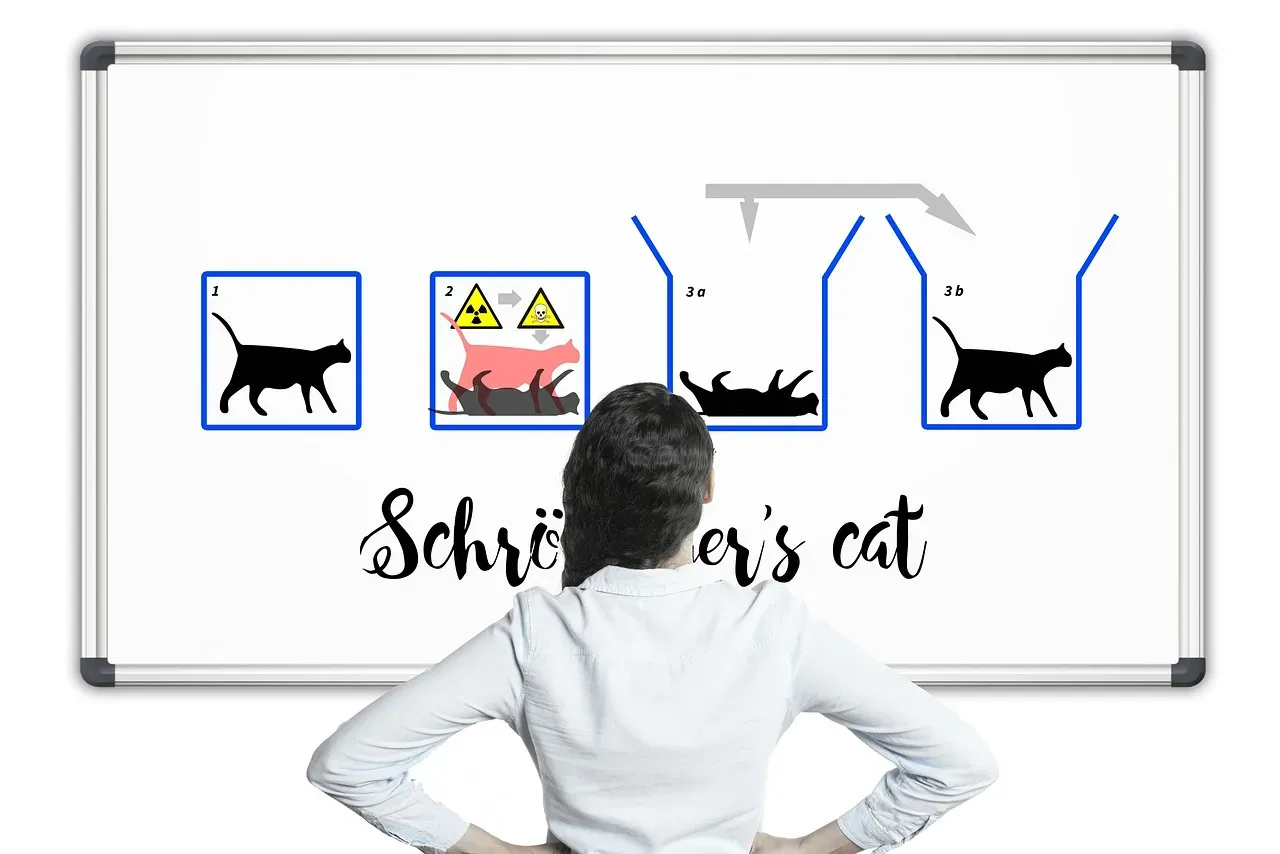
It is tempting to file all this under “weird quantum trivia” and move on, but that would miss the bigger picture. The realization that causality itself can be put into superposition is already feeding into quantum information science. Protocols using indefinite causal order can, at least in principle, perform certain tasks more efficiently or robustly than any classical system tied to a fixed sequence of operations. As our quantum technologies mature, these effects could become design tools rather than just conceptual puzzles, much like entanglement went from paradox to practical resource.
Beyond technology, these discoveries force us to re-examine some philosophical habits. Many big questions – about free will, determinism, and the nature of time – quietly assume that causes always line up in a neat, one-way chain. Quantum physics is not handing us simple answers here, but it is telling us that any serious picture of reality has to make room for processes where “what caused what” is more relational, more global, and sometimes literally undefined. If that does not make us a bit humbler about our grand theories, I do not know what will.
Conclusion: Maybe Causality Was Never as Simple as We Wanted
When you strip it down, the quantum discovery shaking scientists is not a single dramatic headline result, but a growing body of work showing that causality can be indefinite, context-dependent, and sometimes impossible to pin down in classical terms. Experiments like the quantum switch and delayed-choice setups have pushed us past the point where we can blame this on vague language or bad analogies. There are real, testable situations in which it simply does not make sense to insist that cause must always come cleanly before effect in a single, universal order.
My own opinion is that we will eventually see everyday causality as a kind of powerful illusion: extremely accurate in the macroscopic world we live in, but not fundamental in the way we once hoped. The arrow from cause to effect will stay incredibly useful – no one is planning a “superposition of brake pedals” in your car – but we will know it sits on top of a deeper layer where reality plays a subtler game. Maybe that is the real shock: not that quantum physics breaks causality, but that it shows how provincial our old picture was. If even time’s basic flow can bend under scrutiny, what other “obvious” truths are waiting to be taken apart next?