

If there’s one idea in modern physics that feels like it was ripped straight from science fiction, it’s quantum entanglement. Two tiny particles, separated by kilometers or even light years, somehow behave as if they’re still touching, reacting to each other in ways that seem to ignore space itself. When I first tried to wrap my head around it, it honestly felt more like magic than science.
But beneath the weirdness, entanglement is very real, very carefully tested, and quietly reshaping how we think about reality, information, and even future technologies. It challenges our intuition about cause and effect, raises deep philosophical questions, and sits at the heart of some of the most exciting experiments in physics today. Let’s unpack the enigma step by step – and see why Einstein was deeply uncomfortable with it.
The Strange Birth of a Quantum Mystery
Quantum entanglement didn’t start as a fancy tech buzzword; it began as a headache for the people who created quantum theory. In the early twentieth century, as physicists tried to describe atoms and light, they discovered that particles behaved like smeared-out waves of possibility rather than tiny billiard balls. That alone was hard enough to swallow, but then came the realization that multiple particles could share a single, unified quantum description.
Instead of each particle having its own separate set of properties, the mathematics sometimes said: treat them as one combined system. Change something about one part, and the entire description shifted at once. The idea that two particles could be so deeply linked that they no longer had independent identities sounded less like physics and more like a riddle. From the very beginning, entanglement was less a “feature” and more an unsettling side effect of the equations that actually worked.
What Entanglement Really Means (Without the Hype)

At its core, entanglement means that two or more particles share a single quantum state, so their properties are correlated in ways that can’t be explained by ordinary shared history alone. Picture two coins that you flip in different rooms, yet every time, whenever you check them, they always land on opposite sides – heads and tails – no matter how often you try. That would feel suspicious, like some hidden trick, right? Entanglement is that feeling, but rigorously tested and backed by math.
The key twist is that, before you look, quantum theory doesn’t say each particle secretly has a fixed value. Instead, it says the pair is in a combined state where only their relationship is well defined. You can’t meaningfully say “this one is heads and that one is tails” until you look; you can only say that they will always be opposite once measured. That shift – from thinking of properties as pre-existing, to thinking in terms of relationships and probabilities – is where most of our intuition breaks down.
Einstein’s “Spooky Action at a Distance” Problem

Albert Einstein famously hated the implications of entanglement. He felt that if reality made sense, then far-apart objects should be influenced only through signals that take time to travel, never instantaneously. So when he and collaborators proposed a thought experiment involving entangled particles, their goal wasn’t to celebrate quantum theory; it was to expose what they thought was a hidden flaw and argue that the theory must be incomplete.
They imagined two particles flying apart, with linked properties, and argued that if measuring one instantly fixed the other, something deeply disturbing was going on. Either information was traveling faster than light, violating relativity, or each particle already had definite properties that quantum theory simply failed to account for. Einstein preferred the second option: that there were hidden variables underneath the quantum description. For decades, the question simmered: is quantum mechanics just a clever approximation, or is reality genuinely this strange?
Bell’s Theorem: Turning Philosophy Into a Test

For a long time, debates about entanglement sounded almost philosophical, as if physicists were arguing about invisible gears behind the scenes. That changed when physicist John Bell came up with a way to turn the argument into a clear experimental question. He showed that if hidden variables existed and followed the usual rules of locality, then measurements on entangled particles would obey certain statistical limits.
Those limits, known as Bell inequalities, gave experimenters something concrete to test. If the inequalities were always satisfied, Einstein’s dream of a more intuitive hidden-variable explanation might survive. But if they were violated, then local hidden-variable theories would be ruled out, leaving us with the bizarre yet precise predictions of quantum mechanics. This was the moment when entanglement moved from philosophical discomfort into the hard, testable core of physics.
Experiments That Proved the Weirdness Is Real

Starting in the late twentieth century and continuing into the twenty-first, researchers carried out increasingly sophisticated tests of Bell’s ideas. They created pairs of entangled photons and sent them to distant detectors, randomly changing how each one was measured at the last moment. Time and again, the results violated Bell’s inequalities and matched quantum predictions, showing correlations stronger than any local hidden-variable model could explain.
Early experiments still had potential loopholes, like imperfect detectors or the possibility of subtle communication between devices. Over time, scientists closed these gaps, making the experiments more rigorous and covering larger distances, even using satellites in some recent work. The consistent outcome has been clear: nature really does produce entangled correlations that defy classical explanation. The universe, as far as we can tell, genuinely behaves in this strange, nonlocal way – though, crucially, without allowing faster-than-light signaling.
Why Entanglement Doesn’t Let You Send Instant Messages
Here’s where popular explanations often go off the rails: entanglement feels like instant communication, but it doesn’t let you send a controllable message faster than light. When you measure your particle, you get a random outcome. The other person, far away, also gets a random outcome. Only when you later compare notes – using ordinary, slower-than-light communication – do you see the striking correlations. On its own, each side just looks like noise.
A helpful analogy is rolling two dice that are mysteriously rigged to always add up to seven. If you’re alone with your die, you can’t use it to send information; your roll is still unpredictable. It’s only when you and someone else sit down and compare your results that the special relationship becomes obvious. In the same way, entanglement encodes correlations, not readable, deliberate signals. That’s how quantum theory can be both deeply nonlocal in its structure and still perfectly compatible with Einstein’s speed limit for information.
From Thought Experiment to Technology: Quantum Cryptography
What started as a conceptual headache is now the backbone of real technologies, especially in cryptography. Entanglement allows two parties to generate shared, secret keys in such a way that any attempt at eavesdropping leaves unmistakable traces. If an outsider tries to intercept or measure the entangled particles in transit, the delicate quantum correlations are disturbed, and the intrusion becomes detectable when the legitimate users compare parts of their data.
This principle underlies quantum key distribution, which has been demonstrated over fiber-optic networks and even using satellites to bridge long distances. Governments and companies are investing in this area because it promises security based not just on mathematical difficulty, but on the fundamental laws of physics. It’s wild to think that an idea once dismissed as “spooky” is now being harnessed to protect bank transactions and sensitive communications in the real world.
Entanglement and the Dream of Quantum Computers

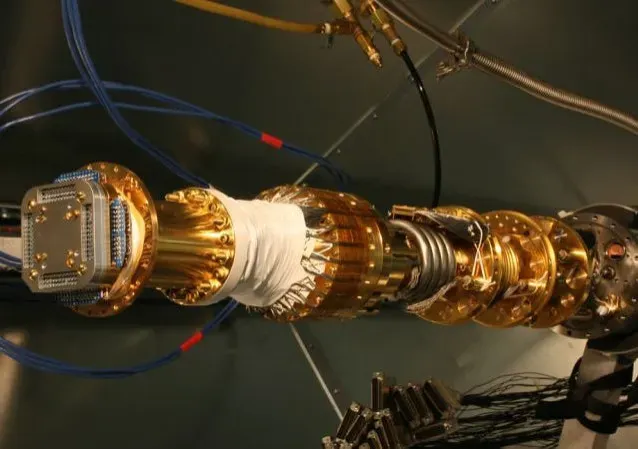
Entanglement is also one of the secret ingredients behind the hype about quantum computing. In a classical computer, bits are either zero or one, and you process them step by logical step. In a quantum computer, qubits can exist in superpositions and can be entangled with one another, allowing certain types of computation to explore many possibilities in a single, structured operation. It’s not that a quantum computer “tries every answer at once” in a naive way, but the entangled structure lets some algorithms gain dramatic advantages.
For problems like factoring large numbers, simulating molecules, or optimizing complex systems, quantum algorithms can, at least in theory, outperform the best known classical methods. Entanglement is what ties qubits together into a powerful collective rather than just a bunch of isolated, fuzzy bits. The challenge is that entanglement is incredibly fragile, easily disrupted by stray interactions with the environment. Building machines that can create, protect, and exploit entangled states at scale is one of the biggest engineering battles in modern technology.
The Cosmic Angle: Entanglement, Space, and Reality

Beyond gadgets and encryption, entanglement is quietly reshaping how physicists think about space, time, and the fabric of reality. Some modern approaches to quantum gravity explore the idea that spacetime itself might emerge from patterns of entanglement, as if geometry is just what large webs of quantum relationships look like from far away. While these ideas are still being developed and tested, they hint that entanglement is not just a weird side effect but something deeply fundamental.
In experiments with black holes and quantum information, entanglement plays a starring role in understanding how information might be preserved, even when classical intuition says it should be lost. The notion that the connectivity of space could be related to the connectivity of quantum states is bold and not yet fully settled. But it shows how far this once-annoying concept has come – from a philosophical nuisance to a potential key for unifying our theories of the very large and the very small.
Living With the Weirdness: What Entanglement Teaches Us

For me, the most humbling thing about entanglement is how it forces us to loosen our grip on everyday intuition. We’re used to thinking of the world as made up of separate, independent things that only influence each other through clear pushes and pulls. Entanglement says: sometimes, the deeper description is about relationships, not about isolated objects and their pre-existing properties. Reality, on the quantum level, is less like a set of Lego bricks and more like a constantly shifting pattern in a spiderweb.
You don’t have to like that picture for it to be true; the experiments keep confirming it whether or not it fits our gut feelings. Yet there’s something oddly beautiful about a universe where connection is so fundamental that two particles can remain linked across oceans or orbits. As we keep probing this phenomenon – building better quantum devices, testing stranger ideas, and refining our theories – we’re really asking a simple but profound question: just how deeply is everything connected, in ways we’re only beginning to see?
In the end, the enigma of quantum entanglement is less about particles doing something flashy and more about us learning to see the world in a new way. It’s a reminder that nature doesn’t owe us simplicity or comfort; it only owes us honesty, if we’re willing to look closely enough. When you think about two particles whispering to each other across vast distances, does it feel unsettling to you – or quietly exhilarating?