

You know that strange shiver you get sometimes, the one that makes you suddenly turn your head and, sure enough, someone’s eyes are on you? It feels almost magical, like you’ve got a sixth sense quietly scanning the room for hidden stares. For a lot of people, that feeling is so vivid that it seems impossible it could be anything but real. Yet when you start to dig into what psychologists and neuroscientists have actually found, the story becomes more complicated, more surprising, and honestly a lot more interesting than a simple yes-or-no answer.
As you look closer, you find there’s a tangle of brain shortcuts, emotional habits, social instincts, and plain old coincidence behind that eerie sensation. Sometimes you really are picking up subtle cues that someone’s paying attention to you; other times, your mind is filling in gaps and then convincing you it “knew it all along.” Understanding the psychology behind this experience doesn’t ruin the mystery – it helps you see how finely tuned your brain is to other people, and how that tuning can both protect you and trick you at the same time.
The Brain’s Hyper-Sensitive Threat Radar

From a survival point of view, your brain is wired to treat being watched as serious business. In the distant past, if something was staring at you, it might have been a predator, an enemy, or at least something you needed to pay attention to. Today, the “predators” are more likely to be a rude stranger or a judgmental coworker, but your nervous system still reacts as if keeping you alive depends on it. That’s why a sense of eyes on you can feel urgent and intense, even when the situation is harmless.
Deep in your brain, areas involved in detecting threat and monitoring your surroundings constantly scan for signals that you’re the center of attention. You don’t consciously tell your brain to do this; it just does, all day, every day. When that system thinks it detects trouble – maybe a tiny movement in your peripheral vision, a change in posture, or a subtle silence – it can trigger a jolt of unease before you even know why. You experience that jolt as a feeling, and your mind quickly wraps a story around it: someone must be watching you.
Micro-Cues You Notice Without Realizing It

Most of the time, when you “sense” you’re being watched and turn around to catch someone looking, you’ve actually picked up on tiny cues without realizing it. Maybe you saw a shadow shift, a head turn, or a reflection in a window. Maybe you heard a small rustle, a chair move, or a faint pause in conversation behind you. These signals are so small and so fast that your conscious mind never notices them – but your unconscious processing does, and then nudges you to look.
Your brain is constantly gathering fragments of information from your surroundings and stitching them into something that feels like a clean, clear intuition. Because you don’t see the stitching work, you experience the final result as a sudden “knowing” that someone is staring. It feels like a pure sixth sense, but in reality, it’s more like your internal detective quietly following a trail of crumbs and then handing you the solution without showing the work.
Pattern-Seeking, Coincidence, and Memory Tricks

Your mind is a powerful pattern-recognition machine, which is great when there really is a pattern – but it also means you’re prone to see patterns where there are none. Think about all the times you’ve had a weird feeling and turned around to see no one looking your way. Those moments fade from memory. The times when you look and someone happens to be glancing at you stick in your mind because they feel meaningful, almost spooky. Over time, your brain builds a story: you’re “good” at sensing eyes on you.
This is a kind of memory bias. You remember hits and forget misses, so the few successful guesses outweigh the many false alarms in your personal narrative. On top of that, you tend to interpret coincidences as confirmation of a hidden ability. If you already believe you can feel when you’re being watched, every matching moment feels like proof, and every non-matching moment feels irrelevant. Little by little, that belief gets stronger, even if the actual odds have not changed at all.
Anxiety, Self-Consciousness, and the Spotlight Effect

When you feel anxious or self-conscious, you’re far more likely to think people are watching you, even when they aren’t. Psychologists sometimes call this the “spotlight effect”: you feel like a bright light is shining on your every move, when in reality most people are wrapped up in their own thoughts. If you’re worried about how you look, what you just said, or whether you’re doing something wrong, you automatically scan for signs of judgment – especially eyes.
That anxious scanning can easily turn into feeling watched, even without much evidence. A neutral glance can suddenly feel intense or hostile when you’re already on edge. Interestingly, once you calm down, the world often seems less “stare-heavy,” even if nothing around you has changed. This suggests that your internal state – your mood, your stress level, your sense of security – plays a huge role in whether you feel observed, maybe even more than what anyone is actually doing.
Empathy, Social Sensitivity, and “Reading the Room”

Some people do seem especially good at picking up when others are focused on them, but the explanation is usually grounded in social skills, not supernatural senses. If you’re highly empathetic or socially sensitive, you might naturally pay very close attention to facial expressions, eye direction, and body language. In a room full of people, you can almost feel where the attention is flowing, like you’re sensing invisible currents of interest and emotion.
This kind of sensitivity can be incredibly useful. It helps you catch when someone is interested, uncomfortable, or silently asking for your response. It also means you may notice even a quick glance in your direction and register it before you’re consciously aware. To you, it feels like you “felt” the stare itself. In reality, you’re just better than average at tracking all the social signals swirling around you, even at the edge of your awareness.
What Experiments Say About the “Staring Effect”
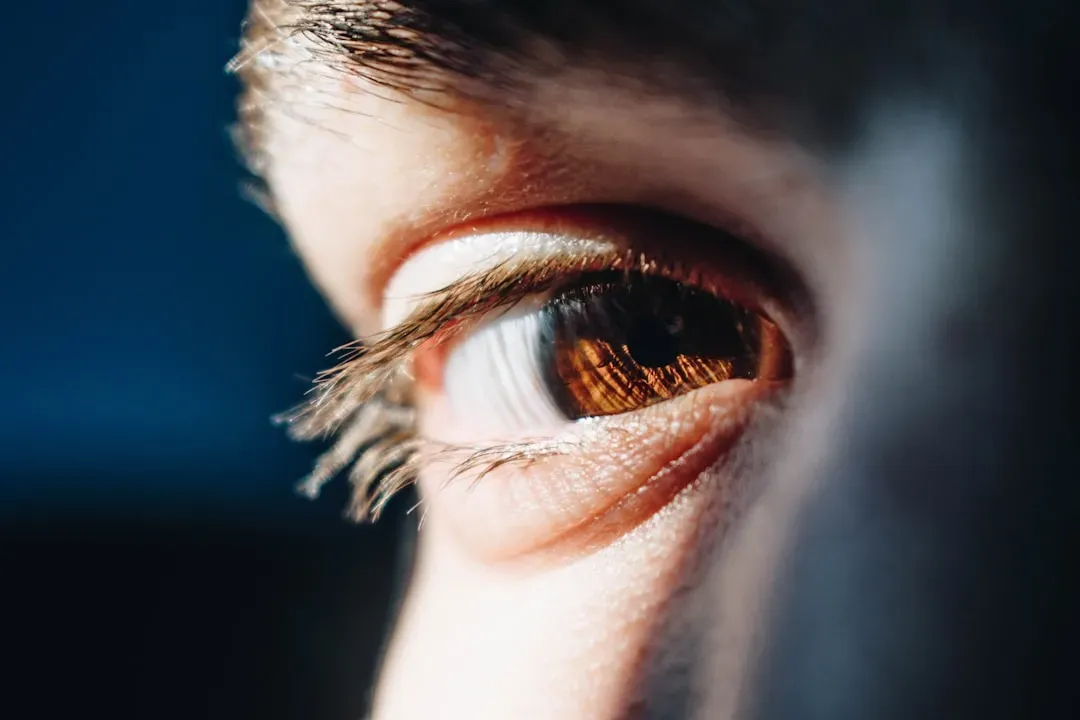
Researchers have tried to test whether you truly have a special sense for being watched, beyond all the normal visual and auditory cues. In many controlled experiments, people are asked to guess whether someone behind them is staring or not, while various conditions are carefully controlled. Overall, when you strip away the usual clues, people tend to perform around what you’d expect from chance. That means the solid scientific support for a literal psychic-like ability is, at best, very thin.
However, that does not mean your experience is fake or meaningless. It points to a different conclusion: your sense of being watched likely comes from a mix of subtle perception, emotional state, memory quirks, and social awareness, rather than a mysterious extra sense. In everyday life, you rarely sit in a perfectly controlled lab setting, so all those real-world cues are still there, shaping your gut feelings. When you understand this, you do not have to choose between “it is all in your head” and “it is magic.” You can see it as your brain doing exactly what it evolved to do.
How to Use This Knowledge in Daily Life

Once you recognize that your sense of being watched is a blend of real perception and mental interpretation, you can handle it more calmly. When that prickly feeling hits, you can pause and ask yourself a few quick questions: Are you feeling anxious or insecure right now? Is there any obvious cue, like a reflection or a sound, that might have triggered you? Are you assuming more than you actually know? That short mental check-in can keep you from spiraling into worry about what others think.
At the same time, you can deliberately sharpen the useful side of this sensitivity. You can practice “reading the room” by paying attention to where people’s eyes go, how their posture shifts, and how the energy of a group changes. Instead of treating your feelings as mysterious omens, you can treat them as hypotheses – and then look for real-world evidence to confirm or revise them. Over time, you build a healthier balance: you trust your instincts, but you also ground them in what you can actually see and hear.
Conclusion: A Powerful Instinct, Not a Superpower
When you really look at it, the psychology behind feeling watched is less about spooky abilities and more about how deeply tuned you are to other people. Your brain is constantly on patrol for social and physical threats, scanning for attention, judgment, and interest, and it often does that work in the background. Sometimes it gets things right in a way that feels almost magical. Other times, it misfires because of anxiety, expectation, or random coincidence, and you only notice the hits, not the misses.
Instead of seeing this as a flaw, you can think of it as a powerful instinct that just needs interpreting. If you treat that prickling feeling as useful information rather than unquestionable truth, you give yourself room to stay alert without becoming paranoid. You are not a mind reader, but you are a remarkably sensitive social animal whose brain is always trying to keep up with the eyes around you. Next time you suddenly feel a stare on the back of your neck, will you assume it is magic – or will you be curious about what your mind just noticed before you did?