
Imagine being told that the universe was not fully real until something like you showed up to look at it. Not just that your brain interprets what is out there, but that your observation helps decide what “out there” even is. That is the unsettling, strangely poetic essence of John Archibald Wheeler’s participatory universe: reality is not a finished movie we sit down to watch; it is a film that is still being written every time an observer presses play.
When I first came across Wheeler’s idea, it felt almost offensive to my common sense. Surely stars exploded and galaxies collided long before any humans arrived to stare at them. Yet the deeper I went into quantum physics, the more I realized Wheeler was not just being mystical for fun. He was trying to take quantum experiments seriously, even when they seem to say that the way we choose to look at the world helps shape what the world becomes. If that sounds wild, keep reading – because this is where physics starts to feel uncomfortably personal.
Who Was John Wheeler, And Why Did He Dare To Rewrite Reality?
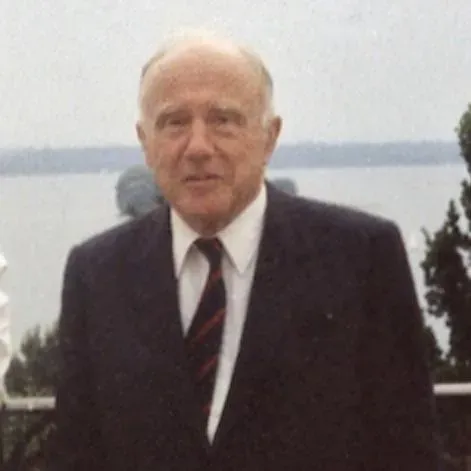
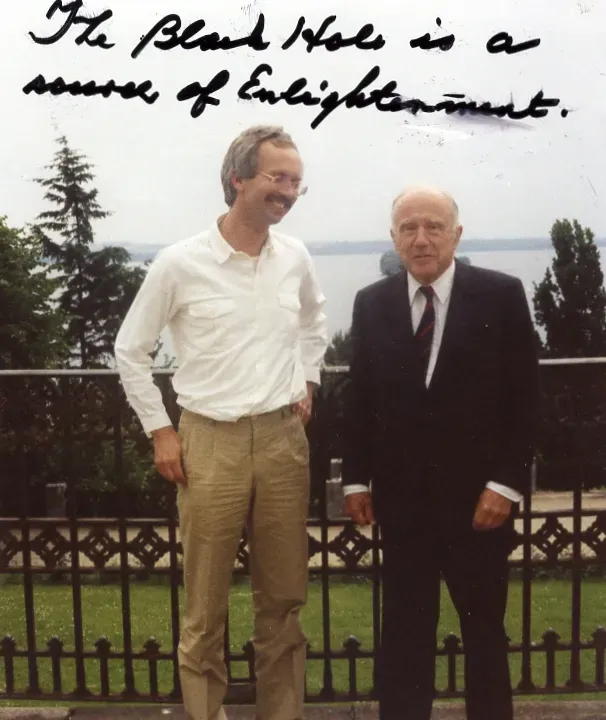
John Archibald Wheeler was not some fringe philosopher lobbing ideas from the sidelines; he was a towering figure in twentieth‑century physics. He worked with Niels Bohr on nuclear fission, coined the term “black hole,” and helped shape modern general relativity. In other words, this was a person deeply trusted with the most serious, concrete questions in physics – bombs, stars, space-time itself – who then turned around and suggested that observers might actually help bring the universe into being.
Because he had such mainstream credibility, his “participatory universe” was harder to dismiss as New Age daydreaming. Wheeler was not rejecting hard science; he was doubling down on it, insisting that we follow quantum theory wherever it leads, even if it leads to the unsettling conclusion that acts of measurement are not passive. In his late career, he shifted from asking what the universe is made of to asking how our questions and observations participate in its story. That pivot – from matter to meaning – is what makes his legacy so unusual and so provocative today.
From Classical Certainty To Quantum Weirdness: The Setup For A Radical Idea
For most of scientific history, reality was treated like a giant, perfectly running machine. In that classical picture, the universe is made of solid stuff with definite properties – where things are, how fast they move – regardless of whether anyone is watching. An observer is like a person checking the score of a game on their phone; the game is happening out there whether you look or not, and your glance changes nothing except your own knowledge.
Quantum mechanics blew a hole straight through that comfortable picture. At tiny scales, particles are described not as little billiard balls but as fuzzy waves of possibility, spread out over different locations or states at once. Only when we perform a measurement do we get a single, definite outcome. That shift – from a world that simply “is” to a world that “becomes” when measured – created the stage on which Wheeler would later step in and ask: if measurement is so central, what exactly is the role of the observer doing the measuring?
The Quantum Measurement Problem: When Looking Changes What Is
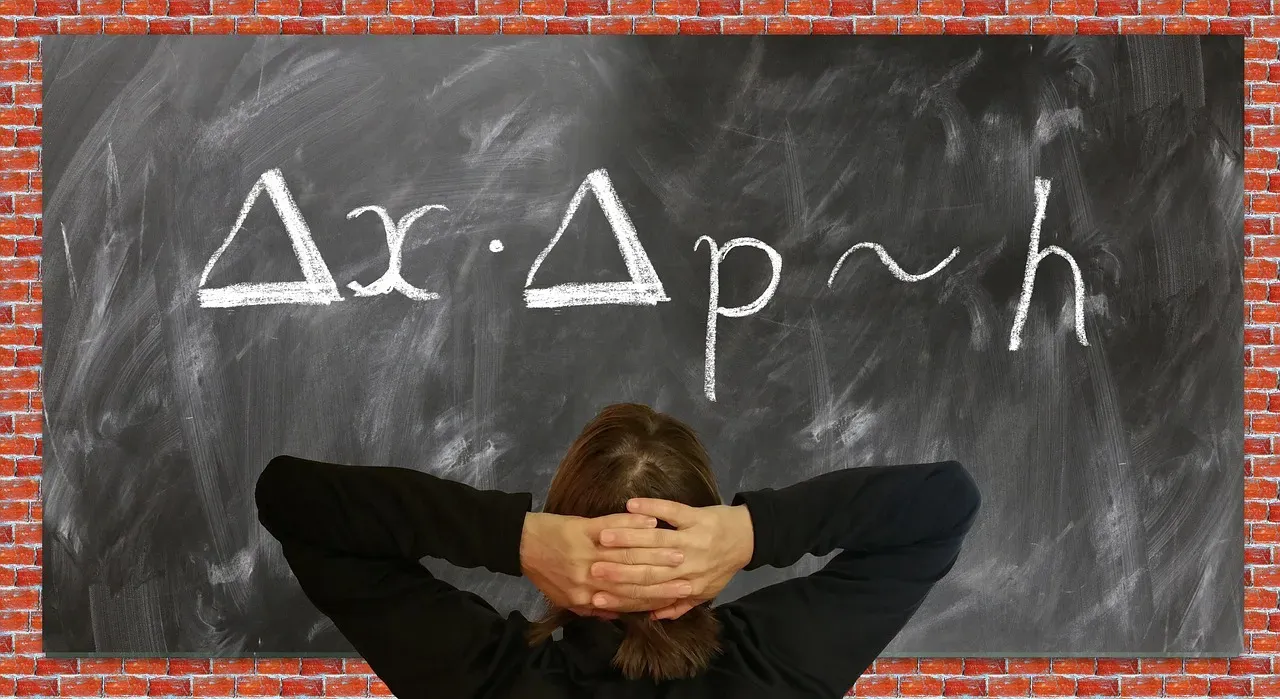
The heart of the trouble is something called the measurement problem. Before we look, quantum theory describes a system – say, an electron – as a superposition, a blend of multiple possible states. After we measure, we always find one concrete result, like “the electron is here, not there.” The theory gives incredibly accurate probabilities for these outcomes, but it does not say, in a straightforward way, how or why one possibility becomes real and the rest vanish. The act of measurement sits uncomfortably at the boundary between the smooth math and the sharp reality we experience.
In everyday life, this sounds almost trivial: of course we do not see a chair both in the kitchen and in the bedroom at the same time. But at the quantum level, that kind of superposition appears to be standard. So what turns a hazy cloud of possibilities into a solid fact? Is it the measuring device, the environment, or something about consciousness itself? Different interpretations of quantum mechanics answer that differently, but they all circle the same strange observation: how we interact with a system is not just a passive peek; it is part of what makes the outcome real.
Wheeler’s Participatory Universe: The Universe As A Question‑And‑Answer Game
Wheeler’s big leap was to take the centrality of measurement and push it all the way to the cosmos. He suggested that observers do not simply uncover a ready‑made world; instead, the universe and observers are locked in a kind of ongoing dialogue. The universe offers possibilities, and observers pose questions – through measurements, experiments, and choices about what to look for. Reality, in this view, crystallizes out of that back‑and‑forth, a bit like a conversation shaping the story told, rather than one person reading from a finished script.
In more intuitive terms, you could imagine the universe as a vast database that does not “load” a page until someone requests it. Wheeler liked to picture reality as “law without law,” emerging from acts of observation and information exchange rather than from some rigid, preexisting set of properties. The participatory universe is not saying that our individual egos create planets and galaxies on demand. It is saying that observers as a whole – wherever and whatever they are – play an essential role in how the universe becomes definite, instead of remaining a blur of unasked questions.
Delayed‑Choice Experiments: When Present Choices Seem To Touch The Past
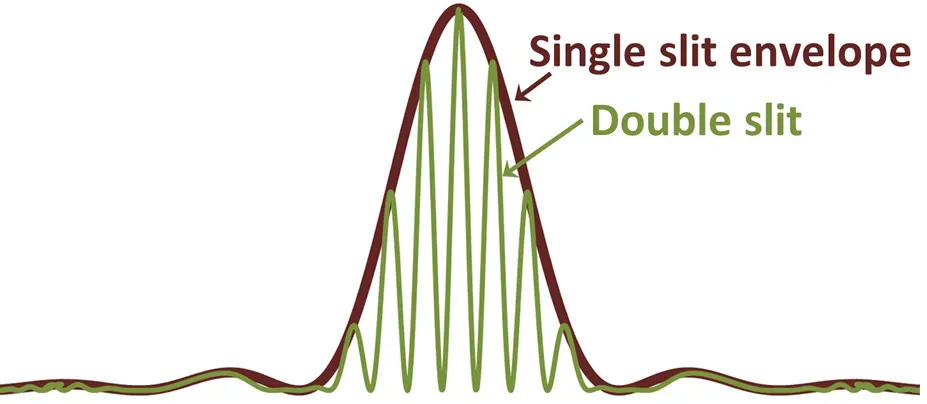
One of Wheeler’s most famous contributions is the delayed‑choice experiment, a mind‑bending twist on the classic double‑slit setup. In the usual version, particles like photons are sent through two slits, and depending on how we measure them, they can behave like smooth waves or like discrete particles. Wheeler’s idea was to decide what kind of measurement to perform only after the photon has already passed the slits, as if we are choosing retroactively whether it traveled like a wave or picked one path like a particle.
Modern versions of these experiments have been carried out, and they consistently support the quantum prediction: the choice of measurement made later still determines whether we see wave‑like or particle‑like behavior. Interpreting this is tricky. It does not mean we literally rewrite the past in a science‑fiction sense, but it does undercut the idea that the photon had some fixed, observer‑independent story all along. For Wheeler, this was powerful evidence that reality is not fully determined until an observation is made, and that our choices about how to look at the world are woven into the fabric of what the world turns out to be.
Do Observers Need To Be Conscious? The Sharp Edge Of The Debate
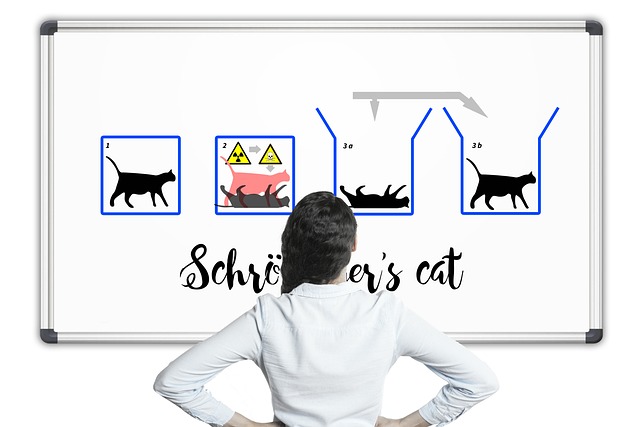
Here is where the conversation gets really heated: when people hear “observer,” they often jump to “human mind creates reality.” Wheeler himself walked a careful line. He emphasized observers and acts of measurement but did not clearly insist that human consciousness, specifically, is a magical ingredient. In many modern approaches, any system that can register and irreversibly record information – like a detector or an environment full of particles – can serve as an “observer” in the quantum sense, without needing self‑awareness or thoughts.
Still, Wheeler’s language about a participatory universe has inspired plenty of people to push the idea further and argue that consciousness is fundamental, not just a by‑product of matter. In my view, the honest answer is that physics alone has not settled this. We have strong theories describing how measurement outcomes become stable records via interactions with the environment, but the connection between subjective experience and these physical processes is an open problem. The participatory universe sits exactly on that fault line, fascinating because it hints at a deep link between mind and world, yet frustrating because it refuses to give a clean, final answer.
Critiques, Misuses, And What Wheeler Probably Did Not Mean
Because the participatory universe sounds so dramatic, it has been repeatedly stretched far beyond what the evidence supports. You can find people claiming that individual thoughts instantly manifest physical reality or that quantum theory proves every belief creates its own universe. That kind of interpretation usually cherry‑picks the weirdest language and ignores the precise conditions under which quantum effects matter, like microscopic scales, isolation from the environment, and carefully controlled experiments.
Many physicists push back hard, arguing that Wheeler’s ideas, while provocative, should not be inflated into a license for wishful thinking. Decoherence theory, for example, explains how interactions with the environment make certain outcomes effectively classical without appealing to mystical observers. From that angle, the participatory language is more about how information is established and shared than about minds magically overriding physics. I tend to side with this cautious reading: Wheeler was reaching for a poetic way to express a real puzzle, not writing a self‑help manual disguised as quantum theory.
Why Wheeler’s Vision Still Matters In 2026: Meaning, Responsibility, And Awe

Even with all the caveats, I think Wheeler’s participatory universe hits a nerve because it suggests that we are not just accidental spectators in a cold, indifferent cosmos. If reality, at some level, depends on acts of observation and questions being asked, then beings capable of asking those questions are not trivial side effects. Our curiosity, experiments, and even our confusion become part of how the universe explores its own possibilities. That is a surprisingly uplifting thought in an age where it’s easy to feel small and powerless.
At the same time, his idea quietly raises a moral undertone: if we are participants, not bystanders, then how we choose to look at the world matters. The stories we tell, the measurements we value, the questions we keep returning to – they shape not just our private experience but, in a subtle way, the shared reality we all navigate. I do not think physics alone can tell us how to live, but Wheeler’s picture nudges us to take our role more seriously. We are, in a sense, co‑authors of the cosmic narrative, whether we like it or not.
Conclusion: My Take On The Participatory Universe
Personally, I do not think Wheeler proved that consciousness literally conjures the universe into being, and I am wary of turning his participatory universe into a slogan for magical thinking. The safest reading, in my opinion, is that quantum physics shows us a world where outcomes are not fully settled until interactions – measurements – happen, and where the questions we ask genuinely matter for what becomes fact. That is already radical enough without claiming that a single human mind can bend the cosmos at will.
Where I do agree with Wheeler, in spirit, is that observers are not irrelevant extras wandering through a pre‑written script. Our capacity to measure, record, and understand is woven into how the universe becomes knowable and definite. That makes the act of looking at the world feel less like idle curiosity and more like a kind of responsibility. If reality is, even in a small way, a participatory project, then the way we choose to pay attention – to each other, to the planet, to the mysteries we have not solved yet – might be one of the most meaningful things we ever do. How differently would you move through your day if you truly believed that how you look at the world helps decide what it becomes?