
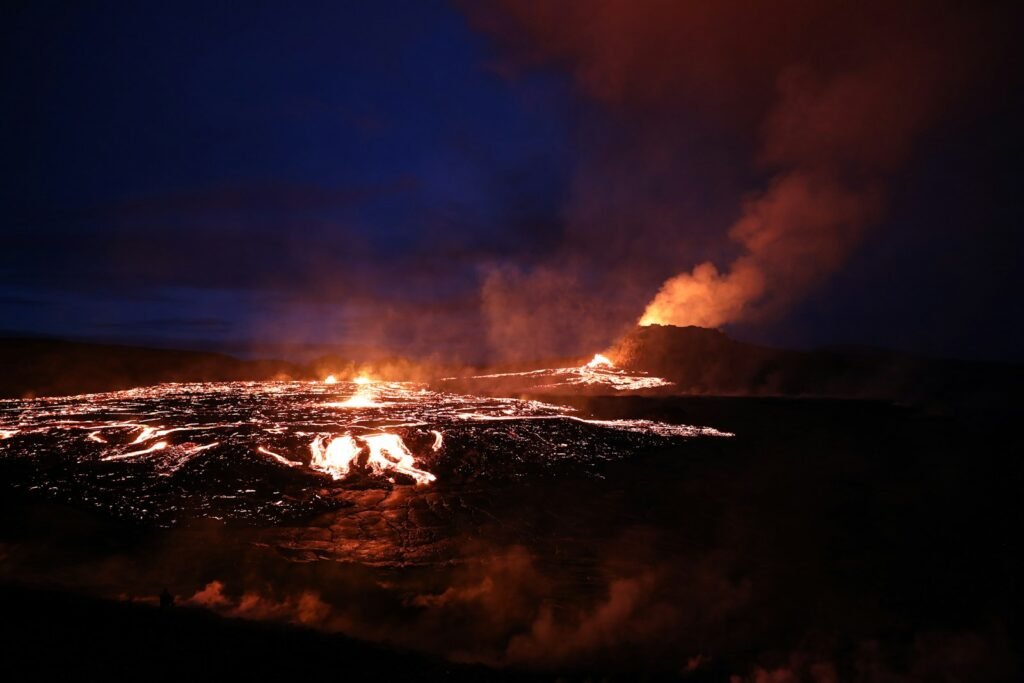

On a map, the Pacific Ring of Fire looks almost harmless: a red horseshoe sketched around the edges of the world’s largest ocean. On the ground, it is anything but. This sweeping arc of volcanoes, deep-sea trenches, and fracture zones controls some of the most violent earthquakes and most spectacular eruptions on Earth. It threatens megacities from Tokyo to Santiago, but it also builds new land, powers geothermal plants, and shapes weather and climate in subtle ways. Scientists are racing to understand its hidden rhythms, because the better we read its signs, the more lives we can protect when the ground suddenly decides to move.
The Fiery Horseshoe That Never Sleeps
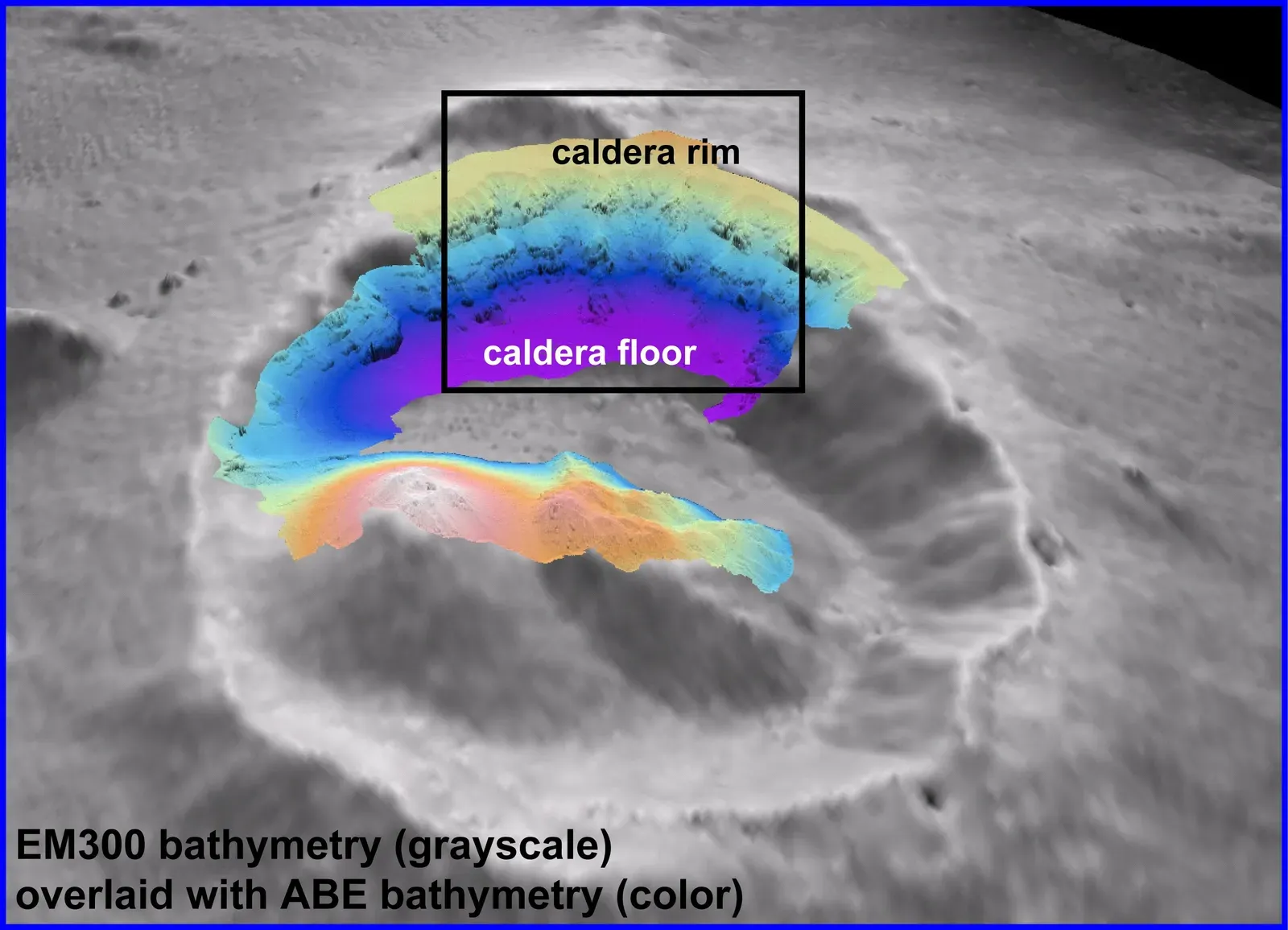
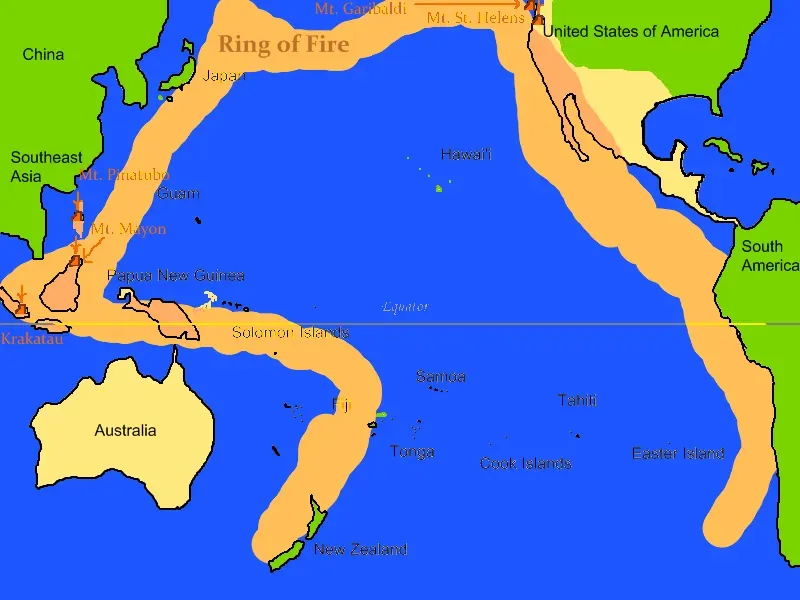
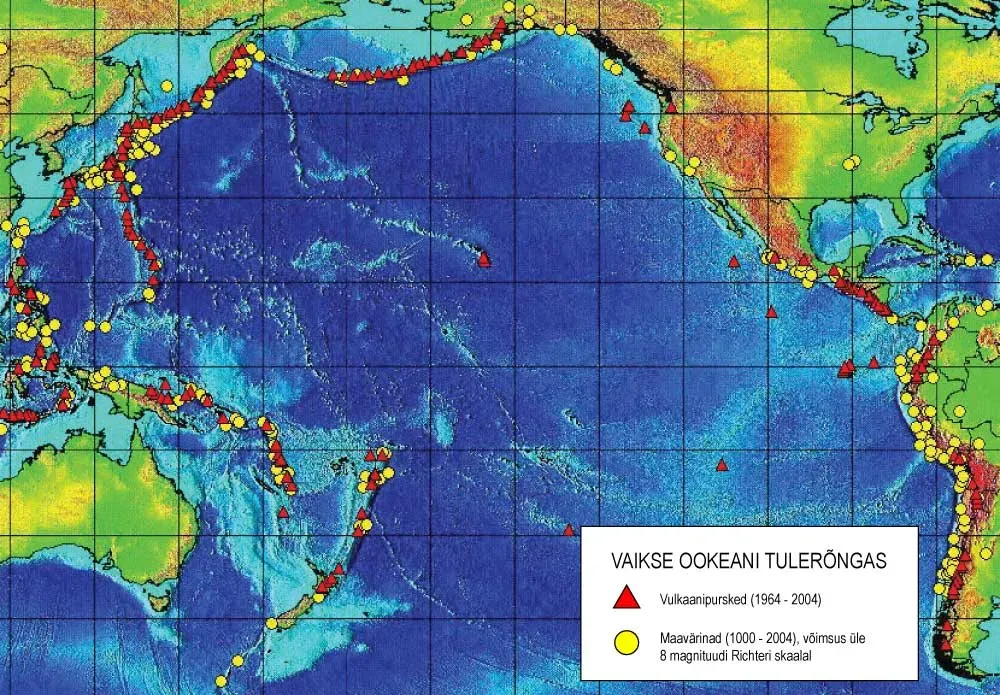
Imagine standing on a beach in Chile, then tracing a line in your mind up the Andes, past Alaska, down through Japan and the Philippines, and finally along New Zealand’s rugged coast – that looping path is the Pacific Ring of Fire. It stretches for more than twenty thousand miles, encircling the Pacific Plate like a geological noose. Roughly about three quarters of the world’s active volcanoes sit along this ring, along with the vast majority of the planet’s strongest earthquakes. To live here is to share a neighborhood with restless giants that breathe ash, steam, and magma.
This region is not a single fault or a single danger zone, but a patchwork of tectonic boundaries where plates collide, slide past, or dive beneath one another. In Alaska’s Aleutian Islands, one plate plunges under another, generating deep earthquakes and a chain of volcanoes that rise like teeth from the sea. Around Japan and Indonesia, multiple plates converge in a kind of slow-motion car crash, storing strain for decades before it snaps in a few terrifying minutes. When it does, entire coastlines can jump, ocean basins can flex, and tsunamis can race outward faster than a commercial jet.
The Hidden Machinery Beneath the Ring
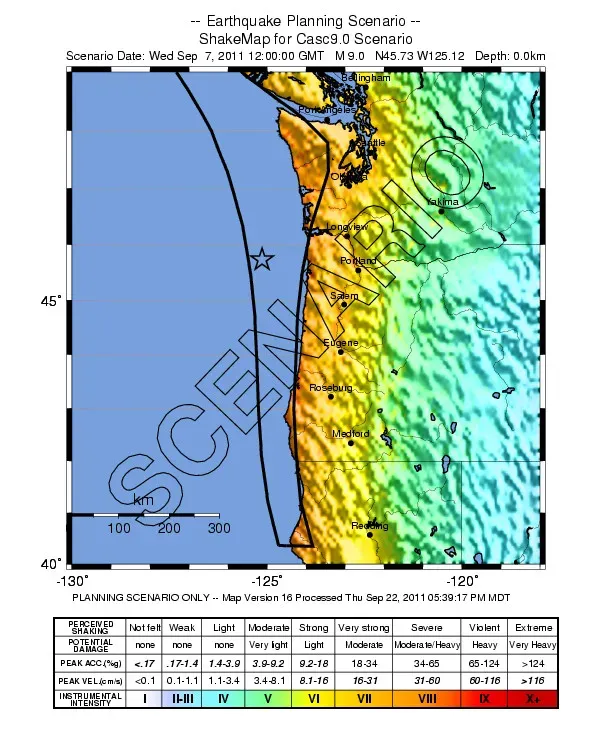
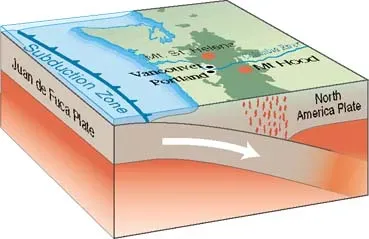
The real drama of the Ring of Fire unfolds far beneath our feet, in a hidden realm that no human will ever visit directly. Here, at depths of dozens to hundreds of miles, cold slabs of oceanic crust sink into the mantle in a process known as subduction. As these slabs descend, they heat up, release water, and trigger partial melting of the overlying mantle, generating magma that is buoyant enough to rise toward the surface. That slow, relentless rise is what feeds many of the volcanoes that crown the Ring of Fire.
To picture it, think of a slow-moving conveyor belt: old ocean floor is carried down, new magma rises up, and the surface above gradually buckles, cracks, and reshapes. This system drives not just volcanoes, but also mountain building, deep ocean trenches, and some of the world’s most destructive earthquakes. In some regions, like off the coast of Peru and Japan, the subducting slabs bend so steeply that they create trenches deeper than the height of Mount Everest. Above them, swarms of small quakes flicker like static, hinting at the grinding, creaking machinery of the planet’s interior, usually out of sight and out of mind until a major rupture occurs.
When the Ring Strikes: Quakes, Tsunamis, and Eruptions
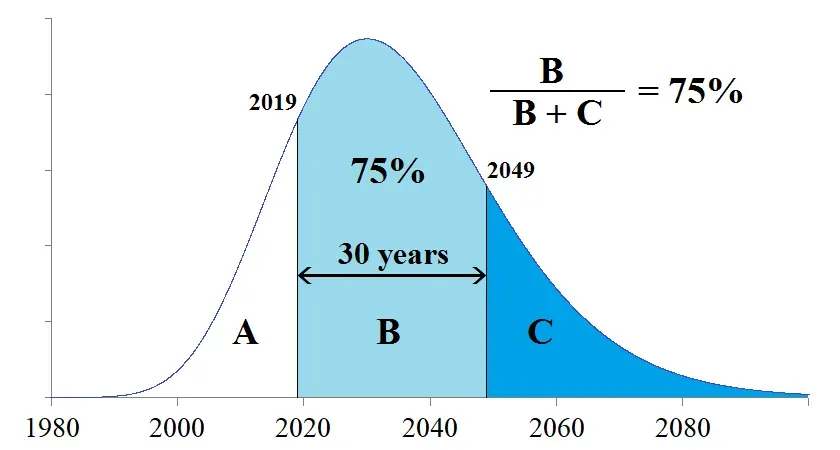
The Ring of Fire’s power is not theoretical; it is etched into human memory in ruined cities and reshaped coastlines. The magnitude 9.0 earthquake that struck Japan in March 2011, triggering a devastating tsunami and nuclear crisis, was a textbook example of what happens when a locked subduction zone suddenly lets go. In 1960, an even larger quake off Chile’s coast launched waves that ricocheted around the Pacific, reaching as far as Hawaii and Japan. These events are rare on human timescales, but over centuries they are inevitable, part of the way Earth releases the strain built up at its tectonic seams.
Volcanoes along the Ring can be just as disruptive and, in some ways, even more surprising. The 1991 eruption of Mount Pinatubo in the Philippines blasted so much ash and sulfur into the atmosphere that global temperatures dipped measurably for several years. Smaller but still dangerous eruptions routinely threaten communities in Indonesia, Mexico, and Alaska, forcing evacuations and grounding flights. A single explosive eruption can bury villages, poison water supplies, and trigger deadly mudflows that race down valleys at highway speeds. For many who live along the Ring, the line between ordinary life and disaster is a thin one, drawn by the mood of the volcano on the horizon or the quiet tension in the faults beneath their homes.
The Hidden Clues: How Scientists Listen to a Restless Rim
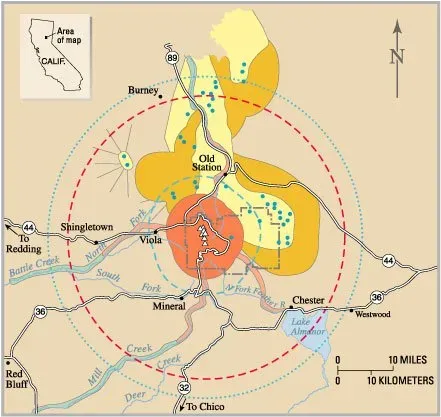
If the Ring of Fire is Earth’s most volatile region, it is also one of the most closely watched. Scientists now surround many active volcanoes and major faults with dense networks of seismometers, GPS receivers, and gas sensors that act like stethoscopes on the planet’s pulse. They listen for tiny earthquakes that cluster and migrate, often signaling magma on the move or faults beginning to slip. With satellite radar, they can detect ground deformation the width of a coin over broad areas, mapping how the crust flexes and swells long before cracks appear at the surface. These measurements turn invisible forces into data that can be read and, increasingly, interpreted in near real time.
Still, the Ring of Fire does not give up its secrets easily. Not every swarm of quakes leads to an eruption, and not every quiet period means safety. There are slow-slip events where faults creep silently over weeks, releasing strain without shaking cities, and there are sudden ruptures that seem to come with little obvious warning. To cope with this uncertainty, researchers increasingly lean on machine learning and massive global data sets to spot patterns humans might overlook. It is a bit like trying to predict a storm from the sound of every raindrop hitting a roof, only the roof is the size of an ocean basin and the raindrops are buried miles underground.
From Ancient Stories to Modern Science
Long before anyone talked about tectonic plates, people living along the Pacific Rim tried to make sense of the quakes and eruptions that shaped their world. Oral traditions from Indigenous communities in North America, Polynesia, and the Andes often describe mountains that breathe fire, seas that suddenly rise, and lands that break apart. These stories were once dismissed as myth, but researchers are increasingly finding that some capture real geological events: ancient tsunamis, colossal eruptions, and shoreline shifts preserved in cultural memory. In a way, they form the earliest human archives of the Ring of Fire’s behavior.
Modern science has layered new tools onto that deep well of experience. In the twentieth century, the theory of plate tectonics finally provided a unifying explanation for why quakes, volcanoes, and trenches cluster around the Pacific. Since then, ocean drilling, deep-sea mapping, and satellite monitoring have transformed our view of the region from static map lines to a dynamic, evolving system. What strikes me most is how often field geologists still rely on simple observations – tilted rocks, buried soils, storm-battered tree rings – alongside sophisticated instruments. It is a partnership between high-tech measurement and old-fashioned detective work, both trying to answer the same question: what did the Ring of Fire do in the past, and what might it do next?
Why It Matters: The Ring’s Global Shadow
The Ring of Fire is not just a local hazard zone; it is a global influence that quietly shapes economies, migration, and even climate. A major quake along a densely populated coastline can ripple through global supply chains, shutting down factories, ports, and data centers thousands of miles away. When a big eruption injects ash and aerosols high into the atmosphere, it can temporarily cool global temperatures, disrupt jet routes, and dust agricultural land with fine particles. For coastal communities around the Pacific, from Oregon to Indonesia, the possibility of tsunami waves means evacuation routes and vertical shelters are as critical as roads and schools.
Some of the stakes can be sketched in simple numbers and comparisons:
- Roughly about three quarters of the world’s major earthquakes with magnitudes above seven occur along the Ring of Fire.
- Nearly half of the global human population lives in countries that border the Pacific Ocean, many clustered near coasts and fault zones.
- The vast majority of the world’s subduction-related volcanoes, which are among the most explosive, lie on this rim.
In practical terms, that means decisions about where to build hospitals, data hubs, and ports cannot ignore the long memory of the land beneath them. For me, that is the most sobering part of covering this topic: the realization that modern skylines and digital networks still depend on the same shifting bedrock that terrified people centuries ago.
Global Perspectives from a Single Fiery Belt
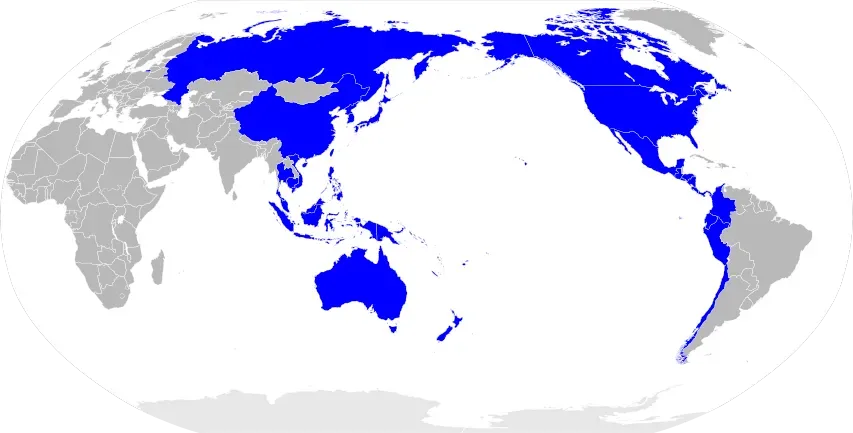
One reason the Ring of Fire is so compelling is that it ties together places that seem wildly different at first glance. Japan’s meticulously engineered skyscrapers have more in common, tectonically speaking, with the fishing villages of coastal Chile than with inland cities just a few hundred miles away. The same deep processes that build the Andes also fuel geothermal fields in New Zealand and eruptive islands in the western Pacific. In each region, local culture, politics, and resources shape how people prepare for and respond to these risks, creating a patchwork of resilience and vulnerability.
There is also a stark inequality in who bears the brunt when the Ring unleashes its energy. Wealthier countries ringed by the Pacific can invest in early warning systems, strict building codes, and public drills. In many lower-income coastal regions, even basic seismic-resistant construction can be out of reach, and informal settlements crowd into the most dangerous floodplains and hillsides. As a result, two quakes of similar magnitude can have wildly different human tolls depending on where they strike. The Ring of Fire might be a single geological system, but its human consequences are filtered through economics, governance, and history.
The Future Landscape: Technology on a Moving Planet
Looking ahead, the Ring of Fire is forcing scientists, engineers, and policymakers to rethink how we live with a planet that never truly sits still. New generations of ocean-bottom seismometers, fiber-optic cables that double as quake sensors, and continuous GPS networks are filling in blind spots, especially offshore where many great quakes begin. Researchers are experimenting with early warning systems that can send alerts to smartphones and infrastructure within seconds of detecting the first tremors, sometimes buying precious moments to shut down trains, surgeries, and power grids. None of this stops the quake or eruption, but it can blunt the worst impacts.
At the same time, there is growing interest in harnessing some of the Ring’s power. Geothermal projects in places like New Zealand, Japan, and parts of the United States tap into hot rocks created by subduction-related activity, offering low-carbon energy that comes straight from Earth’s internal heat. But drilling and development in such active regions also carry risk, requiring careful monitoring to avoid triggering small quakes or destabilizing slopes. The bigger challenge may be social rather than technical: persuading governments and communities to plan on timescales longer than election cycles. The Ring of Fire thinks in centuries; if we want safer cities, our planning horizons need to stretch at least partway toward that timescale.
Living with a Restless Rim: What You Can Do
For most of us, the Ring of Fire is both distant and uncomfortably close, especially if we live on or near a Pacific coastline. We cannot calm the faults or cork the volcanoes, but we are far from powerless in the face of this vast system. Simple steps – knowing your local evacuation routes, keeping an emergency kit, securing heavy furniture – can make a real difference when seconds matter. Supporting strong building codes, early warning programs, and science funding is another way of voting, indirectly, for a safer coexistence with the planet’s deeper forces. Even learning the history of past quakes and eruptions where you live can shift them from abstract threats into concrete stories with lessons attached.
On a broader scale, paying attention to the Ring of Fire means recognizing that Earth is not a static backdrop but an active character in our shared story. Following reputable science reporting, backing community drills, and engaging with local hazard maps turns curiosity into quiet preparedness. It might not feel heroic, but resilience is often built in small, unglamorous choices repeated over years. The Ring of Fire will keep circling the Pacific long after our lifetimes; the question is how wisely we choose to live along its shifting edge.
Suhail Ahmed is a passionate digital professional and nature enthusiast with over 8 years of experience in content strategy, SEO, web development, and digital operations. Alongside his freelance journey, Suhail actively contributes to nature and wildlife platforms like Discover Wildlife, where he channels his curiosity for the planet into engaging, educational storytelling.
With a strong background in managing digital ecosystems — from ecommerce stores and WordPress websites to social media and automation — Suhail merges technical precision with creative insight. His content reflects a rare balance: SEO-friendly yet deeply human, data-informed yet emotionally resonant.
Driven by a love for discovery and storytelling, Suhail believes in using digital platforms to amplify causes that matter — especially those protecting Earth’s biodiversity and inspiring sustainable living. Whether he’s managing online projects or crafting wildlife content, his goal remains the same: to inform, inspire, and leave a positive digital footprint.


