
If you’ve ever fallen down a late‑night rabbit hole of strange history, you’re exactly the kind of person who will be haunted by the Voynich Manuscript. It’s a small, unassuming book from the early fifteenth century that somehow manages to be more confusing than any modern puzzle you’ve ever seen. You’re looking at pages filled with looping, elegant handwriting in a language no one on Earth can read, surrounded by drawings that feel both familiar and deeply wrong at the same time.
As you get closer, the mystery only deepens: world‑class codebreakers, artificial intelligence tools, historians, and even conspiracy theorists have all taken a shot at it, and yet the book stubbornly refuses to make sense. You’re left with a bizarre feeling, like the world is winking at you and refusing to explain the joke. That is the Voynich Manuscript: an object that dares you to understand it, and almost certainly wins.
A Strange Little Book That Shouldn’t Exist
When you first hear about the Voynich Manuscript, it sounds like something out of a fantasy novel rather than a real object sitting in a library vault. You’re dealing with a handwritten book of about two hundred surviving pages, filled with neat lines of text in an unknown script that circles around drawings of plants, stars, naked women in baths, and bizarre diagrams. It is not a dusty myth; it is a physical thing you could, in theory, hold in gloved hands.
Radiocarbon dating on the parchment places it in the early 1400s, so you know you’re not looking at a modern internet hoax. The ink and pigments match what you’d expect from that time period as well, which rules out a lot of easy explanations. You’re left with this uncomfortable conclusion: someone, six centuries ago, spent an enormous amount of time making an entire book in a language that nobody today can identify or read. That alone should make you pause.
Writing You Can See But Will Never Read
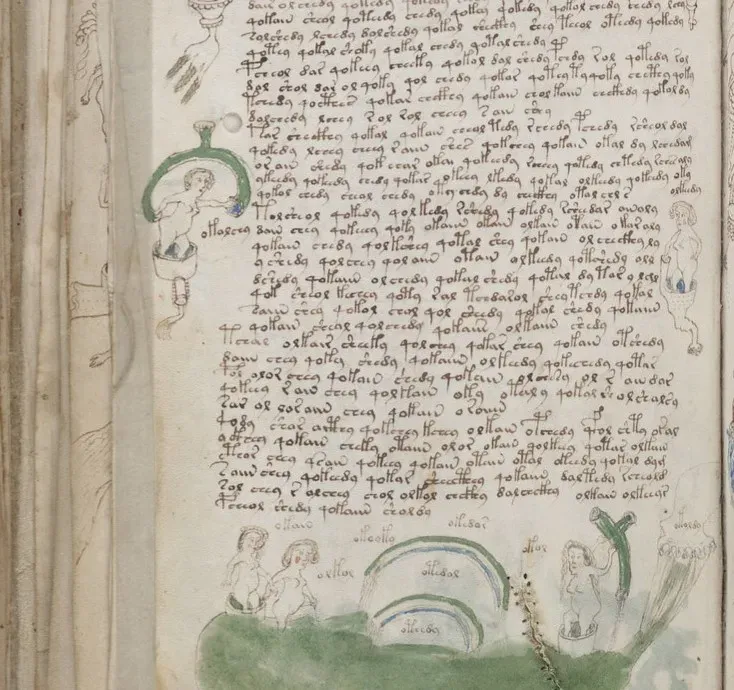
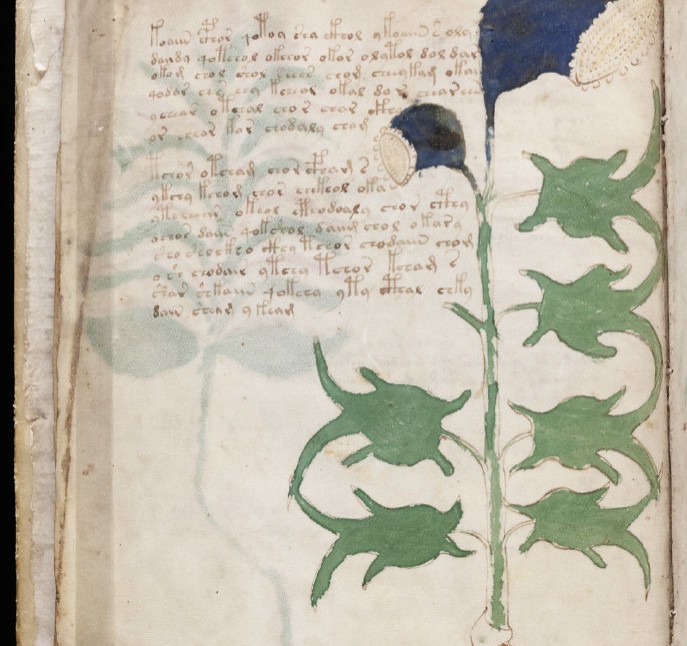
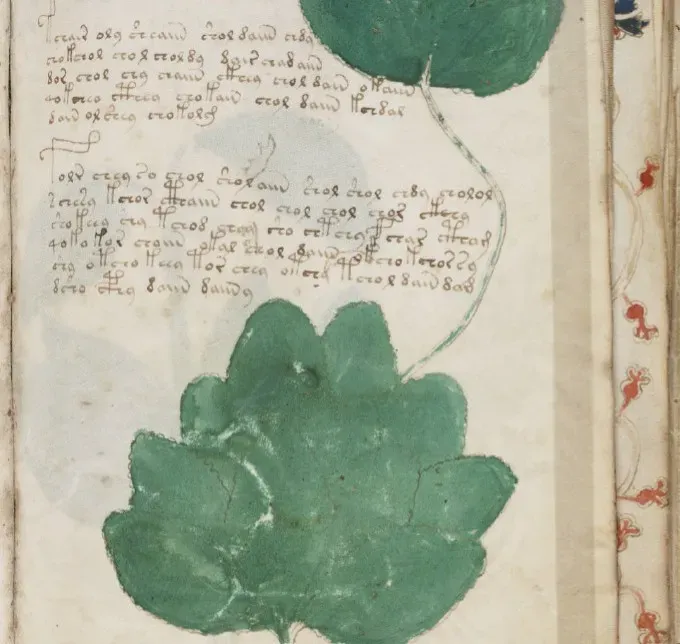
The first thing your eyes lock onto is the script. It looks close enough to real writing that your brain keeps trying to recognize it, like when you glance at a foreign alphabet and feel that you almost understand it. The characters are smooth and consistent, with certain letter shapes and patterns that repeat across the entire book, suggesting there really is a system here and not just random squiggles. You can even spot what seem to be “words” separated by spaces and some repeating clusters that behave like grammar.
Yet every time someone tries to map these shapes to known languages or codes, the results fall apart. You’re told that the structure of the text behaves strangely: it has some statistical patterns like real language, but also quirks that make it feel off, as if it’s intentionally dancing just beyond comprehension. Modern computers can spot rhythms, clusters, and distributions of characters, but they still can’t tell you what a single word means. You end up in this maddening place where the text looks perfectly readable but remains utterly silent.
Plants That Look Almost Right… Until They Don’t
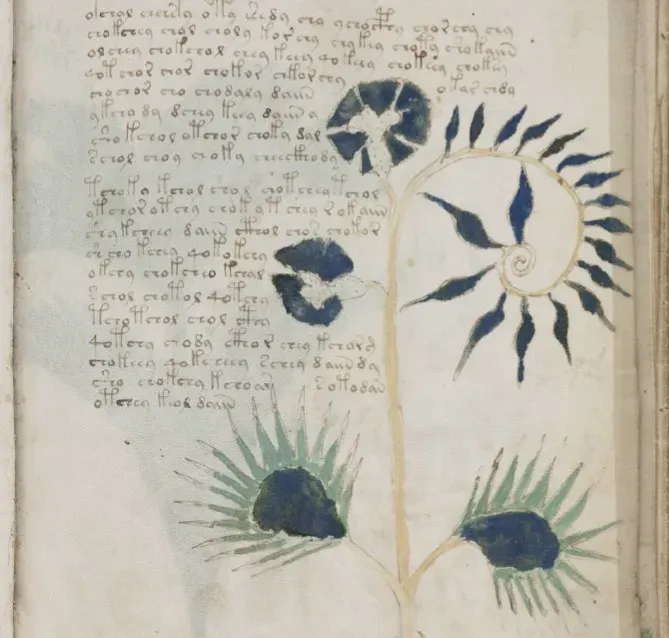
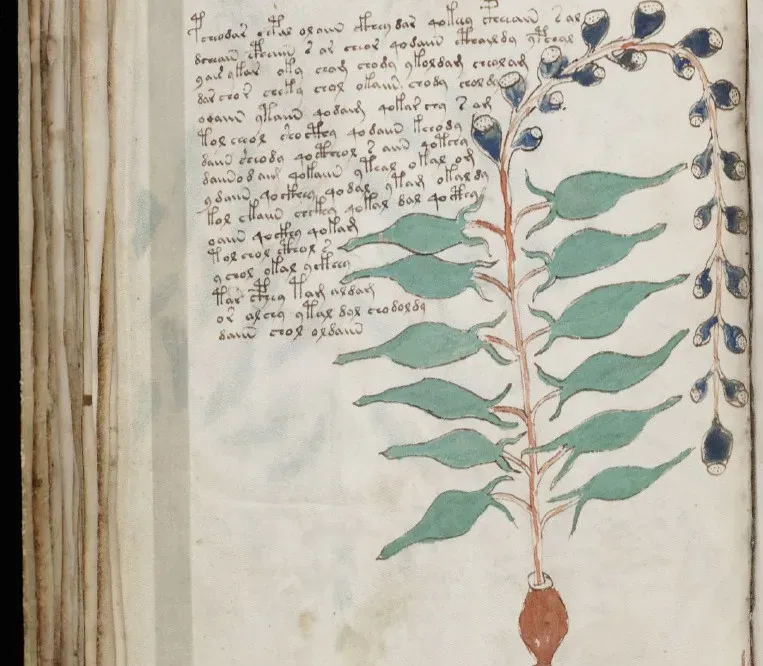
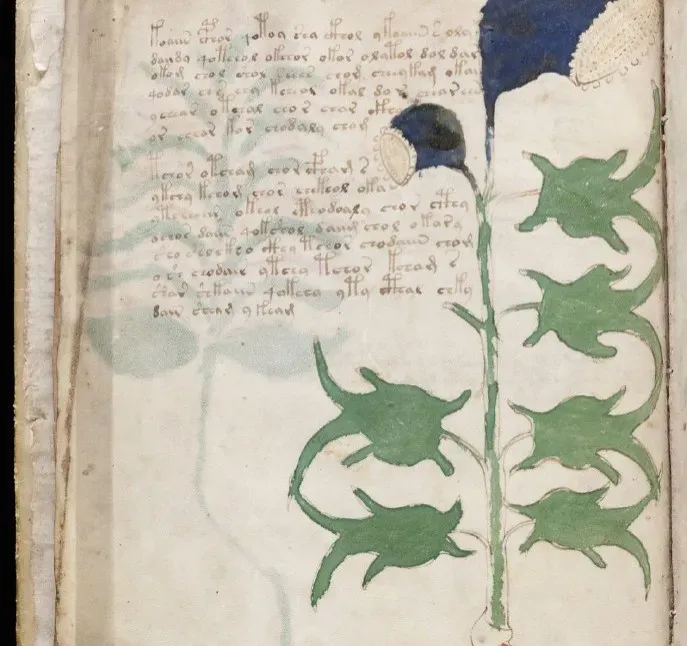
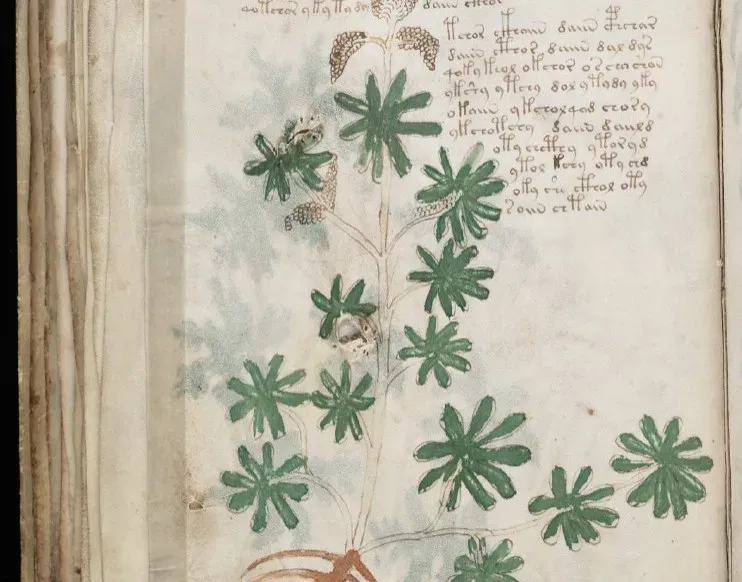
Once your eyes wander away from the text, you hit the drawings of plants. At a glance, you feel like you’re flipping through a medieval herbal guide, the kind that might tell you how to make medicine from roots and leaves. Then, the longer you stare, the more wrong everything feels: many of the plants seem like awkward mash‑ups of real species, with leaves from one, flowers from another, and roots that look completely invented. You start recognizing almost‑familiar features that never quite match anything from real botany.
This in‑between feeling is what makes the pictures so unsettling. Either you’re looking at a catalog of plants from some lost knowledge system, or you’re seeing someone deliberately drawing things that cannot be found in nature. You might wonder if the plants were meant symbolically, or if they were distorted from memory, or if you’re just missing regional species that are hard to identify centuries later. But you never quite land on a comforting answer, and that nagging ambiguity keeps your imagination working overtime.
Women In Green Pools And Impossible Plumbing
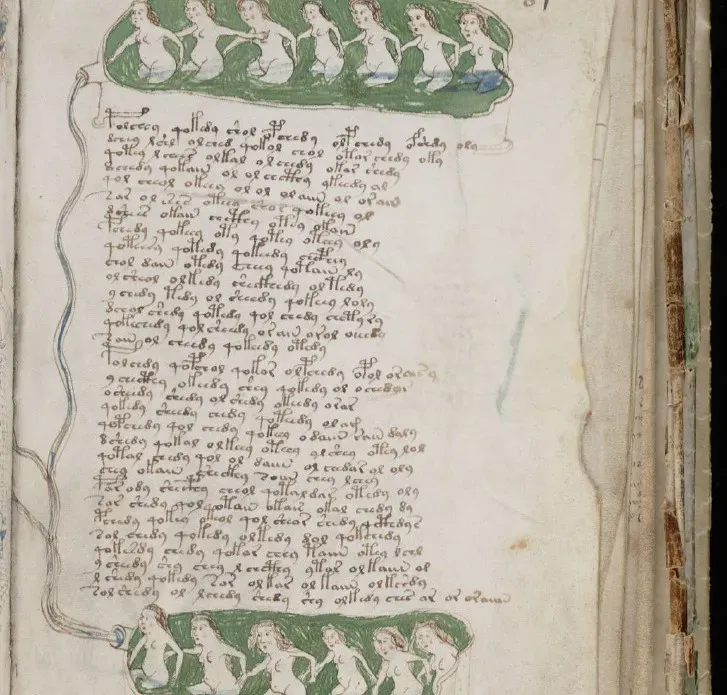
Then you turn the page and things get even weirder. You see pages filled with naked women standing, sitting, or half‑submerged in greenish pools that look like tubs, baths, or maybe even strange channels of water. Around them wind long, pipe‑like structures and tubs that connect to each other in ways that make no obvious physical sense, almost like a medieval blueprint for some fantastical spa that follows its own rules of physics and plumbing. At this point, you really feel like you’ve crossed into an alien world using medieval ink and paint.
Some people speculate that you might be looking at a kind of medical or gynecological guide, maybe describing women’s health, pregnancy, or bathing rituals from a lost medical tradition. Others think you might be seeing a symbolic map of bodily fluids or even some spiritual or astrological process working its way through the human body. As you try to make sense of it, you become very aware of your own modern assumptions and how they might be blinding you. The more you look, the more you realize how easy it is to project your own stories onto something that doesn’t explain itself.
Stars, Zodiac Signs, And A Sky That Won’t Talk
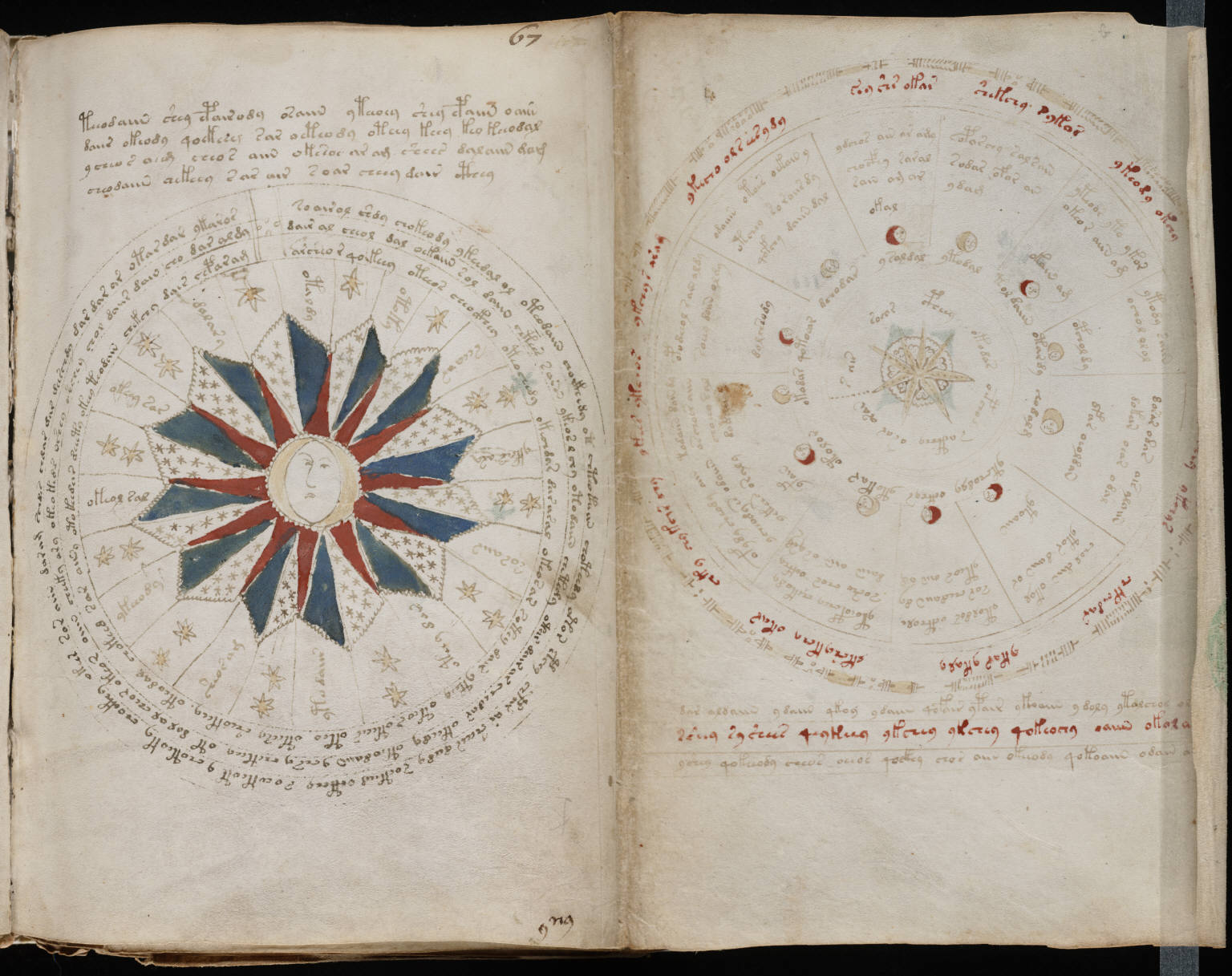
In other parts of the book, you’ll notice circular diagrams, stars, and what appear to be zodiac symbols like you might see in an old astrology chart. You might recognize shapes that look like the constellations of Pisces, Sagittarius, or others nestled around the page, sometimes combined with those same small, naked figures that haunt the rest of the manuscript. The layouts feel purposeful, as if you’re seeing someone’s complicated model of the universe, time, or fate rendered in full color.
If you’ve ever checked your horoscope for fun or read about historical astronomy, it’s tempting to assume you’re just looking at another medieval astrological manual. But when you try to line it up with known systems, something always seems slightly off: cycles do not match cleanly, labels do not translate, and the overall logic resists simple mapping. You end up caught between two possibilities: either you’re dealing with a forgotten, highly specific astrological tradition, or you’re misreading a diagram that isn’t really about the stars the way you think it is. In either case, the sky in this book refuses to give you a straight answer.
Codebreakers, Crackpots, And The Limits Of Cleverness
At this point, you might be thinking that surely some genius has cracked this thing by now. Historically, you’re in impressive company: military codebreakers, professional cryptographers, historians of language, and passionate amateurs have all thrown themselves at the Voynich Manuscript. Some have tried treating it like a classical cipher, others like an unknown natural language, and more recently, people have pushed modern algorithms and machine learning at the script, hoping pattern recognition will do what human intuition cannot.
Again and again, you see bold claims of “Finally decoded!” appear, only to watch them crumble under scrutiny. One person insists it is an invented language, another says it’s a cipher of a known tongue, another claims it’s a sophisticated hoax built from controlled nonsense. When you look closely at these competing solutions, they typically fail basic tests: they cannot translate arbitrary pages consistently, or they require tortured explanations for why so much does not fit. What you learn, almost reluctantly, is that your cleverness has limits when the evidence is thin and the object might not follow any rulebook you recognize.
Is It A Hoax, A Lost Language, Or Something In Between?
Eventually, you run headfirst into the big question: what is this thing, really? One tempting idea is that it’s an elaborate hoax, maybe created centuries ago to impress or swindle a wealthy patron with an “esoteric” book full of fake knowledge. If you lean into that theory, the strange plants, mysterious diagrams, and unreadable text become props in a very old con. You can almost imagine the pitch: a secret book of forbidden knowledge, encoded for the chosen few. It would not be the first time someone made money by selling mystery.
On the other hand, the level of consistency throughout the manuscript makes a simple hoax harder to swallow. The writing is remarkably regular, the patterns in the text behave in ways that feel more like real language than random gibberish, and the illustrations follow recurring themes rather than pure chaos. You might end up in a more uncomfortable middle ground: perhaps it is a partial code over a real language, or a constructed language used seriously by a tiny group, or a text whose purpose is more ritual than practical. You are forced to live with uncertainty, and that is not something most of us are used to in the age of instant answers.
What This Mystery Really Says About You
In the end, the Voynich Manuscript tells you almost as much about yourself as it does about the past. You probably arrived expecting a clear explanation, some satisfying key that unlocks the puzzle and lets you walk away feeling smarter. Instead, you’re left with a knot of questions and a lingering sense that the world still holds pockets of deep, unapologetic mystery. That feeling can be frustrating, but it can also be strangely comforting, like realizing that not every corner of history has been flattened into a paragraph on a website.
You’re reminded that for all your technology, data, and analytical tools, there are still things that your culture simply cannot decode. The Voynich Manuscript forces you to accept that some knowledge may be lost, some codes may never be cracked, and some objects will outlast your best theories. Maybe that is the quiet gift of this odd little book: it invites you to make peace with not knowing, while still keeping your curiosity alive. After all, would this mystery be half as fascinating if you already had the answer?
So the next time you catch yourself assuming everything important has already been discovered or explained, you can picture this small, stubborn manuscript, sitting in its archive, still refusing to talk. It is a reminder that the past is not a closed book, and that your hunger to understand will always be bumping up against the edges of the unknowable. And who knows – if someone eventually does crack the code, will the truth be as exciting as the mystery that kept so many people guessing, or will you secretly miss not knowing?