

There’s something quietly electrifying about the idea that the clock on your wall might not tell the whole truth about time. We grow up treating time like a straight road: you’re born, you age, you die, and everything else falls somewhere on that line. Then you stumble across physics, and suddenly that tidy picture shatters. Time stretches, bends, slows down, and in extreme cases almost seems to stop. It’s no wonder time travel feels less like pure fantasy and more like a puzzle we haven’t fully solved yet.
I still remember the first moment I learned that astronauts on the International Space Station age a tiny bit slower than people on Earth. It sounded like a throwaway trivia fact, but it hit me like a plot twist: time travel, in a small but very real way, is already happening. Not in the flashy movie sense, of course, but enough to make you question what “now” even means. That’s where the real magic is – not in spinning DeLoreans, but in how deeply weird reality already is when you look closely.
Time Is Not What Common Sense Says It Is

Imagine standing on a train platform while a high-speed train rushes by. Your common sense says everyone, whether on the platform or in the train, experiences the same flow of time. According to modern physics, that instinct is simply wrong. Special relativity tells us that for someone moving very fast, time actually runs more slowly compared to someone who’s standing still. This isn’t a theory in the casual sense; it’s been repeatedly confirmed in particle accelerators and with ultra-precise atomic clocks.
One famous type of experiment flies a highly accurate clock on a fast-moving airplane and compares it to a synchronized clock on the ground. When the plane lands, the airborne clock and the ground clock disagree by a tiny but measurable amount. That time difference isn’t a glitch; it’s a sign that time is flexible, not absolute. So before we even ask whether dramatic time travel is possible, we already know one thing for sure: time does not behave like the simple, universal ticking we feel in our daily lives.
Relativity Already Gives Us Real Time Travel (Into the Future)

If you’re willing to accept a much less cinematic version of time travel, then traveling into the future is not just possible – it’s built into how the universe works. This form of time travel is called time dilation, and it happens whenever you move very fast or sit in a strong gravitational field. The stronger the gravity or the higher your speed, the slower your time passes relative to people in weaker gravity or at lower speeds. You can think of it as living in slow motion compared to everyone else.
We’ve observed this effect with subatomic particles that decay more slowly when traveling close to the speed of light, and with astronauts who return to Earth having aged slightly less than those who stayed behind. The differences are tiny with current technology – fractions of a second over entire missions – but the principle is rock solid. In theory, if you could board a spaceship that travels incredibly close to the speed of light, you could experience a few years while centuries pass on Earth. That’s not a plot device; that’s straight from Einstein’s equations.
Why Going Backward in Time Is So Much Harder
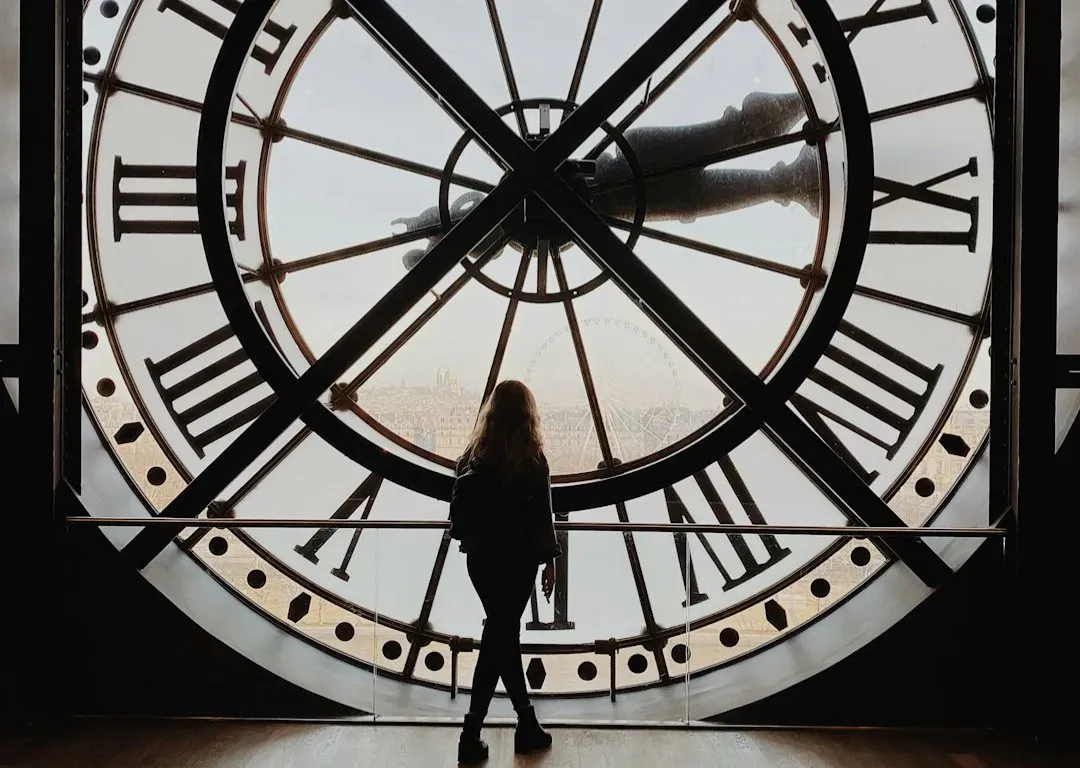
Traveling into the future fits neatly inside our current understanding of physics, but traveling into the past is where things get deeply messy. The main problem is causality: the idea that causes come before effects. If you could go back in time and change something significant, you risk creating logical contradictions, like preventing your own birth or undoing the events that led you to time travel in the first place. These are not just fun riddles; they strike at the heart of how physical laws keep the universe consistent.
Some physicists argue that the equations of relativity allow for scenarios that resemble time loops, at least mathematically. But just because the math permits something doesn’t mean nature actually does. There might be hidden rules that forbid paradoxes from occurring, or mechanisms that “protect” the past from being altered in a meaningful way. Until we have a theory that fully unifies gravity with quantum mechanics, any claim that past-directed time travel is truly possible has to be taken with a serious dose of caution.
Wormholes: The Most Famous Time Machine That Might Not Exist
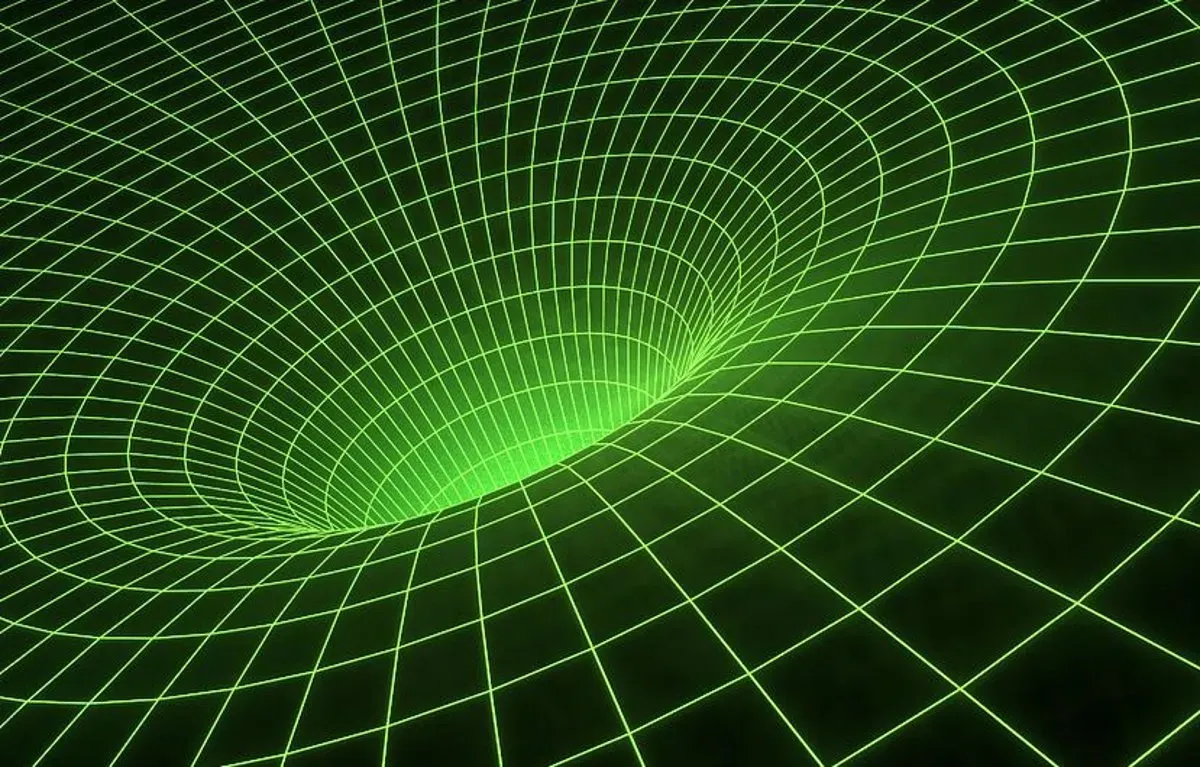
When people talk about time travel in a serious science context, wormholes almost always come up. A wormhole is a hypothetical tunnel connecting two distant points in spacetime, like a shortcut through a folded sheet of paper. General relativity allows solutions that look like wormholes, and if you could move one end relative to the other – say, by accelerating it or parking it near a massive object with strong gravity – you could, in principle, create a time difference between the ends. Step through, and you’d effectively jump into the past or future relative to where you started.
The catch is brutal: we have zero direct evidence that wormholes actually exist anywhere in the universe. On top of that, every version of a stable, traversable wormhole we know how to describe needs exotic matter with extremely unusual properties, like negative energy density, to hold it open. While quantum physics does allow tiny, fleeting negative energy effects, scaling that up to a huge, stable wormhole seems wildly unrealistic with anything remotely like current or foreseeable technology. So wormholes remain an intriguing idea on the chalkboard, not a blueprint for an actual machine.
The Arrow of Time and Why We Remember Yesterday, Not Tomorrow
One of the strangest things about physical laws is that many of them don’t really care which way time flows. The equations work just as well if you flip time and run them backward. Yet our everyday experience absolutely does care: you remember the past, not the future, eggs crack but never un-crack, and coffee cools down instead of spontaneously heating up. This one-way direction we feel is often called the arrow of time, and it’s tightly linked to entropy, the tendency of systems to move from order to disorder.
For time travel to the past to make sense, it would need to somehow fit inside this picture of a universe where entropy, on the whole, increases. One way to think about it is that going back in time would mean diving into a region of spacetime with lower entropy, which seems to go against the general drift of reality. Some interpretations of physics suggest that the arrow of time might be more about our perspective than fundamental law, but nothing so far overturns the basic link between time’s direction and the growth of disorder. That connection is one of the quiet reasons why past-directed time travel looks so suspect.
Quantum Mechanics: Multiverses, Many Worlds, and Dodging Paradoxes

Quantum mechanics adds an extra layer of weirdness to the time travel conversation. In some interpretations, like the many-worlds view, every quantum event branches into multiple outcomes, each realized in a different universe. Under that kind of framework, you could imagine a version of “time travel” where visiting the past actually sends you into a parallel branch instead of your own history. You wouldn’t be changing your original timeline; you’d just be creating or stepping into another one where events unfold differently.
This idea can neatly dodge classic paradoxes, because you’re never truly rewriting your own past. However, it comes with its own heavy baggage: we don’t currently have a way to test the existence of those parallel branches directly, and interpretations of quantum mechanics are just that – interpretations. They make the same experimental predictions as more traditional views, at least so far. So while multiverse-style thinking gives science fiction writers a clever way around paradoxes, it doesn’t yet provide a tested roadmap for real-world time machines.
Why We Don’t See Time Tourists (And What That Might Mean)

A simple argument against the possibility of time travel to the past goes like this: if it were possible and ever actually used, wouldn’t we see evidence of people from the future showing up here? After all, if someone centuries from now built a working time machine, our era might be historically fascinating to them. The silence – the apparent lack of time tourists – has led some people to conclude that backward time travel must be impossible in any practical sense.
There are counterarguments, of course. Maybe time machines, if they ever exist, can only go back as far as the moment they were created, so there’s no way for tourists to visit us before that. Maybe any future civilization capable of building one is also responsible and secretive enough not to disturb their own history. Or maybe, more mundanely, past-directed time travel is simply so insanely difficult and energy-hungry that no one ever bothers. The absence of evidence isn’t proof either way, but it does keep expectations grounded.
The Technological Wall: Energy, Stability, and Sheer Scale
Even if the laws of physics quietly permit some form of time travel, the gap between theoretical possibility and engineering reality might be enormous. Many time-travel ideas involve conditions that are almost unimaginably extreme: black hole-level gravity, cosmic-scale energies, or precise manipulation of quantum fields that we barely understand. We struggle right now to sustain a fusion reaction on Earth for more than brief moments; stabilizing a wormhole or warping spacetime on demand makes that look like a warm-up exercise.
On top of that, any time machine that involves looping paths in spacetime raises questions about stability. Small fluctuations and quantum effects might pile up and tear apart any would-be time tunnel as soon as it starts to form. Some physicists suspect that nature simply sabotages these configurations, making so-called closed timelike curves physically impossible even if the equations flirt with them. In that sense, the universe might have built-in safeguards that stop us from pushing causality too far, no matter how clever we get with technology.
Where Science Fiction Gets It Right (And Very Wrong)
Stories about time travel often get the spirit of real physics more right than people realize. The idea that time can pass differently for different observers, that gravity distorts time, and that high speeds can fling you into the future all have solid grounding in relativity. Some tales also grapple thoughtfully with paradoxes and consequences, hinting at how fragile history might be if it could be edited. When science fiction leans into the emotional and ethical chaos of time travel rather than just treating it as a flashy gadget, it often feels surprisingly close to genuine scientific curiosity.
Where most stories go off the rails is in hand-waving away the actual difficulty of manipulating spacetime. Hop in a sleek machine, spin a dial, hit a button, and suddenly you’re in ancient Rome – that’s charming, but it ignores energy, causality, and the stubbornness of physical law. Still, those playful inaccuracies have a real upside: they pull people into asking serious questions about time, space, and reality. Many working physicists today first fell in love with the subject not because of a textbook, but because a fictional time machine made them wonder what was truly possible.
So Is Time Travel Truly Possible? A Sober, Exciting Answer

If you define time travel as moving into the future at a different rate than your neighbors, then yes, time travel is absolutely possible and already happening. Astronauts, high-speed particles, and clocks on airplanes all show us that time is flexible and depends on motion and gravity. Scale that up with more extreme conditions, and you could imagine journeys where travelers return home to find that far more time has passed for everyone else. That’s not a fantasy twist; it’s an unavoidable consequence of relativity.
But if by time travel you mean hopping into a machine and visiting your grandparents before they met, the honest answer is that we simply don’t know – and the odds don’t look great with what we understand today. The best current physics hints that the universe might strongly resist or outright forbid closed time loops and paradoxes. At the same time, history is full of ideas that once seemed impossible until new discoveries rewrote the rules. For now, the most mind-bending truth is this: even without a single working time machine, time itself is already far stranger than any clock on your wall will ever admit. If reality is this weird before we even start, what else might be hiding in the shadows of spacetime that we haven’t learned to see yet?