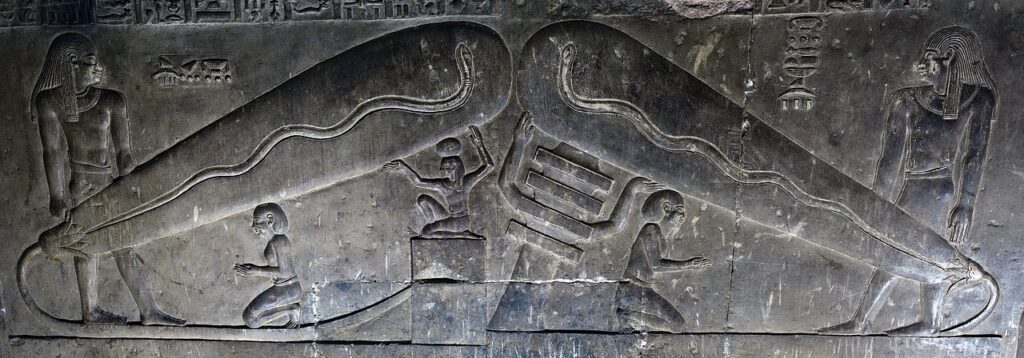
Hidden in the dim inner chambers of Egypt’s Temple of Hathor at Dendera are carvings that have fueled one of the strangest debates in archaeology: do some of these hieroglyphs really look like advanced machines that should not exist in the ancient world? To a casual visitor, they are just more mysterious figures on sandstone walls. To others, they look uncannily like cables, bulbs, and boxes that belong in a lab, not in a shrine built thousands of years ago.
When I first saw photos of the so‑called “Dendera light” reliefs, I’ll admit my brain instantly tried to turn them into something modern and familiar. That is what humans do: we see patterns, even when none were meant. But the longer you look, and the more you learn how Egyptian symbolism works, the more the question shifts from “Is this a machine?” to “Why do some of us desperately want it to be one?” That tension between imagination and evidence is exactly what makes these hieroglyphs so gripping.
A Sacred Temple with a Surprisingly Modern Mystery
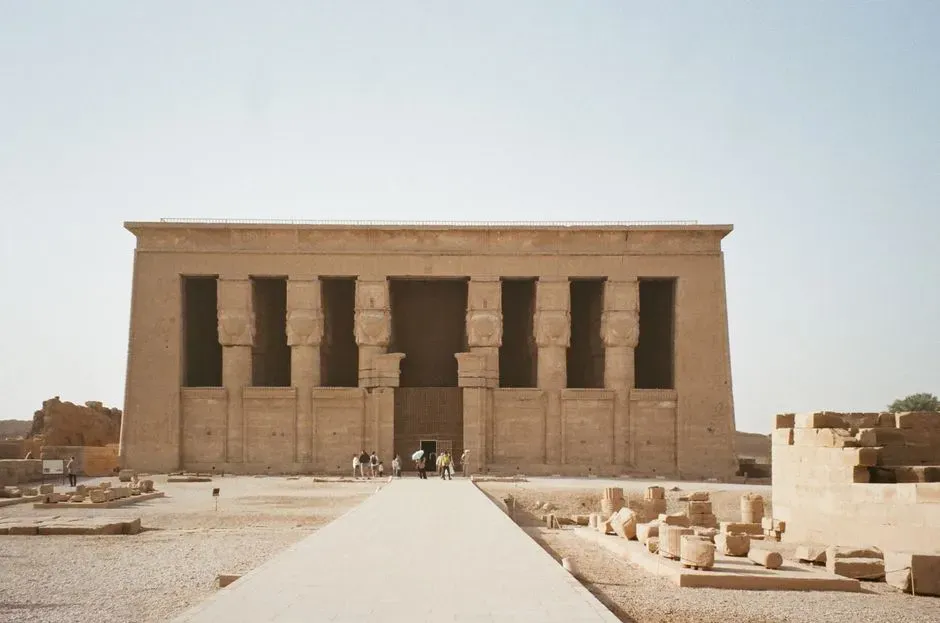
The Temple of Hathor at Dendera was not some obscure backwater shrine. It was a major religious center dedicated to Hathor, a goddess linked with music, love, fertility, and cosmic order, and the building we see today dates mostly to the late Ptolemaic and early Roman periods. You walk through towering colonnades, ceilings packed with astronomical scenes, and chapels that once echoed with incense and chants rather than the whispers of modern tourists trying to decode the walls.
In one of the crypts beneath the temple complex, however, there is a set of reliefs that has become famous for a very different reason. These underground spaces were not designed for large public rituals; they were more restricted, used for storing ritual objects and housing esoteric imagery tied to the cosmos and creation. It’s here that a series of long, oval shapes, supported by what looks like a pillar or stand and connected to narrow lines, sparked the idea that we might be looking at ancient machinery instead of sacred myth.
The “Dendera Light” Reliefs and Why They Look So Technological
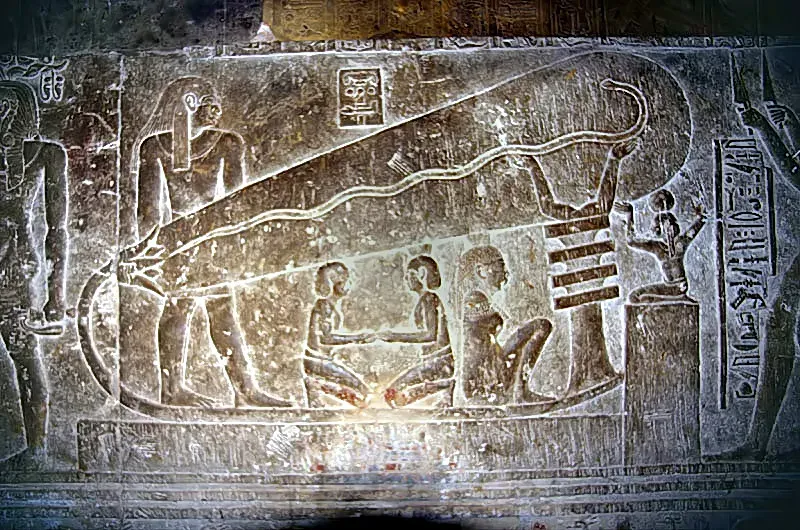
The carvings most people talk about show an elongated, almost bulb‑shaped form that surrounds a sinuous, snake‑like figure. This oval form rests on a narrow pedestal, and behind it there is a rectangular element that some viewers think looks like a power source or control box. If you grew up seeing electrical diagrams or lab equipment, it is very easy for your brain to jump straight to “lamp” or “device.”
From certain angles, it can resemble a modern glass bulb with a filament inside, supported on a stand and connected by a cable to something behind it. That resemblance has been photographed, traced, and endlessly circulated online, often with contrast boosted or details simplified in ways that make the “technology” reading even more tempting. The irony is that the more these images get simplified for memes and videos, the further they drift from the complex symbolic system the original artists were actually using.
What Egyptologists Actually See: Snakes, Lotuses, and Creation Myths
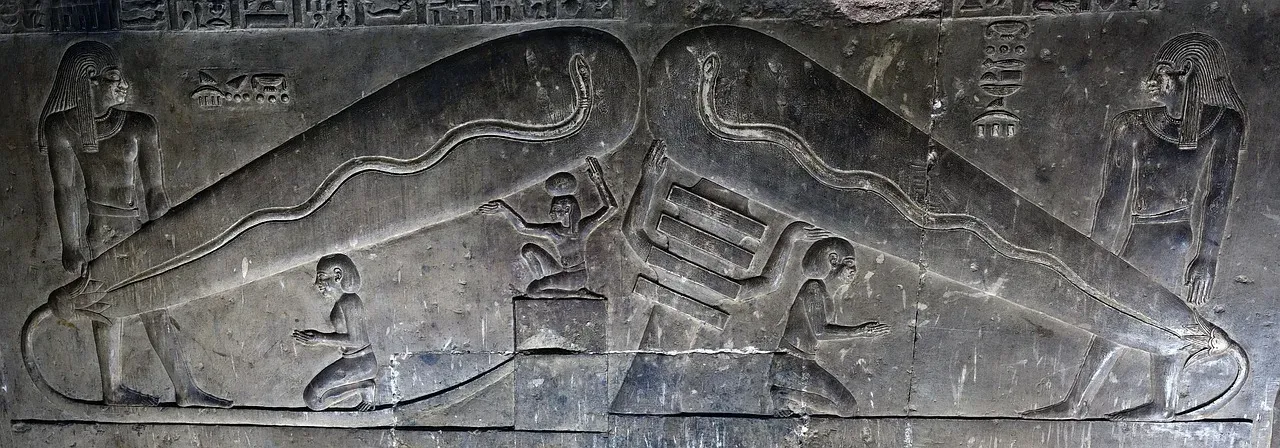
Professional Egyptologists do not see a light bulb at all when they look at these reliefs. Instead, they recognize a set of fairly standard symbols telling a story about creation, energy, and the sky. The snake represents a divine power or deity emerging from a lotus flower, a motif tightly connected to Egyptian ideas of the universe arising from a primeval watery chaos, with the first lotus opening to reveal the newborn sun.
The long oval around the snake is interpreted as a kind of cosmic bubble or womb, sometimes called a “henu” form or compared to a symbolic container that holds the creative force. The “pedestal” is linked with the djed pillar, a sign of stability often tied to Osiris. The so‑called box behind it fits into known patterns of temple iconography, representing shrines or supports rather than equipment racks. Once you see these as mythic ingredients in a visual sentence rather than parts of a gadget, the images stop being mysterious hardware and start looking like theology in stone.
Why Our Brains Keep Turning Myths into Machines

Even if the academic explanation is solid, it still leaves a psychological puzzle: why do so many people find the machine interpretation more compelling than the mythological one? One big reason is that humans are experts at pattern matching. We’re constantly mapping new things onto familiar shapes, whether it is seeing animals in clouds or faces in random stains. In a world saturated with screens, wires, and devices, our “familiar shapes” are now technological.
There is also a strong emotional pull in the idea that ancient people possessed advanced knowledge that was lost. It taps into a mix of nostalgia and rebellion: nostalgia for a vanished golden age, and rebellion against what mainstream experts say is possible. I think that is why the machinery interpretation refuses to die, even when linguistic, archaeological, and contextual evidence all pull strongly in the other direction. People are not just debating reliefs; they are defending a story about how special, secret, and strange our past might be.
The Evidence Problem: No Hidden Cables, No Forgotten Power Grid
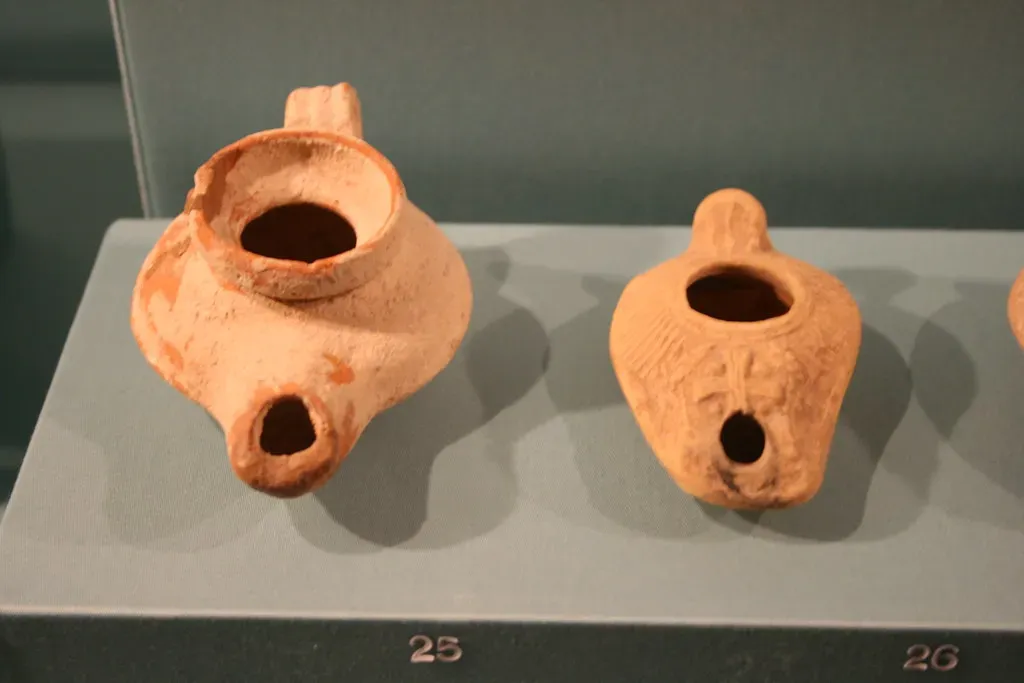
If these hieroglyphs were truly depicting actual machinery, we would expect at least some supporting evidence in the material record. Complex technology leaves a long trail: tools, spare parts, workshops, written instructions, and a broader infrastructure that makes such devices useful. Across Egypt, however, we simply do not find physical remnants of glass bulbs, metal filaments, copper wiring for large‑scale lighting, or generators that could power an underground system.
Instead, what we do find are plentiful remains of oil lamps, torches, soot traces, and architectural solutions like light wells that match what we know about ancient illumination techniques. Inscriptions across other temples describe rituals, offerings, star cycles, and hymns, not engineering manuals. The Dendera crypts are rich in religious and cosmological symbolism but silent about any practical gadgetry. When you line everything up, the “ancient electricity” idea starts to look less like a suppressed truth and more like a modern fantasy projected onto old stone.
There is also a huge engineering gap that is often glossed over. Advanced electrical devices do not emerge in a vacuum; they require a wide range of metallurgical, chemical, and mathematical capabilities that tend to show up in many other artifacts and texts. We simply do not see that ecosystem in ancient Egypt in a way that would support something like a true lighting system. The hieroglyphs still matter deeply, but for what they tell us about sacred imagination, not about secret laboratories.
Symbolism as Technology of the Mind, Not the Workshop
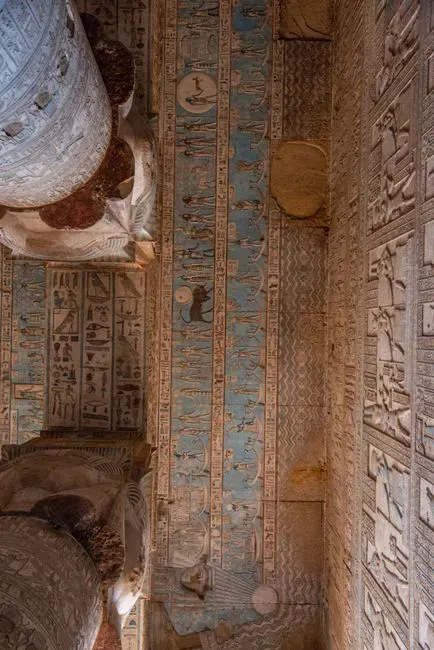
One thing I love about the symbolic explanation is that it does not actually make the Egyptians seem less impressive. If anything, it highlights a different kind of technology: a mental and spiritual one. These reliefs are not circuit diagrams; they are more like highly compressed graphic novels of the cosmos, where snakes, flowers, and pillars act as shorthand for complicated theological ideas. Instead of wiring up a literal lamp, the artists were wiring up metaphors that helped priests think about how existence itself stays powered.
In that sense, the “machinery” we see is not electrical but conceptual. The snake flowing out of the lotus inside a cosmic container resting on a pillar of stability is a visual equation about movement, birth, and structure. Ancient temples were packed with this kind of encoded knowledge, meant to be unpacked during rituals rather than plugged into a socket. Once you frame symbolism itself as a kind of cognitive technology, the carvings do not feel like a letdown compared to a lost machine; they feel like a different kind of engineering problem that the Egyptians solved with remarkable creativity.
Conclusion: Awe Without Inventing Ancient Gadgets
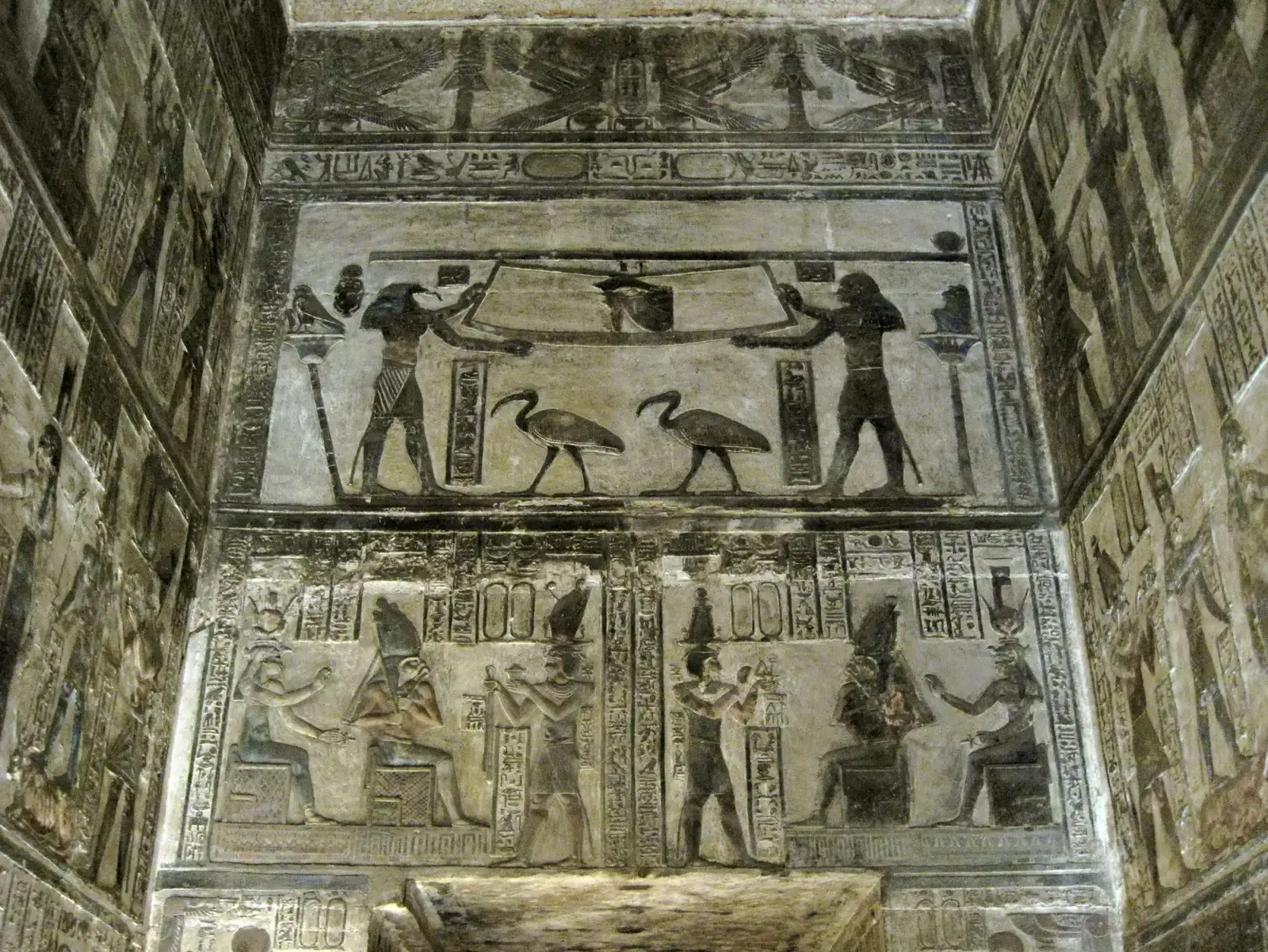
When I look at the Dendera reliefs now, I see two overlapping stories. One is the story of the ancient artists and priests who carved their cosmology into stone, using snakes, flowers, and sacred pillars to model how divine energy flows through the universe. The other is the story of us, modern viewers, squinting at those same forms and trying to turn them into bulbs, cables, and boxes because that is the language we live in today. The hieroglyphs have not changed; our assumptions have.
In my view, clinging to the machinery interpretation ends up shrinking the real achievement of the Temple of Hathor. It tries to make the past impressive by making it resemble our present, instead of letting it be astonishing on its own terms. We do not need hidden power grids or unrecognized devices to feel awe here; the real miracle is that a culture more than two millennia old could encode such dense, abstract ideas in images that still provoke arguments on the internet. Maybe the better question is not “What device is this?” but “What does it say about us that we keep trying to see one?”