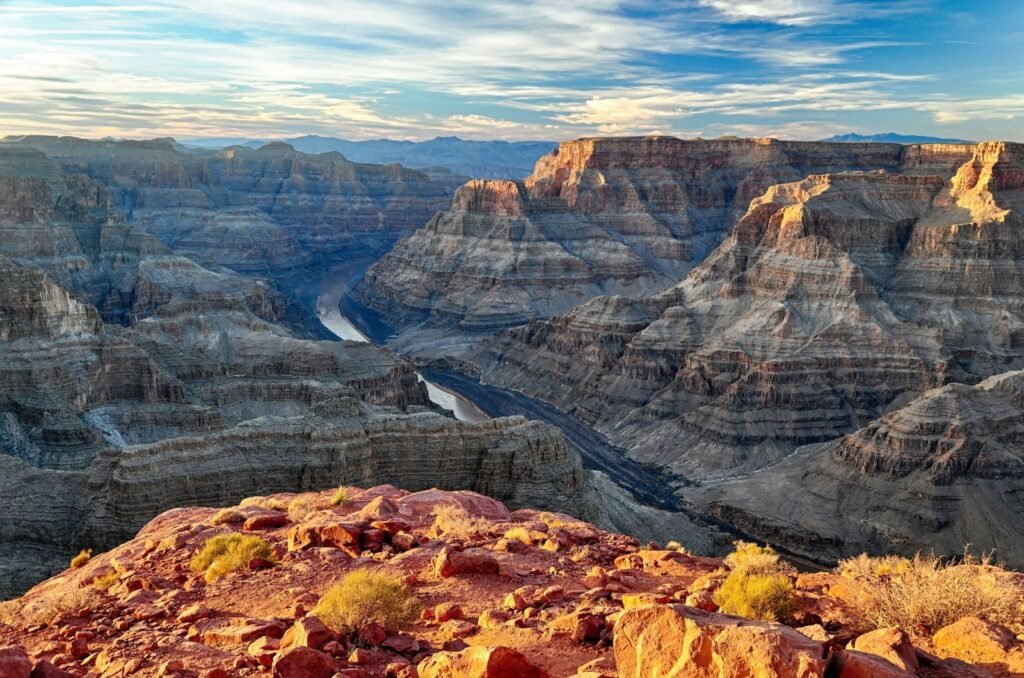

Stand on the rim of the Grand Canyon, and it feels less like looking at a landscape and more like staring into time itself. Layer upon layer of rock rises and falls in jagged color bands, each one an echo of oceans, deserts, and continents that vanished long before humans ever walked the Earth. For decades, geologists argued over just how old this chiseled scar truly is, and what stories might be locked in its depths. Now, new tools and fresh discoveries are revealing that some of the rocks exposed in the canyon predate animals, plants, and even the oxygen-rich atmosphere we take for granted. The mystery is slowly giving way to a richer, stranger history of our planet – one that forces us to rethink where the story of life, climate, and continents really begins.
The Hidden Clues Beneath the Rim
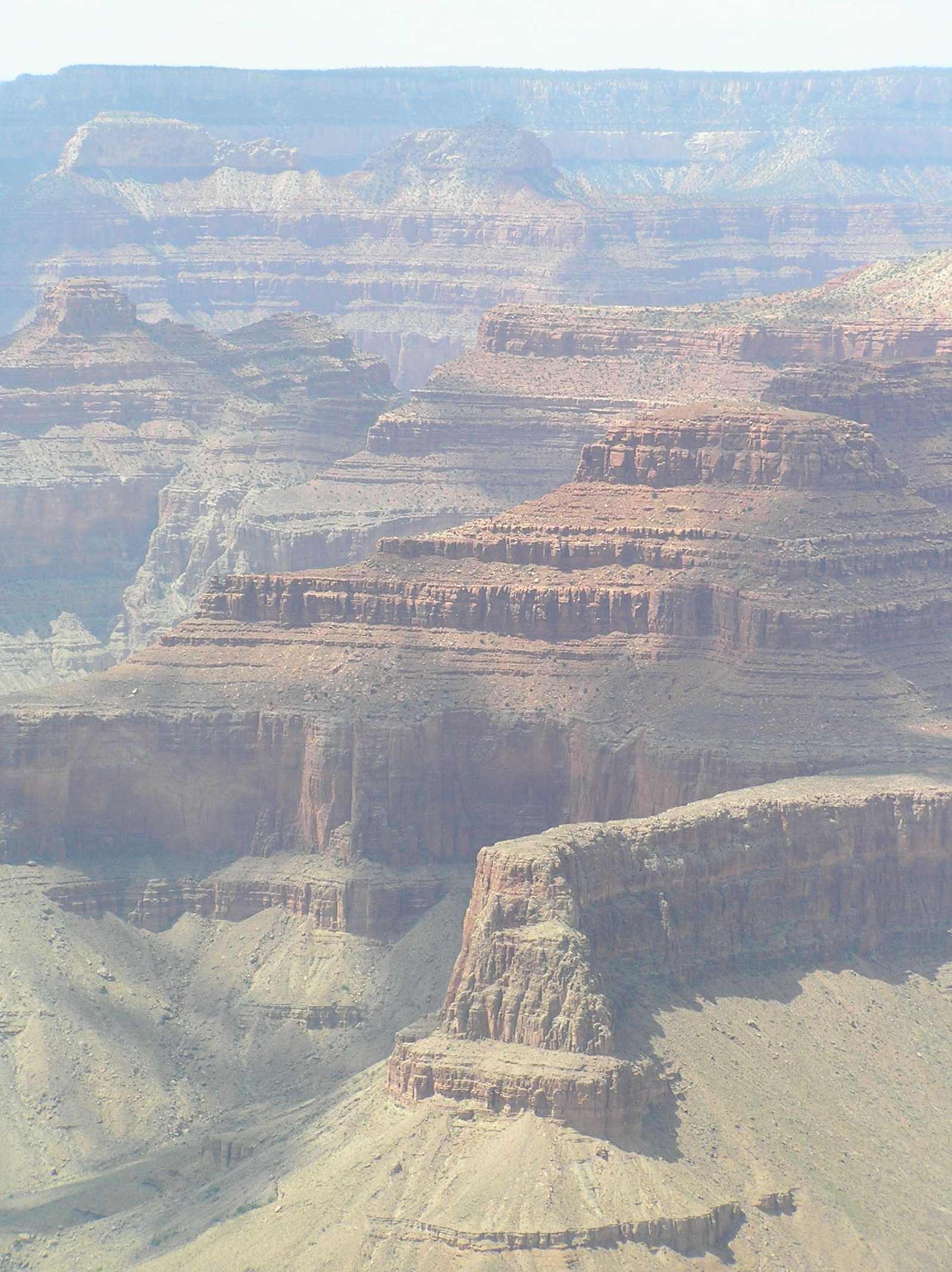
From the tourist overlooks on the South Rim, the canyon reads like a layered cake of color, but to a geologist, it is closer to a library of stone. Each band – the rust-red sandstones, the pale limestones, the dark, ancient schists – holds chemical traces, microscopic fossils, and mineral textures that record conditions going back more than a billion years. The deepest exposed rocks in some sections, known as the Vishnu Schist, have been dated to roughly about one and three quarter billion years old, formed when volcanic islands and ocean sediments were crumpled and baked deep within the crust. Above them lie tilted and faulted sequences called the Grand Canyon Supergroup, preserving episodes of ancient rifting, shallow seas, and even early microbial life. None of this is obvious from a quick selfie at the rim, but the clues are there for anyone who knows how to read them.
What makes these clues so powerful is not just their age but their continuity. In many parts of the world, subsequent mountain building and erosion have scrambled or erased similar records, like pages torn from a book. The Grand Canyon, by contrast, is one of the rare places where erosion has cut down through vast stretches of the crust without completely destroying the evidence. Mineral grains like zircon, which can survive intense heat and pressure, act as tiny time capsules, allowing researchers to pin down when specific layers formed. Together, these clues reveal that the canyon exposes a cross-section of Earth’s history that spans most of the planet’s known timeline – long before humans, long before dinosaurs, and even before complex animals existed at all.
How Old Is a Canyon, Really?
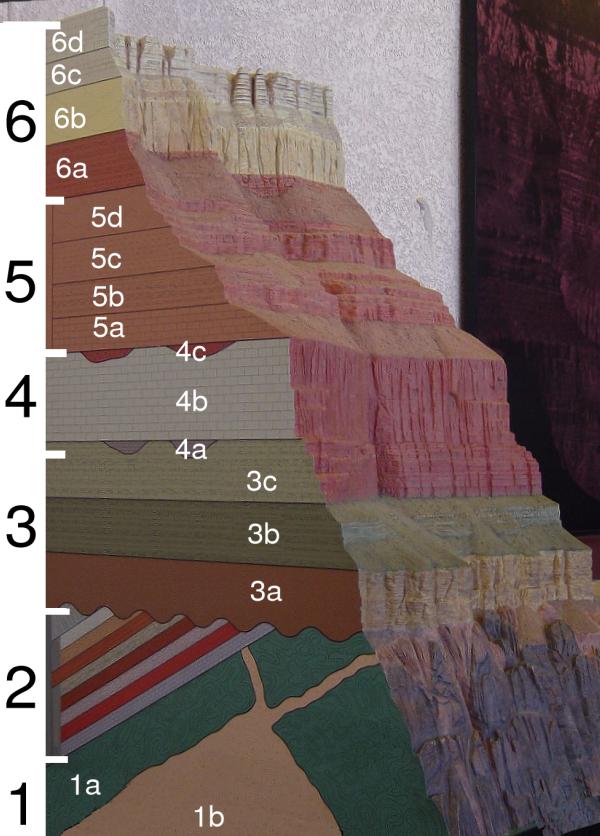
It sounds like a simple question: how old is the Grand Canyon? But geologists quickly discovered that the answer depends on what you mean by “old.” The rocks themselves, especially those at the bottom, are staggeringly ancient, but the carving of the canyon – the incision of the Colorado River that produced the breathtaking chasm we see today – is a much younger story. For much of the twentieth century, textbooks confidently placed the canyon’s age at around five to six million years, based primarily on river terraces and volcanic flows that dammed or crossed the Colorado. That seemed old enough to awe most people, but to Earth scientists, it left room for doubt.
In the last decade or so, that doubt sharpened into outright controversy. New techniques such as thermochronology, which tracks when rocks cooled as they were brought toward the surface, suggested that parts of the canyon might have been cut far earlier, perhaps tens of millions of years ago. Some studies argued that different segments of the canyon formed at different times, like puzzle pieces carved by separate rivers long before the modern Colorado linked them together. Others pushed back, pointing to evidence that the main, through‑going canyon is relatively young and unified. The current consensus is cautious and nuanced: some ancestral gorges likely existed by about seventy million years ago, but the continuous, iconic canyon is believed to have taken its present shape mainly within the last six million years or so.
From Ancient Tools to Modern Science
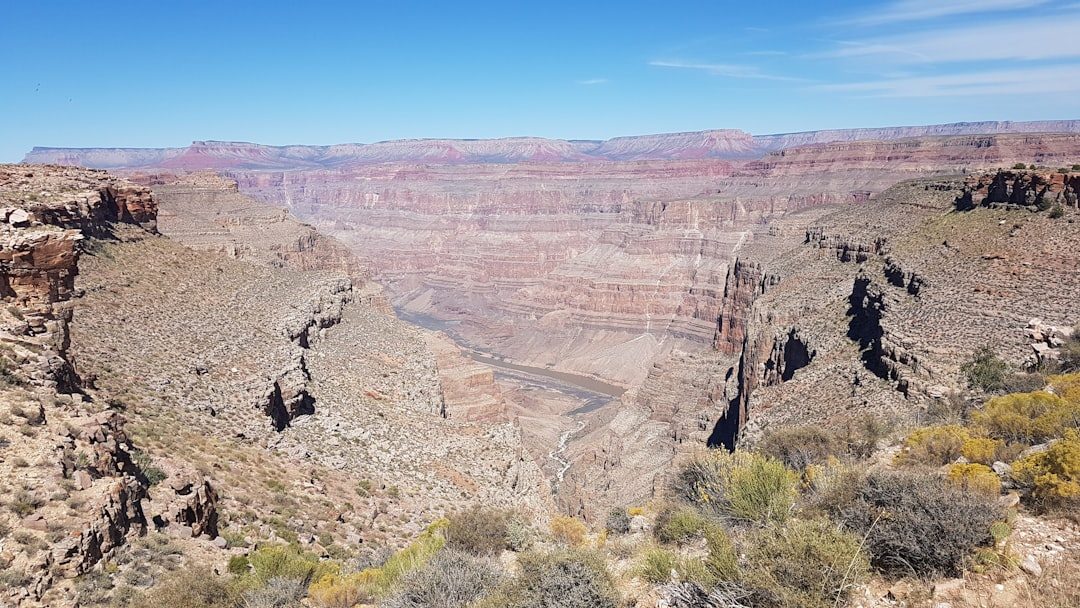
Humans have been wandering the Grand Canyon region for thousands of years, but for most of that time, the canyon was a lived-in homeland, not a scientific puzzle. Indigenous communities such as the Havasupai, Hopi, Navajo, Zuni, and many others developed rich cultural, spiritual, and practical relationships with the canyon, reading its moods, seasons, and resources with an intimacy that modern visitors rarely match. When early European and American explorers first encountered the canyon in the nineteenth century, they saw both a barrier and an opportunity. Harrowing expeditions down the Colorado River, like the famous nineteenth‑century boat journeys, mapped the canyon’s course and offered the first written descriptions that reached a wider public.
The tools those early surveyors carried – compasses, barometers, rock hammers – were crude compared with what researchers use today, but they laid the groundwork for a century and a half of geologic detective work. Modern scientists now arrive with drones, satellite imagery, laser‑based elevation mapping, and portable labs. Techniques such as radiometric dating, which measures the decay of radioactive elements in minerals, allow them to assign ages to rocks with remarkable precision. Paired with computer models that simulate how rivers carve landscapes over millions of years, these tools are rewriting the canyon’s timeline in far greater detail. The shift from hand‑drawn maps to high‑resolution, three‑dimensional models has turned the Grand Canyon from an obstacle into one of Earth’s best‑studied natural laboratories.
Ancient Oceans, Lost Atmospheres, and Microbial Worlds
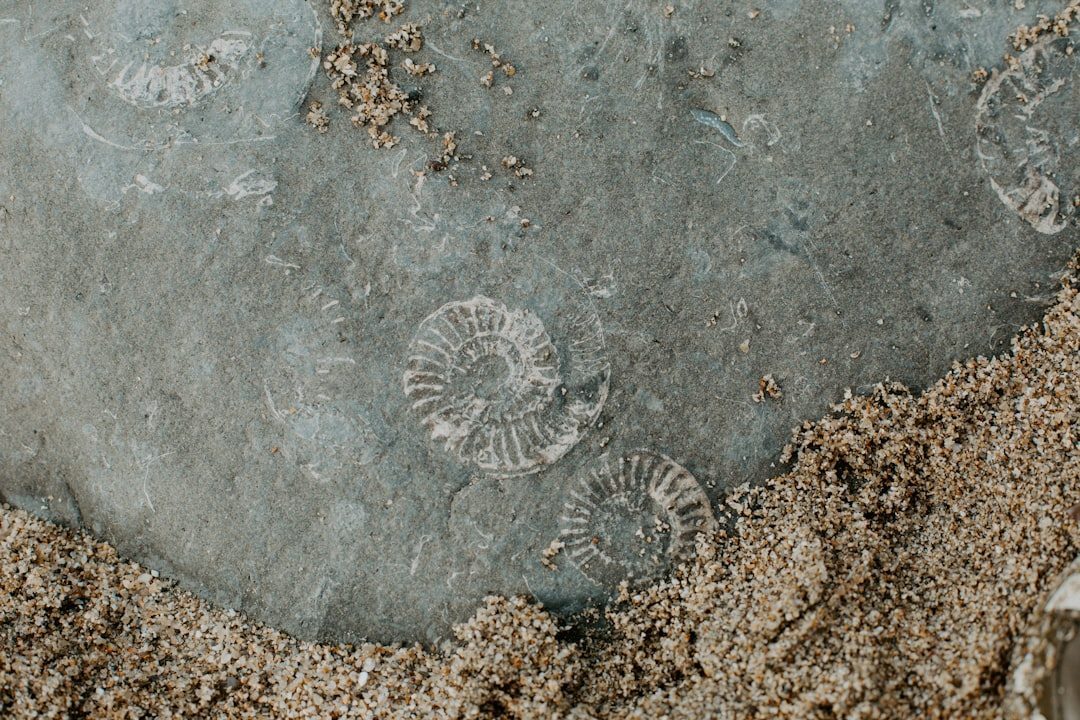
One of the most startling realizations to come from modern research is that many of the canyon’s rocks formed in worlds that would be utterly alien to us. Some of the oldest layers were deposited when Earth’s atmosphere contained far less oxygen, and complex life had not yet evolved. In those times, microbial mats – thin, carpet‑like communities of bacteria – dominated shorelines and shallow seas, leaving behind delicate wrinkled textures in the rocks that geologists can still see today. Other units preserve evidence of long‑vanished oceans that once covered what is now the American Southwest, with fossils of early marine organisms that flourished long before dinosaurs.
Seen through this lens, the canyon is not just a pretty hole in the ground, but a compressed archive of lost worlds. You can stand on a limestone ledge formed in a warm, shallow sea teeming with ancient marine life, then look down thousands of feet to schists that record a time when hardly any oxygen existed in the air. Some rock layers capture intervals of profound climate upheaval, including episodes when glaciers advanced and retreated or when vast deserts marched across the region. These changes are not abstract – chemistry locked into the rocks reveals shifts in carbon, oxygen, and other elements that scientists use to reconstruct ancient temperatures and atmospheric compositions. The story that emerges is one of a planet that has always been dynamic, sometimes violently so, long before humans ever began to influence the climate.
Why It Matters: Reading Earth’s Past to Understand Our Future
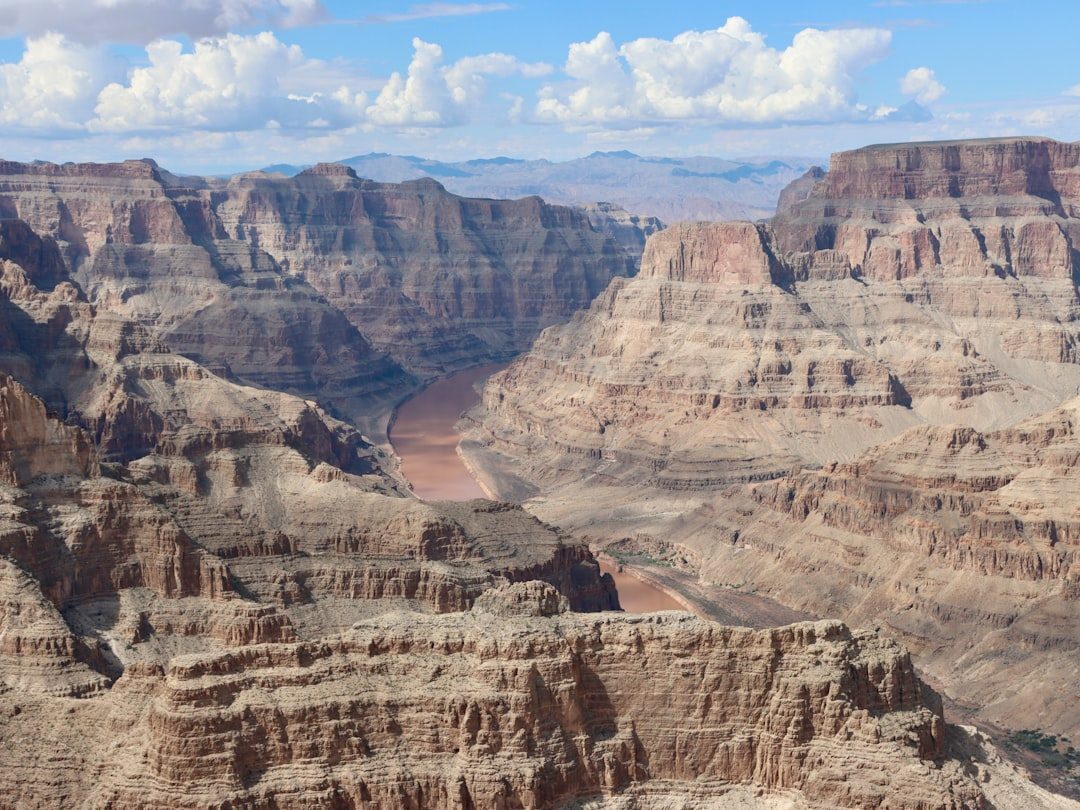
It might be tempting to treat the age of the Grand Canyon as a curiosity, the sort of fact you might deploy at a trivia night and then forget. But the canyon’s deep-time story matters directly to questions we are wrestling with today. By tracing how landscapes, rivers, and climates have changed over immense spans of time, geologists gain context for the rapid shifts we now see in the modern world. When you know that seas have advanced and retreated across continents, that river systems have reorganized entire regions, and that climates have swung from greenhouse warmth to icehouse chill, you start to see today’s changes in a new, more sobering light. The difference is that what once took millions of years is now happening over centuries or even decades because of human activity.
There is also a humbling perspective in realizing that our species is a very recent arrival in a story that has been unfolding for billions of years. The canyon reminds us that Earth’s systems – tectonic plates, erosion, climate cycles – do not revolve around us and will continue to operate long after we are gone. At the same time, the rocks make it clear that small changes, sustained over long periods, can completely remake the surface of the planet. That lesson cuts both ways: it explains the canyon’s grandeur but also warns that human‑driven carbon emissions, deforestation, and resource extraction can have outsized impacts if left unchecked. In this sense, understanding the deep past is not a luxury; it is a crucial piece of planning for a livable future.
Global Perspectives: A Canyon Among Giants
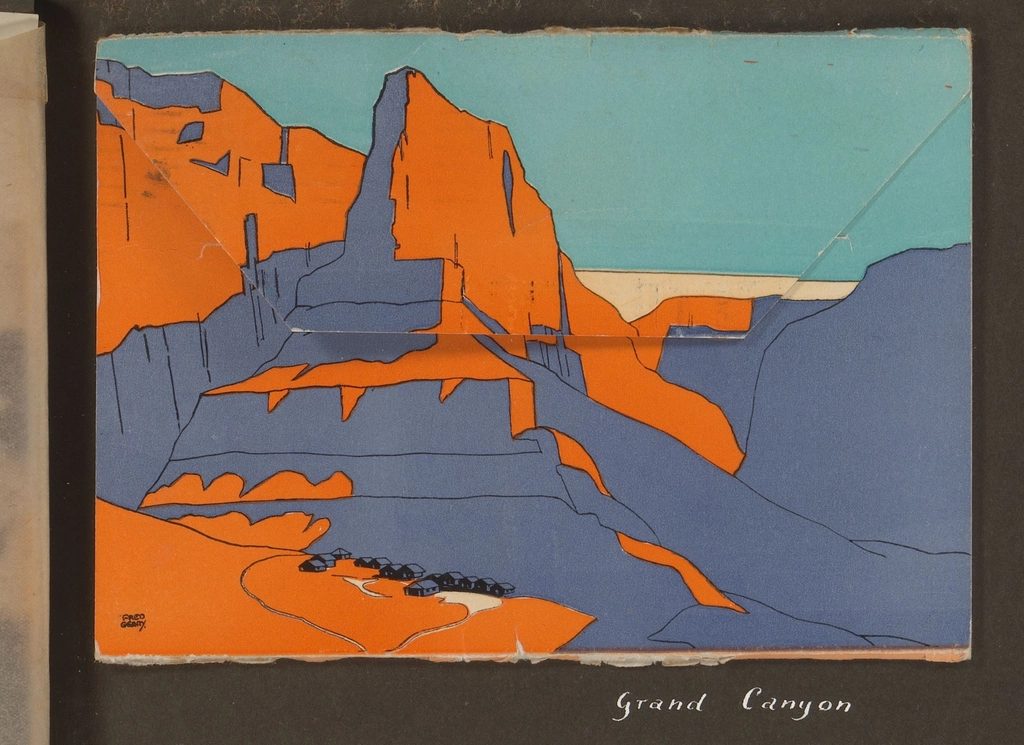
The Grand Canyon is not the only place on Earth where ancient rocks peek through the surface, but it is one of the most dramatic and accessible. Other regions, from the Canadian Shield to parts of Australia, Africa, and Greenland, also expose crust that is more than two billion years old. Some of those rocks record even older events, such as the formation of the earliest continents and hints of the planet’s first surface water. Yet few of these ancient terrains show their history in such vivid, three‑dimensional relief as the Grand Canyon does, with cliffs and buttes that allow researchers to trace individual layers across tens of miles. That visual clarity makes the canyon an invaluable benchmark for comparing geologic records from around the globe.
When scientists link data from the Grand Canyon with evidence from other continents, they can reconstruct the positions of ancient landmasses and the rise and fall of long‑gone mountain belts. This global stitching reveals that the canyon’s rocks were once part of supercontinents that have since broken apart and drifted across the planet. It also helps test big‑picture ideas, such as how plate tectonics has evolved over time or how early life responded to shifts in climate and chemistry. The canyon, in other words, is both a local wonder and a global reference point. Its secrets help calibrate timelines that reach from Arizona to Antarctica and beyond.
The Future Landscape: Erosion, Technology, and a Changing Climate
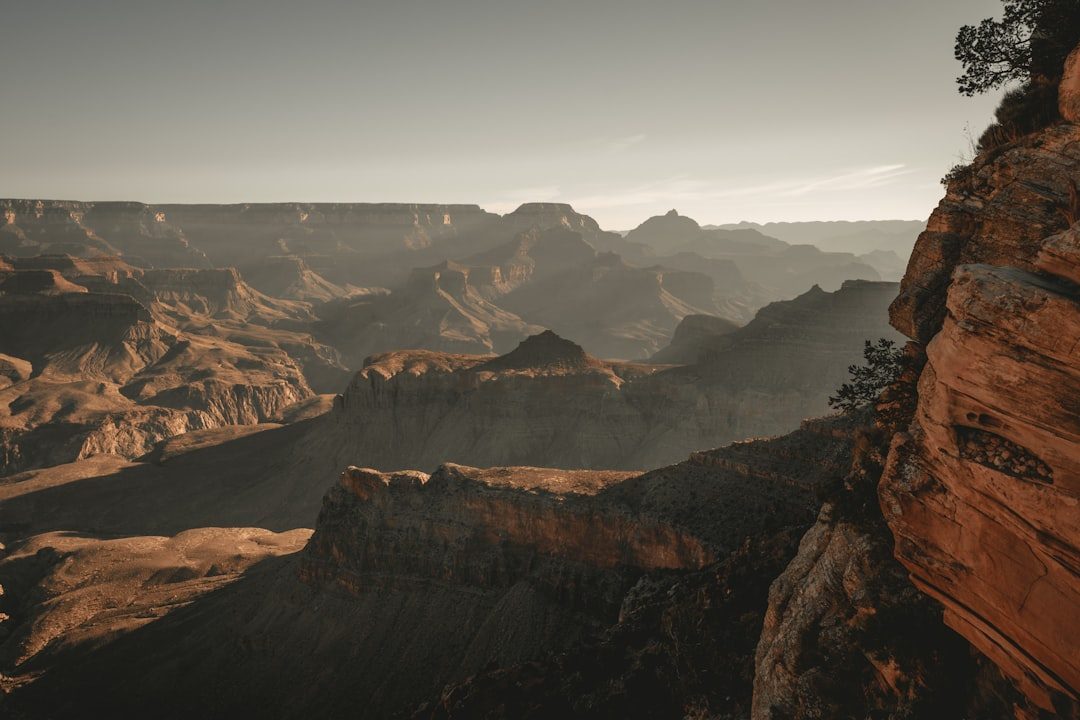
For all its apparent permanence, the Grand Canyon is not frozen in time. Every summer thunderstorm, winter snowmelt, and rare but powerful flash flood continues to deepen side canyons, undercut cliffs, and transport sediment downstream. The Colorado River itself has been reshaped by dams and diversions, altering the natural flow that carved the canyon in the first place. Climate change compounds these pressures, shifting precipitation patterns and reducing snowpack in the Rockies that feed the river. Over the coming centuries, the balance between erosion, river flow, and human intervention will determine how the canyon evolves – whether beaches shrink, habitats shift, and rockfalls become more or less frequent.
At the same time, the tools used to study the canyon’s future are becoming almost as transformative as those that unlocked its past. High‑resolution satellite monitoring, autonomous drones, and ground‑based sensors now track everything from tiny rock movements to changes in vegetation. Researchers are combining these data streams with sophisticated computer models to predict where landslides might occur, how ecosystems could respond to warming, and how cultural sites might be at risk. Future technologies may even allow non‑invasive probing of deep subsurface structures, offering a clearer picture of the foundations beneath the exposed walls. The canyon is still carving itself, and in the coming decades, we will watch its evolution with a level of detail that earlier generations could hardly imagine.
What You Can Do: Seeing the Canyon – and Deep Time – Differently
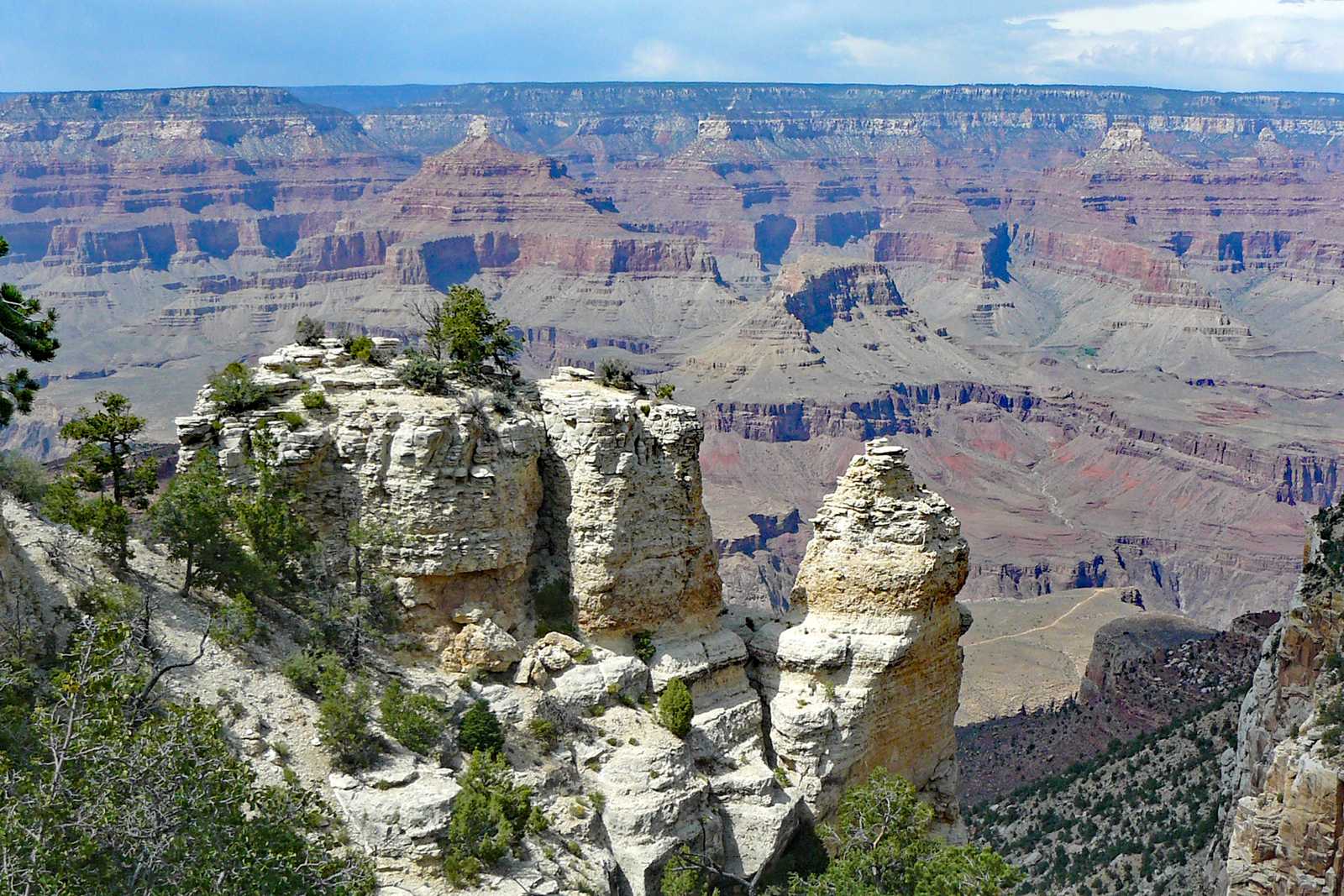
Most of us will never analyze zircon crystals or run climate models, but that does not mean we are bystanders in the story of the Grand Canyon. Simply learning to see the canyon as a record of deep time, rather than just a scenic backdrop, changes how we relate to it and to the planet as a whole. If you visit, you can pause at an overlook and try to imagine the sea that once covered your feet, or the microbial mats that once lived where now only dust and rock remain. Supporting responsible tourism – sticking to trails, respecting closures, minimizing waste – helps ease the modern pressures on fragile soils, plants, and archaeological sites. Even from afar, staying informed about water policy in the Colorado River Basin and backing science‑based conservation measures can make a difference.
There are also simple ways to foster a deeper appreciation for deep time in everyday life. You can read or share science reporting that highlights Earth’s long history, or support organizations that fund geologic and climate research. Classroom discussions, public talks, and community events can use places like the Grand Canyon as gateways into bigger conversations about climate change and planetary stewardship. In a world that often feels trapped in short‑term thinking, the canyon offers a stark reminder that we are part of a very long story – and that the choices we make now will become the rock layers future beings might one day read.
Suhail Ahmed is a passionate digital professional and nature enthusiast with over 8 years of experience in content strategy, SEO, web development, and digital operations. Alongside his freelance journey, Suhail actively contributes to nature and wildlife platforms like Discover Wildlife, where he channels his curiosity for the planet into engaging, educational storytelling.
With a strong background in managing digital ecosystems — from ecommerce stores and WordPress websites to social media and automation — Suhail merges technical precision with creative insight. His content reflects a rare balance: SEO-friendly yet deeply human, data-informed yet emotionally resonant.
Driven by a love for discovery and storytelling, Suhail believes in using digital platforms to amplify causes that matter — especially those protecting Earth’s biodiversity and inspiring sustainable living. Whether he’s managing online projects or crafting wildlife content, his goal remains the same: to inform, inspire, and leave a positive digital footprint.