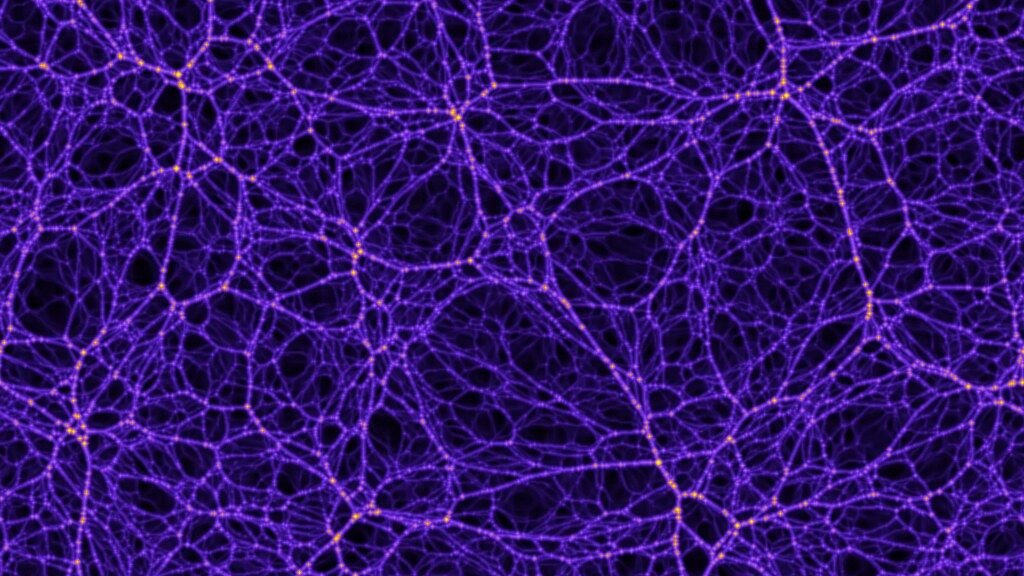
When you look up at the night sky, it feels like you’re seeing random points of light scattered in every direction. But on the largest scales, the universe is anything but random. Galaxies, clusters, and even vast voids are all part of a huge hidden structure called the cosmic web, stretching across billions of light-years. Once you start to picture this web, the universe stops being an empty stage and starts to feel like a living, interconnected system.
In this article, you’ll walk through what the cosmic web actually is, how it formed, and how you can even see traces of it from your backyard. You’ll discover how invisible dark matter holds everything together, why galaxies line up along filaments like cities on intergalactic highways, and how scientists map something so gigantic that no telescope can see it in one shot. By the end, the sky above you will look a lot less random – and a lot more like a story in progress.
What You Really Mean When You Say “The Universe Is Connected”
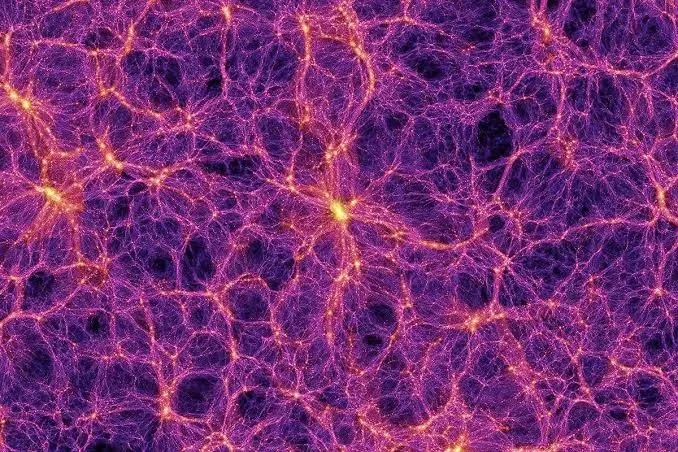
If someone told you that every galaxy you see is part of a vast, three-dimensional web, you might think it sounds poetic or spiritual. But in this case, it’s literal. On scales of hundreds of millions of light-years, matter in the universe isn’t spread out evenly. Instead, it gathers in long, thin filaments, dense knots, and huge empty gaps, creating a pattern that really does look like a gigantic spider web frozen in space.
When you say the universe is connected, you’re describing this exact structure – galaxies and galaxy clusters linked along cosmic filaments, with dark matter acting as the scaffolding. Where filaments intersect, you get massive galaxy clusters, like busy interchanges on a cosmic highway. Between these filaments lie enormous voids, regions where you’d travel for tens or hundreds of millions of light-years and barely see a galaxy at all. You’re living inside one strand of this web right now, whether you realize it or not.
From Tiny Ripples to Giant Webs: How the Cosmic Web Formed
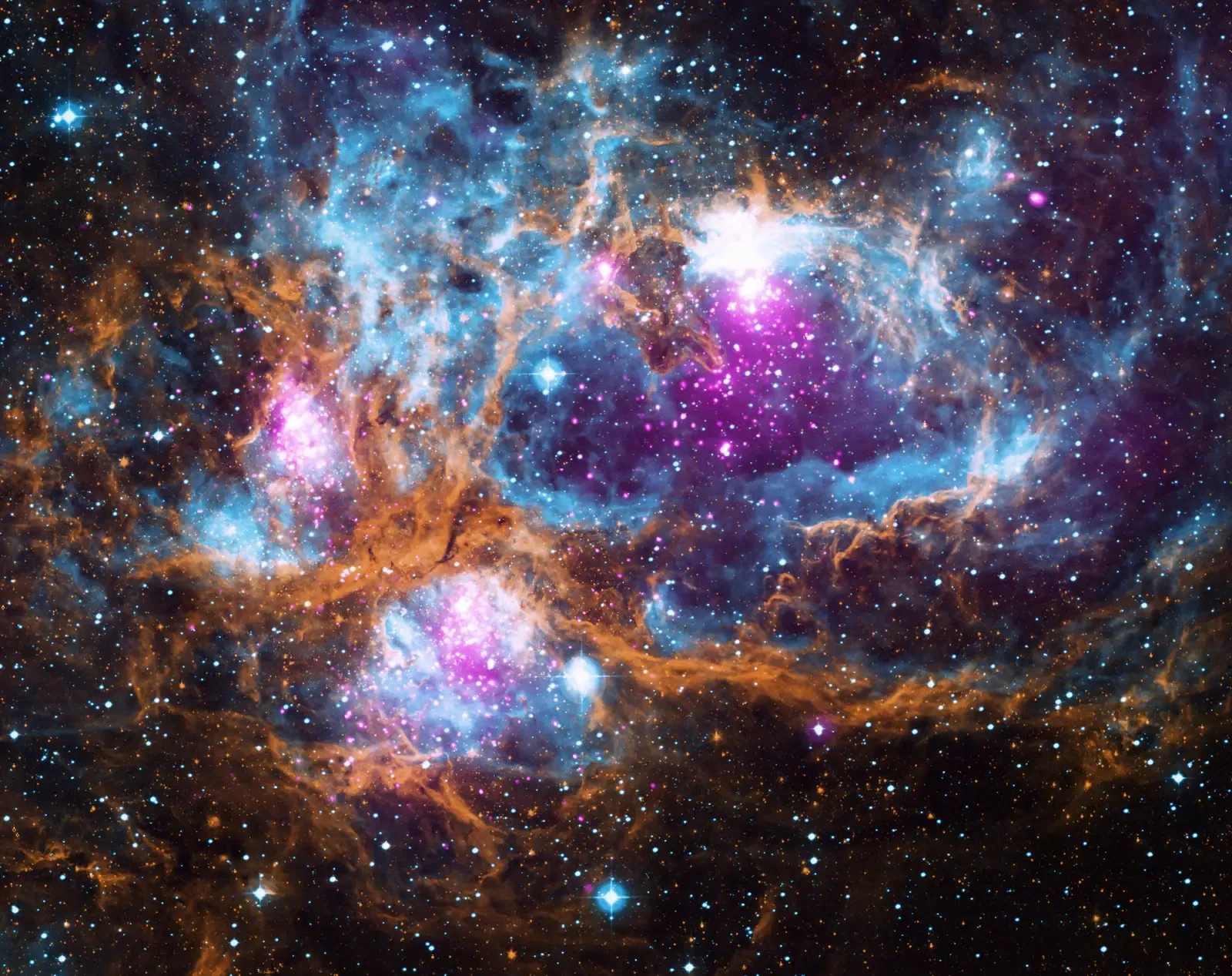
To understand how the cosmic web came to be, you have to go back to a time when the universe was still almost perfectly smooth. After the Big Bang, matter and radiation were spread out with only tiny ripples in density – some regions were just slightly denser than others. You can think of it like a calm ocean with very gentle waves that are barely noticeable, but those small differences set the stage for everything that followed.
Over billions of years, gravity amplified those small ripples. Slightly denser regions pulled in more matter, becoming denser still, while emptier regions lost matter and became voids. Dark matter, which does not emit light but does feel gravity, started clustering first and formed invisible skeletons in space. Ordinary matter – gas that would later form stars – fell into those dark matter structures, lighting up the cosmic web as galaxies and clusters formed along its densest strands. You are seeing the frozen echoes of those early ripples whenever you look at large-scale maps of the universe.
Dark Matter: The Hidden Skeleton of the Cosmic Web
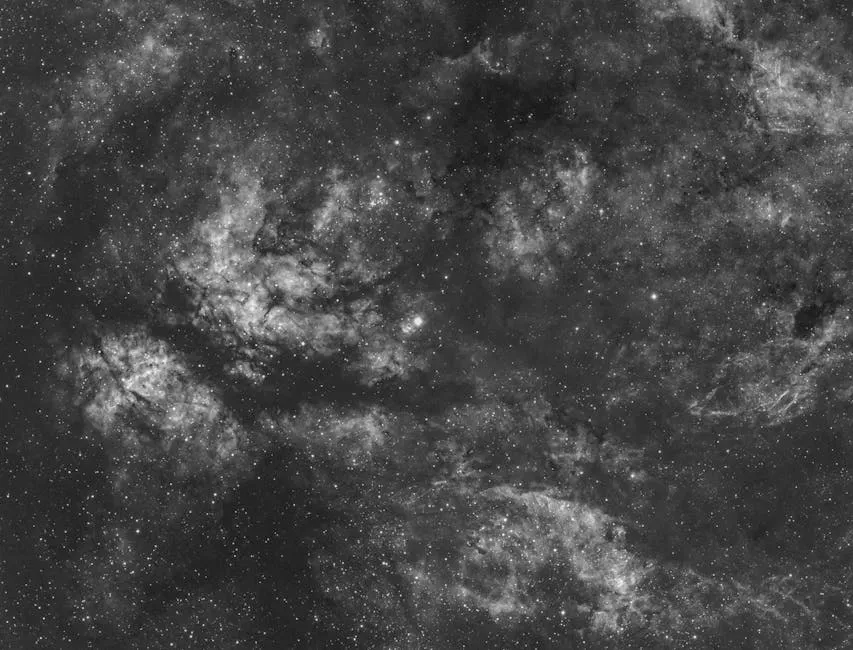
You can’t talk about the cosmic web without talking about dark matter, because without it, the web as you know it simply would not exist. Observations show that the visible material – stars, gas, dust – is only a small fraction of all the matter in the universe. The rest is dark matter, which doesn’t shine, doesn’t absorb light, and can’t be seen directly with any telescope, but still exerts gravitational pull. In a way, you’re always looking at a shadow play; you see the glowing parts, but the real structure is shaped by something you can’t see.
Think of dark matter as the invisible wireframe model of the universe. Computer simulations that include dark matter naturally produce filamentary patterns that match the observed cosmic web strikingly well. Galaxies form where dark matter clumps, fall along its filaments, and build up at its knots, much like raindrops flowing along the grooves of a window. When you look at a galaxy cluster or a line of galaxies stretching across space, you’re really tracing the outlines of a hidden dark matter backbone.
Filaments, Clusters, and Voids: The Architecture of the Cosmic Web
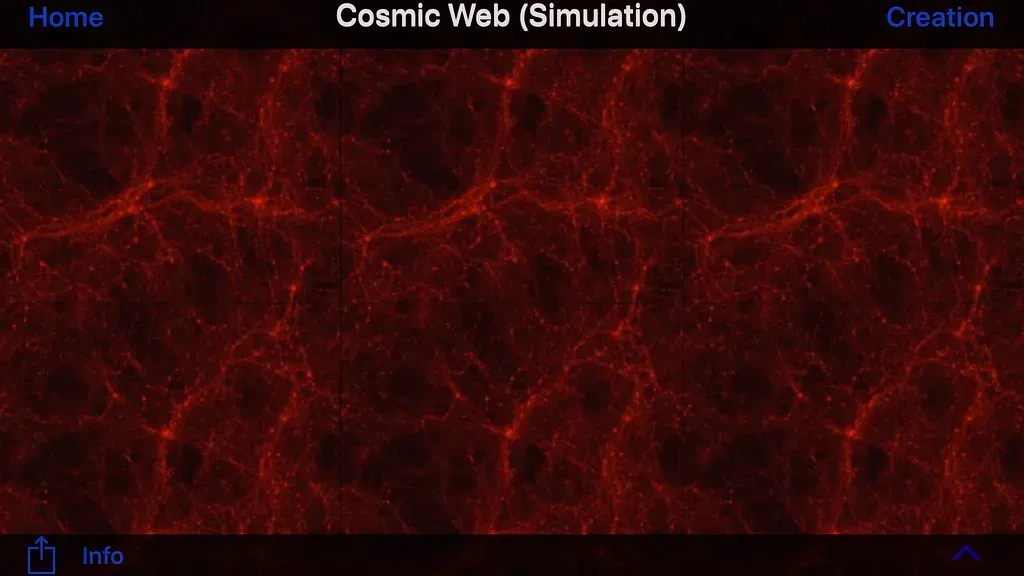
Once you zoom out far enough, you start to see a clear cosmic architecture. Filaments are the long, thread-like structures where thousands of galaxies line up, often spanning hundreds of millions of light-years. At the places where several filaments meet, you find galaxy clusters – enormous gravitational hubs containing hundreds or thousands of galaxies bound together. These clusters are like the bustling downtowns of the universe, full of fast-moving galaxies, hot gas, and intense gravity.
Then there are the voids, which are just as important. These are huge cosmic cavities, often tens of millions of light-years across, where galaxies are rare and space feels eerily empty. You might assume that nothing is happening there, but voids influence how matter flows along the web, almost like low-pressure regions shaping global wind patterns. Together, filaments, clusters, and voids form a repeating pattern across the observable universe, giving you a kind of grand-scale cosmic city map.
How You Actually See Something This Big: Cosmic Cartography
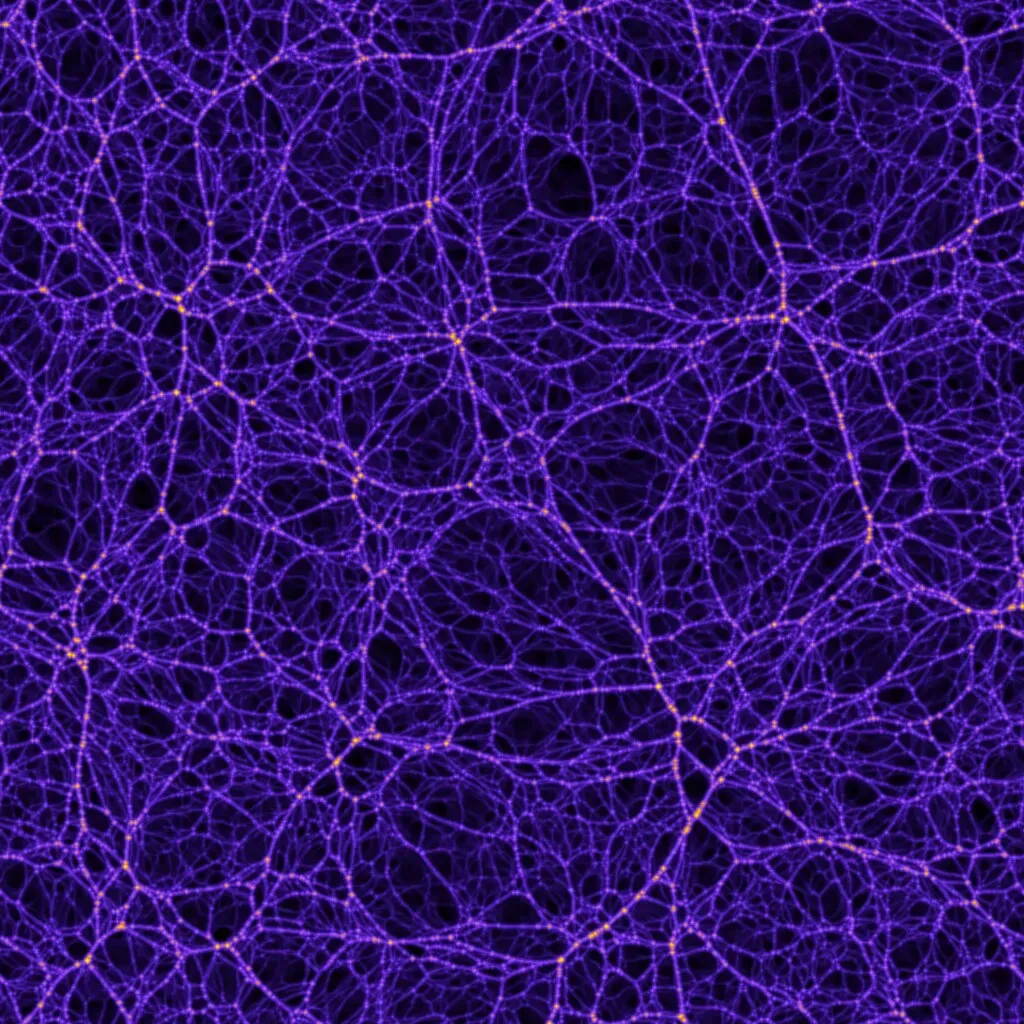
You might wonder how anyone can map a structure so colossal that a single filament can stretch for hundreds of millions of light-years. Astronomers do this by measuring the positions and distances of millions of galaxies and then plotting them in three dimensions. Large sky surveys act like cosmic censuses, collecting redshifts (a measure of distance from how much light is stretched) and turning them into giant 3D maps. When you slice through these maps, filaments and clusters pop out as clear patterns.
Beyond galaxies, you can also trace the cosmic web using gas and radiation. The glow of hot gas in galaxy clusters reveals where the densest nodes lie, and subtle distortions in the light of background galaxies – caused by gravitational lensing – let you infer the underlying dark matter distribution. In some cases, astronomers study light absorbed by tenuous gas between galaxies to map filaments too faint to see directly. All of these methods give you overlapping views of the same grand structure, like different layers of a single, enormous blueprint.
Your Night Sky and the Web You Cannot See
![Your Night Sky and the Web You Cannot See (Flickr and the review where it was used on Lonely Speck : [1], CC BY-SA 2.0)](https://nvmwebsites-budwg5g9avh3epea.z03.azurefd.net/dws/d49bb9e53632f620c830e7a27639fac6.webp)
Standing outside at night, it’s tempting to feel isolated, like your tiny patch of stars is just a local curiosity. But even your own Milky Way is not drifting alone. It sits in a small group of galaxies, which in turn is part of a much larger structure embedded in cosmic filaments. When you hear names like Virgo Cluster or Laniakea Supercluster, you’re really hearing the mailing address of your galaxy within the cosmic web’s hierarchy.
Although you can’t see the filaments with your naked eye, their influence shows up in what you do see. Certain regions of the sky are packed with galaxies and clusters; others are surprisingly sparse because they look toward voids. If you explore deep-sky images from large telescopes, you’re often looking straight down a filament, with galaxies dotted along it like lanterns hanging on an invisible cable. You might only see the beads, but the string tying them together is very real.
How the Cosmic Web Shapes Galaxy Life and Evolution
Where a galaxy lives on the cosmic web dramatically affects how it evolves, much like a city, suburb, or small town shapes the life of a person. Galaxies in dense clusters, at the intersections of filaments, are more likely to interact, merge, and get stripped of their gas. That can shut down star formation and leave behind older, redder galaxies that are quieter and more settled. You can think of these places as crowded city centers where traffic jams and collisions are common.
Meanwhile, galaxies in the quieter outskirts of filaments or near voids often evolve more slowly and can keep forming new stars for longer. They have more gas available and fewer disruptive encounters, like small towns where life is less hectic. Research suggests that everything from a galaxy’s shape to its star formation rate can be influenced by its location in the web. In a very real sense, the cosmic web provides the environment that decides how a galaxy grows up and what kind of galaxy it becomes.
What the Cosmic Web Tells You About the Universe’s Fate
When you understand the cosmic web, you’re not just seeing a snapshot of structure – you’re getting a clue about where the universe is heading. The web itself formed under the competing influences of gravity pulling matter together and cosmic expansion dragging it apart. Today, the expansion of the universe is speeding up, driven by something you know as dark energy. That acceleration gradually stretches the spaces between filaments and clusters, making the web more isolated over time.
In the far future, distant filaments and clusters will recede beyond what you can ever observe, leaving only your local region of the web visible. The large-scale pattern you can map today is, in a sense, a privileged view – a moment when the web is still clearly drawn across the sky. By studying its structure now, you’re capturing evidence about the universe’s composition, its history, and its long-term trajectory. The cosmic web is not just an impressive pattern; it’s a record of how everything got where it is and a hint of where it is going.
When you step back and let this all sink in, the idea that galaxies are connected stops being abstract and becomes deeply personal. Your own galaxy is a tiny light on an enormous wire of dark matter, part of a web that reaches as far as you can possibly observe. The next time you look up and see just a handful of stars, will you be able to forget that behind them lies a vast, hidden network tying the universe together – or will you start wondering which strand of the web you’re actually looking along?