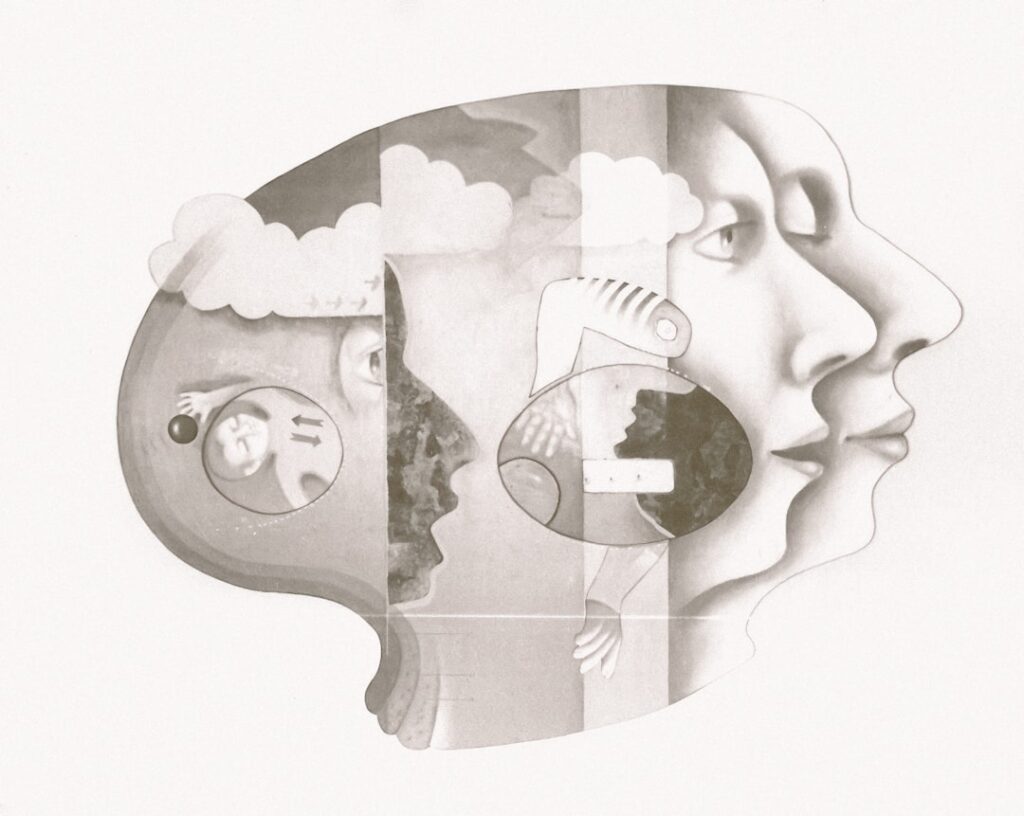

Imagine walking through a crowded ancient city and suddenly hearing a commanding voice in your head telling you what to do – but you don’t recognize it as your own thought. Instead, you experience it as the booming instruction of a god or ancestor. That is the strange and fascinating world suggested by the bicameral mind hypothesis, a bold idea that claims your distant ancestors may not have had consciousness in the way you understand it today.
This hypothesis does not just tweak your picture of the past; it flips it on its head. It suggests that what you call conscious self-awareness is relatively recent, and that earlier humans lived in a kind of mental split where one part of the brain spoke and the other obeyed. Whether you end up convinced or deeply skeptical, exploring this idea forces you to rethink what it even means to have a mind.
What the Bicameral Mind Hypothesis Actually Says
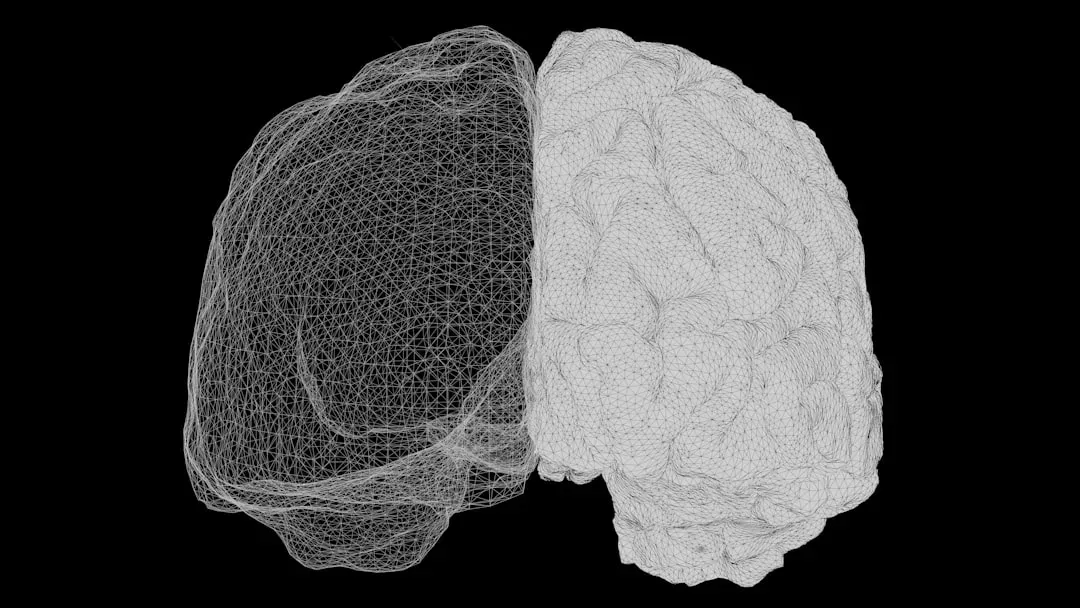
At the heart of the bicameral mind hypothesis is a radical claim: ancient people did not experience an inner, unified “I” narrating their lives the way you do. Instead, their mental life was divided, or “bicameral.” One side of the brain generated auditory hallucinations – actual heard voices – while the other side received those voices as if they were external commands coming from gods, kings, or spirits.
In this framework, what you call your thoughts today would have been perceived as something alien and authoritative back then. You might feel indecisive; an ancient person, according to this view, might simply have “heard” a divine order telling them to go, fight, submit, or sacrifice. You rely on inner dialogue, reflection, and self-questioning; they, supposedly, relied on a literal inner voice that they did not recognize as their own.
How This Hypothesis Says Your Brain Used to Work
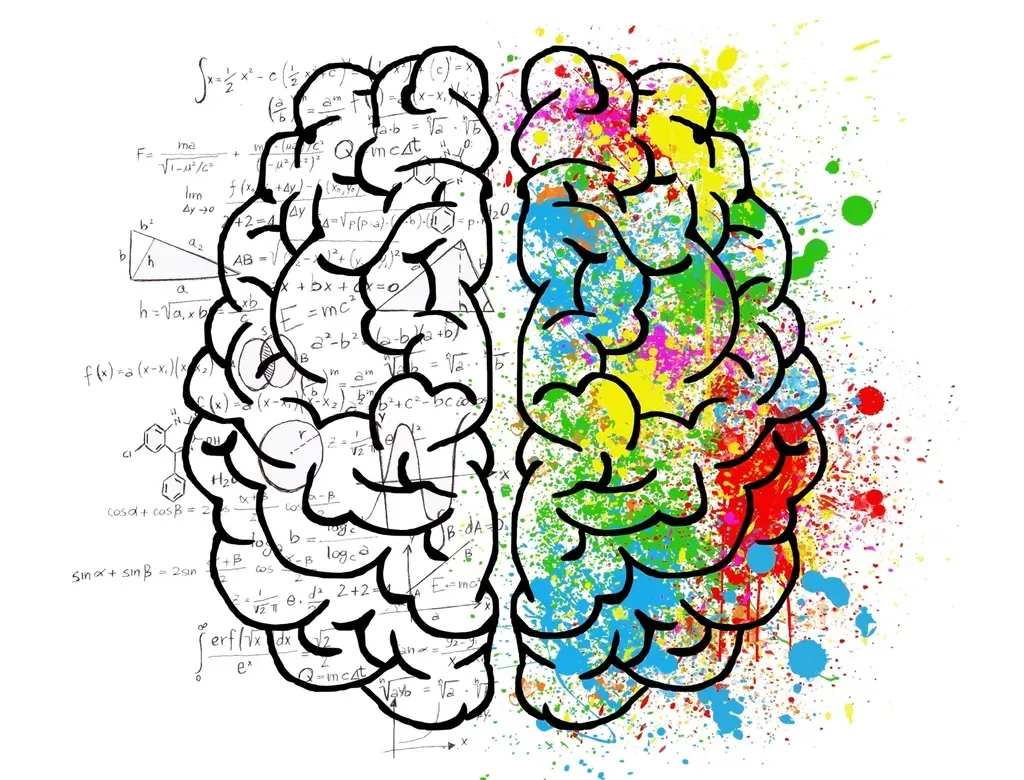
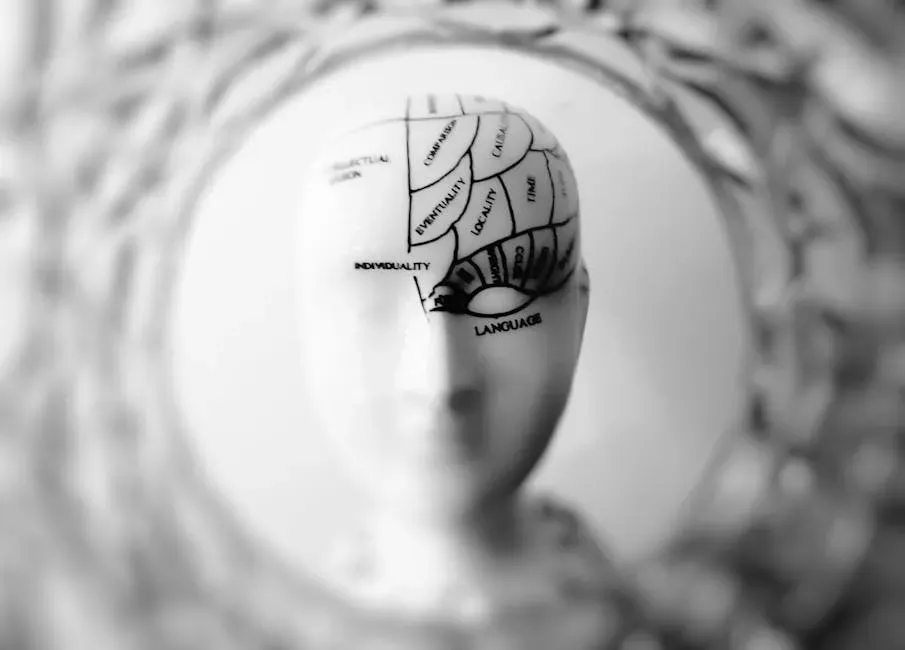
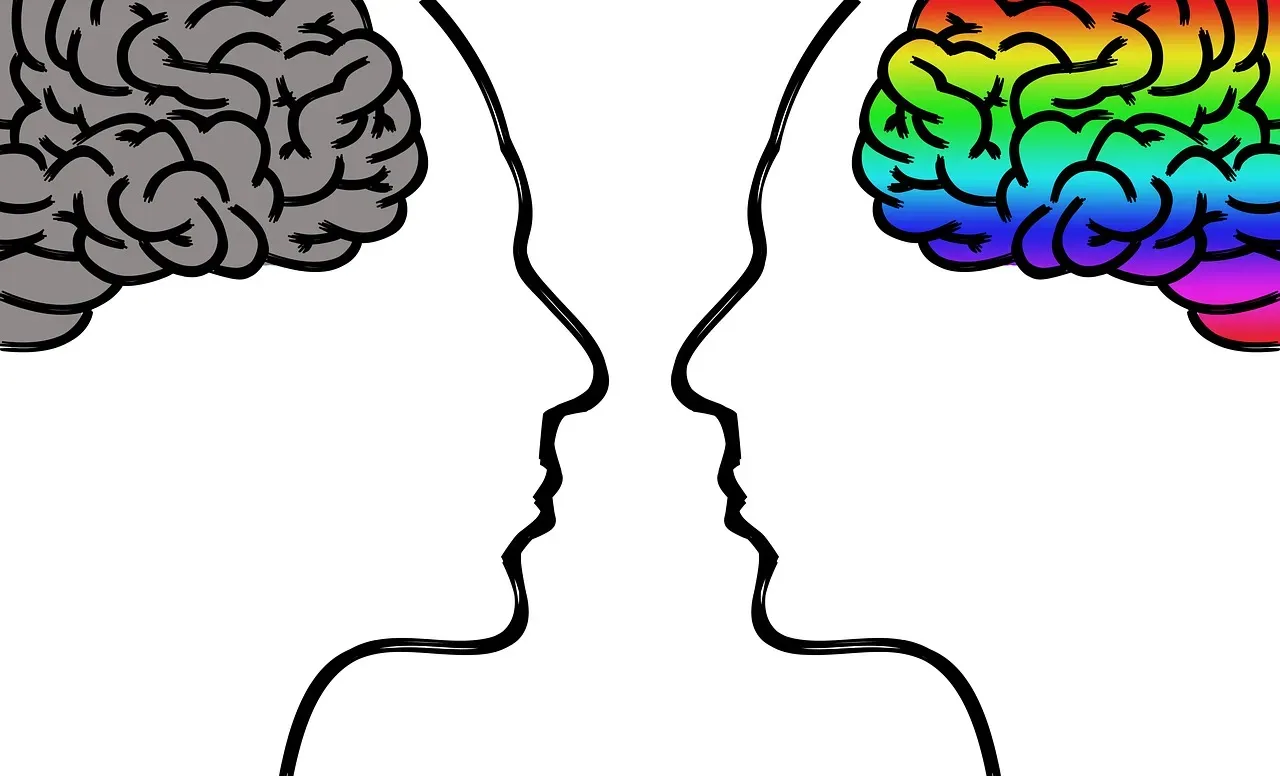
To make sense of this, you need to think about brain lateralization – the way different hemispheres handle different tasks. The bicameral theory suggests that one hemisphere (often associated with language production) created the “voices,” while the other interpreted them as if they were coming from outside. Instead of these systems integrating into a single self-aware perspective, they operated almost like two cooperating agents inside one skull.
In your modern brain, communication between hemispheres is constant and fluid, allowing you to merge perception, memory, language, and self-reflection into one ongoing stream of consciousness. According to the bicameral account, this unified stream did not fully exist for early humans. Instead, there was a kind of mental hierarchy: a speaking part that issued commands and a listening part that followed them. Consciousness, on this view, emerged later from the need to coordinate these systems more flexibly as societies became more complex.
Why Ancient People Might Have Heard Gods Instead of Themselves
If you had no concept of “my inner thought,” how would you explain a clear, authoritative voice inside your head? You would probably reach for the cultural tools you had at hand. In early civilizations, those tools were myths, deities, heroes, and ancestral spirits. The bicameral hypothesis argues that when people heard inner voices, they mapped them onto the powerful figures they already believed controlled their world.
You can see how this would fit neatly into a world where every storm, harvest, and war already had divine meaning. A commander on the battlefield who suddenly hears a “god” telling him to advance would feel not confused but guided. A grieving parent who hears the “voice” of a dead relative might interpret it as a visitation rather than an internal memory. Where you say, “I thought to myself,” they might have said, “The god spoke to me.”
The Evidence Supporters Point To: Texts, Myths, and Oracles

If you look at some of the earliest surviving texts, you often find gods speaking directly to humans, issuing commands and advice in very literal ways. Supporters of the bicameral hypothesis argue that this is not just colorful storytelling but a faint echo of how people actually experienced their minds. They point to epic poems, royal inscriptions, and prophetic writings where leaders claim they received specific, spoken instructions from divine figures.
You also see institutions built around hearing and interpreting voices, such as oracles, seers, and prophets. In many traditions, an individual goes into a trance and then delivers messages said to come from a god. From a bicameral perspective, you can read these episodes as socially organized ways of accessing and legitimizing inner auditory experiences. Instead of treating such voices as personal thoughts, societies gave them ritual structure and sacred authority.
How Consciousness, as You Know It, Supposedly Emerged
According to this hypothesis, your modern, introspective consciousness did not just pop into existence; it had to be built. As societies grew more complex, with laws, trade, writing, and large cities, simple voice-command guidance would have become less effective. You suddenly needed to plan further ahead, weigh conflicting goals, handle ambiguous situations, and adapt to rapidly changing conditions. A rigid inner “god voice” telling you what to do in every crisis no longer cut it.
In that pressure cooker, the theory suggests, people gradually evolved or culturally developed new mental habits: metaphorical thinking, narrative self-reflection, and inner modeling of different possibilities. Instead of hearing gods, you started talking to yourself. Over generations, this self-talk became richer, more flexible, and more integrated. Eventually, you arrived at what you experience today as a coherent, continuous “me” that can think about itself, doubt itself, and even argue with itself without needing to imagine an external deity for every impulse.
What Modern Science Says About Hearing Voices

When you jump from ancient texts to modern neuroscience and psychology, things get more complicated. You now know that hearing voices is not rare; many people report internal voices at some point, not only in psychiatric conditions but also under stress, grief, trauma, or intense focus. Brain imaging has shown that auditory hallucinations often activate language and hearing regions much like real speech, suggesting that your brain can generate “heard” voices from within.
This does not prove the bicameral hypothesis, but it makes one piece of it feel more plausible: your brain is fully capable of producing vivid inner voices that feel external. You may experience this in mild forms as your own inner critic, a “gut feeling” that sounds like a parent, or the echo of a beloved teacher. The key difference is that you now label these experiences as aspects of yourself. The ancient people imagined by the hypothesis, in contrast, would have routinely labeled them as separate beings.
The Big Criticisms and Why You Should Be Careful With This Idea
If you feel skeptical, you’re not alone. Many historians, psychologists, and neuroscientists think the bicameral mind hypothesis stretches limited evidence too far. They argue that you cannot reliably read mental states off ancient texts, that mythic language may be symbolic rather than literal, and that consciousness is likely older and more gradual than this dramatic before-and-after story suggests. From this view, the hypothesis is a provocative metaphor, not a solid description of actual ancient brains.
You also have to consider all the modern cultures where people still report hearing gods, spirits, or ancestors today, while clearly also having rich, reflective inner lives. That alone suggests that hearing divine voices and having unified consciousness are not mutually exclusive. So if you take this theory seriously, you need to hold it lightly: treat it as a lens that sharpens your awareness of how culture shapes inner experience, not as a settled fact about all early humans.
What This Means for How You Think About Your Own Mind

Even if you ultimately reject the bicameral hypothesis as historical reality, it pushes you into an unsettling but useful question: how much of your inner life is “natural,” and how much is trained by language and culture? You were taught from early childhood to say “I think,” “I feel,” and “I decided,” and to imagine yourself as a single, continuous self behind your eyes. That story feels obvious, but it might be more like a software layer running on top of older brain hardware that can still produce separate, voice-like processes.
When you notice different parts of yourself pulling in opposite directions – one voice telling you to take a risk, another telling you to play it safe – you can see a hint of this older, more divided system still at work. Instead of seeing that inner multiplicity as a problem, you might treat it as a feature: a way your mind tests options, simulates perspectives, and negotiates with itself. The bicameral idea, even as a thought experiment, invites you to be more curious about your own inner voices and less quick to assume that the way you experience consciousness is the only way a human mind can work.
Conclusion: A Strange Mirror Held Up to Your Own Consciousness
When you follow the bicameral mind hypothesis to its full implications, you are not just peeking into a speculative past; you are holding up a funhouse mirror to your own sense of self. The possibility that earlier humans might have experienced their thoughts as gods forces you to question how fixed your own mental world really is. Maybe your inner monologue, your feeling of “I,” and your sense of being a single, unified person are less like eternal truths and more like cultural inventions that could have turned out differently.
You do not need to fully believe this theory to let it change how you look at your mind. The next time you catch yourself thinking in different “voices” or arguing with yourself, you might smile and imagine an older version of you hearing a god instead. That little shift in perspective can make your own consciousness feel more mysterious, more fragile, and strangely more precious. If your sense of self is something that had to be built, what might you still be in the middle of building right now?