Forests, Ice, and Currents Face Mounting Pressures (Image Credits: Pexels)
Global warming has propelled the planet toward critical thresholds where ecosystems face sudden, potentially permanent shifts. Researchers from over 160 institutions detailed these dangers in the Global Tipping Points Report 2025, highlighting how even fractions of a degree beyond 1.5 degrees Celsius above pre-industrial levels amplify risks.[1][2] Warm-water coral reefs have already crossed a key limit, marking the first major breach in a chain of vulnerabilities that could reshape climates, food systems, and human societies worldwide. Urgent mitigation now offers the last chance to limit overshoot and prevent widespread collapse.
Coral Reefs Cross the Threshold First
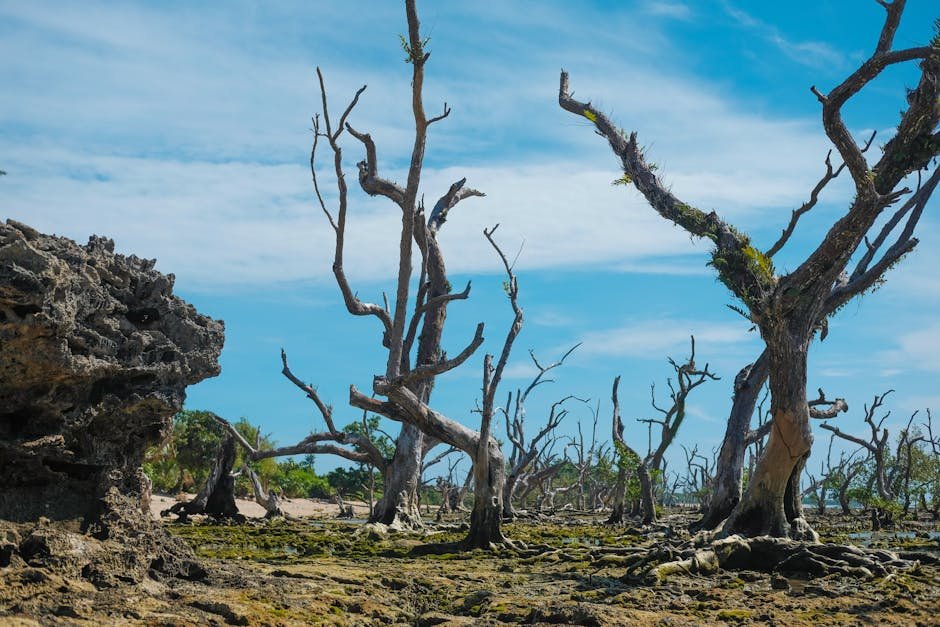
Warm-water coral reefs stand as the planet’s initial casualty in the escalating climate crisis. Scientists determined that these ecosystems passed their central thermal tipping point at approximately 1.2 degrees Celsius of global warming, with regional declines now underway at current levels around 1.4 degrees Celsius.[1] Heat stress and ocean acidification have triggered widespread mortality, leaving little room for recovery even if temperatures stabilize soon. Over 99 percent probability of full tipping persists under 1.5 degrees Celsius without overshoot.
These reefs support hundreds of millions of people through fisheries and tourism. Their loss disrupts marine food webs and coastal protections, compounding vulnerabilities in tropical regions. Tim Lenton, lead author of the report and climate scientist at the University of Exeter, stated, “The biggest picture is that we’re sadly already starting to cross climate tipping points, and the risk of crossing others increases with every fraction of a degree of global warming.”[2]
Forests, Ice, and Currents Face Mounting Pressures
The Amazon rainforest edges toward widespread dieback below 2 degrees Celsius of warming, exacerbated by drought and deforestation. This transformation into a dry savanna would release billions of tons of stored carbon, accelerating global temperature rises further.[3] Polar ice sheets, including Greenland and the West Antarctic, approach instability around 1.5 degrees Celsius, committing the world to meters of sea-level rise over centuries. Glaciers like Alaska’s Mendenhall have retreated dramatically, spawning outburst floods that damage communities.
Permafrost thaw looms at similar warming levels, unlocking methane – a potent greenhouse gas – that intensifies the cycle. The Atlantic Meridional Overturning Circulation (AMOC) risks collapse below 2 degrees Celsius, potentially disrupting monsoons, agriculture, and weather patterns across hemispheres. These systems interconnect, where failure in one heightens threats to others.
| Ecosystem/System | Estimated Tipping Threshold | Current Status |
|---|---|---|
| Warm-water coral reefs | 1.2–1.5°C | Tipping point crossed |
| Amazon rainforest | <2°C | At risk of dieback |
| Polar ice sheets | ~1.5°C | Approaching |
| AMOC | <2°C | Declining, at risk |
Cascades of Risk Threaten Global Stability
Tipping points do not act in isolation; interactions often destabilize further systems. For instance, AMOC weakening could exacerbate Amazon drought, while permafrost emissions fuel Arctic sea ice loss. The report identifies 45 percent of connections as harmful, projecting impacts on food security, economies, and billions of lives.[1]
Regions like small islands, South Asia, and the Arctic face acute threats from sea rise, monsoon shifts, and ecosystem upheaval. Non-climate factors, such as overfishing and land use, compound these dangers. Lenton emphasized that every additional 0.1 degree Celsius elevates probabilities across the board.
Positive Tipping Points Provide a Counterforce
Amid dire warnings, accelerating shifts in technology and society offer hope. Solar photovoltaic panels have dropped in price by a quarter for each doubling of capacity, driving rapid adoption as the fastest-growing electricity source. Electric vehicle uptake similarly plummets costs through scale.
Restoration initiatives and policy mandates can trigger cascades toward stability. Local actions, like Indigenous-led conservation around glaciers, demonstrate scalable models. Combined with halving emissions by 2030 and net-zero by 2050, these efforts could minimize overshoot duration and safeguard remaining systems.[2][1]
Key Takeaways
- Coral reefs have tipped, but limiting warming to 1.5°C buys time for others.
- Cascading risks demand integrated global and local responses.
- Harness positive tipping in renewables and restoration to reverse trajectories.
The Global Tipping Points Report underscores a narrowing window for decisive intervention before interconnected collapses lock in profound changes. Communities and leaders must prioritize decarbonization, nature regeneration, and precautionary governance to steer away from catastrophe. What actions do you support to secure these ecosystems? Tell us in the comments.