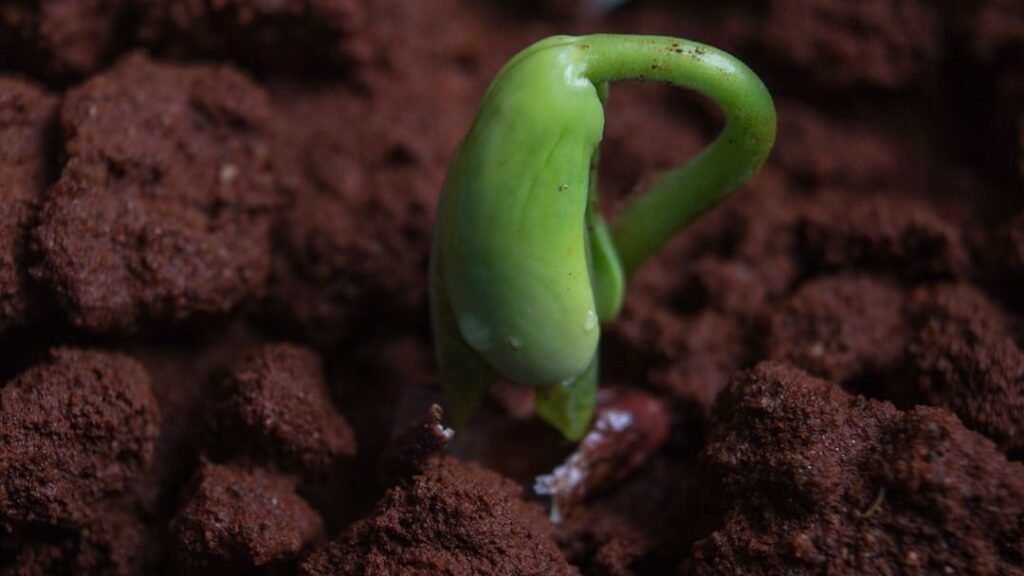

Something remarkable just happened in the world of space agriculture, and honestly, it deserves more attention than it’s getting. Researchers have managed to grow and harvest chickpeas under conditions that simulate the harsh, unforgiving environment of the Moon. Not in a science fiction novel. In a real laboratory setting.
This kind of breakthrough sits at the intersection of survival science and interplanetary ambition. It raises a question that’s both thrilling and a little mind-bending: could the food on your plate one day trace its origins back to lunar soil? Let’s dive in.
Why Chickpeas? The Surprisingly Smart Choice
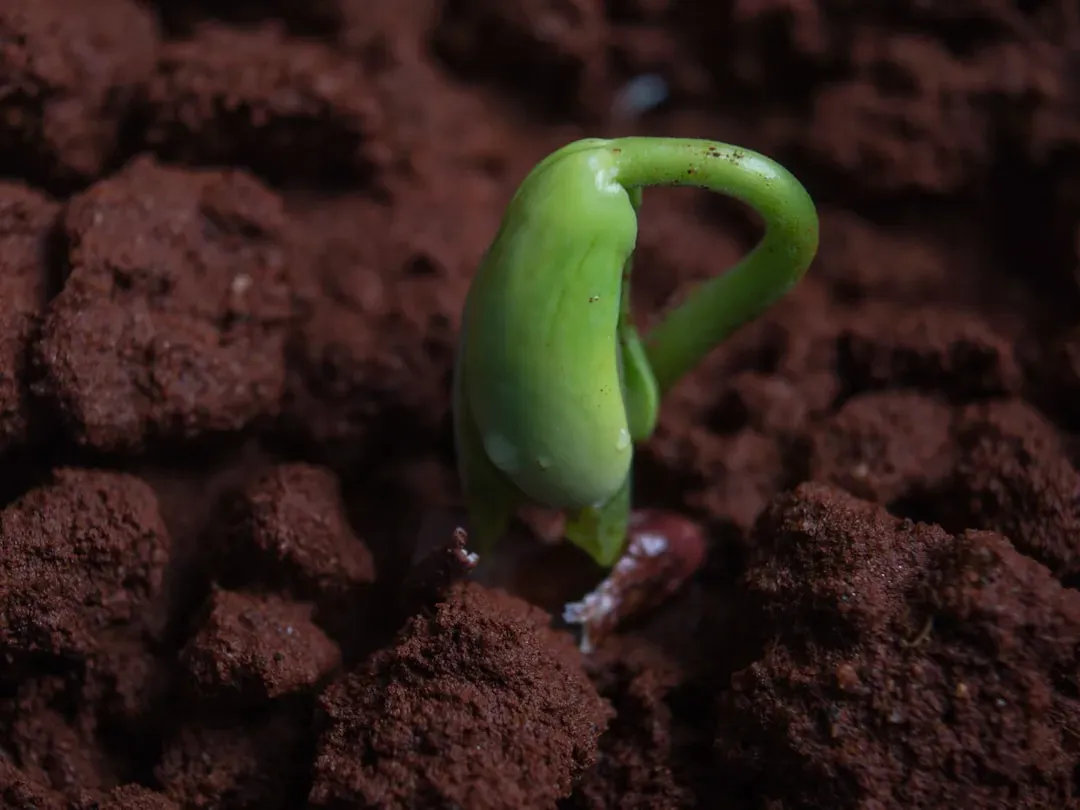
Here’s the thing about chickpeas – they’re not glamorous. They don’t have the cultural cachet of rice or the symbolic weight of wheat. Yet scientists zeroed in on them for a reason that makes complete sense once you hear it.
Chickpeas are legumes, which means they fix nitrogen naturally through their root systems. On a Moon base where resources are brutally limited, having a crop that essentially fertilizes its own soil is not just convenient. It’s potentially life-saving. They’re also packed with protein and calories, making them an efficient food source in environments where every gram of cargo launched from Earth costs a staggering amount of money.
Honestly, when you think about it, chickpeas are the ultimate survivalist crop. Compact, nutritious, and chemically generous to the soil around them. I think future astronauts might end up owing a lot to the humble chickpea.
Simulating the Moon – What That Actually Means
Recreating lunar conditions on Earth is far more complex than dimming the lights and lowering the temperature. Scientists had to replicate the Moon’s reduced gravity environment, its dramatically altered light cycles, and the intense radiation exposure that comes without the protection of Earth’s thick atmosphere.
The researchers worked with lunar regolith simulant, a specially engineered material designed to mimic the physical and chemical properties of actual Moon soil. Real lunar regolith is notoriously difficult to work with. It’s sharp, abrasive at the microscopic level, and largely lacks the organic matter that makes Earth soil so hospitable to plant life.
What makes this experiment remarkable is that the chickpeas didn’t just survive these conditions. They completed a full growth cycle and were successfully harvested. That’s a distinction worth pausing on. Surviving is one thing. Producing edible yield is something else entirely.
The Role of Controlled Environments and Grow Systems
The plants weren’t just tossed into a box of simulated Moon dirt and wished luck. Researchers used carefully controlled growth chambers that regulated temperature, humidity, light spectrum, and atmospheric composition. Think of it like a very sophisticated terrarium engineered by people who really, really don’t want to fail.
Lighting played a particularly critical role. The Moon experiences roughly two weeks of continuous sunlight followed by two weeks of total darkness in its natural cycle. For this experiment, artificial lighting was used to provide the plants with a workable photoperiod, essentially tricking them into behaving as they would under normal growing conditions.
This kind of environmental manipulation is going to be central to any future lunar farming operation. You can’t rely on the Sun’s schedule up there. You build the schedule yourself, and you make sure your crops don’t know the difference.
Challenges That Almost Derailed Everything
Let’s be real – this wasn’t a smooth, triumphant journey from seed to harvest. The research team encountered significant obstacles related to water retention. Lunar regolith simulant drains water far more rapidly than Earth soil, which creates a persistent challenge for maintaining the moisture levels that plants need at the root level.
Nutrient availability was another serious hurdle. Without the rich microbial ecosystems that make Earth soil so fertile, delivering the right chemical balance to growing plants requires precise intervention. The scientists had to supplement the simulant with targeted nutrients to give the chickpeas a fighting chance.
There were also concerns about root development. Lunar soil simulant’s abrasive texture can physically damage delicate root structures. Yet the chickpeas managed to push through, quite literally, demonstrating a resilience that researchers found genuinely encouraging. It’s hard to say for sure, but there’s something almost poetic about a plant tough enough to grow on the Moon.
What This Means for Long-Term Space Missions
The implications of this harvest extend well beyond the laboratory. Any serious human presence on the Moon – whether a research outpost or something more permanent – will require a reliable food supply that doesn’t depend entirely on resupply missions from Earth. The logistics of shipping food from our planet are prohibitively expensive at scale.
Growing food on site, or “in situ” as scientists prefer to call it, transforms the entire economic and logistical equation of space habitation. A crop like chickpeas could serve as a cornerstone of a broader lunar agricultural system, potentially paired with other hardy crops in a diversified growing program.
This research also feeds directly into planning for Mars missions, where resupply from Earth would take months rather than days. The lessons learned from lunar agriculture translate remarkably well to Martian conditions, giving this experiment a reach far beyond the Moon itself.
The Broader Scientific Community’s Reaction
The space agriculture field has been building momentum for years, but breakthroughs with this level of practical clarity tend to energize the entire research community. Growing plants in microgravity environments aboard the International Space Station has provided useful data, but replicating the specific conditions of a planetary surface is a different and arguably more meaningful challenge.
Researchers working on bioregenerative life support systems have long argued that closed-loop food production is not a luxury for long-duration missions. It’s a necessity. This chickpea harvest adds a concrete data point to that argument, making it harder to dismiss lunar agriculture as distant speculation.
It’s also worth noting how this connects to sustainability research on Earth. The techniques developed for growing food in resource-poor, nutrient-deficient environments have real potential applications in arid regions and degraded agricultural lands right here on our own planet. Space science, as it often does, winds up solving problems closer to home.
What Comes Next for Lunar Agriculture Research
Harvesting one crop under simulated conditions is a milestone, not a finish line. The next phases of this research will likely involve testing a wider variety of crops under similar lunar-simulated environments, identifying which plants demonstrate the best combination of yield, nutritional value, and tolerance for harsh conditions.
Scientists will also need to tackle the long-term sustainability of lunar soil. Even with nitrogen-fixing legumes like chickpeas, maintaining soil health across multiple growing cycles in a closed system presents enormous challenges. Microbial supplementation and composting strategies are likely to become key areas of focus in the coming years.
There’s also the question of scaling. A successful harvest in a controlled laboratory is one thing. Designing a functional, reliable growing system that could operate inside a pressurized lunar habitat, maintained by astronauts with limited agricultural training, is an entirely different engineering problem. The journey from proof-of-concept to operational reality is long but, after this harvest, a little less uncertain.
A Harvest That Changes the Conversation
It’s easy to read a headline like this and file it away as interesting trivia. But I genuinely think this experiment represents a quiet turning point. For decades, the idea of farming on the Moon has lived in the realm of optimistic speculation. Now it has evidence behind it.
The chickpea, of all things, just became a symbol of human adaptability and ambition. Not a rocket engine, not a space suit, not a rover. A small, round legume that grows underground and feeds billions of people on Earth, and might one day feed the first humans to call the Moon a temporary home.
What strikes me most is how this kind of science forces us to rethink our assumptions about what’s possible. A few years ago, the idea of a successful lunar harvest would have sounded like science fiction. Now it sounds like a research paper. What other “impossible” ideas are quietly becoming inevitable? That’s a question worth sitting with.