
Think about the last time you were stuck in a boring meeting. Every minute felt like an hour, right? Now compare that with a night out with your favorite people that seemed to vanish in a blink. The clock on the wall was moving at the same pace in both situations, but your mind definitely was not. That weird, slippery feeling of time speeding up or slowing down is not just in your head in the casual sense; it is literally created by hidden timing systems inside your brain.
Neuroscientists are increasingly convinced that our sense of time is not a passive clock we simply read, but an active construction the brain builds on the fly using memory, attention, emotion, and prediction. The wild part is that by understanding how this inner machinery works, you can start to nudge it. You will not bend the laws of physics, but you can make your life feel longer, richer, and more spacious – or, when you want, make dull stretches pass more quickly. Once you see how it works, you can never unsee it.
Why Time Feels So Weird: Your Brain Does Not Have One Clock, It Has Many
Here is the first shocking thing: your brain has no single master clock for subjective time. Instead, different brain regions track different kinds of timing – milliseconds for speech and movement, seconds for decision-making, minutes and hours for experiences, and even years for your sense of life history. It is like a cluster of overlapping stopwatches, all running for different reasons, none of them quite in agreement.
Researchers have found timing functions in areas such as the cerebellum, basal ganglia, and parts of the cortex, each handling different windows of time. Your sense of “how long something took” comes from these networks comparing notes after the fact, not from some neat internal stopwatch. That means your felt time is, by design, a best guess, stitched together from signals that are noisy, biased, and deeply influenced by what you care about in the moment.
Attention Is Your Time Dial: What You Focus On Changes the Speed
One of the most powerful “levers” you have over subjective time is where you put your attention. When you are hyper-focused on something uncomfortable – like waiting for test results, sitting in traffic, or staring at a download bar – your brain allocates a lot of resources to monitoring every tiny change. That flood of detail makes moments feel dense and drawn out, as if time were dragging its feet just to mess with you.
Flip that around, and when your attention is absorbed in something meaningful, challenging, or fun, your brain stops tracking each passing second so carefully. It chunks the experience as one continuous flow rather than a string of separate moments, and in hindsight you feel like time just evaporated. In a very real sense, attention is like a zoom lens on time: zoom in and the seconds stretch; zoom out and they blur together. Knowing this, you can be more intentional about when you want to zoom in and when you would be better off mentally zooming out.
Emotion Bends Time: Fear, Joy, and Boredom Warp Your Inner Clock
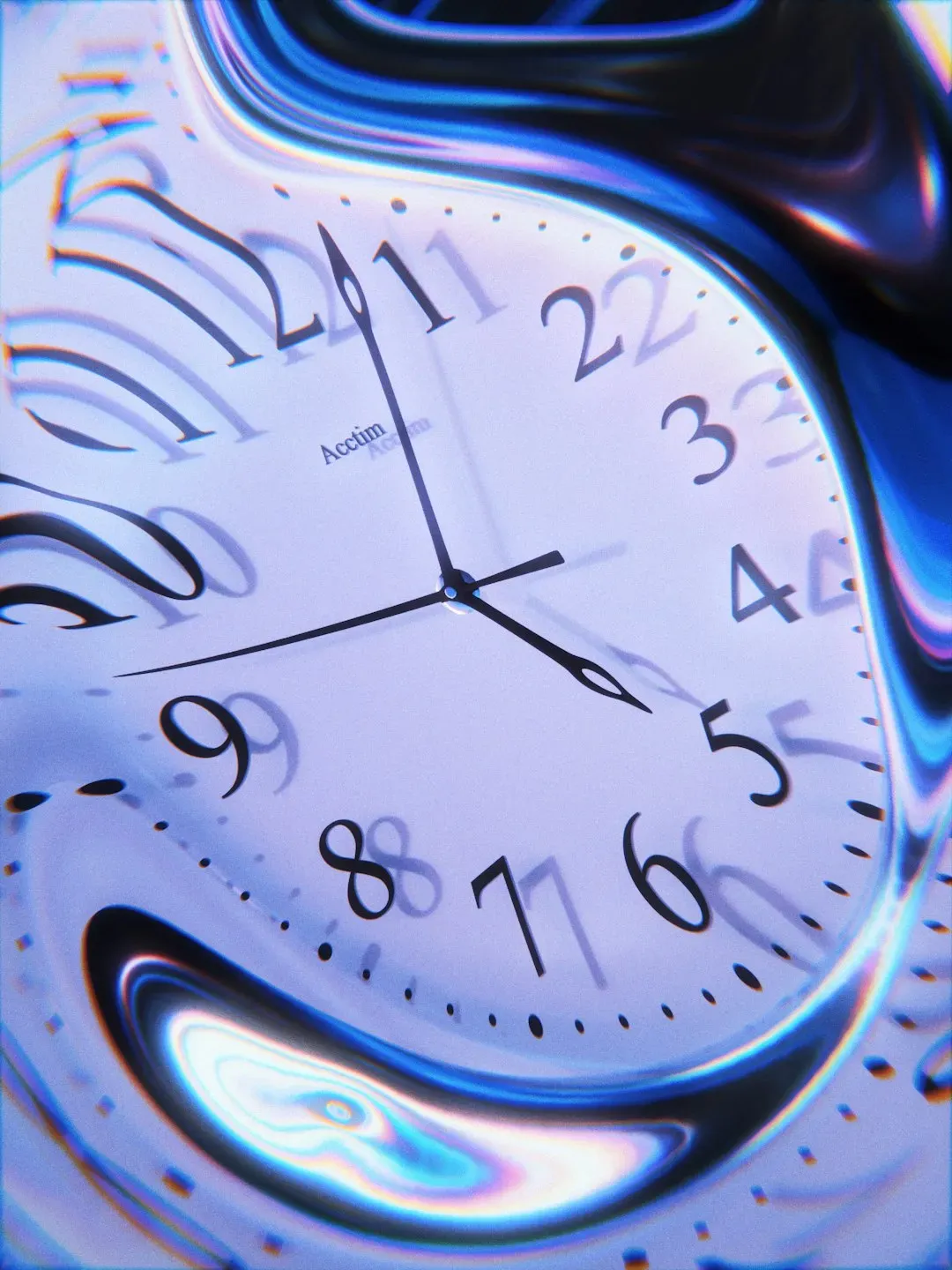
Strong emotions act like gravity wells for time. Fear, anxiety, and stress tend to slow it down; joy, excitement, and deep interest often make it race. When you are in danger or feel threatened – even socially, like giving a big presentation – your arousal systems kick in, and you pay close attention to every detail. Your brain is essentially running in high-resolution survival mode, so later it feels like a short event took far longer than the clock says.
On the flip side, when you are relaxed and engaged, especially in something playful or creative, your brain does not mark each moment so aggressively. Joyful events can feel fleeting while they happen, but afterward they often expand in memory because they created rich, varied experiences. Boredom is its own strange beast: nothing is happening, but your mind has nothing to latch onto, so it ends up obsessing over the passage of time itself, stretching each minute into a small eternity. Managing emotion, then, is not just about feeling better – it is a practical way of managing the felt speed of your life.
Memory Is the Real Timekeeper: Why Years Feel Shorter as You Age
If you have ever said that your childhood summers felt endless but your adult years vanish, you have already noticed one of the deepest tricks of time perception: the brain measures time in memories, not minutes. When life is full of novelty – new schools, new friends, new cities, new jobs – your brain lays down rich, detailed memory traces. Looking back, that period seems expansive because there is so much “stuff” in it.
As routines settle in and days start to look the same, your brain becomes more efficient and records fewer distinct events. A month of nearly identical workdays can shrink into a blur in hindsight, even if it felt long and tiring while you were living it. That mismatch is why many people in their thirties, forties, and beyond complain that years are “flying by.” The tough lesson is this: if you want your life to feel long when you look back on it, you need to keep feeding your brain variety – new skills, new places, new people – even when it is tempting to stay in the comfort of sameness.
Flow States: How Total Immersion Lets You “Step Out” of Time
Those rare moments when you are completely absorbed – coding, painting, gaming, playing music, running, or even having a deep conversation – are often described as being outside of time. In neuroscience and psychology, these are called flow states: periods when challenge and skill are well matched, distractions fade, and your sense of self and clock time temporarily loosen their grip. During flow, your brain devotes nearly everything to the task at hand, with little bandwidth left to monitor the ticking of time.
Afterward, people often report that hours felt like minutes, yet the experience was deeply satisfying and full. It is not that time literally sped up, but that your inner machinery deprioritized tracking it in favor of performance, creativity, or connection. You can nudge yourself toward more flow by choosing tasks that are just hard enough to be engaging, cutting down interruptions, and giving yourself longer blocks of single-tasking. In a world obsessed with multitasking and micro-distractions, deliberately courting flow is one of the most powerful, underrated ways to reshape how full your time feels.
Practical Ways to Stretch Your Time Experience Without Touching a Clock
Once you accept that your experience of time is constructed, not given, you can start playing with that construction in small but meaningful ways. One strategy is to deliberately load your life with “firsts”: try a new route to work, cook a dish you have never attempted, learn a new skill, or travel somewhere unfamiliar. First-time experiences are extremely “memorable,” and your brain will treat those days as longer and fuller when you look back on them.
Another approach is to carefully decide when to zoom in and when to zoom out with your attention. For moments you want to stretch – like a walk at sunset, reading with your kid, a rare dinner with someone you love – slow down, put the phone away, and fully soak in sensory detail. For stretches you want to compress – like a tedious commute – pair them with light distractions such as podcasts or music so you are less focused on the clock itself. These are small, almost sneaky adjustments, but over months and years, they add up to a very different feeling of how much life you have truly lived.
Can You “Hack” Time? What Science Supports and What Is Just Hype
Modern culture loves the idea of time hacks, from productivity gurus promising to “double your day” to dubious claims about breathing techniques that supposedly slow the world around you. The honest, slightly disappointing truth is that you cannot step outside of physics or make the external clock behave differently. What you can do, and what science actually supports, is learning to manage brain states – attention, emotion, and memory – in ways that reliably shift your subjective sense of duration.
Simple practices like mindfulness training, regular exercise, and adequate sleep sound almost boring compared with flashy “time tricks,” but they improve your ability to regulate attention and emotion, which are the real knobs on your internal time machinery. I will admit I find a lot of time-hacking talk overblown and a bit dishonest, because it pretends you can escape limits rather than live more deeply within them. The more grounded and realistic view is actually more empowering: you stay bound to the same twenty-four hours as everyone else, but you have surprising influence over whether those hours feel hollow and rushed or vivid and expansive.
Your Inner Time Machine Is Real – The Question Is How You Choose to Use It

The idea that your mind secretly manipulates and stretches time might sound mystical, but it is really a story about how deeply involved your brain is in building reality itself. You do not just witness time passing; you assemble a personal version of it from attention, emotion, and memory. That means passively complaining that “time flies” is, in a way, giving up your role in creating how your life actually feels.
My own opinion is that we should treat subjective time as a limited but powerful resource, just like physical energy or money. You cannot manufacture more hours, but you can absolutely choose to invest them in ways that generate richer memories, deeper presence, and more frequent flow. That might mean saying no more often, tolerating boredom less, and actively chasing novelty and meaning instead of comfort and autopilot. In the end, physics will still win, but your felt life – the one that will matter to you on your last day – is written by your inner time machine. So the real question is not whether you can stretch time, but whether you will dare to live as if your perception of time is something you can shape on purpose.