Astonishingly Short-Lived Cosmic Phenomena (Image Credits: Unsplash)
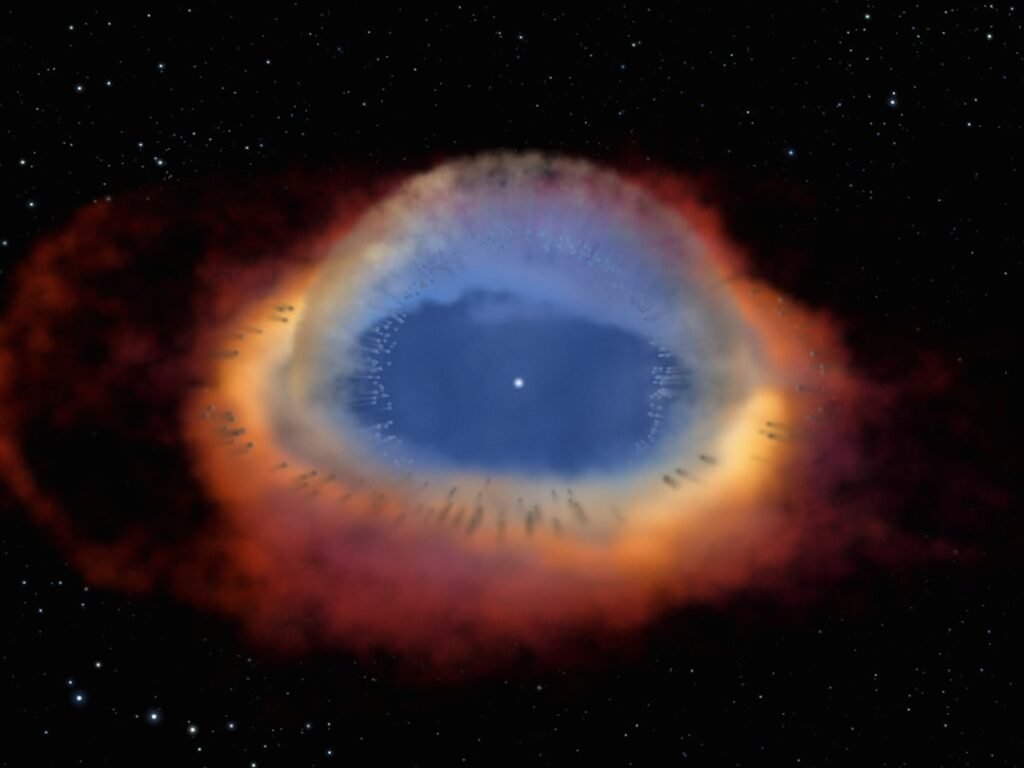
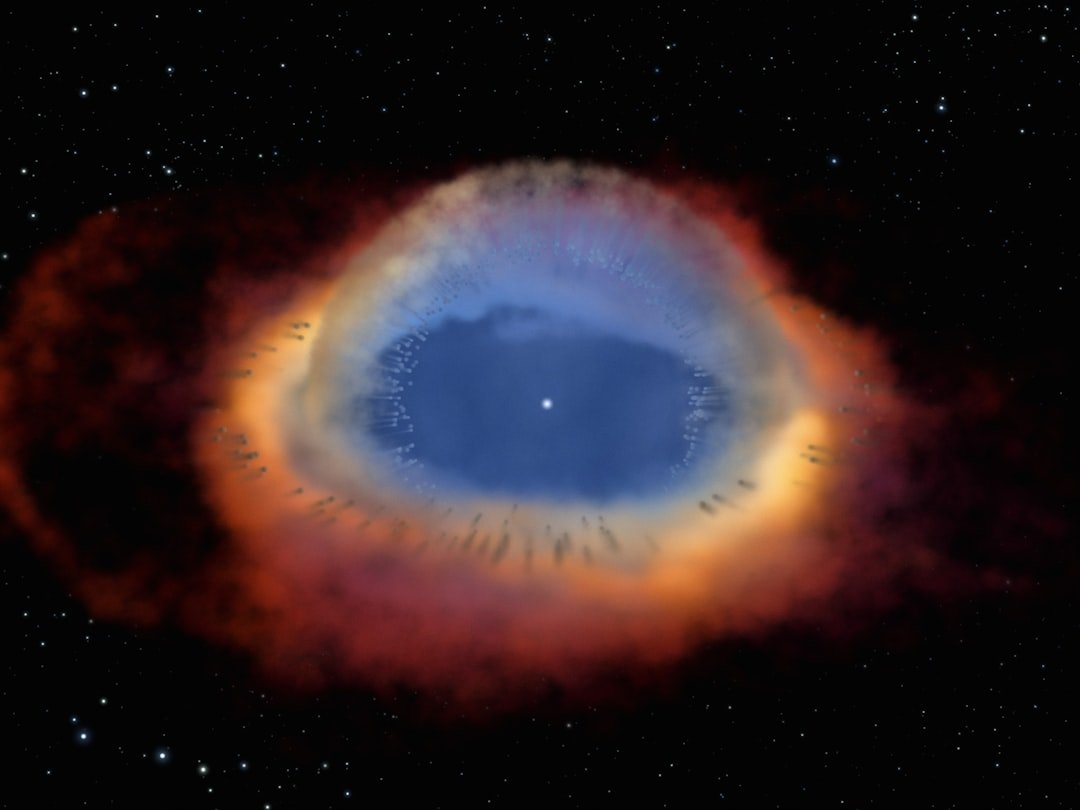
Planetary nebulae represent some of the most striking visuals in the night sky, with their colorful, expanding shells surrounding the hot cores of dying stars. These objects form when stars akin to our Sun shed their outer layers in their final evolutionary stages. Astronomers have long puzzled over their persistence, as these glowing clouds eventually disperse into the interstellar medium.[1]
Astonishingly Short-Lived Cosmic Phenomena
Planetary nebulae rank among the briefest spectacles in astronomy, outshone only by certain explosive events like supernovae. Their visibility typically spans just 21,000 to 25,000 years on average before the gas shells grow too thin to emit light. This brevity stands in stark contrast to the billions of years their progenitor stars endure.
The process begins with stars of 0.8 to 8 solar masses reaching the end of hydrogen-burning phases. These stars expand into red giants, then eject outer envelopes, exposing scorching central cores. Astronomy Educator Edward Herrick-Gleason explained that the cores pump out ultraviolet radiation, which excites the surrounding gas to produce the nebula’s glow.[1]
Mechanisms Behind the Glowing Shells
The brilliance of a planetary nebula stems from atomic physics at play. Ultraviolet photons from the central white dwarf strike the ejected gas, boosting electrons to higher energy states. As electrons cascade back down, they release photons across visible wavelengths, creating the nebula’s vivid hues.
This excitation fades as the shell expands and dilutes. Eventually, the gas density drops below the threshold needed to absorb sufficient UV light effectively. Observers witness this phase through telescopes, where brighter, denser nebulae appear more compact and intricate.
Factors Determining Longevity
Several variables dictate how long a planetary nebula remains detectable. The progenitor star’s mass sets the baseline, as heavier stars expel more material, yielding thicker shells that linger longer. Expansion velocity plays a crucial role too; rapid dispersal hastens invisibility.
Metallicity, or the abundance of elements heavier than helium, influences density. Shells poorer in metals disperse quicker due to lower opacity. Astronomers account for these in models, yielding the 21,000–25,000-year average estimate.
- Progenitor mass: More mass means more gas, extended visibility.
- Expansion rate: Faster speeds shorten lifespan.
- Metallicity: Higher content supports denser, longer-lasting shells.
- Initial density: Compact ejections resist dilution better.
From Averages to Outliers
While most planetary nebulae conform to the average timeline, exceptions exist. In 2022, researchers from the University of Hong Kong identified one in the M37 star cluster dated to 70,000 years old, the eldest among roughly 4,000 known in the Milky Way.University of Hong Kong announcement[1]
Age estimates derive from measuring expansion speeds and backtracking kinematically. NGC 6302, dubbed the Bug Nebula, exemplifies youth at about 2,200 years. Icons like the Ring Nebula and Helix Nebula will persist for thousands more years, delighting future observers.
Exceeding 100,000 years seems improbable, as physical limits cap even the densest shells.
Key Takeaways
- Planetary nebulae shine for 21,000–25,000 years on average through UV-excited gas emission.
- Star mass, expansion speed, and metallicity primarily control duration.
- Rare cases reach 70,000 years; none likely surpass 100,000.
Planetary nebulae underscore the universe’s impermanence, transforming stellar corpses into fleeting art before returning elements to the cosmos. Their study refines models of stellar evolution and galactic chemistry. What favorites have you observed through your scope? Share your thoughts in the comments.