
You know that eerie shiver when you walk into a place you have never been and feel, deep in your bones, that you have lived this exact moment before? For a long time, déjà vu sat in that weird space between ghost stories and brain science, blamed on everything from past lives to glitches in the Matrix. Now, though, researchers are finally piecing together a far less mystical – but far more fascinating – explanation hiding in the way your brain handles memory, prediction, and error checking.
What they are finding is surprisingly intimate: déjà vu is not your brain seeing the future, and it is not a sign that something is “wrong.” It is your brain doing exactly what it is supposed to do, just in a way that occasionally produces a strange side effect in consciousness. Think less supernatural premonition and more your brain’s quality-control system briefly flashing a strange internal warning. Once you see what is really going on under the hood, that unsettling feeling becomes less like a cosmic wink and more like catching a computer window flicker open for a split second before closing again.
The Myth Bust: Déjà Vu Is Not A Glitch In Reality
For decades, déjà vu has been wrapped in superstition and pop-culture drama. People talk about it as if the universe just coughed and showed you a preview of the future, or as if you are momentarily stepping into a parallel timeline. It feels cinematic, so we reach for cinematic explanations, and honestly, it is tempting to believe that a feeling that intense must mean something mystical. I remember being a teenager, sitting in a coffee shop, convinced that my sudden wave of déjà vu was proof I had dreamed this exact moment weeks before.
Modern neuroscience, though, is pretty blunt about this: reality is not “lagging,” and you are not slipping between dimensions when déjà vu hits. Instead, the sensation seems to emerge from the brain’s ordinary machinery for encoding, comparing, and updating memories. That does not make the experience any less powerful, but it does drag it firmly out of the paranormal aisle and into the messy, endlessly interesting territory of how the brain builds our sense of now. In other words, the weird part is not the universe – it is us.
The Memory Mismatch Theory: When Familiarity Fires Without A Memory

The leading scientific view today is that déjà vu happens when your brain’s “familiarity” signal lights up even though you cannot link the moment to a specific past event. In everyday life, we usually get both pieces at once: you see your friend’s face (familiarity) and you know who they are and where you know them from (recollection). With déjà vu, researchers think those two systems get briefly out of sync, and familiarity comes on strong while recollection fails to deliver any details. Your brain basically goes: this feels known, but I have no idea why.
This mismatch is unsettling because your conscious mind is used to those two processes lining up neatly. Some scientists argue that déjà vu might actually be your brain detecting a kind of internal error: the system senses a pattern that matches something in its vast memory store but cannot anchor it to a clear, retrievable episode. Rather than being a sign of damage, this could be evidence that your memory circuits are actively checking themselves, like a spellchecker flagging a word it is not certain about. The strange familiarity is not a message from beyond – it is more like an internal notification that something did not line up perfectly under the surface.
How The Brain Fakes Familiarity: The Hippocampus And Friends
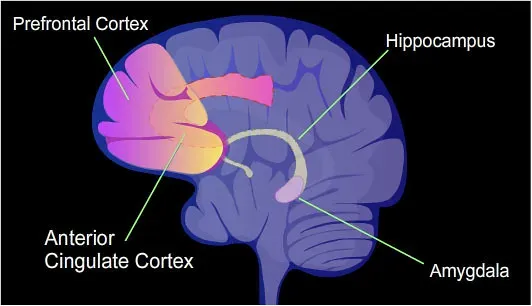
At the heart of this story is the hippocampus, a seahorse-shaped structure buried deep in your brain that plays a central role in forming and comparing memories. The hippocampus constantly takes in patterns from your senses and checks them against patterns you have stored before. When it spots enough overlap, you get that warm, effortless sense of familiarity, often before you can consciously say what you are recognizing. Surrounding regions in the medial temporal lobe help decide whether a situation is simply familiar or tied to a detailed, vivid memory.
Many researchers think déjà vu shows up when this familiarity circuit fires more strongly than it should, or at the wrong time, in response to something only loosely similar to a past experience. Maybe the layout of a room echoes a hallway from your old school, or the light and sound combination lines up with a half-forgotten bus ride. The brain is extremely good at pattern completion, so it may jump to “this is familiar” based on partial cues, even when you cannot pull up the original event. The result is that haunting sense of knowing a scene without being able to explain how.
Brain Glitches Without Damage: What Epilepsy Taught Us About Déjà Vu
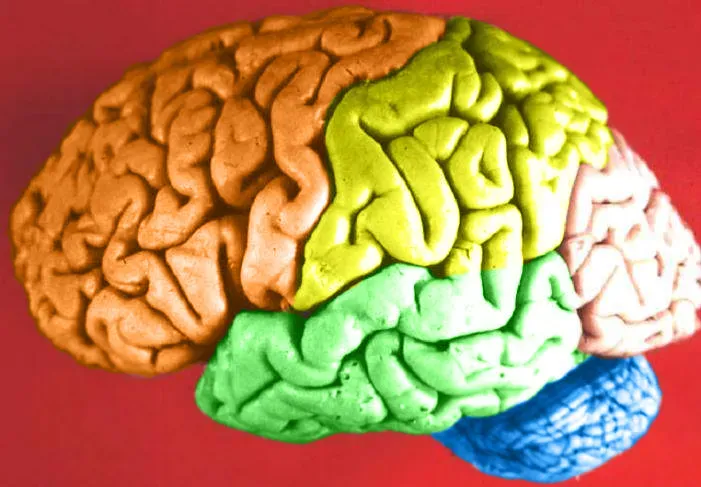
Some of the strongest clues about déjà vu have come from people with temporal lobe epilepsy, a condition where brief storms of electrical activity flare up in the same neighborhoods involved in memory. Many of these patients report intense déjà vu episodes just before or during a seizure, sometimes so powerful that everyday surroundings feel overwhelmingly and disturbingly familiar. That connection led scientists to suspect that even small, harmless misfires in similar regions of a healthy brain might produce milder déjà vu in the rest of us.
Importantly, though, ordinary déjà vu by itself is not considered a warning sign of epilepsy or brain damage. In healthy people, it tends to be brief, not distressing, and not accompanied by confusion or other neurological symptoms. The epilepsy research is useful because it shows that artificially or abnormally activating memory circuits can reliably produce the déjà vu feeling. In everyday life, you can think of spontaneous déjà vu as the much softer, natural version of that same phenomenon – a tiny, temporary surge or mis-timing in neural activity that you only notice because it leaks into consciousness as a very odd gut feeling.
Prediction And Reality: When Your Brain’s Forecast Feels Like A Memory
Another fascinating angle comes from looking at how much of your perception is actually your brain predicting what will happen next. Neuroscientists now see the brain as a kind of prediction machine, constantly guessing what you are about to see, hear, or feel based on past experience, then checking those guesses against incoming information. A few researchers think déjà vu might appear when your brain’s prediction about a scene is so accurate and detailed that it feels like something you have already lived through, even though it is just a very good forecast.
Imagine walking into a new café and, in a split second, your brain guesses where the counter is, how people are likely arranged, and what the soundtrack sounds like based on similar places you have been. When what you actually see and hear matches that prediction almost perfectly, the brain’s internal comparison may blur the line between “I expected this” and “I remember this.” The overlap could be tight enough that the prediction gets mislabeled internally as a memory signal. From your point of view, it feels like the present moment is echoing an earlier one, when in reality you are just experiencing an unusually spot-on mental preview.
Everyday Triggers: Layouts, Delays, And Split-Second Processing Errors

Even without fancy lab equipment, you can spot the kinds of situations that seem to invite déjà vu. It tends to show up more in young adults than in children or older adults, and often when you are tired, stressed, or in an unfamiliar place that shares certain features with environments you know well. Subtle cues like a certain arrangement of furniture, a specific combination of colors, or a familiar rhythm of conversation can all provide just enough overlap to nudge your brain into that “this rings a bell” mode. The kicker is that you are usually unaware of those similarities, so the feeling seems to come out of nowhere.
Some theories suggest that tiny timing hiccups in how your brain processes incoming information might also play a role. For instance, if the same input is briefly routed through two slightly different paths and reaches your awareness with a small delay, the second arrival might be flagged as familiar simply because your brain has literally just processed something almost identical. This kind of idea is still being debated, and it probably does not explain every case, but it fits with the broader pattern: déjà vu seems to emerge when overlapping patterns, or slightly off timing, confuse the systems that tag experiences as new or known.
What Déjà Vu Says About A Healthy, Self-Checking Brain
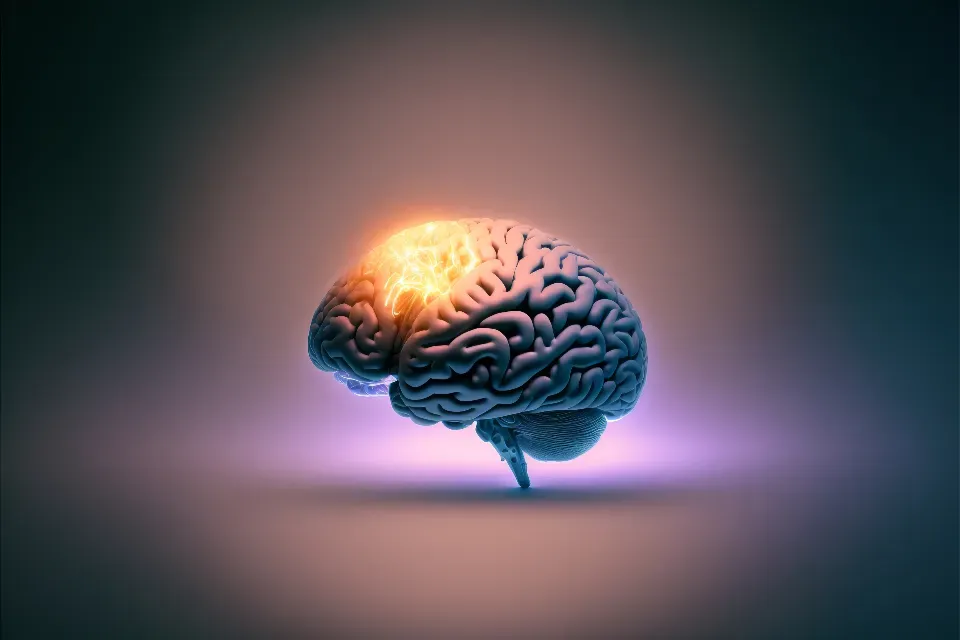
Here is the twist that I personally love: many scientists now lean toward the idea that déjà vu is not a sign of failure, but a sign that your memory system is actually doing sophisticated quality control. When the brain’s monitoring circuits notice that a sense of familiarity has popped up where it does not quite belong, that tension may bubble into awareness as déjà vu. Rather than indicating that your memory is broken, it may be the conscious side effect of a deep, ongoing effort to keep your internal model of the world consistent and accurate.
Seen this way, déjà vu becomes less like a spooky error message and more like catching a backstage glimpse of how hard your brain works to keep reality stitched together. It is a reminder that our sense of “now” is not a raw feed from the outside world, but a carefully curated blend of memory, prediction, and constant cross-checking. The oddness of déjà vu is simply what it feels like when those normally hidden systems briefly disagree. Instead of worrying that something is wrong with you when it happens, you might just take it as proof that your brain is surprisingly busy behind the scenes.
So Is Déjà Vu Meaningful? A Blunt, Opinionated Take

Here is where I land, after digging through the science: déjà vu is meaningful, but not in the mystical way many of us were raised to believe. There is no solid evidence that it predicts the future, signals past lives, or points to some secret destiny laid out in advance. What it does reveal, quite powerfully, is that your everyday consciousness is just the tip of an iceberg of pattern matching and error detecting that your brain runs all the time. The meaning, in other words, is psychological and neurological, not supernatural. That might feel deflating at first, but I actually find it weirdly comforting.
If anything, déjà vu is a humbling reminder that we are living inside a constructed experience, stitched together by a brain that sometimes misfires but mostly performs miracles of interpretation. It shows how quickly we reach for big stories to explain a simple but intense feeling and how easy it is to mistake internal noise for an external message. When you next feel that flood of eerie familiarity, you are not peeking behind the curtain of the universe – you are catching a rare glimpse of the curtain inside your own head. Knowing that, does the experience feel less magical to you, or, in a different way, even more?