Something strange is happening at the edge of our understanding of the universe. Physicists have long theorized that reality might contain more dimensions than the four we experience – and now, new experimental evidence is making that idea feel less like science fiction and more like science fact.
For decades, extra dimensions have lived comfortably in the realm of theoretical physics, tucked away in equations that most people never see. But a recent study is shaking things up in ways that even veteran researchers didn’t fully anticipate. Let’s dive in.
The Discovery That Has Physicists Buzzing
Here’s the thing about extra dimensions – most of us instinctively dismiss them as the stuff of comic books and multiverse movies. So when serious experimental physicists start presenting data that actually supports their existence, it tends to stop a room cold. That’s exactly what’s happening right now.
Researchers analyzing gravitational behavior at very small scales have detected anomalies that don’t fit neatly into our standard four-dimensional model of spacetime. The deviations are subtle, but they’re consistent. Consistency in experimental physics is basically the loudest alarm bell there is.
What makes this particularly compelling is that these aren’t theoretical predictions drawn from a whiteboard – these are measured results from controlled experiments probing the behavior of gravity at distances far smaller than anything previously tested with this level of precision.
What Extra Dimensions Even Means – A Quick Reality Check

Let’s be real, the phrase “extra dimensions” sounds deeply abstract. Most people picture a cartoon portal to another universe. The actual scientific concept is simultaneously simpler and more mind-bending than that.
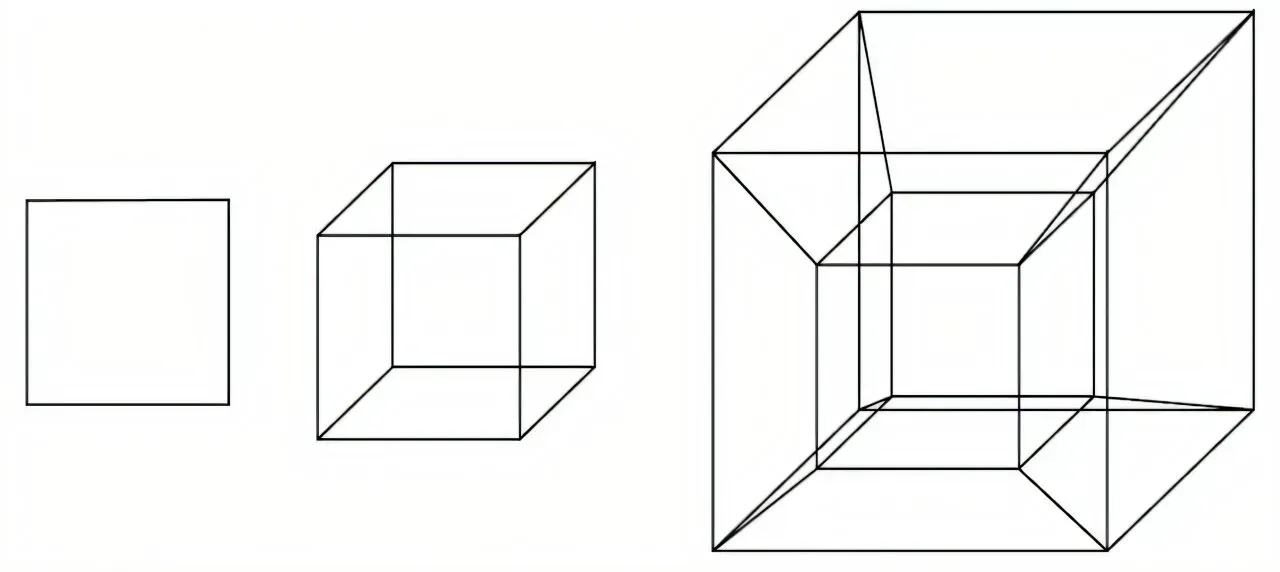
In physics, a dimension is essentially a direction in which something can move or extend. We live in three spatial dimensions – length, width, height – plus time. Extra dimensions, as theorized in frameworks like string theory and Kaluza-Klein theory, would be additional spatial directions that are either too small to detect directly or curled in on themselves in ways our instruments have never been sensitive enough to measure.
Think of it like a garden hose viewed from a distance. It looks like a one-dimensional line. Up close, you can see it’s actually a cylinder with a circular cross-section – a hidden dimension, invisible until you zoom in far enough. That analogy, honestly, does more explanatory work than most textbooks.
The Experimental Setup Behind the Evidence
Measuring gravity at tiny scales is extraordinarily difficult. Gravity is by far the weakest of the fundamental forces, and at sub-millimeter distances, other forces completely dominate, making isolation of gravitational signals a genuinely impressive technical achievement.
The researchers used precision torsion balances and carefully controlled gravitational source masses to probe forces at distances far below what standard experiments typically access. The goal was to check whether gravity follows the expected inverse-square law – meaning it weakens predictably with distance – at those tiny scales.
What they found was a deviation. Gravity, at these microscopic distances, didn’t behave exactly as expected. It’s hard to say for sure what causes that deviation without further investigation, but one of the strongest candidate explanations is that gravity is “leaking” into extra dimensions that we normally don’t interact with at all.
Why Gravity Leaking Into Extra Dimensions Makes Sense
One of the long-standing puzzles in physics is why gravity is so extraordinarily weak compared to the other fundamental forces. Electromagnetism, for instance, is roughly ten to the power of thirty-six times stronger. That’s not a small gap – it’s a canyon so wide it barely makes sense.
One elegant theoretical solution is that gravity doesn’t actually originate in our four-dimensional spacetime the same way other forces do. Instead, it might “spread out” across extra dimensions, which would naturally dilute its strength in the dimensions we inhabit. If that’s true, measuring that dilution effect at small scales would look almost exactly like what these researchers observed.
It’s a beautiful idea, honestly. The weakness of gravity, which has puzzled physicists for generations, might be a direct consequence of our universe being embedded in something much larger and more complex than we can perceive.
How This Connects to String Theory and Larger Physics Frameworks
Extra dimensions aren’t a new idea in theoretical physics. String theory, one of the most ambitious attempts to unify all the fundamental forces, has long required the existence of additional spatial dimensions – typically around ten or eleven total. The challenge has always been finding any experimental trace of them.
The Kaluza-Klein model, proposed nearly a century ago, suggested that electromagnetism could be unified with gravity by adding a fifth dimension. It was mathematically elegant but experimentally inaccessible for most of the twentieth century. What’s changing now is measurement technology – our instruments are finally catching up to the math.
If the new gravitational anomalies hold up under further scrutiny, this would represent a landmark moment for string theory and unified field theories in general. It wouldn’t prove string theory outright, but it would place a substantial piece of circumstantial evidence in its favor for the first time from direct experimental observation.
What Skeptics Are Saying and Why That Matters
Not everyone is ready to pop champagne. That’s fair, and honestly, healthy skepticism is exactly what makes science work. Several physicists have pointed out that gravitational measurements at tiny scales are notoriously susceptible to systematic errors – stray electromagnetic forces, vibrations, surface effects that mimic gravitational anomalies.
The scientific community will demand independent replication before drawing strong conclusions. A single result, however carefully obtained, is just a starting point. It needs to be reproduced by different labs using different equipment and different methodologies before it earns consensus status.
Still, the researchers behind this work are not amateurs. They anticipated many of the obvious objections and designed the study to account for known sources of noise. That doesn’t make the result bulletproof, but it does mean the anomaly is unlikely to be dismissed as a simple instrumentation error.
What Comes Next in the Search for Extra Dimensions
The immediate priority is replication. Multiple independent labs are already reportedly motivated to attempt similar measurements using updated equipment. The next few years could either confirm this anomaly or reveal it to be an artifact of experimental limitations.
Beyond replication, researchers are interested in probing even smaller scales. If extra dimensions exist and gravity genuinely leaks into them, there should be a characteristic distance at which that leakage becomes measurable. Pinning down that distance would give physicists a powerful clue about the actual size and geometry of those hidden dimensions.
Particle physics experiments, including those at large colliders, have also been searching for signatures of extra dimensions through high-energy particle interactions. If gravitational evidence and particle physics evidence start pointing in the same direction simultaneously, that would be enormously significant – the kind of convergence that reshapes entire fields.
Are We Living in a Universe Bigger Than We Think?
Honestly, I think the most striking thing about this research isn’t the result itself – it’s what the result implies about the limits of human perception. We have spent all of recorded history experiencing a four-dimensional world, building our intuitions and our physics around it, and yet mathematics and now experiments keep suggesting that reality is far richer and stranger than our senses reveal.
The evidence for extra dimensions is not yet conclusive. But it is now more than speculation – it is an experimentally motivated hypothesis with measurable, reproducible anomalies demanding explanation. That is a profound shift, and it deserves to be taken seriously.
If extra dimensions do exist, they would not only explain gravity’s weakness but would fundamentally transform our picture of what the universe is and where we sit within it. The four walls of our perceived reality might just be the outermost surface of something incomprehensibly vast. What do you think – does the idea of hidden dimensions hiding in plain sight of our physics equations excite you, or does it feel too strange to believe? Tell us in the comments.