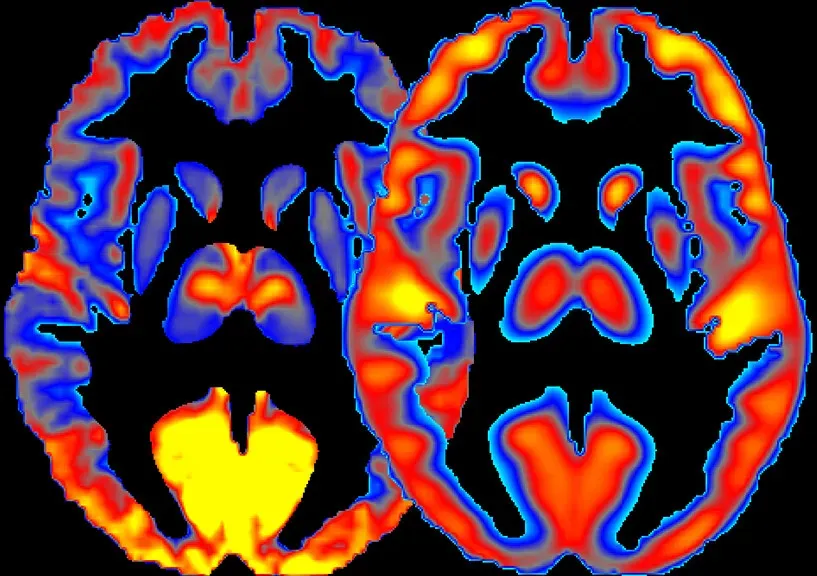

Imagine watching a flatline appear on a heart monitor, the moment doctors call time of death, and then learning that inside the skull, the brain is still firing in surprisingly organized ways. Not random noise, not a last electrical hiccup, but complex, coordinated activity that can continue for up to half a minute after the heart has stopped. That single detail instantly turns the line between life and death from a sharp border into something much blurrier and far more unsettling.
In the last several years, neuroscientists studying cardiac arrest, near-death experiences, and end-of-life brain activity have been forced to confront a strange truth: the brain is not done just because the pulse is gone. Rather than quietly shutting down, it can enter a brief but intense state of synchronized firing that, in some cases, even resembles the patterns seen during conscious awareness. What this means, nobody can agree on. Is it a final storm of consciousness, a meaningless artifact of dying cells, or a glimpse into something we barely understand? Let’s dig into what we actually know, what’s still speculation, and why this debate matters more than most of us want to admit.
The Moment of “Death” Is Not What We Thought

For most of modern medicine, death has been treated like a switch: either the heart is beating and you are alive, or it stops and you are gone. Clinical death is usually defined as the point when the heart stops pumping blood effectively and circulation collapses, which quickly deprives the brain of oxygen and sugar. Within seconds, a person loses consciousness, and within minutes, if blood flow is not restored, brain cells start to die in large numbers. On paper, it sounds like a simple progression from life to death with no gray area in between.
But when researchers started recording brain activity around the moment of cardiac arrest, that neat story began to crumble. Instead of a smooth slide into silence, they detected sudden bursts of highly organized brain activity after the heart had already flatlined. In experimental settings with animals, and in rare monitored human cases, the brain seemed to rally for a brief window, generating patterns that did not look like random noise. That has forced scientists, doctors, and philosophers to ask whether the classic definition of clinical death is more about convenience than reality, and whether our brains have a more dramatic exit than anyone expected.
What “Complex Coordinated Activity” Actually Means
When people hear that the brain is active after death, it is easy to imagine something like a ghost waking up. In scientific terms, though, “complex coordinated activity” refers to large groups of neurons firing together in structured patterns, the kind we normally associate with awareness, perception, or memory processing. These are not isolated spikes from dying cells; they are synchronized waves, often spanning multiple regions of the brain, like a stadium crowd suddenly clapping in rhythm instead of shouting at random.
In electroencephalogram recordings, this can show up as a surge in organized oscillations, particularly in frequency bands that, during life, are linked to things like attention, sensory integration, or dreaming. Some studies have found spikes in gamma-band activity, a fast rhythm that, in awake brains, often tracks with conscious processing and binding different sensory inputs into a unified experience. That does not prove the dying brain is having a coherent final experience, but it does mean the activity is far from a simple blackout. In plain language: the lights flicker, but they flicker in a way that looks suspiciously like the system is still trying to do something.
Why Up to 30 Seconds Matters More Than It Sounds
Thirty seconds does not sound like much in everyday life; it is the time it takes to send a text or microwave a snack. At the edge of life and death, though, half a minute is enormous. Loss of oxygen to the brain triggers a cascade of metabolic problems, and yet within that brutal environment, the brain can still manage to launch one last coordinated surge. Those seconds may be enough for some people to form vivid impressions, flashes of memory, or altered states that later get reported as classic near-death experiences.
From a medical standpoint, those 20 or 30 seconds also complicate how we talk about being “gone.” If organized activity is continuing after the heart has stopped, then clinical death is not a cliff but a short, steep slope. That window could represent a final chance for resuscitation to restore not just heartbeat but potentially conscious experience, or it could be a phase where interventions no longer change the eventual outcome but still leave traces in what a person feels. Either way, it is no longer honest to pretend nothing is happening upstairs once the heart monitor goes flat.
Near-Death Experiences: Mystical Trip or Brain in Overdrive?
Stories from people who have been resuscitated after cardiac arrest are full of powerful imagery: tunnels of light, encounters with deceased relatives, a sense of overwhelming peace, or the feeling of floating above their own body. For a long time, these reports floated in a kind of cultural no-man’s-land, dismissed by some as fantasies and embraced by others as proof of an afterlife. The discovery of complex, coordinated brain activity in the seconds after clinical death suddenly gives these accounts a more concrete, if still controversial, context.
One popular scientific interpretation is that near-death experiences are what it feels like to have a brain pushed far outside its normal operating range while still retaining just enough organization to generate experience. In this view, the dying brain is flooded with abnormal electrical activity, altered neurotransmitter levels, and failing sensory inputs, which together create intense but distorted perceptions. The coordinated bursts after cardiac arrest could provide the neural backbone for those experiences. That does not settle the spiritual debate, but it does mean these visions and sensations might be grounded in the brain’s last determined attempt to keep functioning, rather than being purely metaphor or myth.
Why Scientists Fiercely Disagree on What It All Means
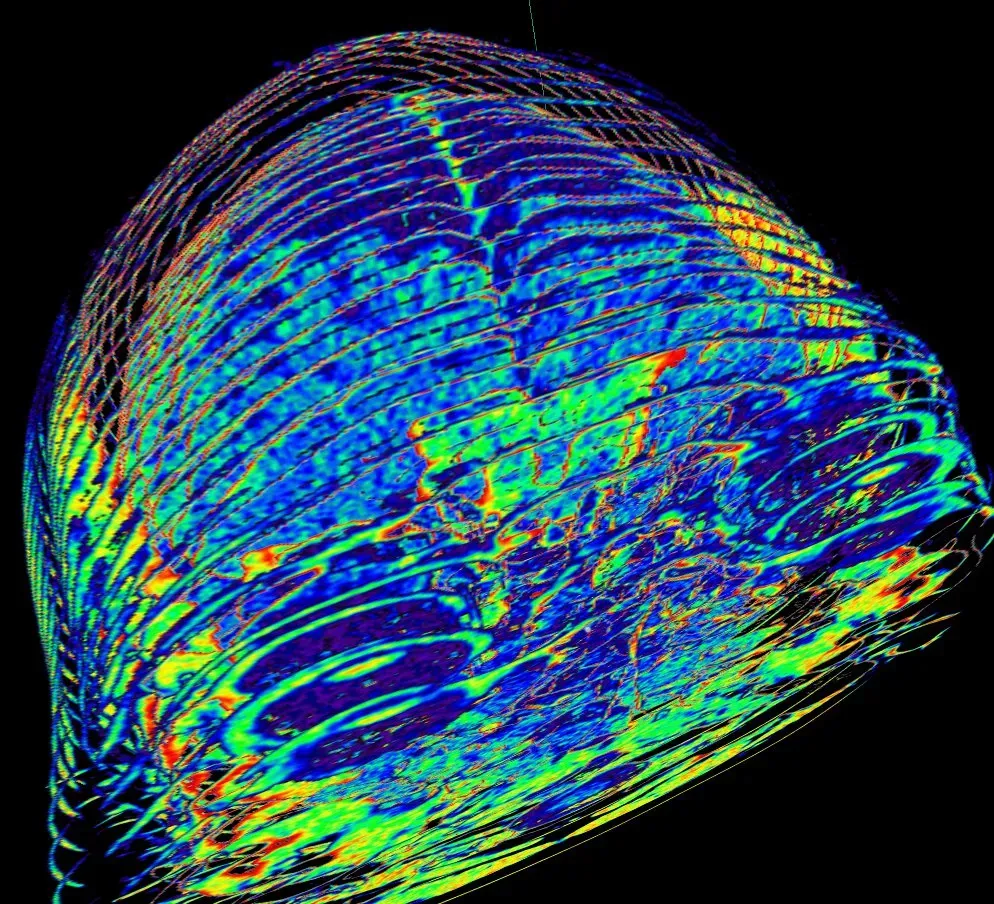
If you put five neuroscientists, two anesthesiologists, and a couple of philosophers in a room and ask them what this post-mortem activity means, you will probably walk out with seven different answers. One camp argues that these patterns are essentially the brain’s death throes: a storm of activity generated by collapsing systems, impressive but ultimately meaningless in terms of consciousness. To them, coordinated does not automatically mean conscious; the circuitry can light up without there being a subject who experiences it in a coherent way.
Another camp pushes back and says that if the electrical patterns look similar to those seen during waking or dreaming states, we cannot just wave them away. They argue that the safest assumption is that, at least in some cases, there might be a residual window of awareness or vivid internal experience as the brain shuts down. A third, more cautious group sits in the middle, pointing out how limited the data is: most recordings come from very sick patients or from animal models that are, by definition, not equivalent to a healthy human suddenly going into cardiac arrest. The bottom line is that the phenomenon is real, but the interpretation is still very much up for grabs.
How These Findings Challenge Our Notion of Consciousness
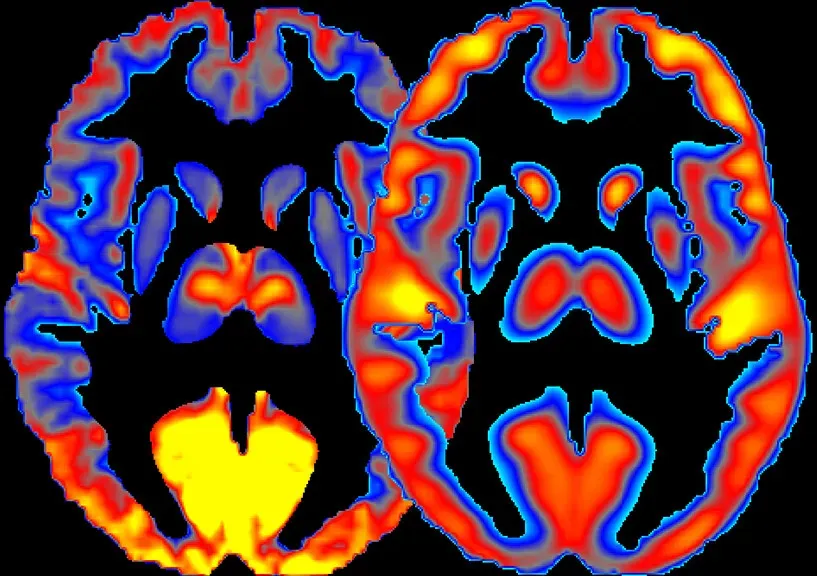
Hidden underneath this whole debate is an even bigger question: what exactly is consciousness, and how tightly is it tied to ongoing brain function? Many mainstream theories assume that conscious experience arises from certain patterns of integrated, information-rich activity across large networks of neurons. When those patterns fall apart, awareness fades. The discovery that such organized patterns can persist briefly after clinical death puts pressure on any model that treats consciousness as something that instantly disappears the moment blood flow stops.
At the same time, these findings highlight how fragile our tools are for measuring subjective experience. We can see waves and spikes on a monitor, but we cannot ask a person who is actively dying to tell us what they are feeling in real time. We have to rely on rare survivors, incomplete recollections, and indirect evidence. That has led some researchers to argue that we might be underestimating how long a fading brain can still “host” some kind of awareness, even if it is fragmented, dreamlike, or rapidly breaking apart. Others insist that we should not equate certain electrical signatures with consciousness so quickly, warning that we might be reading too much into patterns we barely understand.
Personally, I find it hard to believe that a brain capable of mounting such a complex last surge is completely empty on the inside. Even if whatever is happening is warped, disjointed, or fleeting, it may still feel like something to the person moving through it. That does not magically solve the mystery of consciousness, but it does make the boundary between “here” and “gone” feel a lot stranger than the tidy diagrams in textbooks.
Ethical and Medical Implications: When Are We Really “Gone”?
These discoveries are not just philosophical puzzles; they have very real implications for how we treat dying patients. Decisions about when to stop resuscitation efforts, when to declare death, and when to begin organ donation often rest on assumptions about what is happening, or not happening, inside the brain. If there is a brief window of organized activity after the heart stops, we have to ask whether that window should change how we handle those crucial minutes. Are we potentially ignoring a period when a patient might still be experiencing something, even if they can never report it?
On the other side, transplant medicine depends on clear, reliable criteria for determining when a person is dead, so that organs can be recovered in time to save other lives. If we shift our definitions based on still-uncertain interpretations of these brain patterns, we risk causing confusion or mistrust without actually improving patient outcomes. My own opinion is that medicine should err on the side of transparency: acknowledge that the brain can stay active briefly after clinical death, be honest that we do not yet know what that activity feels like from the inside, and keep refining protocols as better data comes in. Pretending the issue does not exist helps no one.
Why This Research Feels So Unsettling on a Human Level
![Why This Research Feels So Unsettling on a Human Level ([1] Direct
StemBook Figure 7 Human stem cell imaging.Rodriguez-Porcel, M., Wu, J.C., and Gambhir, S.S., Molecular imaging of stem cells (July 30, 2009), StemBook, ed. The Stem Cell Research Community, StemBook, doi/10.3824/stembook.1.49.1, http://www.stembook.org., CC BY 3.0)](https://nvmwebsites-budwg5g9avh3epea.z03.azurefd.net/dws/6707e7e0e441216a28077025a4881b35.webp)
Even if you never read a scientific paper in your life, the idea that your brain might still be “doing something” for several seconds after doctors say you are gone is deeply personal. It pokes at the most intimate fear many of us have: not just dying, but what it feels like to die. I still remember the first time I read about post-mortem brain activity; I caught myself wondering what those last 20 or 30 seconds might be like, whether they would feel like a peaceful drifting off, a bright surge of clarity, or a chaotic blur of memories and sensory fragments. The science does not give easy answers, and maybe that is exactly why it sticks in your mind.
There is also a strange comfort tucked inside the discomfort. If the brain puts up this last, coordinated fight, it suggests that our most complex organ does not simply collapse at the first sign of trouble. It has layers of resilience and backup modes, even at the edge of failure. Some people hear that and think of a last gift of meaningful experience; others see it as the brain’s stubborn refusal to go quietly. Either way, recognizing that death is not a sharp click but a brief process can make the whole thing feel less like a sudden drop and more like a strange, final transition our biology walks us through.
Opinionated Conclusion: A Final Firework, Not a Light Switch
When you pull all of this together, the picture that emerges is not of a brain that simply shuts off when the heart stops, but of a system that goes out more like a firework than a light switch. For up to half a minute after clinical death, the brain can generate surprisingly organized, high-energy patterns of activity that look, at least on the surface, like the kind we associate with conscious states. Scientists disagree fiercely about whether those patterns carry real experience or are just the phantom echoes of a failing system, and the uncomfortable truth is that, for now, nobody can prove their side beyond doubt.
My take is this: it is intellectually lazy to dismiss these final surges as meaningless, and it is equally reckless to overplay them as proof of any grand narrative about the afterlife. The honest middle ground is to admit that the dying brain is more active, more coordinated, and more mysterious than our older stories about death allowed, and to let that discomfort push us toward better research, clearer ethics, and more honest conversations about what it means to be here at all. In the end, knowing that our last moments may involve a brief, intense burst of inner activity does not make death less real, but it does make the transition more intricate than a simple off switch. If your brain truly does light up one last time on the way out, what do you hope it shows you in that final flicker?