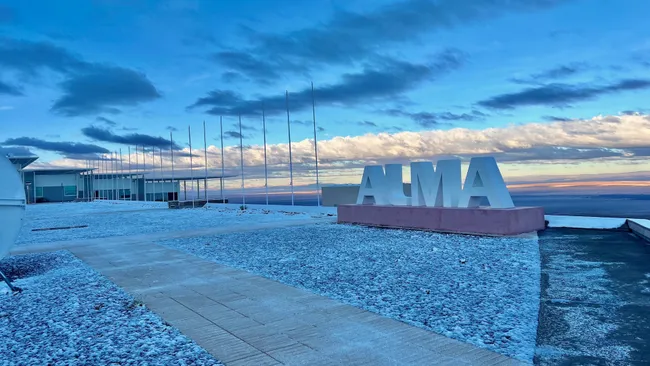

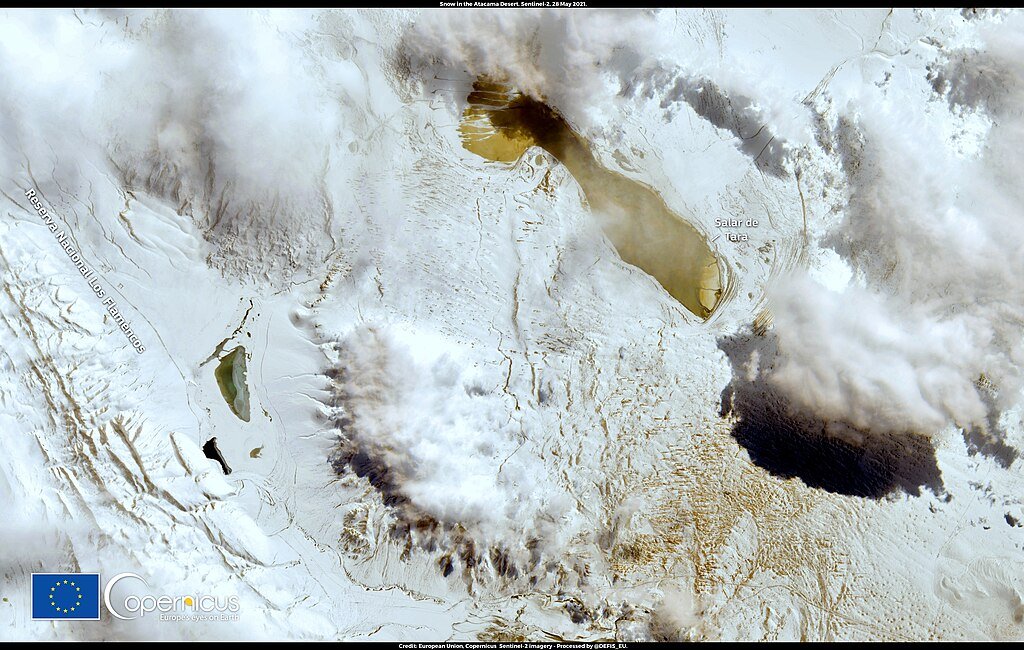
The Atacama Desert, the driest place on Earth, has been covered in an unexpected layer of snow. In this area, rain is measured in millimetres and decades can go by without a single drop. The rare storm put the Atacama Large Millimeter/submillimeter Array (ALMA), one of the world’s most advanced radio telescopes, into “survival mode,” stopping all scientific work and raising urgent questions about how climate change might affect even the most remote and well-planned scientific outposts.
A Desert’s Snowy Anomaly: The Storm That Stunned Scientists
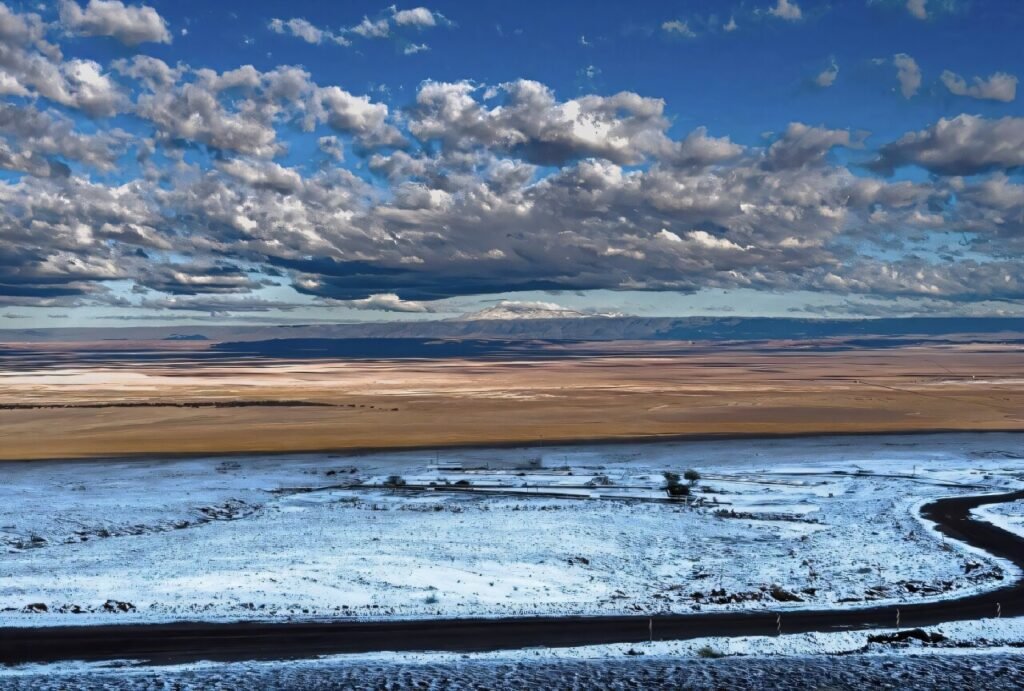
The ALMA Observatory is used to bad weather, but snow at its base camp, which is just 9,500 feet (2,900 meters) elevation, is not typical. This is a remarkable meteorological phenomenon for a desert that only gets 0.6 inches (15 mm) of rain a year. It hasn’t snowed here in more than ten years.
Meteorologists say that an unusual “cold core” system that moved through northern Chile caused the storm. It brought not only snow but also hurricane-force winds of up to 62 mph (100 km/h). The storm knocked down power lines, caused landslides, and forced schools to close all over the area. These things are almost never heard of in this dry area.
Survival Mode: How ALMA’s Telescopes Weather the Storm
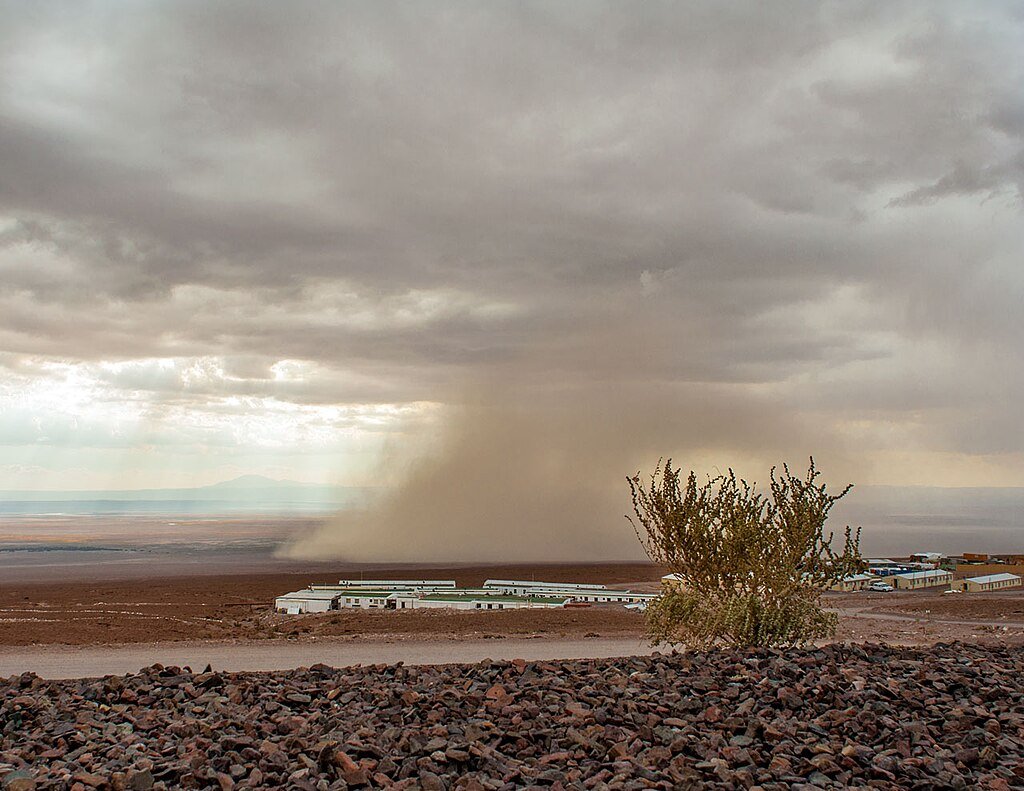
When the temperature dropped to -12°C (10°F) and wind chill was -28°C (-18°F), ALMA’s team sprung into action as if on standby for an emergency response. To safeguard the 66 high-precision antennas, they undertook specific measures. Each dish was oriented to allow wind to blow directly on it and Therefore, the snow would not accumulate stress on the building and add unnecessary stress on the construction. Additionally, the facility was undergoing some critical scientific session which was being disrupted, although it was important to do so at that moment. It has spent 1.4 billion dollars on that facility, so clearly that decision is going to be expensive.
The aftermath of these storms, as unusual as it sounds, makes certain things more observable, resulting in dead zones in scientific visualization for a while. In ALMA’s particular case, scientists have stated, “The cold makes the air less humid, which usually messes up our readings.” Machines removing the snow need to ensure every antenna is checked prior to commencing any other tasks, so operations can be resumed as normal. Balancing safety with urgent research remains a challenge, since the facility supports a significant amount of scientific investigations.
Climate Change in the Atacama: More Snow in the Driest Place on Earth?
The Atacama’s high plateau usually gets three snowfalls a year, but this storm’s effects at lower altitudes are much less common. Raúl Cordero, a climatologist, says that while climate models say that hyper-arid regions will get more rain, it is still unclear if this event is directly related to global warming. He admits, “We can’t say for sure that this is the new normal yet,” but the trend fits with other changes in global weather patterns.
What is odd? When the temperature goes below freezing, warmer air can hold more water, which helps the snow fall faster. This has happened before in deserts like the Sahara and Saudi Arabia.If things like this keep happening, the people who make ALMA might have to change how they build things in the Atacama Desert.The desert is getting wetter and less stable.
Global Snowfall Shifts: A Tale of Extremes
The snowstorm in the Atacama is like a pattern of strange winter weather around the world. Since the 1970s, snowfall in the U.S. has dropped by 64%, but some areas, like the Great Lakes, get more lake-effect snow because there are longer periods when the ice is not present. The Himalayas and Andes are also losing snowpack, which puts water supplies for millions of people at risk.
But there are still outliers: in 2025, Saudi Arabia’s Nafud Desert saw its first snowfall ever, and South Africa saw its first November snow in 85 years. These strange things show that climate change isn’t just making less snow; it’s also moving it around in ways that aren’t always clear.
The Ripple Effects: From Astronomy to Water Security
The storm’s consequences are felt all over Chile’s parched north, not just in ALMA’s study that is now on hold. Heavy rain created flash floods that hurt buildings and other infrastructure. In the meantime, the rest of the scientific community is watching closely. The desert is a terrific area for astronomy since it is so dry. But if it snows more regularly here, that could change.
ALMA has to deal with two problems: keeping its equipment secure from bad weather that is getting more unexpected and getting ready for storms that hit more than once every ten years.
What’s Next? ALMA’s Climate-Proofing Dilemma
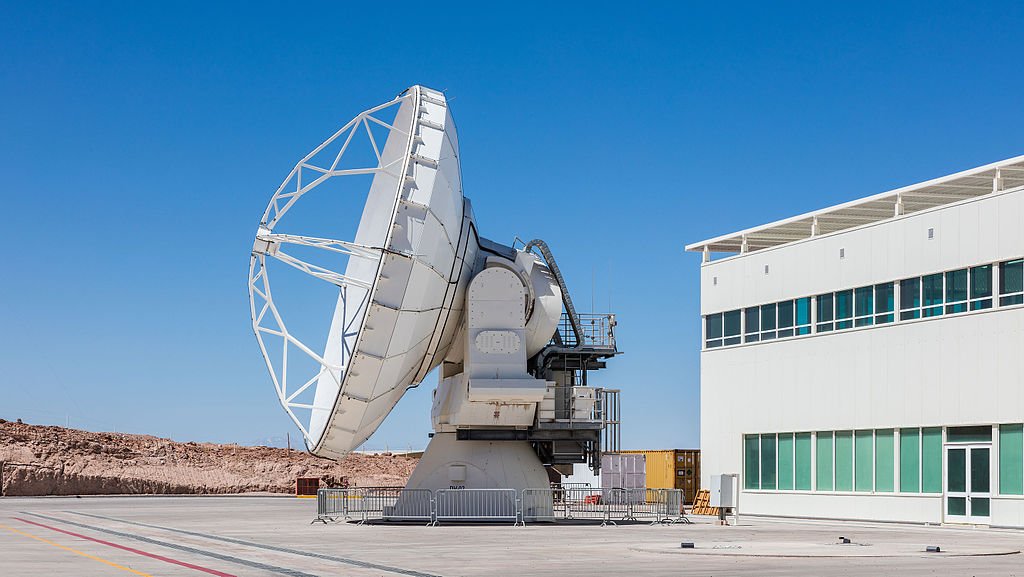
ALMA’s crew has to answer uncomfortable questions when the snow melts. Should they put money into better ways to protect themselves from the cold? Could storms in the future mess up the telescope’s sensitive calibration? One engineer said, “We’re built for extremes, but not these extremes.”
Right now, the main goal is to get things going again. But climate projections say that the atmosphere will be more unstable in the future. The world’s driest desert may need to get ready for a time when snow is no longer a rare event but a regular problem.
Final Thought
The snowfall in the Atacama is a reminder that even the most stable places are not safe from the changing climate on Earth. Astronomers need to change, and climatologists need to figure out how to deal with our planet’s new normal.
Sources:
Suhail Ahmed is a passionate digital professional and nature enthusiast with over 8 years of experience in content strategy, SEO, web development, and digital operations. Alongside his freelance journey, Suhail actively contributes to nature and wildlife platforms like Discover Wildlife, where he channels his curiosity for the planet into engaging, educational storytelling.
With a strong background in managing digital ecosystems — from ecommerce stores and WordPress websites to social media and automation — Suhail merges technical precision with creative insight. His content reflects a rare balance: SEO-friendly yet deeply human, data-informed yet emotionally resonant.
Driven by a love for discovery and storytelling, Suhail believes in using digital platforms to amplify causes that matter — especially those protecting Earth’s biodiversity and inspiring sustainable living. Whether he’s managing online projects or crafting wildlife content, his goal remains the same: to inform, inspire, and leave a positive digital footprint.