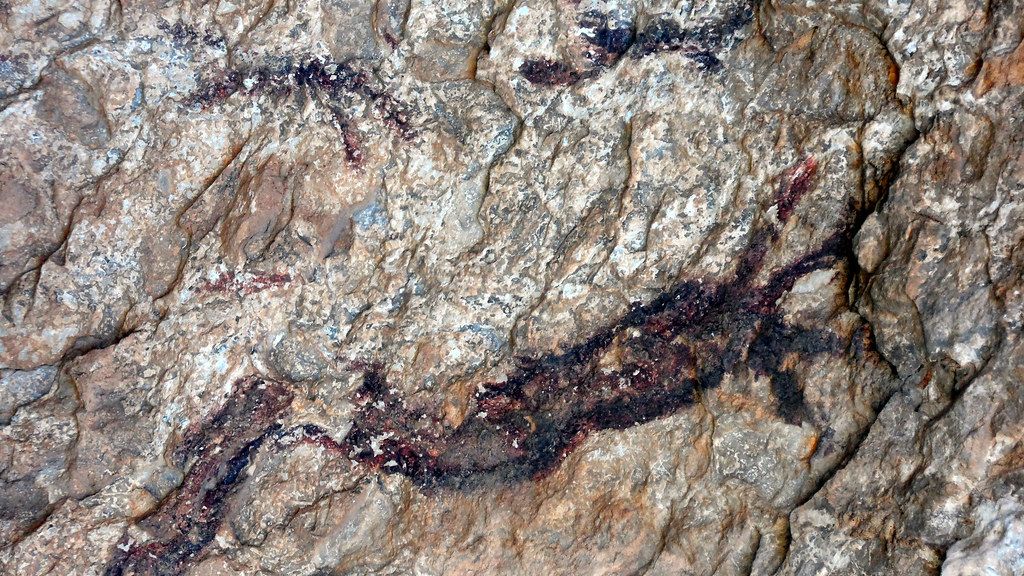
Scientists claimed the world’s oldest rock art is 67,800 years old. But is the science behind that estimate flawed? – Image for illustrative purposes only (Image credits: Flickr)
A technique credited with pushing back the origins of human artistic expression by tens of thousands of years now faces growing skepticism from within the scientific community. Researchers who helped establish the 67,800-year estimate for what was described as the world’s oldest rock art are being challenged by colleagues who argue the underlying method may systematically inflate ages. The debate highlights how even established scientific tools require ongoing scrutiny when applied to delicate archaeological contexts.
Why the Timeline Shift Drew Attention
The original dating effort relied on a method that analyzes thin mineral layers overlying the paintings, allowing scientists to set minimum ages for the artwork beneath. This approach produced results far older than many previous estimates based on stylistic comparisons or other indirect clues. As a result, the findings prompted a broad reassessment of when symbolic thinking and creative expression emerged among early human groups in Europe and beyond.
Supporters viewed the new dates as evidence that artistic traditions developed earlier than textbooks had long suggested. Critics, however, began to examine whether the same mineral-deposition process could introduce consistent upward bias in the calculated ages. The discussion has remained measured, focused on methodological details rather than outright dismissal of the paintings’ significance.
Potential Sources of Overestimation
At the heart of the concern lies the way the dating technique interprets the growth of calcite or other deposits that form on cave walls. Small variations in how quickly these layers accumulate, or in the chemical environment inside the cave, could alter the apparent age without any change to the art itself. Scientists raising the issue emphasize that such factors are difficult to calibrate perfectly across different sites and time periods.
Another point of discussion involves the assumption that the dated material formed immediately after the paint was applied. Any delay between the creation of the artwork and the start of mineral deposition would make the paintings appear older than they truly are. While the original team accounted for some of these variables, independent reviewers argue that the margins of uncertainty may be larger than initially reported.
What the Field Is Watching Next
Archaeologists and geochemists are now calling for additional cross-checks using complementary dating approaches on the same or similar paintings. These could include refinements to existing methods or entirely different analytical techniques that target organic residues within the pigments themselves. Such work is expected to proceed slowly, given the need to avoid damaging irreplaceable cultural heritage.
Until more data arrive, the 67,800-year figure remains a reference point rather than a settled fact. The episode serves as a reminder that scientific timelines for deep prehistory are continually refined as methods improve and new samples become available for study.
Broader Implications for Understanding Early Creativity
Even if future analyses revise the ages downward, the paintings themselves continue to demonstrate sophisticated use of color, form, and possibly symbolic meaning at a remarkably early stage. The debate therefore centers less on whether the art is ancient and more on precisely how ancient it may be. This nuance matters for models of human cognitive development and the spread of cultural practices across continents.
Researchers stress that uncertainty in one dating project does not undermine the overall value of applying scientific methods to rock art. Instead, it underscores the importance of transparent discussion and repeated testing, practices that ultimately strengthen confidence in the results that survive scrutiny.