
Imagine flying thousands of miles in the dark, over oceans and continents, without a map, GPS, or even a visible landmark. Yet every year, tiny birds weighing less than a letter somehow find their way from one side of the planet to the other with shocking precision. For decades, scientists could describe this in broad strokes, but not really explain it. Now, quantum biology is stepping in with a bold, almost sci‑fi answer: birds may literally see Earth’s magnetic field using a compass made from quantum entanglement inside their own eyes.
This idea sounds outrageous at first, like something ripped from a futuristic novel. But it is built on very real physics and a growing body of experiments that suggest quantum effects can survive inside living cells long enough to be useful. If this holds up, it doesn’t just tweak our understanding of migration; it forces us to rethink what life itself can do with the rules of the universe. Let’s unpack how a robin’s nighttime flight might secretly depend on some of the strangest phenomena ever discovered in quantum mechanics.
The Strange Claim: Birds Using Quantum Entanglement To See A Magnetic Map

The core claim is almost unsettling: some migratory birds may rely on pairs of quantum‑entangled electrons in their eyes to sense Earth’s magnetic field. In other words, their “compass” is not in their brain as a separate gadget, but baked right into their visual system as a special light‑sensitive chemical reaction. Instead of a needle pointing north, they may get a faint, direction‑dependent pattern overlaid on their normal vision, like a ghostly filter that shifts as they turn their head.
What makes this claim so surprising is that quantum entanglement is famously fragile. In the lab, keeping entangled particles coherent typically requires ultra‑cold temperatures and extreme isolation from their environment. A warm, wet, noisy bird’s eye seems like the last place you’d expect quantum coherence to survive. Yet quantum biology argues that evolution may have discovered clever molecular tricks to briefly shelter these delicate quantum correlations just long enough to extract useful information from Earth’s weak magnetic field.
Quantum Biology 101: When Weird Physics Moves Into Living Cells
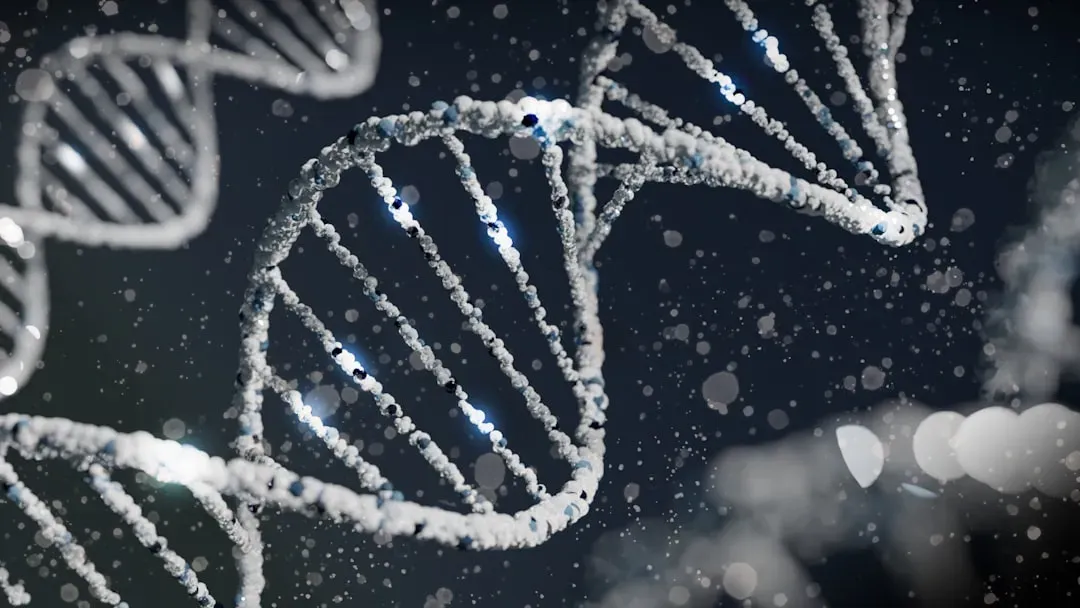
Quantum biology is a relatively young field that looks at ways quantum effects like tunneling, coherence, and entanglement might play an active role in life. For most of the twentieth century, biology was dominated by classical ideas: molecules bumping, reacting, and binding in predictable, Newton‑style ways. Quantum mechanics was acknowledged as the foundation of chemistry, but many biologists treated it as background math, not something that could shape behavior at the scale of cells, let alone animals.
In the last couple of decades, though, evidence has started to pile up that some biological systems use quantum effects in a non‑trivial way. Research on photosynthesis suggests that plants and some bacteria may exploit quantum‑like energy transport to move excitations efficiently. There are hypotheses about quantum roles in smell and even in enzyme catalysis. The magnetic sense of birds sits in this same emerging category: not proven in every detail, but too consistent, too structured, and frankly too elegant to ignore. For many scientists, it is the poster child for why quantum biology deserves to be taken seriously.
How A Weak Magnetic Field Could Possibly Matter To A Tiny Bird

Earth’s magnetic field is incredibly weak compared with forces we normally notice in everyday life. You can easily overwhelm it with a small magnet stuck to your fridge. Yet birds somehow use this faint global field as a reliable guide over thousands of kilometers. Purely mechanical explanations, like iron‑rich particles acting as mini compasses in the beak, never fully matched the behavioral data and struggled to explain some experimental results, especially those involving light conditions.
Behavior studies on migratory birds, such as European robins, showed that their magnetic sense is surprisingly sensitive to small changes in field strength and angle, and that it can even be disrupted by weak oscillating fields that seem precisely tuned to affect electron spins. On top of that, some birds lose their ability to orient properly in certain colors of light, which hints strongly that the compass is light‑dependent and linked to vision. Put these clues together, and the idea of a purely mechanical needle somewhere in the body starts to look incomplete, paving the way for a more exotic, quantum‑based explanation.
The Radical Pair Mechanism: Entangled Electrons As A Biological Sensor

The leading quantum hypothesis for bird navigation is called the radical pair mechanism. It centers on special molecules that, when hit by light, briefly form pairs of electrons with linked, or entangled, spins. These “radical pairs” exist in a super‑sensitive state where tiny magnetic influences can nudge them between different spin configurations. The ratio of those configurations then feeds into the downstream chemistry, effectively turning a quantum spin signal into a classical biochemical one the body can use.
In simple terms, imagine a tiny chemical switch whose outcome depends on how Earth’s magnetic field tilts relative to the molecule. Because the radical pair electrons are quantum‑entangled, their joint state responds in a direction‑dependent way to that field. The chemistry that follows is slightly different depending on the orientation, and that difference could show up as a pattern in what the bird perceives. It’s like the bird’s eye contains millions of microscopic quantum compasses, all whispering the direction of magnetic north in chemical code.
Why The Eye, Not The Beak? The Case For A Visual Quantum Compass
Early on, some researchers proposed that iron‑bearing crystals in the beak could act as passive compass needles. That idea had intuitive appeal, but it hit roadblocks as detailed experiments accumulated. Birds sometimes lost their magnetic sense under particular wavelengths of light or under specific radio‑frequency fields that would affect electron spins, but not simple mechanical magnets. This pointed away from purely iron‑based sensors and toward a light‑sensitive mechanism embedded in a place where photons are constantly being absorbed: the eye.
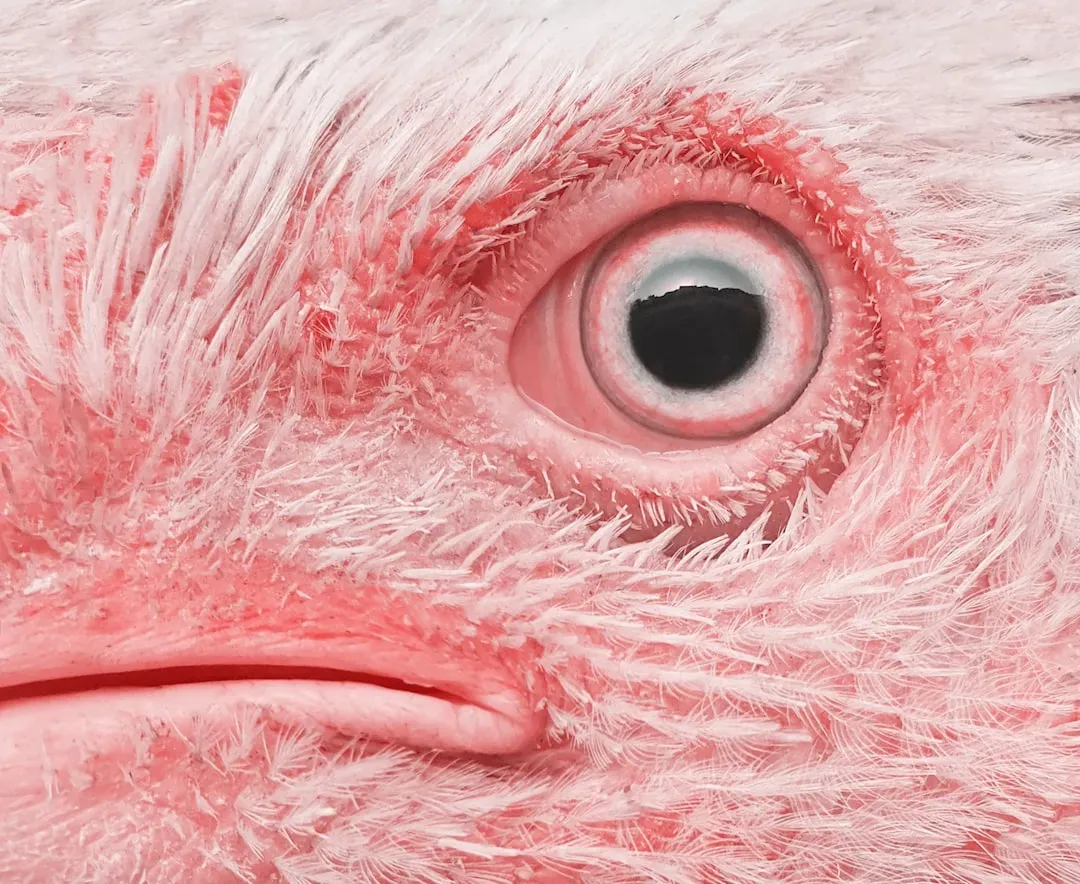
The more scientists probed, the more the visual system looked like the right neighborhood. There is evidence that when parts of a bird’s retina or visual processing pathways are temporarily disrupted, magnetic orientation suffers. The most compelling scenario today is that certain photoreceptor cells in the retina host these radical pair reactions. From there, the signal likely travels along familiar neural routes involved in vision but is processed in a way that overlays magnetic cues on top of the normal visual scene. The bird, in effect, may “see” a dim pattern or shading that moves and rotates with the magnetic field.
Cryptochromes: The Blue‑Light Photoreceptors At The Heart Of The Compass

A key player in this story is a family of proteins called cryptochromes. These are blue‑light‑sensitive molecules found in plants, insects, and animals, including humans. They already have known roles in circadian rhythms, acting as internal light meters that help reset biological clocks. That alone would make them interesting, but cryptochromes also have the right structure to form radical pairs when illuminated, making them prime candidates for the bird’s quantum compass molecule.
Studies have identified specific cryptochrome variants in the retinas of migratory birds that seem especially suited for magnetoreception. In some experiments, when cryptochrome genes are altered or disrupted in model organisms, their magnetic sensitivity weakens or disappears. Laboratory work on isolated cryptochrome proteins has shown that they can indeed undergo radical pair reactions whose spin dynamics are influenced by weak magnetic fields. While the full in‑vivo chain from photon to magnetic perception is still being pieced together, cryptochromes currently sit at center stage in most serious models of the avian quantum compass.
Entanglement In A Warm, Wet Eye: Why This Is Such A Big Deal

Quantum entanglement is famous for being fragile. In physics labs, researchers jump through hoops to protect entangled states from environmental noise, often cooling systems to near absolute zero to extend coherence times. A bird’s eye, by contrast, is warm, messy, constantly bombarded with photons, and packed with jostling molecules. If entanglement can operate reliably there, even for just millionths of a second, it upends the old assumption that biology is too noisy for useful quantum effects.
The radical pair mechanism does not require entanglement to last long by physics standards; it only needs to persist just long enough to influence reaction pathways in ways that depend on the external magnetic field. But even that is a remarkable feat for a living system. If evolution has learned to harness and stabilize such fleeting quantum phenomena, it suggests that life might be far more inventive with the laws of physics than we once believed. To me, this is the most thrilling aspect: the idea that your average robin may be running a kind of nanoscale quantum experiment every time it glances at the twilight sky.
Evidence And Uncertainties: What We Know And What We Still Don’t

So how solid is all of this? On the behavioral side, the evidence that birds have a light‑dependent, spin‑sensitive magnetic sense is strong. Experiments repeatedly show that their navigation can be disrupted by radio‑frequency fields tuned to affect electron spins, and that they need certain wavelengths and intensities of light to orient correctly. Together, these findings rule out many simpler, purely classical explanations and line up cleanly with a radical pair mechanism.
On the molecular and neural side, the picture is more incomplete. We have good candidates like cryptochromes, lab demonstrations of magnetic effects on their radical pair chemistry, and anatomical hints that specific retinal regions are involved. But the full chain – from photon absorption to neural firing patterns to a bird’s conscious use of the magnetic cue – has not been mapped in the kind of detail that would slam the door on competing models. Skeptics rightly point out that extraordinary claims demand extraordinary proof, and quantum biology is still working through that demanding checklist. The honest position right now is that the quantum compass explanation is compelling, well‑motivated, and partially supported, but not yet finished.
What This Means For Us: Tech, Philosophy, And A New Respect For Pigeons

If birds are truly using quantum entanglement as a navigation tool, the implications go beyond ornithology. Engineers are already looking at radical pair chemistry as a possible blueprint for ultra‑sensitive magnetic sensors and quantum‑inspired devices that work at room temperature. A biological system that can detect Earth’s faint magnetic field without bulky equipment is a dream template for everything from miniaturized navigation chips to medical imaging tools that rely on tiny magnetic changes in tissues.
On a more philosophical level, this story forces us to question our place in the natural order. Humans like to think of quantum mechanics as our domain: something we discovered, studied, and maybe one day will harness in sleek quantum computers. The idea that a tiny bird, with a brain smaller than a walnut, has been using quantum tricks for millions of years is humbling. Next time you see a flock cutting across the evening sky, it is worth pausing to imagine the invisible magnetic patterns they might be seeing, patterns that we can barely even conceptualize without an equation.
Opinionated Conclusion: A Compass At The Edge Of What We’re Willing To Believe

In my view, the quantum compass hypothesis sits at a fascinating sweet spot between daring and plausible. It is daring because it asks us to accept that entanglement, one of the strangest ideas in all of physics, might be an everyday tool for a robin. It is plausible because alternative explanations struggle to match the full patchwork of behavioral and biochemical data, while radical pair models naturally account for the quirks we actually observe in the lab and in the field. Pretending this is all just over‑interpretation feels more like discomfort with quantum weirdness than a rational reading of the evidence.
At the same time, I think it would be a mistake to treat the story as fully settled. Quantum biology has been guilty, at times, of racing ahead of the data with flashy narratives. The responsible stance is to be cautiously enthusiastic: to admit that the entangled‑eye compass is currently the best, most coherent framework we have, but to keep demanding harder tests, clearer molecular mappings, and more direct measurements. Whether the final answer turns out to be exactly this mechanism or a surprising cousin of it, one thing already seems clear: migratory birds are doing something far more subtle and sophisticated than anyone guessed a generation ago. And that raises a deeper question: if evolution taught a bird’s eye to play with quantum rules, what else in the living world might be quietly doing the same, right in front of us, while we are still learning how to look?