
If you close your eyes and try to remember your second birthday, odds are you draw a blank. You might picture a cake, a blurry backyard, maybe a photo you’ve seen a hundred times, but you probably don’t have a vivid, first-person memory of being there. That strange emptiness before around age three has a name: childhood amnesia. For years you’ve probably heard that your brain just wasn’t ready yet, that your memory systems were too immature. But modern psychology is quietly suggesting something more radical: maybe the missing piece isn’t just memory, but the “you” that memory needs to attach to.
When you remember something, you don’t just store facts; you re-experience a moment as a person who has a sense of being the same “you” across time. Very early in life, that continuous self is still under construction. Your brain was active, you reacted, you learned, but you didn’t yet have the stable inner narrator that later memories hook onto. Once you look at your early years through that lens, childhood amnesia stops being a mysterious failure of memory and starts to look more like a natural side effect of not yet having a solid self to remember from.
The Mystery of Why Your Earliest Memories Vanish

It can feel weird when you realize you’ve lived through years you cannot recall. You know you were once a baby, you’ve seen the pictures and heard the stories, but inside your own mind there’s just darkness where those early experiences should be. You might even wonder whether something went wrong with your memory or whether you somehow “lost” those moments along the way. Psychologists call this gap childhood amnesia, and you’re not some strange exception; it’s a near-universal human experience.
What makes it even more intriguing is that you clearly were capable of learning before age three. You learned language, faces, routines, and tons of tiny skills, all without forming long-lasting autobiographical memories. That suggests your brain wasn’t empty; it was doing serious work. The real question isn’t whether anything was stored, but why you can’t retrieve those early life events in the rich, story-like way you access memories from later childhood and adulthood. This is the puzzle that leads to the idea that maybe the missing ingredient is not just a memory system, but a stable self to own those memories.
How Memory Really Works: More Than Just Storing Data

When you think of memory, you might imagine your brain as a kind of mental hard drive, filing away everything that happens so you can pull it up later. In reality, memory is much messier and much more personal. You have many different kinds of memory: you remember facts, you remember skills like how to ride a bike, and you remember episodes of your life. It is that last kind – episodic or autobiographical memory – that seems to go missing in your earliest years.
Autobiographical memory is not just about what happened; it is about what happened to you. When you recall your first day of school, you are not just listing events; you are re-entering a moment from your own perspective, with an inner sense that you were there as the same person you are now. That kind of memory relies on more than brain structures that can store information. It depends on having a concept of yourself across time, a feeling that there is a continuous “me” that stretches from the past, through the present, into the future. Without that, events may be stored in some way, but they do not become the kind of personal stories you can later revisit.
What It Means to Have a “Continuous Self”
To understand why your very early life is so hard to remember, you need to look closely at what psychologists mean by a continuous self. It is not just being able to say your name or recognize your face in the mirror, although those are pieces of it. A continuous self is the sense that there is one ongoing person inside you, with a past, present, and future, who stays essentially the same as circumstances change. It is that feeling you have when you say to yourself, “I can’t believe I did that years ago, but that was still me.”
This kind of self does not appear overnight. For a long time when you were very young, your experiences were more like disconnected islands: sensations, emotions, and reactions in the moment, but not yet organized into a single storyline. A continuous self turns those islands into a chain. Once that sense stabilizes, you can link experiences together and say, “When I was four, I loved dinosaurs,” and feel that you are reaching back to an earlier version of the same person. Before that, you may have felt pain, joy, curiosity, and fear, but the system for tying everything together around an enduring “you” simply was not fully built yet.
When the Story of “You” Starts to Take Shape

If you think back, many of your earliest clear memories probably cluster around the time you were three or four, maybe slightly later. That is also around the time when children begin talking more fluently about themselves, their likes and dislikes, and things they did in the past. They start saying things like “I went to the park” or “I was scared yesterday,” which shows they are beginning to place events on a personal timeline. Language gives you tools to label your experiences and connect them into a story, and that makes a huge difference.
Around these ages, you also start to see stronger signs that kids understand that they are the same person across time. They recognize their own photos from different ages and can talk about those moments as theirs. Parents often start having little conversations about the day, bedtime recaps, and shared family stories, which help reinforce the idea that there is a stable character at the center: you. As those patterns repeat, your brain gets practice weaving together events into a continuous narrative, and from that point on, memories are more likely to stick in a way that feels personally retrievable years later.
Why Your Brain Was Busy Long Before You Can Remember
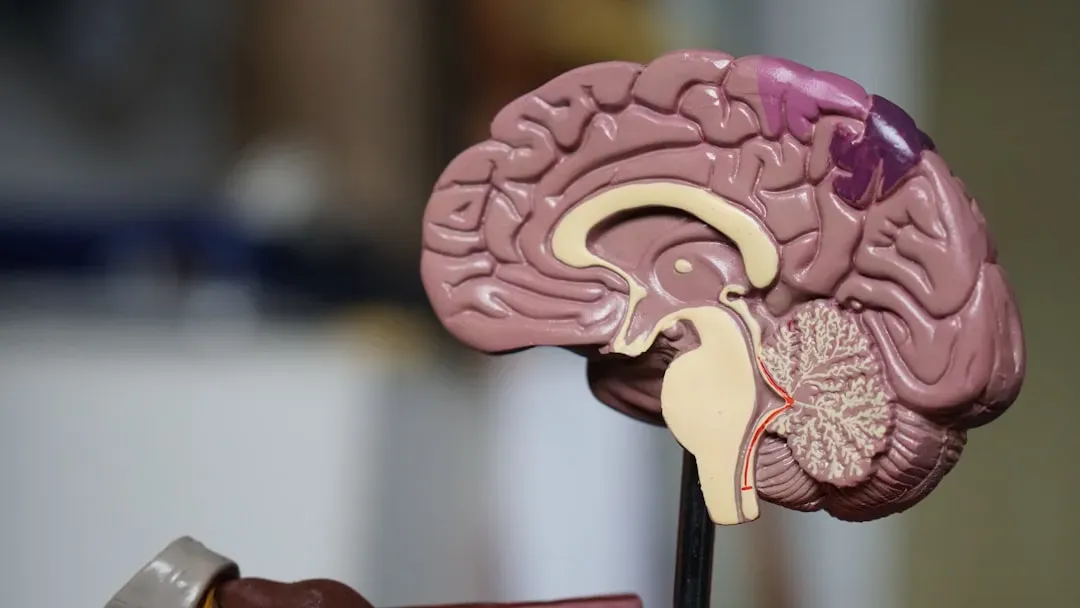
None of this means your brain was idle before age three. In fact, it was in overdrive. Early childhood is a time of incredibly fast brain growth, with new connections forming at a pace that never really repeats later in life. You were soaking up sounds, faces, patterns, and routines. You were learning how to coordinate your body, how to interpret caregivers’ reactions, and how to navigate a confusing world. A lot of that learning shows up today in ways you barely notice, like your ability to understand speech or your comfort with basic social cues.
But much of that early learning lives in forms of memory that do not require a conscious narrator. You store habits, emotional associations, and procedural skills in systems that quietly shape how you react, even if you cannot describe what is happening. You may feel soothed by certain songs or smells from your childhood without recalling a single specific scene where you experienced them. That is your early brain at work. So rather than seeing those pre-three years as a blank, it is more accurate to see them as a time when your brain was intensely active, just not yet organizing experiences into the explicit, story-like memories that you later come to think of as “remembering your life.”
How Parents’ Stories Help Build Your Memory (and Your Self)

Think about how much of your childhood you “remember” because your parents or relatives told you stories about it. Someone may have described the time you spilled juice all over a guest or the way you refused to sleep without a particular toy. Over the years, you might have replayed those stories so often that they feel like memories, even if you cannot clearly recall the original experience. These conversations do more than fill gaps; they help sculpt the shape of your continuous self.
When adults talk with young children about past events, they are not just sharing cute anecdotes. They are teaching kids how to think about themselves in time. Questions like “Do you remember when we went to the beach?” or comments like “You were so brave at the doctor last week” help a child link events with a personal identity. You start learning that there is a “you” who did things in the past and will do more in the future. Over time, this social scaffolding supports both your sense of self and your ability to form and keep autobiographical memories. Before that kind of reflective talk becomes common, your experiences are less likely to be coded as sharable life episodes, and more likely to drift into that early amnesic fog.
Why Those Missing Years Still Shape Who You Are

Even if you cannot recall your life before age three, those early years have not disappeared without a trace. They live on in the way you react to certain tones of voice, how easily you trust people, and the subtle expectations you carry into relationships. Early attachment experiences, for example, can shape your patterns of closeness and independence long before you have words for what you are feeling. You may not remember being soothed or ignored as a toddler, but your nervous system does, in its own way.
Psychologists often talk about implicit memory to describe these under-the-surface influences. You recognize familiar patterns without knowing why, you feel oddly calm or tense in particular situations, and you develop gut-level reactions that come from repeated early experiences. Those traces do not need a continuous self to operate; they just require exposure and repetition. So while you lack explicit stories from that time, you still carry the imprint. Your earliest years may be a narrative blank, but they are not a psychological blank, and that difference matters when you think about how much of “you” comes from times you cannot consciously revisit.
What This Means for How You See Your Past (and Yourself)
Once you understand that you probably remember almost nothing from before age three because your continuous self was still under construction, it can change how you relate to your past. Instead of feeling like those years are missing due to some flaw in your memory, you can see the gap as a normal stage in becoming a person. Your life is not just the parts you remember; it includes all the silent shaping that happened before your inner storyteller really woke up. That realization can be oddly comforting, especially if you have worried that your lack of early memories means something is wrong with you.
It can also give you a deeper appreciation for how your current sense of self is built. The “you” reading this right now is the result of countless experiences, many of them beyond recall but not beyond influence. When you look at childhood photos or listen to family stories, you are not just trying to pull memories from a blank vault; you are actively weaving those fragments into your ongoing narrative. You are deciding what kind of person you were and are, based on limited but powerful evidence. Understanding the psychology behind childhood amnesia can help you hold that story a little more lightly, and maybe with a bit more curiosity and compassion for the parts of you that formed in the dark.
Conclusion: Remembering What You Cannot Remember

If you cannot reach back into your mind and pull out vivid scenes from before age three, you are not broken or unusual; you are human. Your early brain was absorbing the world at high speed, but your continuous self – the inner anchor that personal memories attach to – was still being assembled. Only once that “you” became solid enough could your experiences crystalize into the kind of autobiographical memories you now take for granted. In a way, the very fact that you notice the gap is itself proof that your narrative self has arrived and is looking back, asking questions.
You may never remember your first steps or the exact sound of your own toddler laughter, but their echoes are still with you in how you walk through life and how easily you find joy. Those missing years are like the foundations of a house: buried, invisible, but holding everything up. When you think about your past from now on, you can include not just the memories you can play like movies, but also the hidden shaping that happened before your story had words. Knowing that, how does it feel to realize that the earliest version of “you” is still here, even if you cannot picture them?