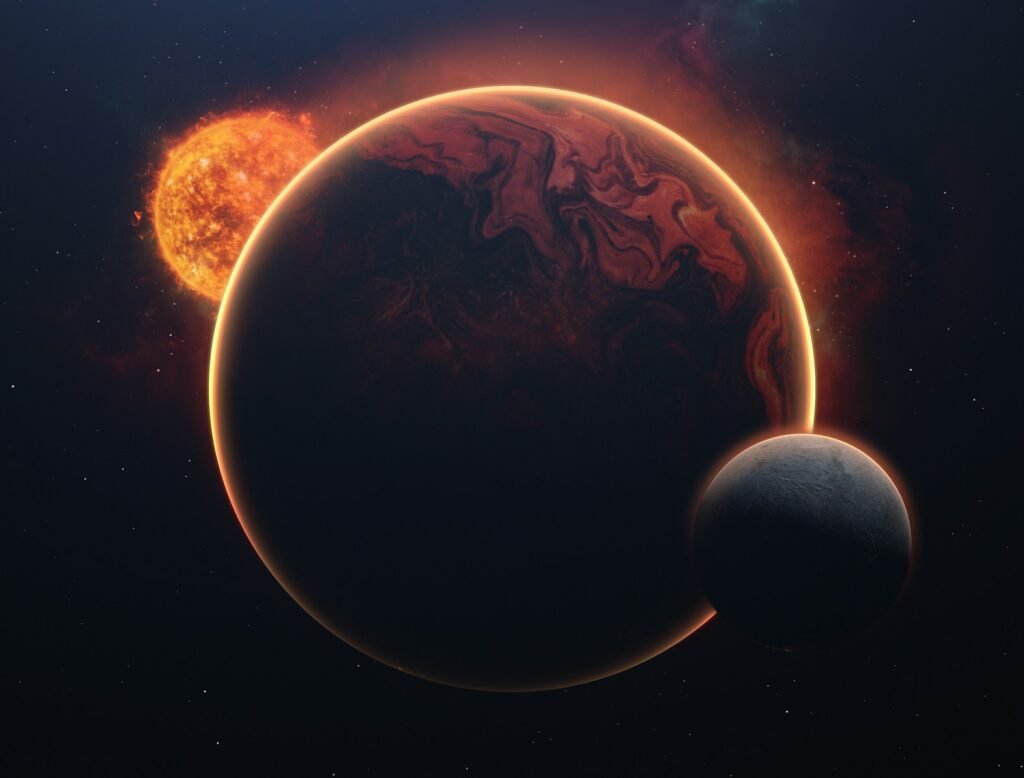

Somewhere in our galaxy right now, a star is quietly devouring a world that once circled it, shredding rock and metal into a glowing, gravitational whirlpool. That image is not science fiction; astronomers are now catching these stellar crimes almost in the act, and the evidence is written in light and dust. What makes this more than a cosmic curiosity is the uncomfortable implication: one day, our own Sun will almost certainly turn on its planets too. By watching distant stars consume their worlds, scientists are piecing together a preview of how the solar system – and Earth’s surface, oceans, and atmosphere – will end. This is the story of how we learned stars really do eat planets, and what that means for the thin little film of life clinging to one small rock around an aging star.
When Astronomers First Suspected Stars Were Planet Killers
The idea that stars might swallow planets is surprisingly recent, at least in terms of solid evidence. For most of the twentieth century, we did not even know for sure that other stars had planets, much less that they might destroy them. That began to change in the mid-1990s, when astronomers started finding exoplanets with orbits so tight they skimmed the atmospheres of their stars. These so-called hot Jupiters suggested violent histories of migration, scattering, and tidal friction, hinting that planetary systems could be far messier than our own.
As researchers examined spectra – the fingerprints of light from stars – they noticed a puzzling pattern. Some stars, especially younger ones with close-in planets, seemed to have atmospheres enriched in the same heavy elements found in rocky worlds. It was as if someone had spiked the stellar gas with the ingredients of planets. That was the first serious whisper in the data: perhaps stars were not just planetary nurseries, but also planetary graveyards.
Stellar Fingerprints of a Consumed World
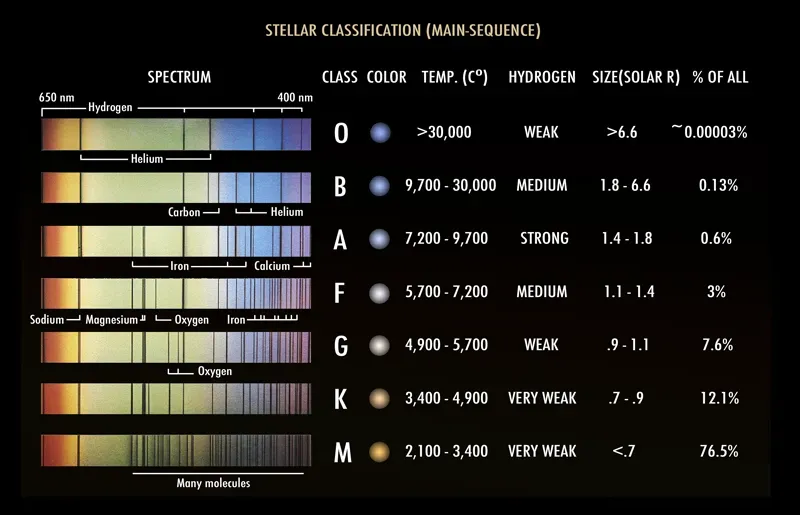
The most direct clue that a star has eaten a planet comes from its chemistry. Stars are mostly hydrogen and helium, but rocky planets are built from heavier elements like iron, magnesium, silicon, and calcium. When a star engulfs a planet, those heavy elements get stirred into its outer layers, subtly changing the star’s spectrum. By running that starlight through a spectrograph, astronomers can measure tiny excesses of those metals compared with similar stars that appear planet-free.
In several Sun-like stars, researchers have found atmospheric compositions that look suspiciously like the “recipe” for rocky planets. In some binary star systems, where two stars formed from the same gas cloud, one star shows a clear enhancement in planet-building elements while its twin does not. That mismatch is hard to explain unless one of the pair has dined on one or more of its former planets. In effect, we are reading a confession in the star’s own light: it has ingested worlds and cannot quite hide the evidence.
White Dwarfs with Rings of Rubble: Planetary Systems After Death
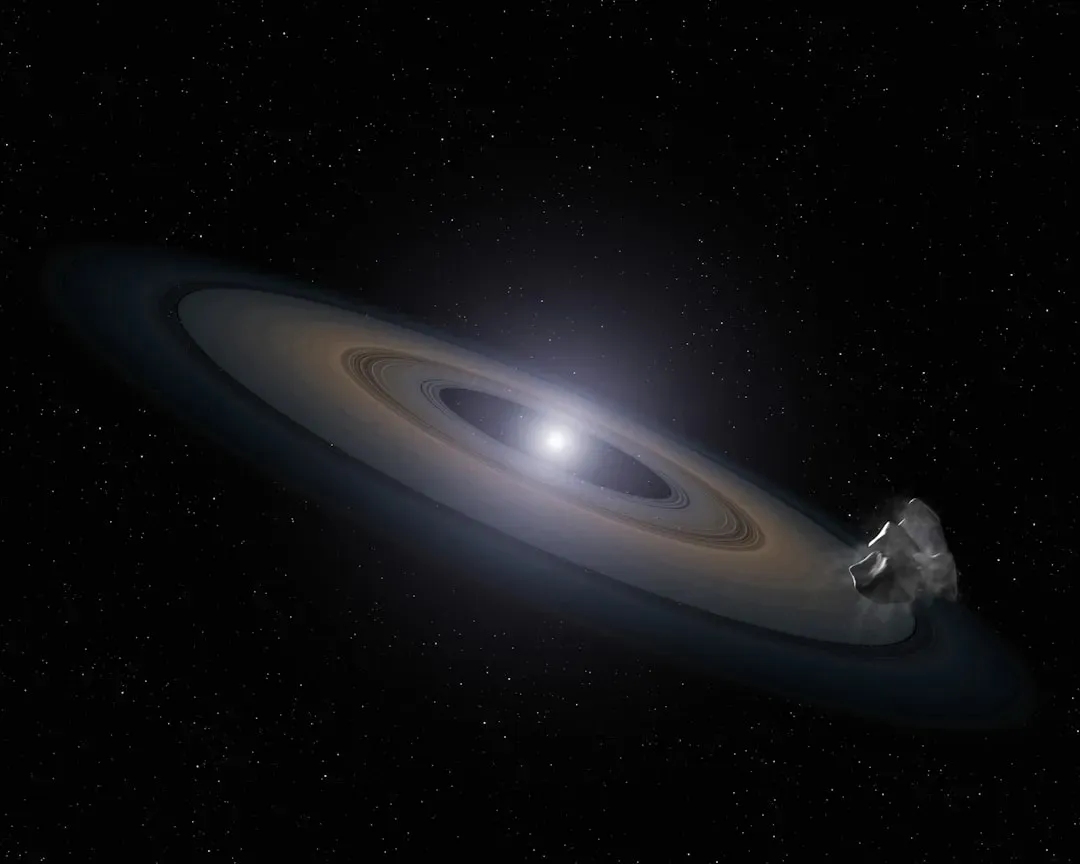
The most dramatic planetary autopsies come from white dwarfs, the burned-out cores left behind when Sun-like stars run out of fuel. These stellar remnants are so dense and hot that heavy elements should quickly sink out of their visible layers, leaving only the lightest gases at the surface. Yet in a significant fraction of white dwarfs, astronomers see strong signatures of metals associated with rocky planets and asteroids mixed into the star’s outer skin. That means fresh planetary material must be continually falling in.
Orbiting some of these white dwarfs, telescopes have spotted dusty rings and debris disks made of shredded planetary bodies. In a few cases, astronomers have detected the disintegrating fragments of minor planets themselves, their orbits warped until they are torn apart by the white dwarf’s gravity. When spectra of the polluted white dwarf atmospheres are decoded, the elemental ratios look strikingly similar to the crust and mantle of terrestrial planets. These dead stars are literally flavored with the remains of worlds, offering a forensic look at planetary interiors long after the systems’ brighter days are over.
A Real-Time Planetary Demolition Caught in the Act
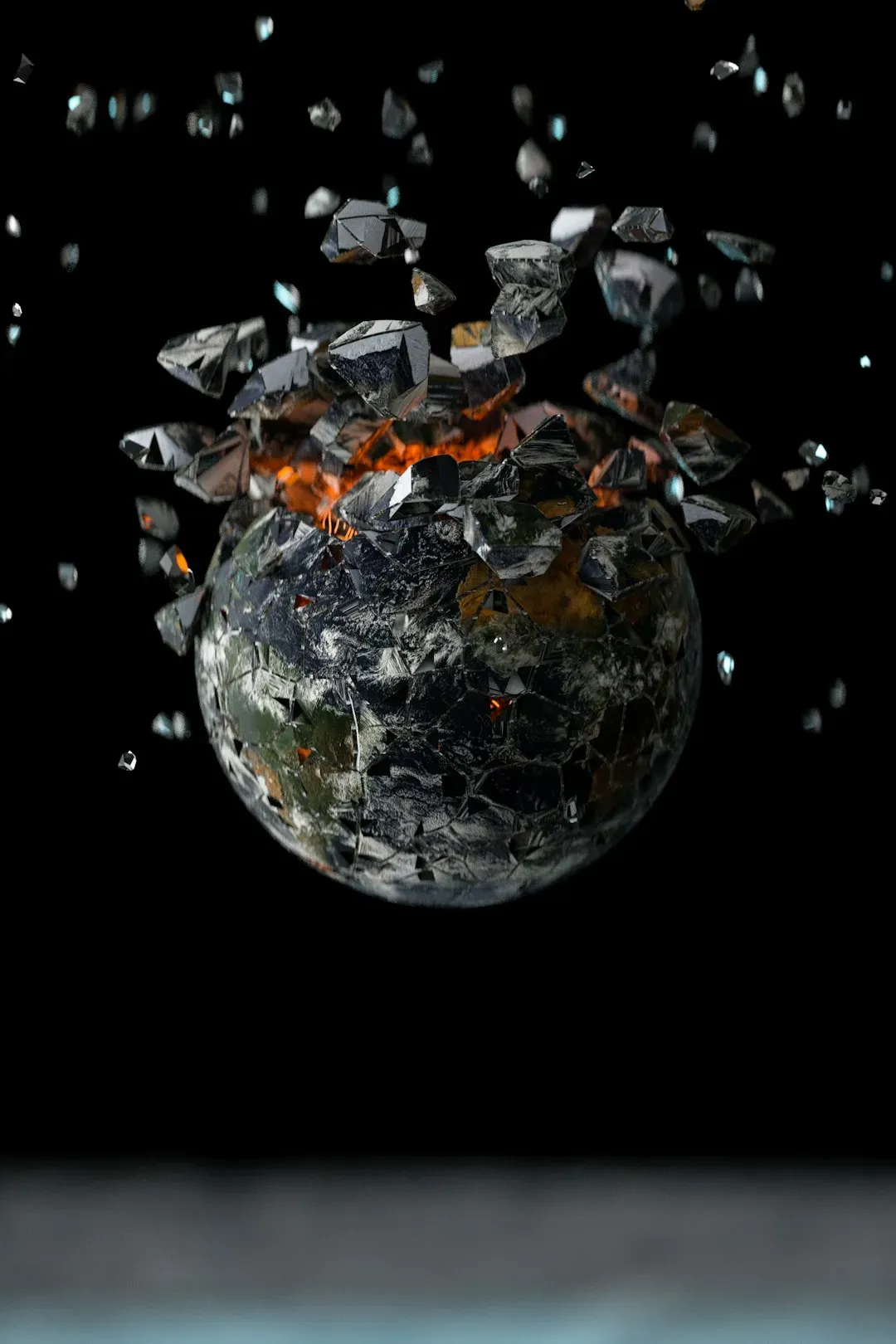
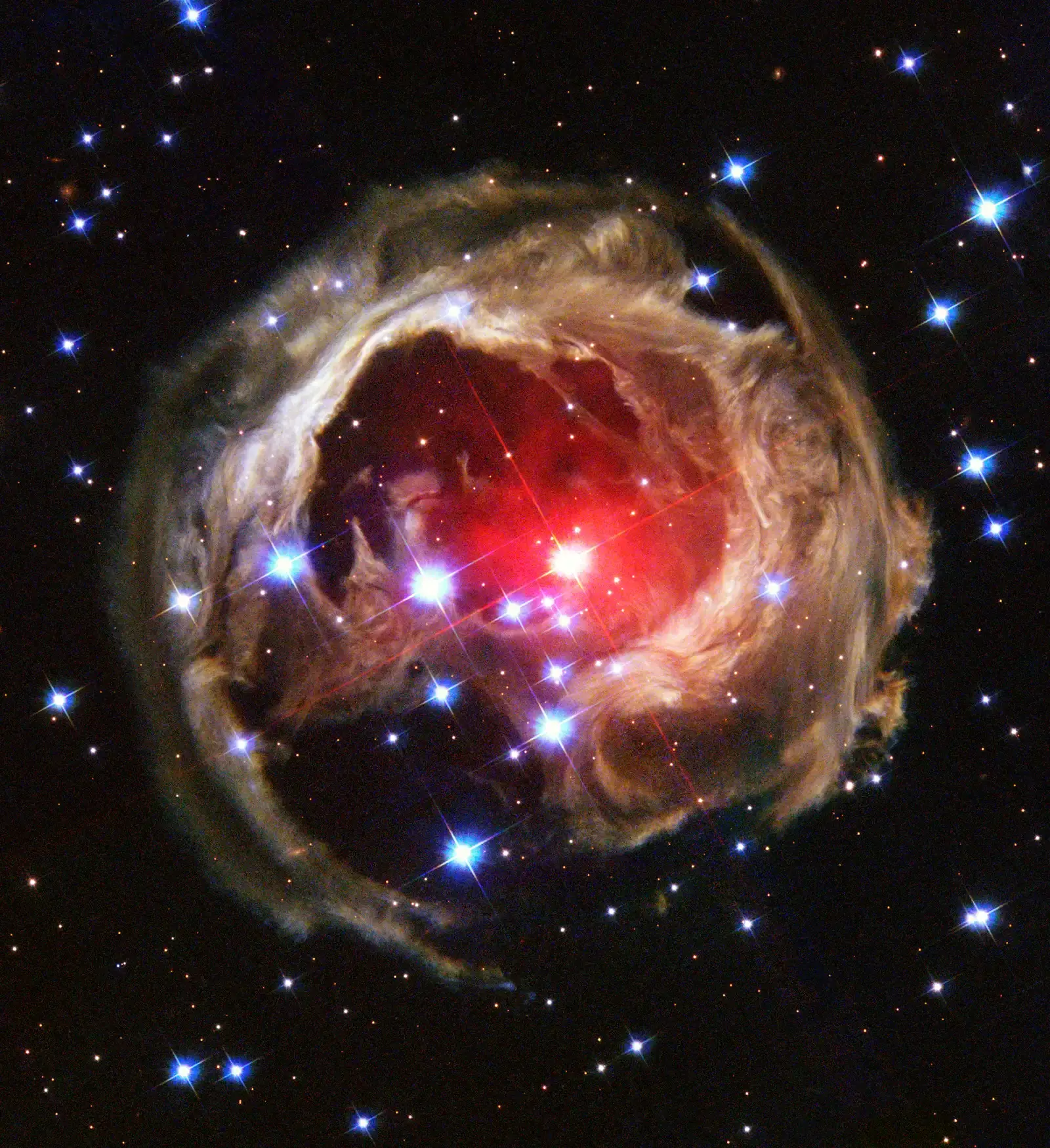
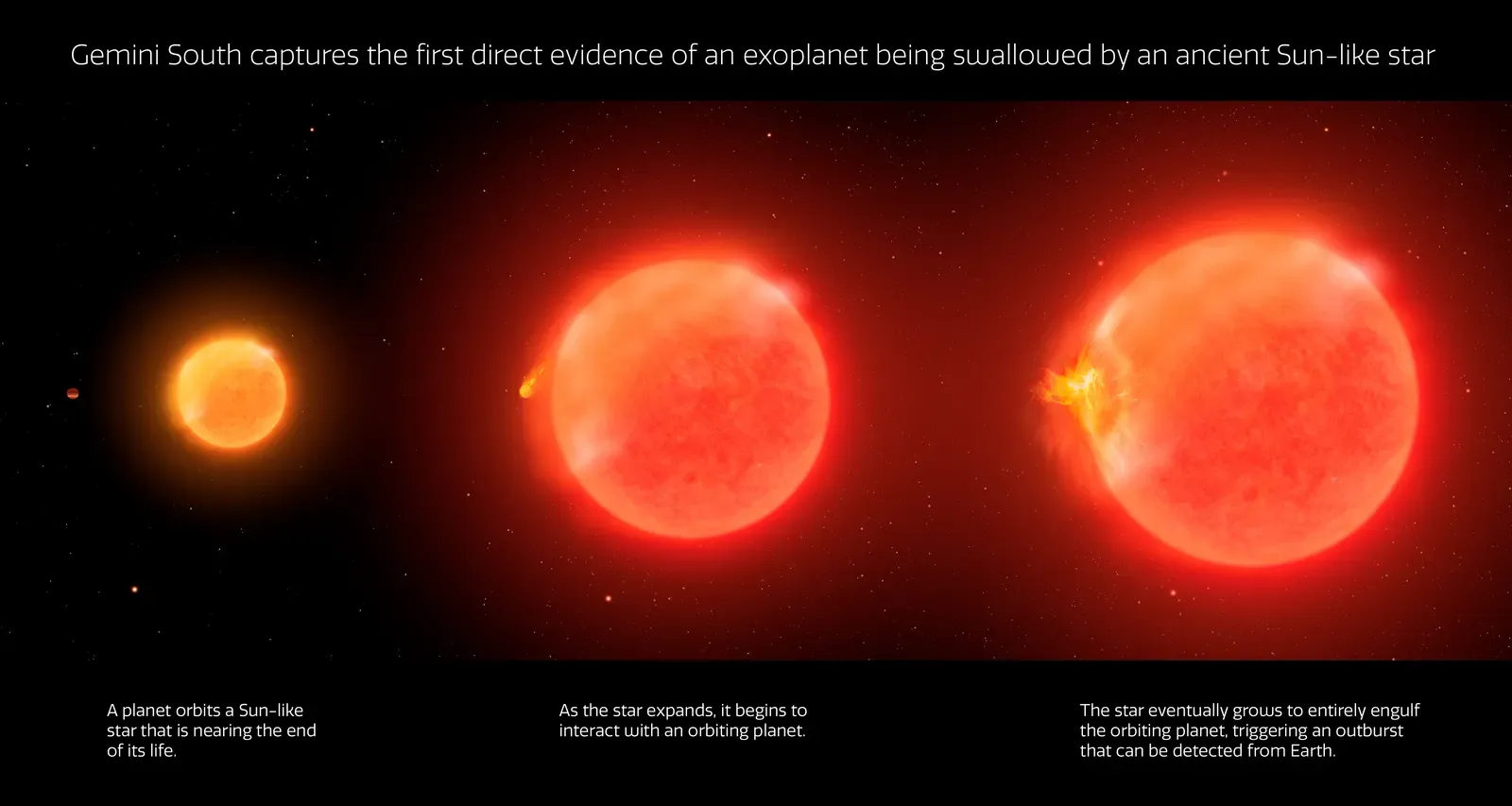
Until recently, most evidence for planet-eating stars came from postmortems, long after the actual destruction took place. That changed when time-domain surveys – projects that repeatedly scan huge swaths of the sky – started catching brief, unusual brightenings from aging stars. One especially compelling event involved a star in our galaxy that suddenly flared and then slowly faded while surrounded by a growing cloud of dust. Infrared observations revealed an expanding, warm shroud consistent with a gas giant or massive super-Earth being engulfed.
In that case, the light curve and spectrum matched theoretical predictions for a planet spiraling into a star swollen into its red giant phase. As the planet plunged into the star’s outer layers, it deposited energy, causing the stellar atmosphere to puff up and glow. Over months, the system cooled and dimmed, leaving behind only a veil of debris. For the first time, astronomers could say with confidence that they had watched a star actively consume one of its own planets – a fleeting, violent moment in a planetary system’s slow death.
How Our Sun Will Swell, Boil, and Possibly Swallow Earth
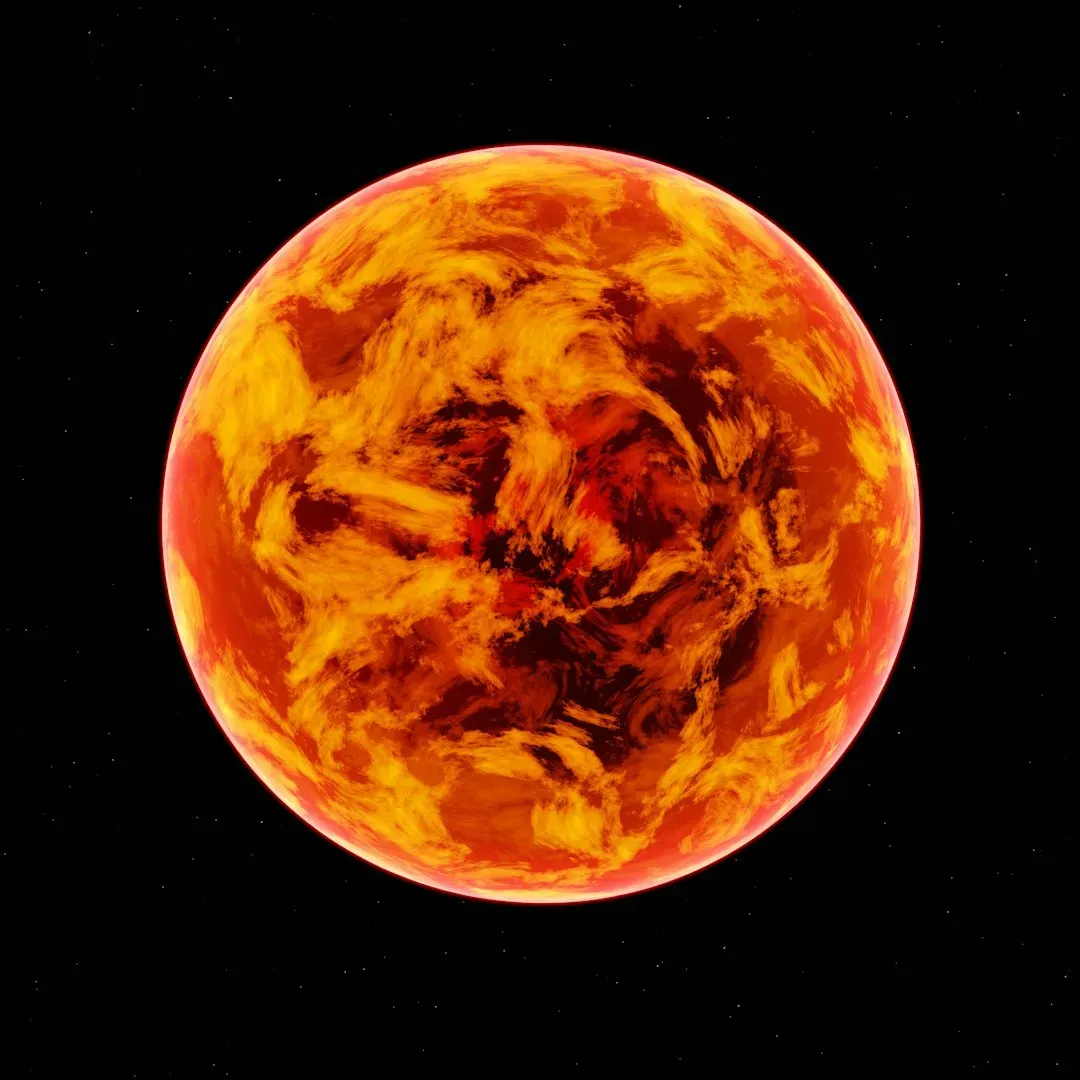
When we talk about planet-eating stars, the obvious question is whether our Sun will do the same to Earth. Current models of stellar evolution say that in roughly five billion years, the Sun will exhaust hydrogen in its core and swell into a red giant, growing hundreds of times its current size. Its outer layers will creep past the orbit of Mercury and likely engulf Venus entirely. Earth’s orbit will expand somewhat as the Sun loses mass, but it is not clear whether that will be enough to keep our planet out of the Sun’s extended atmosphere.
Some simulations suggest Earth could just barely survive outside the swollen Sun, roasted but physically intact, while others indicate it will be dragged inward and vaporized. Either way, long before the red giant phase, rising solar luminosity will overheat our climate, stripping oceans and atmosphere until the surface is scorched and sterile. From a human timescale, those billions of years feel almost like forever. From a cosmic perspective, the Sun is already middle-aged, and the clock toward planetary catastrophe is very much running.
What Planet-Eating Stars Reveal About the Architecture of Planetary Systems
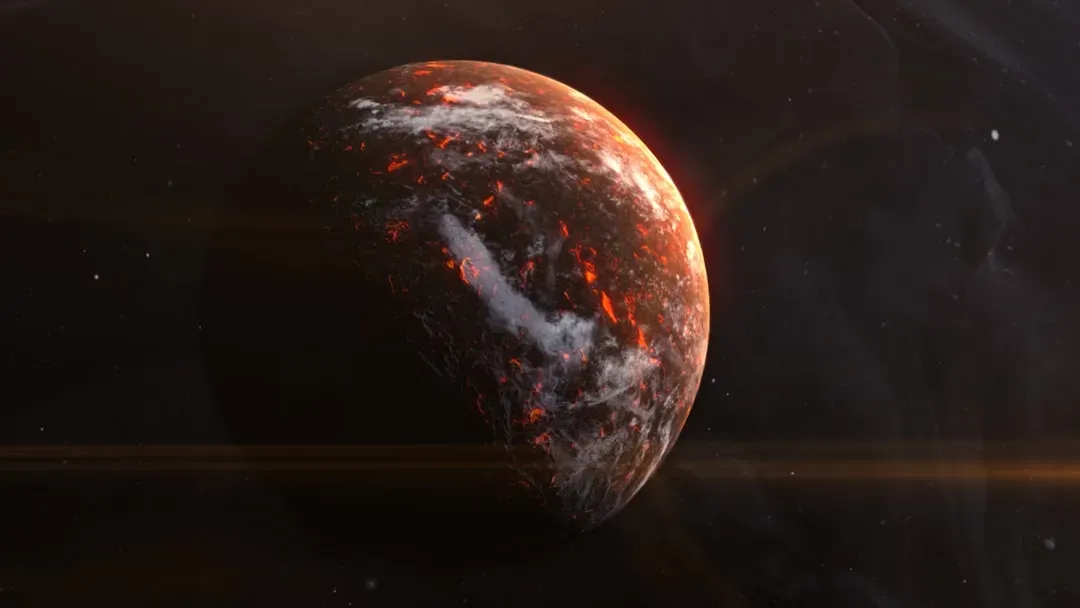
These stellar feasts are not just gory spectacle; they are tools for mapping how planetary systems are built and dismantled. By analyzing the chemical fingerprints of engulfed material, astronomers can infer whether a system had Earth-like rocky worlds, metal-rich super-Earths, or more primitive bodies. That is particularly powerful for white dwarfs, where the “pollution” can be compared against models of different planetary compositions. In some cases, the abundances look very much like differentiated rocky planets that had crusts and cores, hinting that Earth-like geology may be common.
On top of that, the timing and frequency of engulfment events help chart how orbits shift as stars age. Close-in planets are especially vulnerable as stellar tides rob them of energy, but even distant worlds can be destabilized when mass loss and gravitational nudges rearrange the system. Observations suggest that the outer architecture of a system – giant planets, belts of rock and ice – can funnel material inward toward the star long after the main sequence phase. In other words, the story of a planetary system continues to be chaotic and destructive long after star formation ends.
The Deeper Meaning: Rethinking “Stable” Habitable Worlds
For decades, the search for life beyond Earth has focused on habitable zones, those comfortable orbital bands where liquid water can exist. Planet-eating stars complicate that picture by reminding us that habitability is not just about distance and temperature, but also about time and violent change. A world can spend billions of years in a sweet spot, only to be roasted, swallowed, or fractured as its star evolves or as giant neighbors shove it into danger. The apparent stability of our own orbit may be more fragile than we like to imagine, riding on a balance of forces that will not last forever.
To me, this reframes Earth from a cozy, permanent home into something more like a rented apartment in a building that will eventually be condemned. The plumbing still works, the lights are on, and the neighborhood is quiet, but the demolition plan is already filed in cosmic bureaucracy. That might sound bleak, yet there is a strange relief in recognizing our transience as part of a larger pattern. Planet-eating stars are not villains; they are the engines that recycle planetary material, seeding future generations of stars and worlds. Life, if it arises again, will do so from the ashes of worlds that came before.
Open Questions: How Often Do Worlds Actually Survive Their Stars?
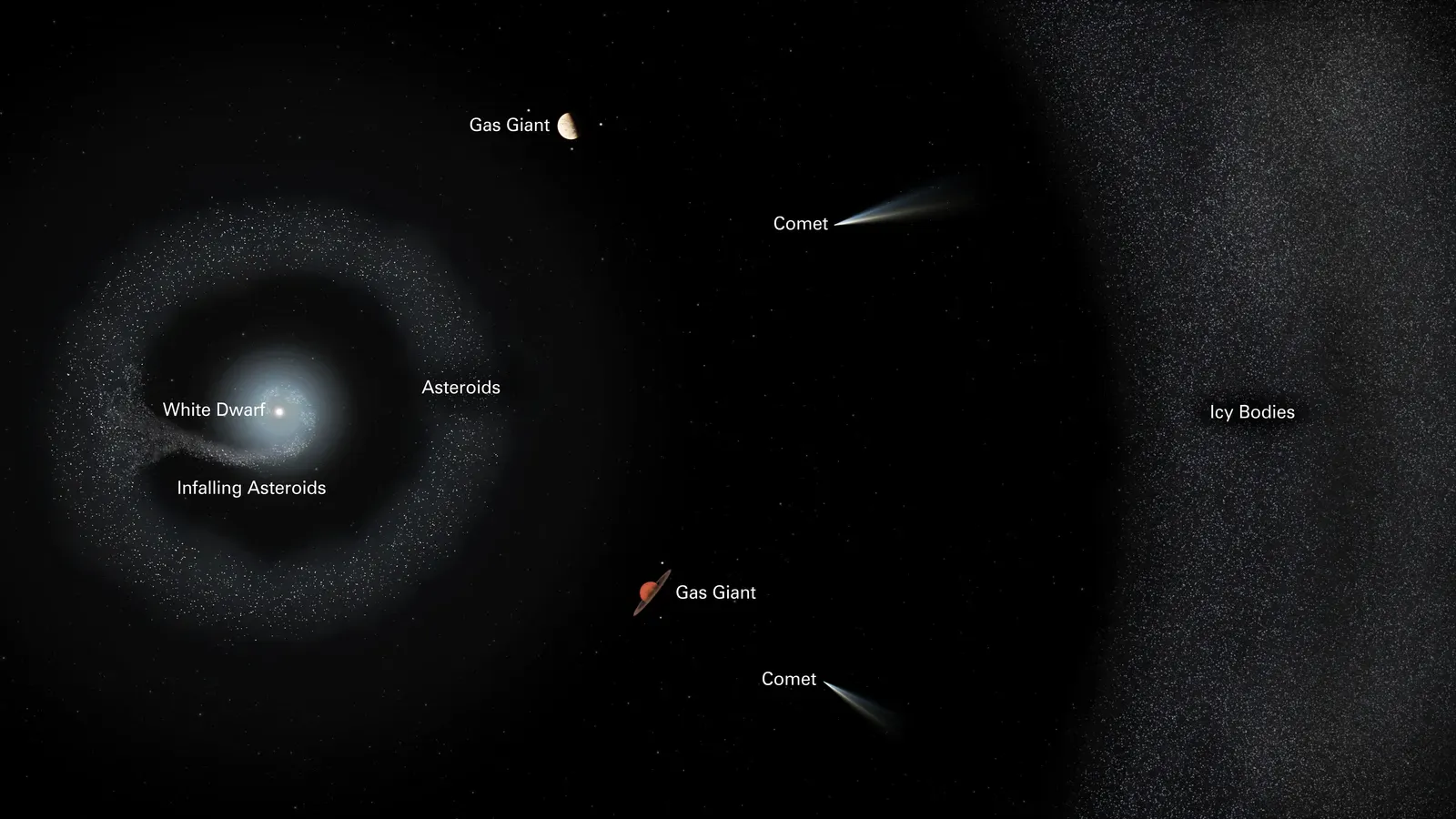
Despite the dramatic discoveries, we still do not know how many planets make it through their star’s old age, especially in the outer reaches of a system. Some white dwarfs show signs of intact giant planets orbiting at safe distances, potentially preserving icy moons or deep interiors where heat lingers. Brown dwarfs and low-mass stars complicate things further, evolving more slowly and changing the pace of any potential engulfment. Astronomers are now using long-baseline surveys and next-generation telescopes to search for cool, faint worlds clinging to life around retired stars.
The statistics will matter for how we think about the overall life cycle of planetary systems. If a significant share of planets survive, then late-life habitats – crusts warmed from within, subsurface oceans under ice – might be more common than we expect. If instead most close and mid-range planets are lost, then the window for complex surface life may be much shorter and narrower. For now, every polluted white dwarf, every strange light curve, is another data point in a story we are still learning to read.
How You Can Follow the Slow Catastrophe of Planetary Systems
It is easy to hear about stars devouring planets and feel very small and very powerless, but there are practical ways to connect with this research. Many of the discoveries about planetary engulfment come from publicly accessible sky surveys and open-data missions, and citizen scientists have helped flag unusual systems for deeper study. If you are curious, you can explore light curves, images, and catalogs from major observatories and space telescopes and see the raw traces of these events yourself. Planet-eating stars are not just expert-only science; they are happening in datasets anyone can browse with a bit of guidance.
Engaging with this work, whether by reading deeper, joining a citizen science project, or simply following updates from observatories and universities, also sharpens a kind of cosmic perspective that is sorely needed. It reminds us that Earth is both precious and temporary, a fragile surface carved out on a world that will not last forever. That realization can nudge us to care more fiercely for the time and conditions we do have. When you look up at the night sky and imagine stars quietly erasing their planets, what does it change about how you see this brief, bright moment on ours?
Suhail Ahmed is a passionate digital professional and nature enthusiast with over 8 years of experience in content strategy, SEO, web development, and digital operations. Alongside his freelance journey, Suhail actively contributes to nature and wildlife platforms like Discover Wildlife, where he channels his curiosity for the planet into engaging, educational storytelling.
With a strong background in managing digital ecosystems — from ecommerce stores and WordPress websites to social media and automation — Suhail merges technical precision with creative insight. His content reflects a rare balance: SEO-friendly yet deeply human, data-informed yet emotionally resonant.
Driven by a love for discovery and storytelling, Suhail believes in using digital platforms to amplify causes that matter — especially those protecting Earth’s biodiversity and inspiring sustainable living. Whether he’s managing online projects or crafting wildlife content, his goal remains the same: to inform, inspire, and leave a positive digital footprint.