
If you could somehow scoop up a tiny cube of what you call “empty space” and put it under a cosmic microscope, you wouldn’t find nothing. You’d see a boiling, restless foam of activity, with fields fluctuating and particles flashing into existence and then vanishing again before you could blink. It sounds like science fiction, but this is one of the strangest and most powerful ideas in modern physics: the vacuum is not truly empty.
Once you see space this way, a lot of things you thought were solid and calm start to feel wild and alive. The very fabric of reality becomes more like a choppy sea than a still pond. You’re living inside a universe where “nothing” is never really nothing, and where the energy locked in a single cubic centimeter of space may dwarf anything you can realistically harness. Let’s walk through what that actually means, why physicists say this with a straight face, and where the mystery still leaves them scratching their heads.
The Quantum Vacuum: Why “Nothing” Is Never Truly Nothing
In everyday life, when you say “empty,” you usually mean a region cleared of stuff: no air, no dust, no objects. In classical physics, a perfect vacuum was imagined as exactly that: a featureless stage where matter and light move but that otherwise just sits there. Quantum physics shakes that picture to its core. In quantum field theory, what really exists at every point in space are fields, like the electromagnetic field, and these fields can never be perfectly still.
Even when you strip away every particle you can, the underlying fields still jitter due to quantum uncertainty. You can’t pin down both the energy of a field and the exact time over which you measure it with perfect precision. That built-in fuzziness forces the fields to fluctuate, producing what you call vacuum fluctuations. So your “empty” vacuum is more like a restless ocean surface at night: it might look calm from a distance, but zoom in far enough and you see endless tiny waves.
Virtual Particles: Flickering Ghosts of the Quantum World
When you hear physicists talk about particles popping in and out of existence, they’re usually talking about virtual particles. You can imagine them as brief disturbances in a quantum field that never quite make it into the role of fully fledged, detectable particles. They appear for a tiny moment, influenced by the field’s fluctuations, and then vanish again, leaving behind subtle effects you can actually measure.
These virtual particles show up in the math as intermediate steps when particles interact. For example, when two electrons repel each other, you can picture them trading virtual photons, the carriers of the electromagnetic force. You never catch those virtual photons in a detector, but their presence explains how the electrons push on each other. So when you picture “empty space,” you’re really picturing a kind of ghostly trading floor where virtual particles are constantly being borrowed and repaid on impossibly short time scales.
Zero-Point Energy: The Inescapable Baseline of Reality
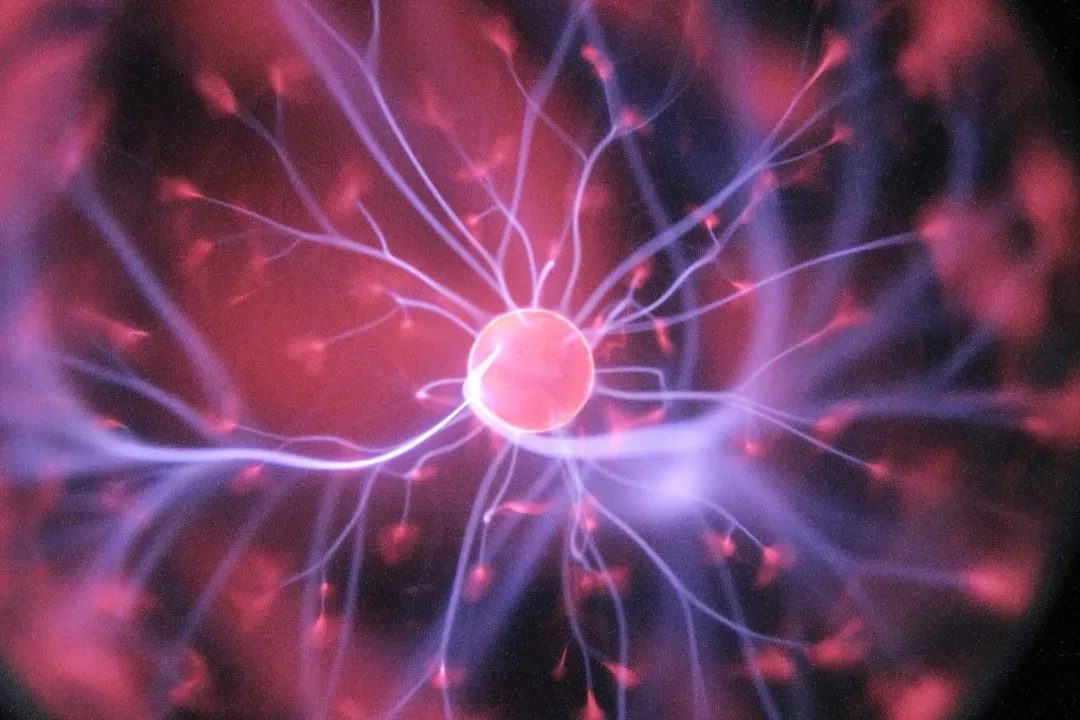
The idea that empty space has energy built into it comes from what’s known as zero-point energy. Even if you cool a quantum system down as close to absolute zero as you can, you never quite squeeze out all the motion. Every mode of a field still has a minimum bit of energy it cannot give up, a kind of irreducible hum that remains even in the lowest possible state.
When you sum up this minimum energy across all the ways a field can vibrate, you’re left with an enormous theoretical energy density for the vacuum. You’re not talking about a few stray joules here or there; some calculations give you absurdly huge values that would make your universe curl up on itself almost instantly if they were taken at face value. That tension between the math and the reality you see around you is one of the biggest puzzles in modern physics, and it shows you just how strange “nothing” really is.
The Casimir Effect: When “Empty Space” Pushes Metal Plates Together
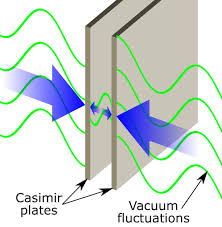
The idea of vacuum energy is not just a philosophical musing; you can actually see its fingerprints in the lab. One of the most striking examples is the Casimir effect. If you place two uncharged, perfectly conducting metal plates extremely close together in a vacuum, they feel a tiny attractive force pulling them toward each other. At first glance, this seems bizarre: there’s no air, no charge, no obvious cause for the plates to move.
What you’re really seeing is the influence of vacuum fluctuations. Only certain wavelengths of virtual photons “fit” between the plates, while outside the plates, more modes are allowed. This mismatch means the pressure from outside vacuum fluctuations is slightly larger than between the plates, gently nudging them together. Experiments have measured this force with high precision, giving you direct, tangible evidence that empty space is not just empty backdrop but an active player in how matter behaves.
Cosmological Constant and Dark Energy: When Vacuum Energy Shapes the Cosmos
Zoom out from tiny metal plates to the entire universe, and the energy of empty space becomes even more dramatic. In Einstein’s equations of general relativity, you can add a term called the cosmological constant that acts like a uniform energy density of the vacuum. This kind of energy does something weird: instead of pulling things together like normal matter, it drives space itself to expand faster over time.
Observations of distant supernovae and the cosmic microwave background suggest your universe’s expansion is accelerating, and the simplest explanation is some form of dark energy that behaves a lot like vacuum energy. The catch is that the observed value is shockingly small compared to what naive quantum field theory predicts – smaller by many, many orders of magnitude. You’re stuck with a universe where empty space clearly has some kind of energy that shapes cosmic history, but you still do not know why its value is what it is, or why it is not catastrophically larger.
Can You Tap Vacuum Energy? The Tempting but Tricky Question
Once you hear that a cubic centimeter of space might contain an immense amount of vacuum energy, it is almost impossible not to ask whether you could ever use it. You might picture futuristic devices sucking energy out of the void, powering civilizations without fuel or pollution. This idea shows up a lot in speculative discussions and science fiction, because it sounds like the ultimate cosmic cheat code.
But when you dig into the physics, things get sobering very quickly. Vacuum energy is part of the lowest energy state of the fields; you cannot lower that state further without breaking the very theory that predicted it. Known effects like the Casimir force do not give you free energy; they just let you redistribute energy you already had in a clever way. As far as your current understanding goes, there is no reliable, experimentally grounded method to extract net usable energy from the vacuum without putting at least as much energy in. The temptation is huge, but nature so far does not seem interested in handing out free lunches.
How Empty Space Shapes Everyday Matter and Forces
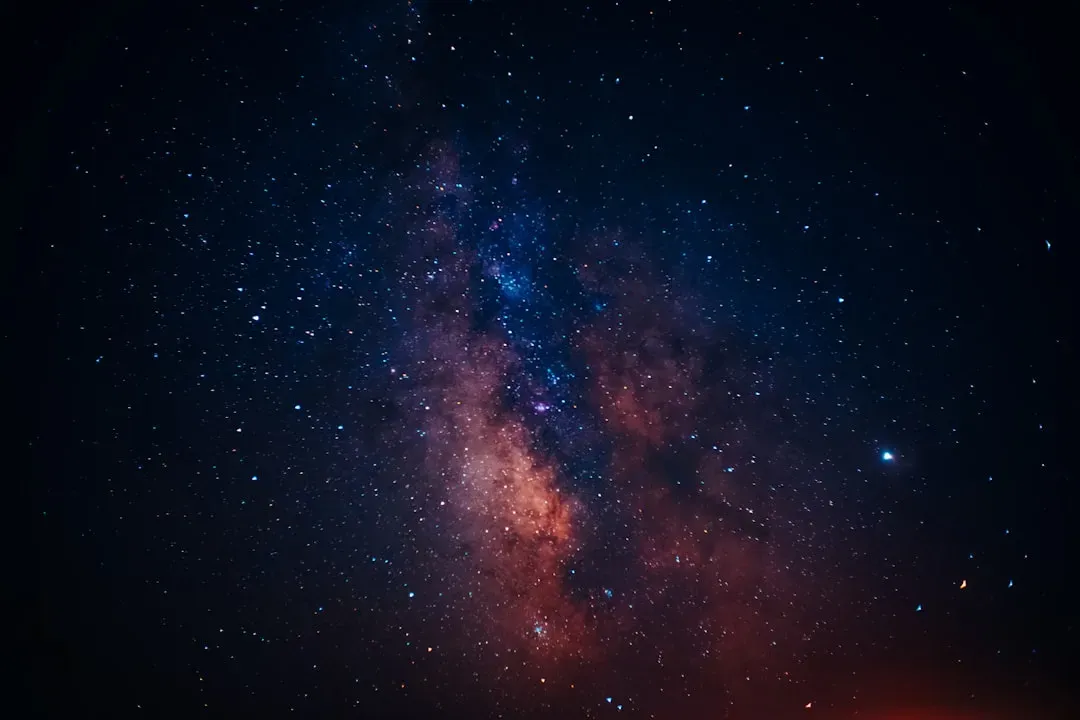
Even if you never touch a particle accelerator or a cosmological telescope, the restless nature of the vacuum quietly shapes your world. Quantum fluctuations contribute to the properties of fundamental particles, such as their masses and charges, through what are called radiative corrections. When you measure the magnetic moment of the electron with astonishing precision, you’re actually probing the influence of a whole zoo of virtual particles clouding around it.
The structure of atoms, the stability of matter, and the way forces behave at short distances all get nudged by the vacuum’s jittery behavior. In a way, what you think of as a “real” particle is never just a simple point in space, but more like a core dressed by a buzzing entourage of virtual particles. You live in a universe where matter and empty space are deeply entangled, and you cannot fully describe one without constantly running into the other.
The Mystery That Remains: When Your Best Theories Disagree With Reality
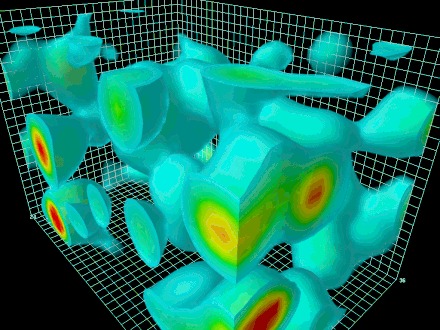
Here’s the part that keeps physicists honest: for all the clear evidence that empty space is active and energetic, your best theories still clash badly when you try to put all the pieces together. Quantum field theory gives you a staggeringly large estimate for vacuum energy, while cosmological observations point to a tiny but nonzero value driving the universe’s expansion. Bridging that gap is not a matter of tweaking a number slightly; it would require an almost miraculous cancellation between huge quantities.
This mismatch is often described as one of the worst theoretical predictions in physics, and it tells you that your picture of empty space is incomplete. Maybe a future theory of quantum gravity will rewrite how you think about the vacuum, or maybe some new symmetry will tame those huge contributions. For now, you are in a strangely humbling place: you know that empty space is not empty, you can measure some of its effects precisely, and yet you still do not really know why the energy of the vacuum has the value it does. That open question hangs over both the tiniest scales and the fate of the entire cosmos.
In the end, when you look at a patch of “nothing,” you are staring at one of the most profound somethings in all of physics. The vacuum is a restless stage where fields never sleep, particles flicker and fade, and the energy woven into space itself quietly shapes galaxies, stars, and even the chemistry in your body. The fact that a single cubic centimeter of space may hold a depth of energy you can hardly put into numbers is not just a technical detail – it is a reminder that reality is richer and stranger than your intuition ever expected. When you look up at a clear night sky and see all that darkness between the stars, will you ever really see it as empty again?