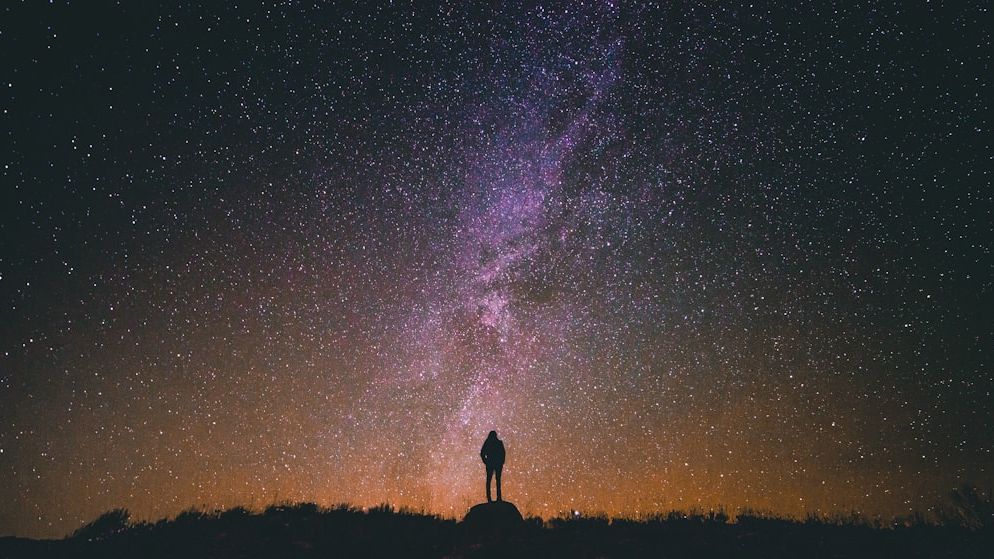

Look down at your hands for a second. What you are seeing is not really “you” in the way most of us imagine it. It is a temporary gathering of ancient particles that once drifted in primordial oceans, flashed through the hearts of exploding stars, cycled through dinosaur lungs, and slept for ages locked in rock. Particle physics, chemistry, and geology all agree on one unsettling truth: your body is a brief configuration in an unimaginably old story written in atoms.
This sounds poetic, almost mystical, but it is actually the most down‑to‑earth conclusion of modern science. The carbon in your DNA, the calcium in your bones, the oxygen in your blood, even the sodium in your tears have all been through countless other forms before they assembled as “you” this morning. And they will keep going long after your name is forgotten. Once you really let that sink in, ordinary life starts to feel strangely epic.
The Stardust Behind Your Skin
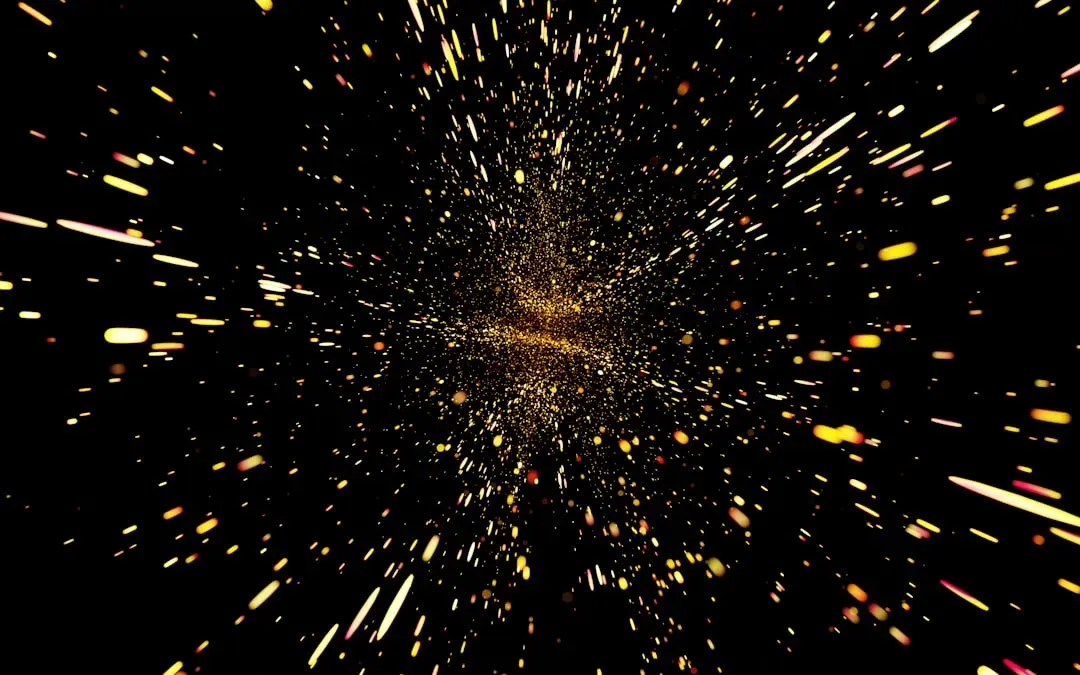
Here is the first wild twist: none of the atoms in your body were made on Earth. The hydrogen in your water is as old as the universe itself, forged in the first few minutes after the Big Bang. Heavier elements like carbon, oxygen, nitrogen, calcium, and iron were created later, in the cores of stars that lived and died billions of years before our solar system even existed. When those ancient stars exploded as supernovae, they scattered these elements across space, seeding the raw material for future planets and, eventually, for you.
By the time Earth formed, roughly about four and a half billion years ago, those atoms had already led long, violent lives. Particle physics tells us that protons, neutrons, and electrons are incredibly stable; the specific combinations that make up your molecules today are rearrangements of building blocks that have survived cosmic collisions, stellar furnaces, and shock waves across light‑years. So when people say you are made of stardust, that is not just a pretty metaphor. It is a literal description of the history of the particles that currently call your body home.
Atoms on the Move: Why Nothing Stays Put
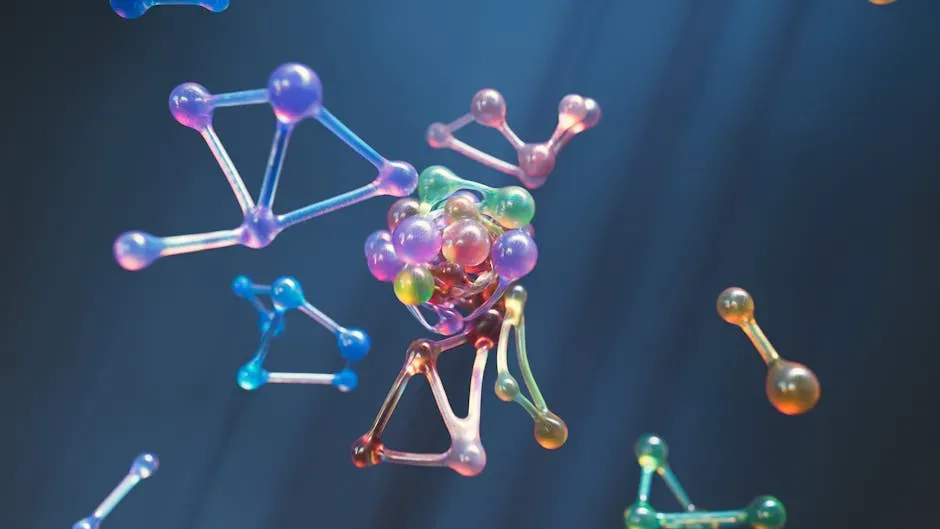
Even though your body feels solid and continuous, at the atomic level it is a constant storm of motion and exchange. Molecules bump, rotate, and vibrate; atoms are swapped in and out through every breath you take and every sip of water you drink. The air you exhale is loaded with carbon dioxide and water vapor that were part of your cells only seconds or minutes ago, and the atoms in that exhaled air will soon disperse into the atmosphere, to be inhaled by other creatures, washed into oceans, or locked again into minerals.
The same kind of churn happens in your tissues. Biological turnover means that many of the atoms in your skin, blood, and even bones are gradually replaced over months and years. You can think of your body less like a fixed statue and more like a whirlpool in a river: the pattern is recognizable, but the water molecules passing through are always new. This constant movement is exactly what makes it true that your atoms can have belonged to ancient oceans, vanished creatures, and even other humans long before they were borrowed for your particular story.
Ancient Oceans Flowing Through You
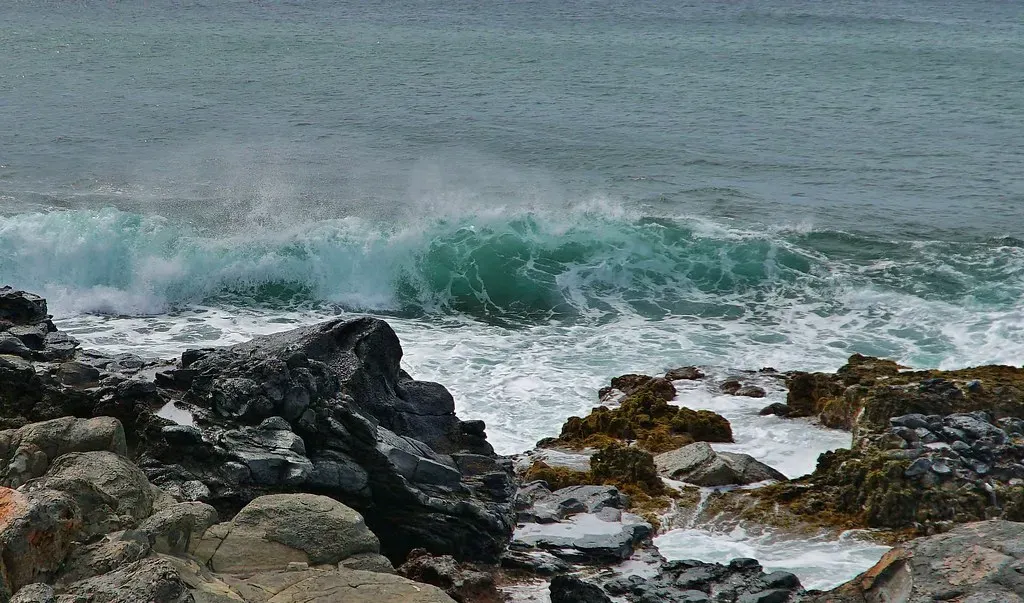
The water in your coffee this morning carries an absurdly long travel history. On geological timescales, Earth’s water is almost never destroyed; it just changes where and how it is stored. Over hundreds of millions of years, water has evaporated from seas, fallen as rain, seeped underground, frozen in ice, and become trapped inside minerals deep in the crust. Some of that “locked” water is stored in crystal structures of rocks, only to be released again by heat, pressure, or erosion and rejoin the active water cycle.
Because of this relentless cycling, the odds are overwhelming that some of the water molecules in your blood plasma once swirled in ancient oceans where trilobites crawled, ammonites swam, and early coral reefs grew. It is not just the water itself, but the dissolved ions – like sodium, chloride, magnesium, and calcium – that have moved between seawater, sediments, shells, and living bodies for eons. When you sweat, cry, or bleed, tiny traces of those oceanic ions are leaving you again, ready for the next chapter in their geological and biological tour.
Locked in Stone: When Bodies Become Rock
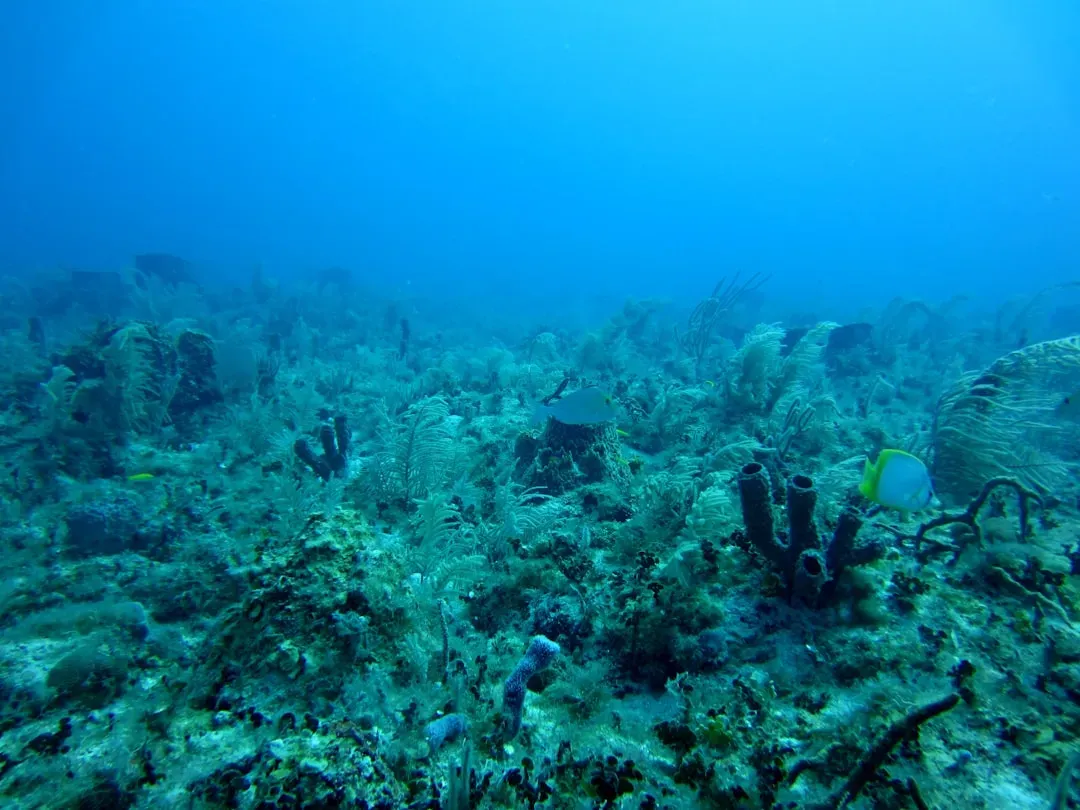
One of the strangest things about Earth is how thoroughly life and rock are intertwined. Marine organisms build shells and skeletons from calcium carbonate, silica, and other minerals pulled out of seawater. When they die, their hard parts rain down to the seafloor, gradually piling up as thick layers of sediment. Over millions of years, pressure and chemical changes transform these layers into solid rock – limestone, chalk, and other sedimentary formations that can be hundreds or even thousands of meters thick.
That means entire cliffsides and mountain ranges are, in a very literal sense, cemeteries of vanished creatures whose bodies were dissolved, reassembled, and eventually turned to stone. The carbon and calcium from those ancient shells and bones can be released again through weathering, tectonic uplift, and volcanic activity. Once freed, those atoms can end up in soil, rivers, plants, and, eventually, in your own bones and teeth. When you run your tongue across your teeth, you are feeling atoms that very plausibly spent ages entombed in rock, wearing the slow, patient history of geology like a ghostly fingerprint.
Breathing Dinosaurs (and Everything Else)
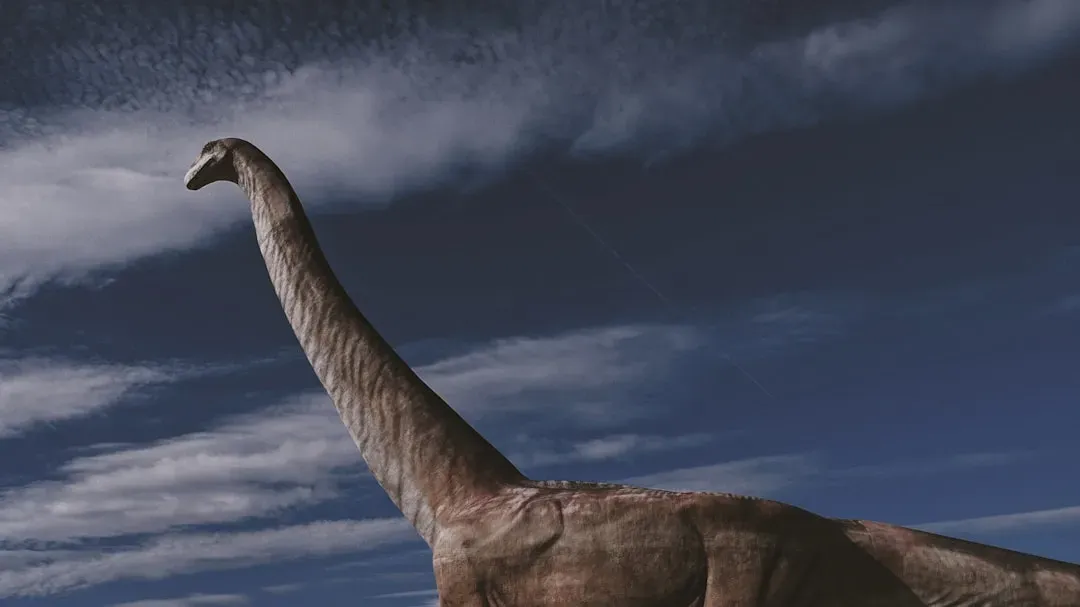
Every breath you take is a quiet reminder that the atmosphere is a global commons shared across species and time. The oxygen you inhale was produced by photosynthetic organisms, mostly plants and algae, that split water molecules and released oxygen as a waste product. The carbon dioxide you exhale comes from breaking down organic molecules in your food, which themselves were built from carbon fixed out of the air by plants. Over and over, atoms move from air to life to air again in a planetary exchange that never really stops.
Because the atmosphere mixes on large scales, the molecules of nitrogen, oxygen, and carbon dioxide you breathe today are spread all over the globe and cycled through countless lungs, gills, and leaves. Statistically, some of the atoms you are exhaling this very second once passed through the respiratory systems of dinosaurs, mammoths, ancient reptiles, and early humans whose names we will never know. Those creatures are gone, but the particles they borrowed live on. In that sense, breathing is not only a personal act of staying alive but also a continuous handshake with every life form that has ever shared this planet with you.
Your Body as a Temporary Arrangement of Matter
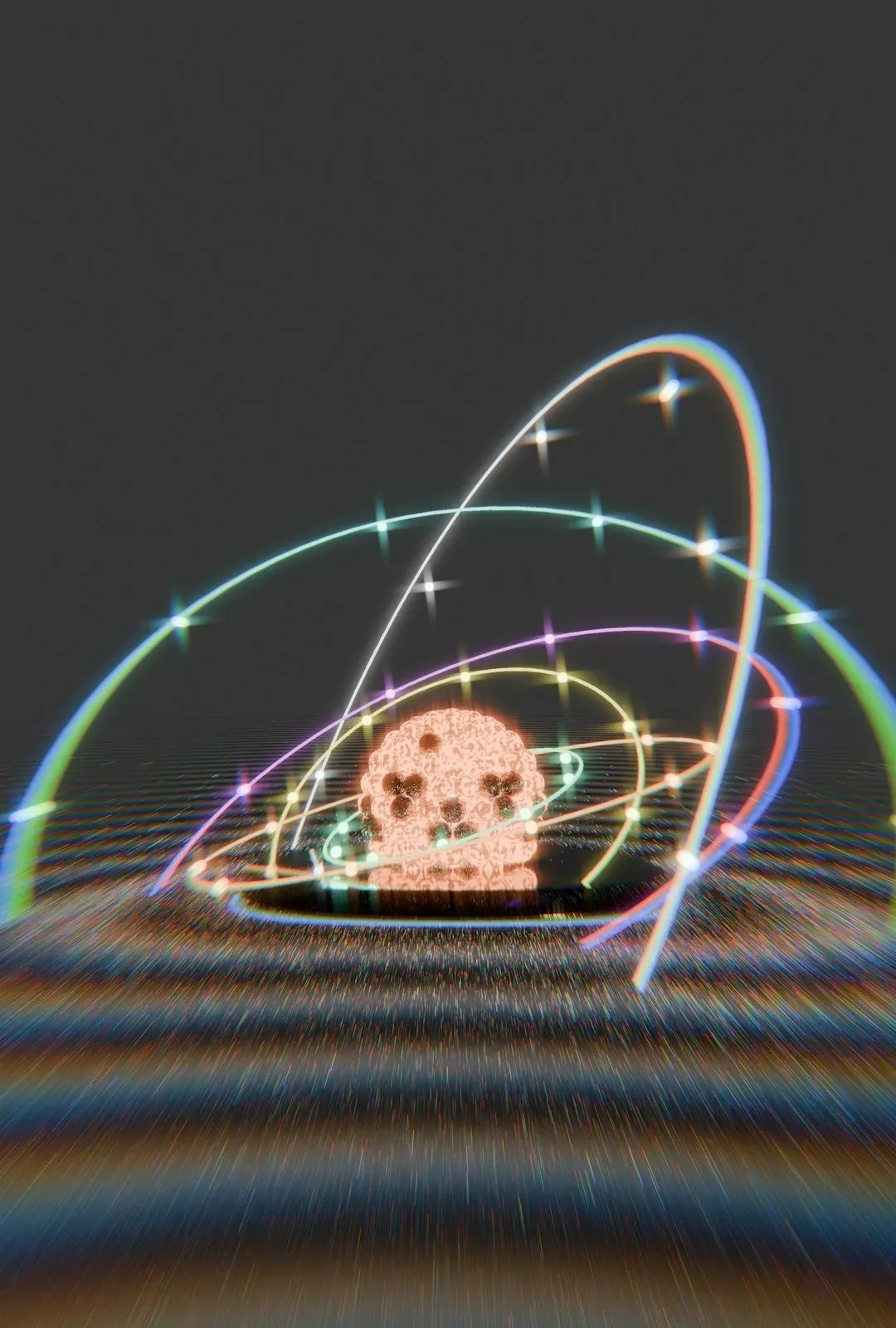
At the level of particle physics, the idea of a permanent, sharply defined “self” starts to fall apart. The protons and neutrons in your atomic nuclei are made of quarks held together by gluons, dancing in an energetic, constantly fluctuating quantum field. Electrons form diffuse probability clouds rather than little beads tracing fixed orbits. Even empty space is not really empty, but seething with quantum fluctuations. What you perceive as a stable body is a momentary pattern in this restless sea of particles and fields.
Biology layers another kind of impermanence on top of that. Cells are born, divide, and die; proteins fold and unfold; DNA is copied, repaired, and sometimes mutated. You stay “you” mostly because of the continuity of patterns – how your nervous system, memories, and relationships carry forward – not because the underlying atoms are loyal or unique. From this perspective, identity is like a story the universe is briefly telling with a particular set of atoms, a story that will eventually end, while the letters – the particles themselves – go back into circulation to tell other stories elsewhere.
After You: Why Your Atoms Will Outlive Your Name
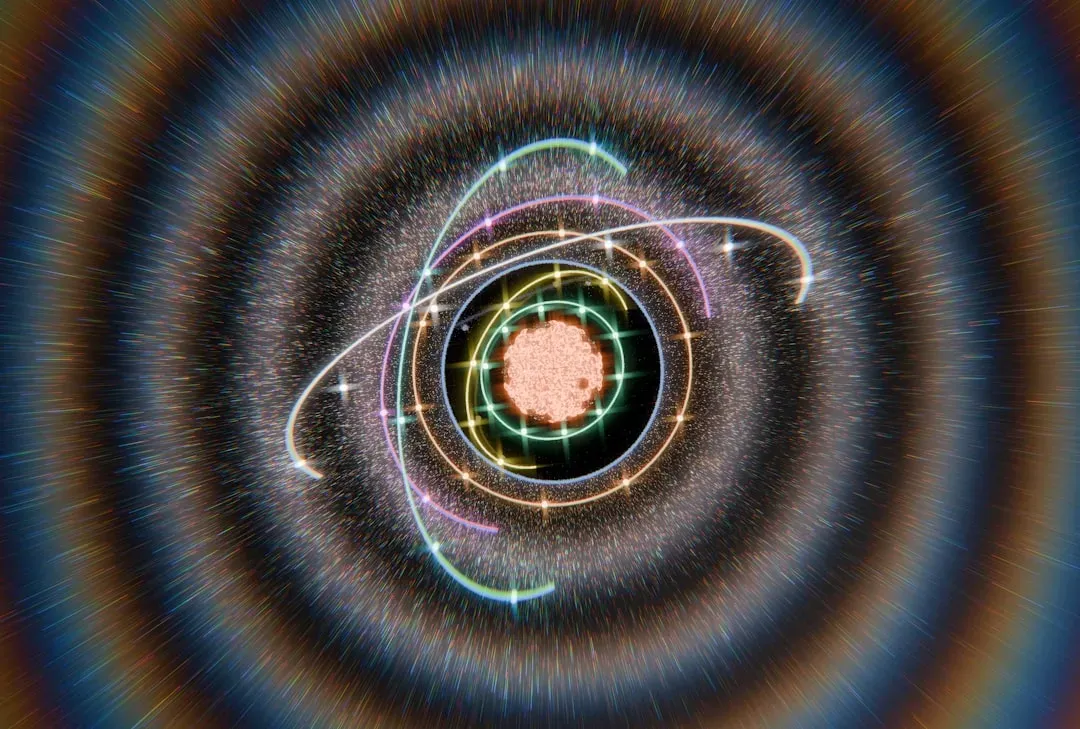
One of the humbling conclusions of modern physics is that matter is incredibly durable on human timescales. Protons, the main building blocks of atomic nuclei, appear to be so long‑lived that for all practical purposes they can be treated as permanent. Long after your body has broken down, those protons, along with your neutrons and electrons, will still exist, rearranged into new molecules, new rocks, new ocean water, perhaps even new living beings. In that sense, nothing about you truly “vanishes”; it only stops being arranged in the pattern you recognize as yourself.
This can sound bleak or beautifully liberating, depending on your mood. Personally, I find it strangely comforting that the universe wastes nothing. The atoms that make up your heart may one day help form the pigment of a leaf, the shell of a sea creature, or the crystalline structure of a mountain. Your individual consciousness is fleeting, yes, but the matter that allowed it to bloom continues its journey. You are not an isolated event; you are a chapter in a book the universe has been writing since the first stars formed, and the writing will go on after you as confidently as the tide keeps returning to the shore.
Conclusion: A Tiny Life with Cosmic Edges
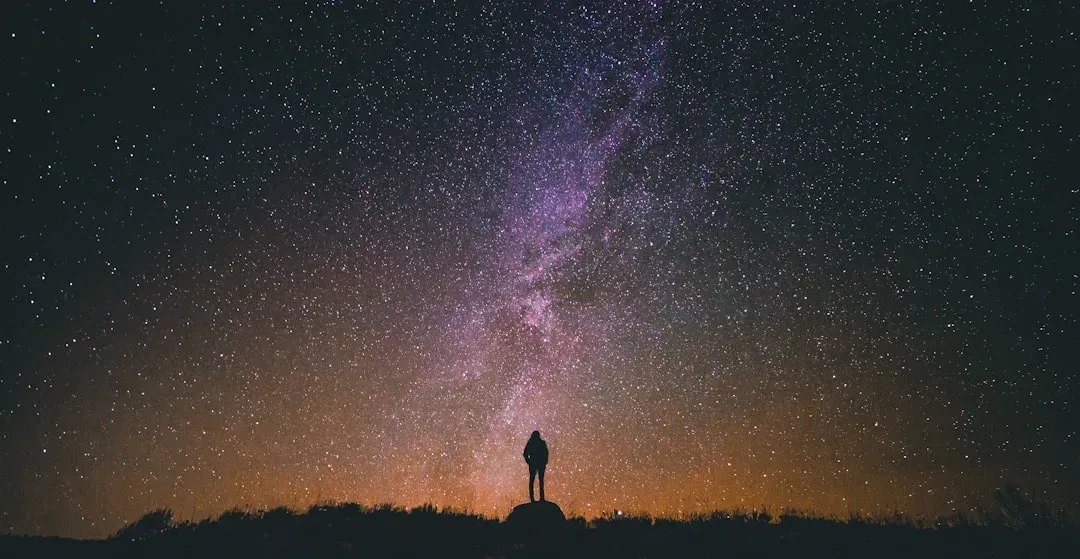
If you take the science seriously, it forces a quiet but radical shift in how you think about yourself. You are not sitting on top of nature looking down; you are made of it, through and through. The same particles that once belonged to ancient oceans, stone, and extinct creatures are now carrying your emotions, your thoughts, and your arguments about what to watch tonight. That does not make you insignificant. If anything, it means that the universe has become briefly self‑aware in the specific configuration that is you, and that feels like a privilege rather than an accident.
I think we waste a lot of time chasing the illusion of solidity – trying to freeze ourselves, our reputations, our stuff – when the deeper truth is that we are currents, not statues. Your atoms will move on; you do not get to vote on that. What you do get to choose is how you use this moment while they are assembled as your body and your mind. Will you treat your life as a disposable glitch, or as a rare window where ancient stardust gets to care, to create, and to be kind before it drifts away again?