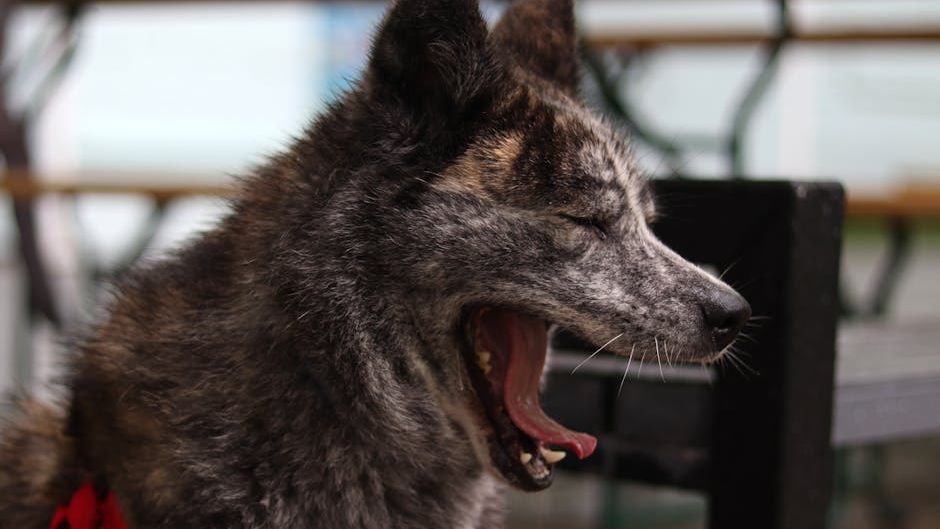

You probably do it without even noticing: you yawn, your dog looks at you, and a second later their mouth stretches into a big sleepy arc. It feels oddly intimate, almost like a secret signal that says, we get each other. For years, scientists shrugged this off as a cute coincidence, but then the data started to pile up and things got interesting: dogs do seem to “catch” human yawns, and that puts them in a very small club of animals that might share genuine emotional contagion with us.
At the same time, the story is nowhere near settled. Some studies find clear evidence, others come up empty, and the more researchers look, the more complicated it gets. Is your dog truly feeling a faint echo of your tiredness or stress, or are they just superb readers of tiny movements in your face? In a world where we love to project human feelings onto our pets, yawning has become a surprisingly serious scientific battleground over what empathy really is, and whether two different species can share it in a measurable way.
Why Contagious Yawning Is a Big Deal in Neuroscience

Contagious yawning sounds like the world’s most boring behavior, but to neuroscientists it is a kind of behavioral fingerprint of empathy. When one individual yawns and another automatically responds with a yawn of their own, it suggests that something in the brain is mapping the other’s internal state onto itself. In humans, this has been linked to brain systems involved in social mirroring and perspective taking, which are also implicated in how we understand and feel for others.
What makes this behavior so compelling is that it tends to emerge only in socially complex animals. In people, children usually do not show robust contagious yawning until they reach an age where basic social understanding is in place. In adults, individuals with certain conditions that affect social processing, like some forms of autism, often show reduced contagious yawning. So when contagious yawning shows up in another species, especially in response to humans, it is like a bright neon sign saying: there might be more going on here than just reflexes.
Dogs: The Unlikely Specialists in Human Emotions

Dogs are not just another animal in this story; they are arguably the species most closely tuned to human social life. Over thousands of years of domestication, they have been selected, consciously and unconsciously, for traits that made them better companions: sensitivity to human gestures, eye contact, and vocal tone. Many experiments have shown that dogs follow pointing gestures, look back at people when they are confused, and seem to pick up on our emotional cues in ways even chimpanzees sometimes do not.
Living in our homes, sleeping on our couches, and navigating our weird human schedules has turned dogs into professional human-watchers. They learn our micro-routines, from the sound of the fridge door to the rustle of car keys, and they often anticipate what we are about to do before we do it. In that context, a dog catching your yawn is not happening in a vacuum; it is nested inside a long history of co-evolution and day-to-day learning, where reading your face can literally shape their survival and comfort.
The Experiments: Do Dogs Really Catch Human Yawns?
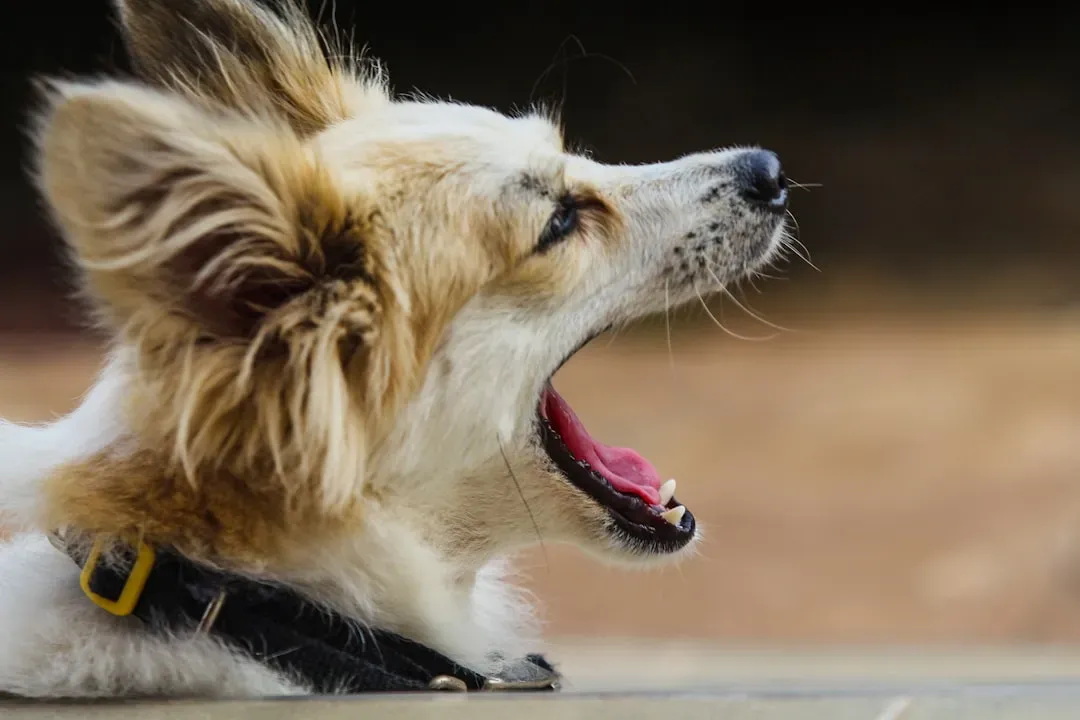
To move beyond cute anecdotes, researchers have put yawning to the test in controlled experiments. Typically, a person sits in front of a dog and alternates between genuine yawning and some neutral mouth movements, like opening and closing the mouth without the full yawn pattern. The scientists then count how often the dog yawns in each condition, sometimes also filming and coding the behavior frame by frame to reduce bias.
Several studies have reported that dogs yawn more often after seeing a human yawn compared to seeing similar but non-yawn movements, suggesting true contagious yawning. Interestingly, some findings suggest that dogs are more likely to “catch” a yawn from a familiar person, such as their guardian, than from a stranger. That social bias mirrors what we see in humans, where people tend to contagious-yawn more in response to friends and family than to unfamiliar faces, and it is one of the reasons this phenomenon has been linked to emotional closeness rather than simple reflexes.
Emotional Contagion: What It Is (and What It Is Not)

Emotional contagion is the process where one individual’s emotional state automatically triggers a similar state in another, often without conscious effort. Think about how laughter can spread across a room, or how tension in a crowded subway car makes everyone a bit more on edge. In neuroscience, emotional contagion is sometimes framed as a basic, low-level form of empathy: you are not necessarily understanding the other person’s situation in detail, but your brain and body are resonating with their mood.
Crucially, emotional contagion is not the same thing as full-blown empathy or compassion. It does not require language, complex reasoning, or even self-awareness; it can be as simple as your nervous system echoing someone else’s arousal level. When people say dog yawning is one of the few documented cases of emotional contagion across species, what they really mean is that it might reflect this basic emotional resonance, not that your dog is running a detailed internal narrative about your day. The bar is lower, but still remarkable if a different species can meet it.
Why Neuroscientists Are Still Arguing About Dog Yawns

Despite some striking results, the scientific picture is not unanimous, and that is where the debate heats up. Some studies have failed to find a strong contagious yawning effect in dogs, or have found it only under very specific conditions. In science, inconsistent results are a red flag that either the effect is small, the methods differ in important ways, or other factors like stress, environment, or prior training are muddying the waters.
There is also a bigger philosophical question underneath: does catching a yawn really prove emotional contagion, or could it be a more mechanical mimicry? Critics argue that dogs might simply be imitating a familiar facial pattern they have seen often, without any shared feeling being involved. Supporters counter that even in humans, we cannot peel behavior and emotion completely apart, and that the social biases in dog yawning (toward familiar humans) are hard to explain without at least some emotional component. The result is a lively, ongoing argument where both sides have decent points.
Other Animals That Yawn Together (And Why Dogs Still Stand Out)
Dogs are not the only animals known to show contagious yawning. Studies in primates like chimpanzees and bonobos have found that these species can catch yawns from other members of their group, and in some cases even from humans. There is also evidence of contagious yawning in certain birds and perhaps in some domesticated animals, though the data there is thinner. All of this suggests that contagious yawning is not uniquely human, but tied to social living more broadly.
What makes dogs special is that they seem to bridge a species gap in a way few others do. Chimpanzees and humans share a relatively recent common ancestor, so some shared behaviors are not surprising from an evolutionary standpoint. Dogs, on the other hand, diverged from our lineage far earlier, yet they now live inside our social world as if they were honorary humans. If they truly experience emotional contagion with us, that would be one of the clearest signs that evolution and domestication can sculpt interspecies emotional connections, not just in-group ones.
What Your Dog’s Yawn Might Really Mean in Everyday Life

From a practical, day-to-day perspective, your dog yawning after you might be a blend of several things at once. Yawning in dogs can signal tiredness, mild stress, or social tension relief, depending on the context. If you are yawning after a long day and flopping onto the couch, your dog might be genuinely sleepy too, and your yawn becomes a subtle cue that it is wind-down time, layered on top of their own drowsiness.
In other situations, your yawning face might just be a familiar, slightly odd signal they have learned to associate with a particular mood or activity. When I first noticed my dog reliably yawning right after I did, I caught myself testing it like a mini experiment while working late on my laptop. Sometimes she mirrored me immediately, sometimes not at all, which honestly made it feel less like a magical connection and more like what it probably is: a mix of genuine social attunement, individual quirks, and the randomness of real life, rather than a perfect emotional mirror on command.
The Opinionated Bottom Line: A Real Bond, Even If the Science Stays Messy
My own take is that we are too quick either to over-romanticize or to over-dismiss what is going on between humans and dogs. No, a contagious yawn from your dog is not proof that they fully grasp your inner world in the way another person might. But it also seems too harsh to claim it is just empty mimicry with no emotional flavor at all, especially given how many lines of research show that dogs tune into our voices, faces, and moods in surprisingly sophisticated ways. The truth probably sits in the middle: a genuine, but low-level, emotional resonance layered with learning and habit.
In that sense, the ongoing scientific debate is not a buzzkill; it is a sign that this question is worth taking seriously. Whether future studies end up downgrading dog yawns to a minor curiosity or upgrading them to a flagship example of cross-species empathy, the deeper reality does not change much for most of us: we live with animals who pay attention to us, react to us, and sometimes seem to breathe in rhythm with our lives. If a simple yawn can capture even a sliver of that shared experience, it is worth wondering about a little longer. When your dog’s jaw stretches wide right after yours, do you really care whether the lab has settled the argument yet?