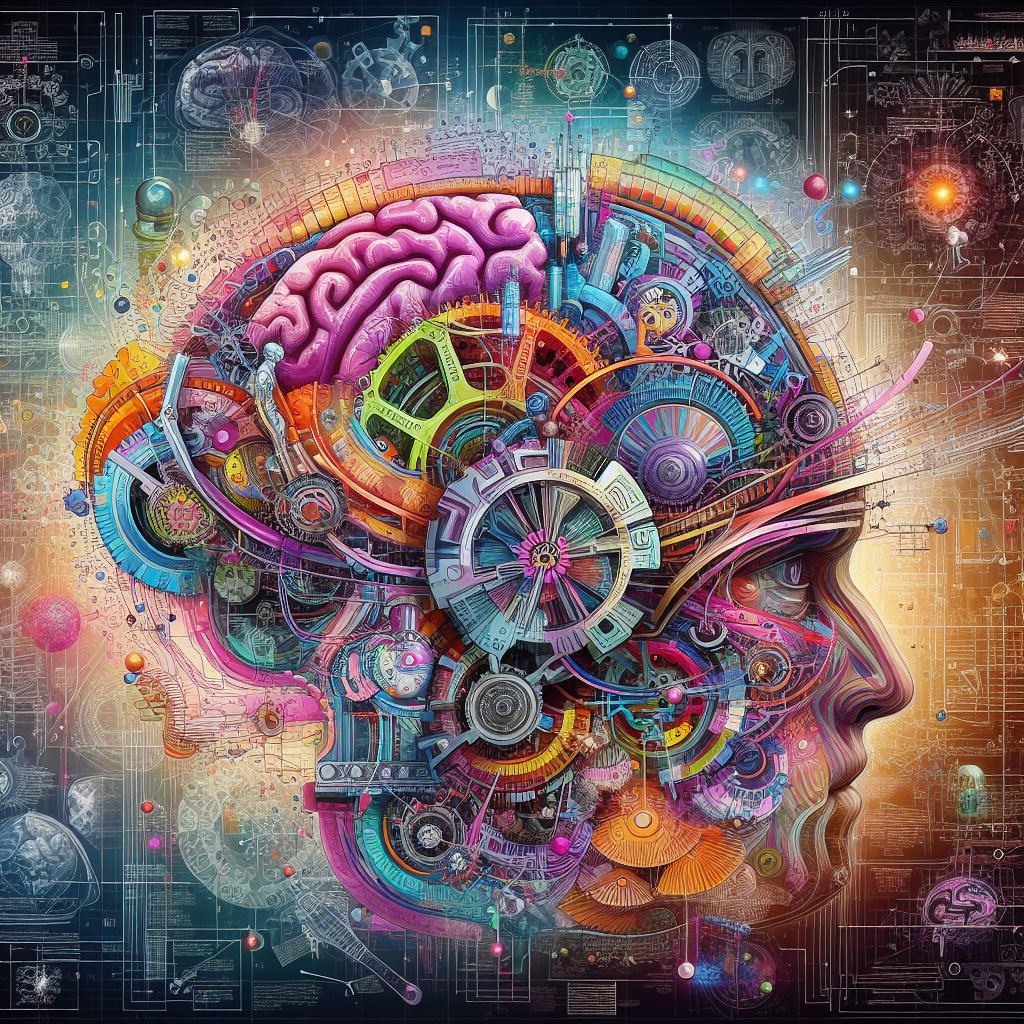

If you’re like most people, you move through your day with a running commentary in your head. It judges, plans, replays old arguments, rehearses new ones, and occasionally delivers a surprisingly sharp one-liner in the shower. It feels so intimate and constant that it is very easy to assume that this inner narrator is you – the core, essential self. But modern neuroscience is quietly saying something a bit unsettling: that voice is not the same thing as your conscious thought, and certainly not the whole of your mind.
When I first started digging into this research, I had a slightly vertigo-like feeling, the same kind of jolt you get when you realize a camera has been filming you from a different angle the whole time. If the voice is not “me,” then who is watching it talk? And why does that matter for our everyday lives, our decisions, even our sense of responsibility? The more scientists map the brain systems behind language, awareness, attention and self-reflection, the clearer it becomes that the story we tell ourselves about “being a mind in a head” is far too simple. Once you see that gap between narration and consciousness, it becomes hard to unsee – and it changes how you relate to your own thoughts.
The Inner Voice: What It Is (and What It Definitely Is Not)

At a basic level, what we call the inner voice is a form of inner speech: you simulate language silently in your mind, using almost the same networks that would fire if you spoke out loud. Brain imaging studies consistently show that when people report “talking to themselves in their head,” language areas like Broca’s region and parts of the temporal lobe light up, as if the brain is whispering to itself. This is not mysterious or magical; it is the nervous system doing one of its favorite tricks – using existing machinery (speech and hearing circuits) for an internal, purely mental rehearsal.
But here’s the key part: that inner speech is just one mental process among many, and plenty of conscious experiences happen with little or no inner narration. You can drive a familiar route, cook a routine meal, or play a well-practiced chord progression on a guitar while your inner voice is off obsessing about a text you sent last week, and the actions still unfold smoothly. You can be vividly aware of a sunset, a knot in your stomach, or a gut hunch about someone without silently phrasing any of it into words. Your inner voice is more like a sports commentator than the athlete, more like the news anchor than the world they describe – it provides a running story, but it isn’t the whole game.
Consciousness Runs Deeper Than Words in Your Head

Consciousness, as neuroscientists usually use the word, is not the stream of sentences you hear in your mind; it is the broader field of awareness in which sights, sounds, emotions, body sensations, and yes, thoughts all appear. Studies of patients with language impairments, such as aphasia after stroke, make this obvious. People can lose the ability to speak fluently or to string together complex grammar, yet remain clearly conscious, capable of noticing, deciding, and experiencing. Their awareness is damaged in some ways, but it does not vanish just because their inner monologue becomes clumsy or fragmented.
On the flip side, much of what your brain does never shows up in that conscious field at all. Visual systems extract depth, motion, and edges; emotional systems assess risk and reward; motor systems plan movements and postures – all mostly outside the spotlight of awareness. Experiments where researchers present stimuli too quickly to be consciously noticed still reveal measurable brain changes and behavior shifts, suggesting a huge iceberg of nonverbal, non-narrated processing beneath the surface. The inner voice is like a small, chatty boat cruising on top of that ocean, commenting on whatever bits of the waves it happens to notice.
Two Different Brain Networks: The Narrator vs. the Observer
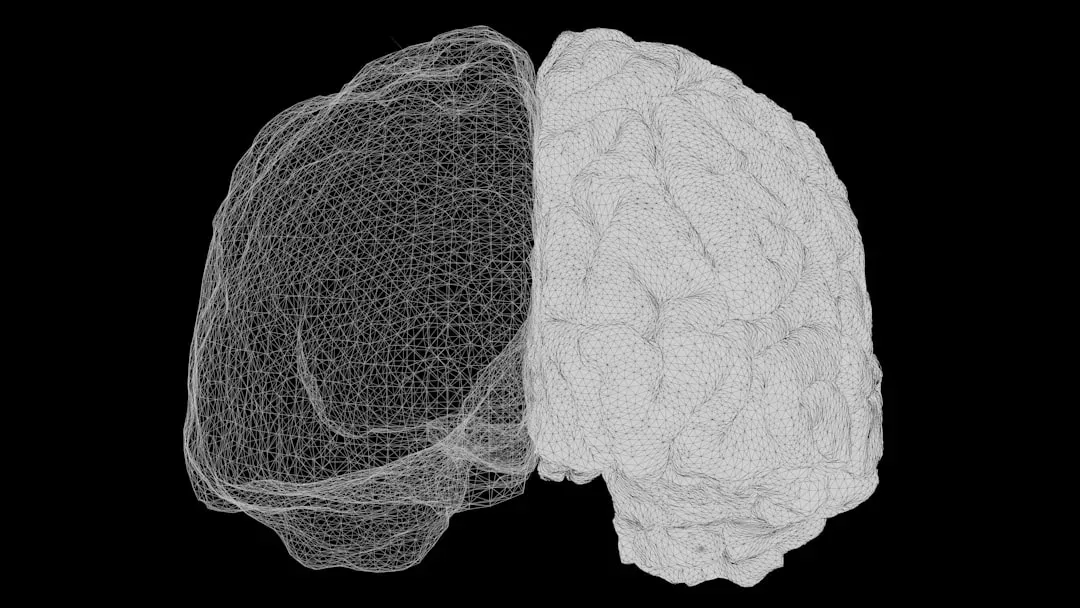
One of the most interesting developments in brain science over the past two decades has been the mapping of large-scale networks that turn on and off together. The inner narrator is closely tied to what’s called the default mode network, a set of regions (especially in medial prefrontal and parietal areas) that activate when you are not focused on an external task. This network lights up when you daydream, remember the past, imagine the future, or think about yourself and other people – exactly the kind of activities that feel like narrative, like life as a story with you at the center.
By contrast, when you place your attention on the present moment – on your breathing, on a demanding puzzle, on a difficult conversation – other networks ramp up, especially those related to attention and sensory processing. Meditation studies repeatedly find a sort of push-pull pattern: as people train in nonjudgmental awareness, default-mode activity often quiets, while attention and interoceptive (body-sensing) systems become more prominent. This has led some researchers and contemplative teachers to talk not just about the “narrator” but also the “observer” or “witness,” the part of the mind that can notice the narrative without being entirely fused with it. Those may not be crisp anatomical labels, but they capture a real functional divide: one network telling stories about your life, another simply watching what is actually happening.
When the Inner Voice Goes Wrong: From Overthinking to Psychosis

For many people, the inner narrator is less like a friendly guide and more like a harsh critic or a catastrophizing doomsayer. Excessive, repetitive self-talk is a well-known feature of anxiety and depression. Rumination – spinning the same negative thoughts over and over without resolution – appears to be tightly linked with persistent default-mode activity, especially in parts of the brain that represent self-focused information. From the inside, this feels like you are “just thinking,” but functionally it can be more like being stuck listening to a bad podcast you did not choose, one that keeps misrepresenting the facts and predicting disaster.
On the more extreme end, disrupted inner speech is a major player in certain forms of psychosis. Some people with schizophrenia experience auditory verbal hallucinations – hearing voices that comment on their actions or issue commands. A leading hypothesis is that these experiences involve misattributed inner speech: the brain generates self-talk but fails to tag it as “mine,” so it is experienced as an external voice. That does not mean that all inner voices are pathological, of course, but it does underline that narration is a brain process that can malfunction, be distorted, and be experienced differently from one person to another. The narrator is not sacred or infallible; sometimes, it is simply wrong.
Speechless but Conscious: What Brain Damage and Development Tell Us

When you look at how consciousness appears and changes across a lifetime, it becomes clear that language comes late to the party. Babies are obviously conscious long before they can talk; they track faces, prefer familiar voices, show surprise when expectations are violated, and display clear emotional reactions. They do not have an inner monologue in the adult sense, yet they are aware and responsive. As children grow, inner speech gradually becomes more elaborate and more tightly woven into problem-solving, planning, and self-control, but it builds on a foundation of nonverbal awareness that was already there.
The same pattern shows up, in a different way, in neurological patients who lose language abilities. People with severe aphasia may not be able to formulate complex sentences, either outwardly or inwardly, yet they can show rich emotional lives and meaningful preferences. They may struggle to explain what they are thinking, but that is not the same as having no thoughts at all. This is an uncomfortable reminder for those of us who live heavily in our heads: your awareness is not limited to what you can put into words. The silent layer underneath the sentences is not a blank; it is a living, active part of who you are.
The Quiet Power of Nonverbal Thought: Intuition, Imagery, and Felt Sense
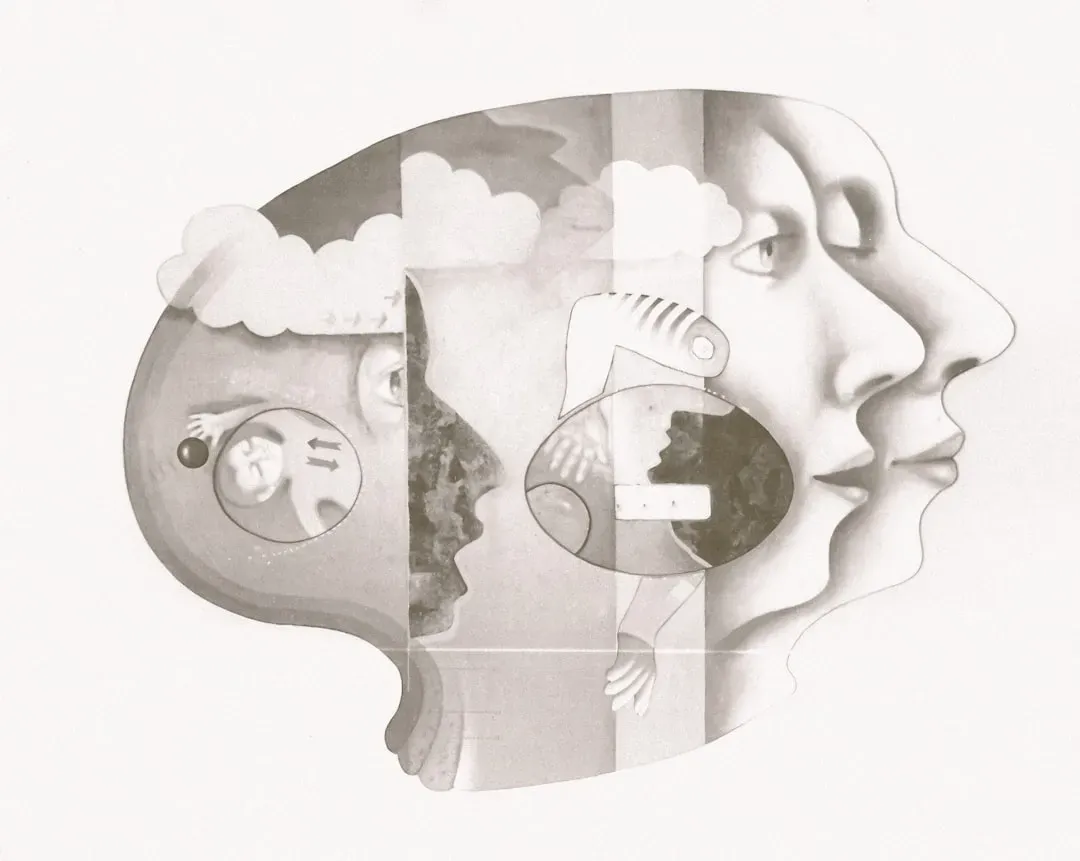
Think about how often you “just know” something without being able to explain why. You walk into a room and feel the tension before a single word is spoken, or you meet someone and instantly sense they are trustworthy, or not. These intuitions are not magic; they are rapid, pattern-based judgments built from years of experience. Crucially, they are often nonverbal at first – a gut tightening, a visual impression, a shift in mood – and only later does the inner narrator come in and try to explain them with a story. Sometimes that story is accurate. Sometimes it is a neat little lie that makes you feel more in control.
Visual imagery is another powerful form of thinking that does not need language to be real. When a chess master reports “seeing” the board several moves ahead, or a designer mentally rearranges a room’s furniture, they are not silently describing every detail in sentences. Their minds are manipulating shapes, possibilities, and relationships in a largely nonverbal format. Many people with aphantasia, who cannot form vivid mental images, can still think perfectly well using other modes, which tells you there are multiple “languages” of thought beyond spoken words. Your inner voice is just one narration track layered over a far more complex movie.
So Who Is “You”? Rethinking the Self Beyond the Narrator

Here is where things get existential: if consciousness is more than inner speech, and if huge chunks of your mental life are nonverbal, then who exactly is the “you” that you take yourself to be? Most of us, almost by default, identify with the voice in our head. We treat it as the board of directors, the judge, the author of our choices. But when you start to see that voice as a limited, sometimes biased commentator, it becomes harder to give it absolute authority. The self might be better understood as the whole living system – body, feelings, unconscious habits, quiet perceptions – not just the talking part that claims the spotlight.
Some theories in neuroscience also suggest that the brain is continually constructing a model of “self” to help predict and regulate the body and its interactions with the world. In that view, the inner narrator is like a spokesperson or press secretary for a much larger, mostly silent organization. It explains decisions after the fact, smooths over contradictions, and maintains a coherent storyline that can be shared with others. That storyline is not fake, but it is selective and simplified. When you cling too tightly to it, you may confuse the press release for the messy, complicated reality of who you actually are.
Practical Takeaways: How to Relate Differently to Your Inner Voice

Once you really internalize that your inner voice is not the same as consciousness, a surprising kind of freedom opens up. You can start to treat self-talk as one data stream among many, rather than the unquestioned truth. Practices like mindfulness meditation, body scanning, or simply pausing to notice sensations before jumping into analysis help you shift attention from the narrator to the broader field of awareness. You begin to see thoughts as events that happen in the mind, not orders that must be obeyed.
In everyday life, this can look surprisingly down-to-earth. When your inner critic starts replaying a mistake from last week, you can mentally label it as “the narrator trying to protect me from future pain” instead of “proof that I am a failure.” When facing a tough decision, you might listen not only to the pros-and-cons monologue, but also to your bodily cues – tension, ease, energy – and the nonverbal sense of whether something fits. Over time, this changes the relationship between you and your mind: you are less the hostage of your thoughts and more the host, able to decide which voices get the microphone and which can quietly pass by.
Conclusion: You Are More Than the Voice You Hear

Personally, I find it both unsettling and deeply relieving that the voice in my head is not the sum total of who I am. Unsettling, because it forces me to admit that my own explanations and stories are partial and sometimes flat-out wrong. Relieving, because it means I am not condemned to be whatever that voice says on a bad day. Neuroscience does not yet have a final theory of consciousness, but it is already clear that inner speech is a narrow slice of a much richer, stranger, and more layered mind.
In my view, the big mistake of modern life is that we over-identify with the narrator and under-appreciate the quieter forms of knowing that do not always come wrapped in words. We worship clever self-talk and quick takes, but neglect the slow signals from the body, the hunches formed from experience, the simple presence of just seeing and feeling without immediately naming. If there is a practical invitation here, it is this: start treating your inner voice as a tool, not a tyrant, and let the rest of your mind have a say in who “you” are. The next time that mental commentator starts narrating your life, will you automatically believe it – or will you notice it, smile a little, and listen for the deeper silence underneath?