
You know that electric rush that races up your spine when a song suddenly explodes into a chorus, or when a single note hangs in the air a little longer than you expected? You probably call it “chills” or “goosebumps” and assume it just means you’re being extra emotional. Neuroscience says there’s more to it than that. What you’re feeling has a name, a map in your brain, and a surprisingly precise trigger pattern. This isn’t just your heart being dramatic. It’s your nervous system firing a highly specific response that scientists can see on brain scans, measure in your skin, and even partially predict from the way a piece of music is written. Once you understand what’s really happening, those shivers stop feeling random and start looking like one of the coolest things your brain does for fun.
The Scientific Name For Your Music Chills: Frisson

That wave of tingles you feel when the music hits just right is called frisson, a French word that roughly means shiver or thrill. In neuroscience and psychology, frisson refers to those sudden, brief, physical chills or goosebumps you get in response to rewarding stimuli like music, powerful speeches, film scenes, or even a perfect plot twist. You’re not imagining it or being melodramatic; frisson is a documented psychophysiological event with a clear pattern in your body and brain. ([en.wikipedia.org](https://en.wikipedia.org/wiki/Frisson?utm_source=openai)) During frisson, your skin may tingle, your hair can stand on end (that’s piloerection), your pupils may dilate, and you might feel a cold rush running along your neck, shoulders, back, or arms. Researchers have even tracked changes in heart rate, breathing, and facial muscles at the exact moments people report chills. In other words, frisson is not simply “feeling moved”; it is your nervous system flipping a very old switch that once helped your ancestors survive, and that you now mostly use when a song absolutely destroys you in the best way. ([pubmed.ncbi.nlm.nih.gov](https://pubmed.ncbi.nlm.nih.gov/11573015/?utm_source=openai))
Why Neuroscientists Say Frisson Is a Neurological Event, Not Just Emotion

You might think chills are just what happens when your emotions get too big to stay inside, but the research paints a more specific picture. Frisson shows up as a distinct, repeatable pattern of neural activity in regions that process sound, expectation, reward, and bodily state. That means what you feel as “goosebumps from music” is a coordinated brain-body event, not a vague emotional blur. In lab settings, scientists can literally watch blood flow and activity shift in particular brain regions at the exact second you press a button to say, “There, I just got chills.” ([pmc.ncbi.nlm.nih.gov](https://pmc.ncbi.nlm.nih.gov/articles/PMC58814/?utm_source=openai)) Emotion is definitely involved, but it’s not the full story. Instead of being a simple emotional overflow, frisson behaves more like a specific reflex your brain triggers when certain conditions in the music line up with your expectations and reward wiring. Think of it less like you being “extra sensitive” and more like your nervous system running a precise program: detect a certain kind of pattern or surprise in the sound, route it through your reward circuits, flip your body into high-alert pleasure mode, and leave you sitting there covered in goosebumps wondering what just happened. ([pmc.ncbi.nlm.nih.gov](https://pmc.ncbi.nlm.nih.gov/articles/PMC4107937/?utm_source=openai))
What Happens in Your Brain When a Song Gives You Chills
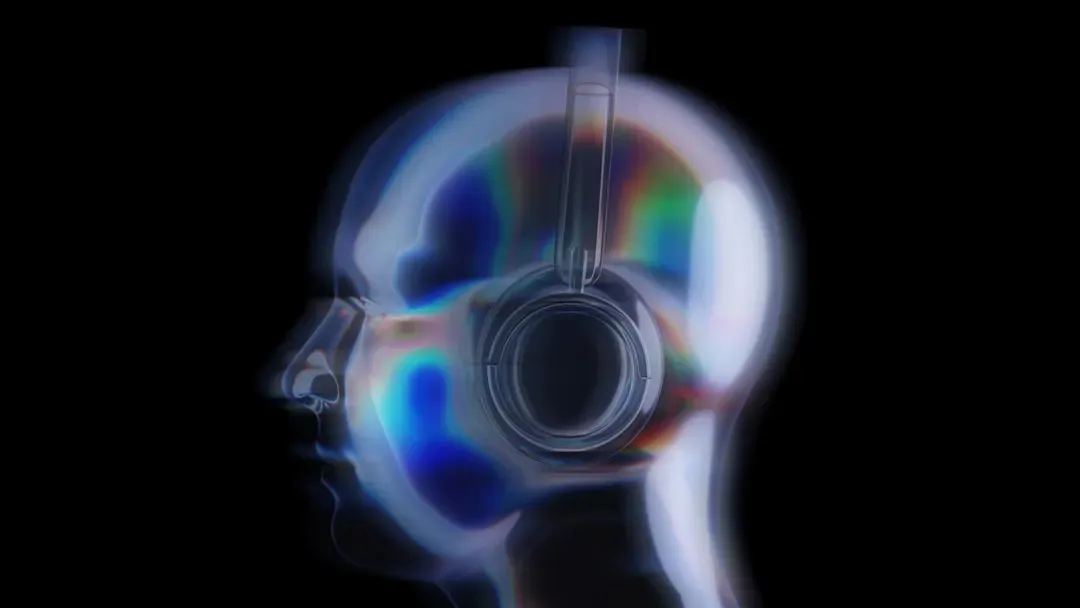
Under the hood, frisson lights up several key brain areas at once. Your auditory cortex handles the sound itself, tracking pitch, rhythm, and timbre. At the same time, regions involved in emotion and bodily state – like the insula, anterior cingulate, and parts of the basal ganglia and thalamus – come online, integrating what you hear with how you feel internally. This is why a single swell in the strings can feel like a whole-body experience instead of just “a nice note.” ([pubmed.ncbi.nlm.nih.gov](https://pubmed.ncbi.nlm.nih.gov/31812503/?utm_source=openai)) Crucially, frisson strongly engages your reward system, especially areas tied to dopamine release that are also active when you eat, fall in love, or anticipate something meaningful. Studies using brain imaging show increased blood flow and neurotransmitter activity in these reward circuits when people experience intense musical chills. Your heart rate, breathing, and muscle tension can change right along with it, confirming that your nervous system is not just observing the music but physically reacting to it as a highly rewarding stimulus. ([pmc.ncbi.nlm.nih.gov](https://pmc.ncbi.nlm.nih.gov/articles/PMC58814/?utm_source=openai))
Dopamine, Opioids, and the Pleasure Chemistry Behind Frisson

When you hit that goosebump moment in a song, your brain is essentially paying you in its favorite currency: neurochemicals. Dopamine, the neurotransmitter linked with motivation, learning, and reward prediction, spikes around the build‑up and release in music that triggers frisson. Interestingly, the anticipation phase – before the drop or before the big vocal entry – can be especially rich in dopamine activity, as your brain predicts a reward and leans forward, so to speak, waiting to see if the music delivers. ([pmc.ncbi.nlm.nih.gov](https://pmc.ncbi.nlm.nih.gov/articles/PMC58814/?utm_source=openai)) More recent work suggests your brain’s opioid system also gets involved when music gives you chills. These natural opioids help modulate pleasure and pain relief, which might explain why an intense frisson can feel both comforting and overwhelming at the same time. You are not just passively hearing a nice melody; you are bathing your nervous system in a chemical mix that reinforces the idea that these sounds matter, feel good, and are worth seeking out again. That’s part of why you keep replaying that one part of the song that always gives you the shivers. ([neurosciencenews.com](https://neurosciencenews.com/music-chills-opioids-neuroscience-28657/?utm_source=openai))
Why Only Some Songs (and Some People) Trigger Frisson

You have probably noticed that not every song can hit you with chills, and some people in your life might rarely experience frisson at all. That is not just personal taste; there are measurable differences in both how music is structured and how individual brains are wired. Pieces that trigger frisson often include tension and release, unexpected harmonic shifts, dynamic changes, or sudden entries of new instruments or voices – moments that violate your prediction just enough to feel surprising but still meaningful. Your brain loves to be right, but it also loves to be delightfully wrong in a safe way. ([pubmed.ncbi.nlm.nih.gov](https://pubmed.ncbi.nlm.nih.gov/16597800/?utm_source=openai)) On the listener side, studies have found that people who frequently feel chills often show stronger connectivity between auditory regions and areas involved in emotion and self‑referential thought. In everyday terms, your brain might be especially good at linking what you hear with your inner world – memories, imagery, values, and identity. That could be why the same song leaves one person unmoved and another person quiet, teary, and covered in goosebumps. It does not mean one of you is “too sensitive” or “not deep enough”; it just means your brains are wired to prioritize different cues. ([snugscience.com](https://snugscience.com/articles/the-neurobiology-of-frisson-why-music-gives-you-the-chills?utm_source=openai))
How Music Tricks Your Prediction System Into Giving You Chills

At the core of frisson is a simple game your brain is constantly playing: prediction versus surprise. As you listen to music, your brain quietly predicts what note, chord, or rhythm will come next. When the music mostly follows those expectations but occasionally flips them in a meaningful way – like a sudden key change, a dramatic pause, or a soaring high note that arrives a beat late – you get a surge of arousal and attention. If that surprise feels rewarding rather than chaotic, your reward system joins in and the chill rolls down your spine. ([pubmed.ncbi.nlm.nih.gov](https://pubmed.ncbi.nlm.nih.gov/16597800/?utm_source=openai)) You can feel this most clearly in moments of build‑up: a long crescendo, a repeated phrase that finally resolves, or a subtle detail like a breath before a vocal line. Your brain treats those details as signals that something significant is about to happen, and it “ramps up” your arousal in advance. When the payoff lands – maybe a choir enters, the drums explode, or a melody suddenly opens up into a higher register – that careful tension snaps, and your nervous system rewards you with frisson. It is a bit like a roller coaster climb and drop, but played out through sound and expectation instead of metal and gravity. ([pmc.ncbi.nlm.nih.gov](https://pmc.ncbi.nlm.nih.gov/articles/PMC4107937/?utm_source=openai))
How Frisson Connects Your Body, Memory, and Identity

Even though frisson is a clearly defined neurological event, it does not happen in a vacuum. The songs that give you chills are often tied to your memories, your culture, your relationships, and your sense of self. A national anthem, a childhood lullaby, a track from your first heartbreak, or a theme song from a movie you love can all plug into your identity network. When the music hits a peak, your brain is not just processing sound; it is lighting up personal meaning, social bonds, and past experiences all at once, which amplifies the physical response. ([pmc.ncbi.nlm.nih.gov](https://pmc.ncbi.nlm.nih.gov/articles/PMC4107937/?utm_source=openai)) Your body reactions – goosebumps, lump in the throat, tears, a sudden change in breathing – are part of the same integrated pattern. Researchers argue that frisson should not be seen as just an after‑effect of emotion but as one of the ways your brain and body co‑create emotional experiences in real time. You might think you are having an emotion and then getting chills; in reality, the chills themselves may be one of the building blocks your brain uses to assemble what you later describe as “that song really moved me.” ([pmc.ncbi.nlm.nih.gov](https://pmc.ncbi.nlm.nih.gov/articles/PMC4107937/?utm_source=openai))
Can You Cultivate More Frisson On Purpose?
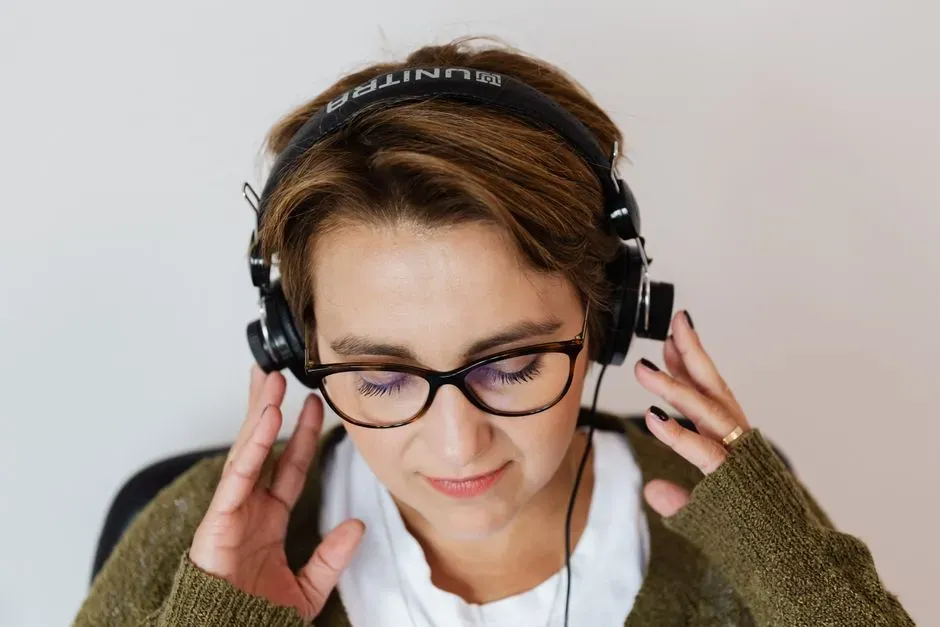
You cannot force frisson like flipping a light switch, but you can absolutely create conditions that make it more likely. Being fully present with the music – good headphones, minimal distractions, volume at a level that feels immersive rather than painful – helps your brain lock onto subtle patterns and surprises. Repeated listening also plays a role: as you get to know a piece, your prediction system becomes more accurate, which means the carefully placed deviations in the music can land even harder. That is one reason a song might suddenly start giving you chills after the third or fourth listen instead of the first. ([pubmed.ncbi.nlm.nih.gov](https://pubmed.ncbi.nlm.nih.gov/16597800/?utm_source=openai)) Your mood, personality, and openness to experience also matter. If you let yourself sink into the moment, engage emotionally with the lyrics or imagery, and give the music permission to matter, you are giving your brain more hooks to tie into its reward and emotion circuits. Personally, I have noticed that frisson shows up most when I stop multitasking and let the music be the main event instead of background noise. You might find that certain genres, singers, or instrumental textures reliably trigger chills for you; once you notice those patterns, you can intentionally seek them out and treat frisson as a kind of personalized, drug‑free high that your own nervous system supplies on demand. ([neurosciencenews.com](https://neurosciencenews.com/frisson-chills-music-9933/?utm_source=openai))
Conclusion: Your Chills Are Your Brain’s Signature, Not Just Your Feelings

The next time a song sends waves of goosebumps across your skin, you can know you are not just “in your feelings.” You are experiencing frisson – a specific neurological event that braids together sound processing, prediction, reward chemistry, body signals, memory, and identity into one brief, electrifying moment. Emotion is there, but it is riding on top of a very real, very measurable cascade in your brain and nervous system, one that scientists can see in scanners and you can feel as a shiver running down your spine. If anything, that makes the experience even more magical: your favorite songs are literally reshaping blood flow, neurotransmitters, and muscle activity for a few seconds at a time, just by arranging vibrations in the air the right way. So when a track hits so hard you have to close your eyes and catch your breath, you are not being dramatic – you are revealing how beautifully wired your brain is to turn sound into meaning, thrill, and full‑body awe. Which song do you think would show your frisson response most clearly if someone could put your brain in a scanner right now?