
You wake up, hit snooze, change your mind, and decide to get up after all. It feels like a tiny, ordinary act of free will, so obvious you barely think about it. Yet in neuroscience labs around the world, that everyday feeling is being poked, challenged, and in some cases, almost completely dismantled.
For decades, brain scientists have been asking a disturbing question: if the brain is just a physical machine, following biological rules, where exactly does your freedom to choose fit in? Some experiments suggest your brain starts preparing your “decision” before you’re consciously aware of it, while other research argues that this is an oversimplified reading of what the data really show. That tension has turned free will into one of the most heated, emotional, and fascinating battlegrounds in modern neuroscience.
The Strange Gap Between What We Feel and What the Brain Shows

Think about the last time you made a tough decision – changing jobs, ending a relationship, or even just deciding to order dessert. Subjectively, it feels like you weigh options, reflect, and then consciously choose. This inner sense of deliberate control is incredibly vivid; it feels like the core of who you are. Neuroscience, however, keeps finding ways in which your perception of the decision may be late to the party.
Experiments measuring brain activity often find that certain neural signals change before people report deciding to move a finger or press a button. That suggests part of what you call a “decision” might be shaped under the hood, before it becomes a conscious experience. Yet the feeling of authorship – the sense that “I did this” – remains very strong, even when scientists show that timing and causality are not as straightforward as they seem. The clash between felt freedom and measured brain dynamics is exactly where the controversy explodes.
The Classic Readiness Potential Experiments That Shook Free Will

Back in the late twentieth century, researchers started using EEG to record electrical activity from the scalp while people made simple voluntary movements. They found a slow build‑up of brain activity, known as the readiness potential, starting some hundreds of milliseconds before subjects reported deciding to move. That result quickly made headlines, because it seemed to show that the brain “decides” before you do.
On the surface, those studies looked like a direct hit against free will: if your brain is already preparing the action before your conscious mind “chooses,” then maybe your conscious choice is just an after‑the‑fact story. But the experiments used deliberately trivial tasks, like flexing a wrist whenever you feel like it, and the exact moment when you “decide” is hard to report accurately. Critics argue that it is risky to leap from such simplified set‑ups to bold claims about every meaningful decision in real life.
Are Brain Signals Really Predicting Your Choices, or Just Biasing Them?
More modern studies have tried to go further by using brain scanners and machine‑learning algorithms to “predict” which choice you’ll make before you are aware of deciding. In some tasks, patterns of brain activity let computers guess which button you will press a short time in advance, better than random guessing. It is tempting to see this as hard proof that your feeling of making a free choice is just a delayed spectator.
But those prediction accuracies are often modest and usually measured in highly controlled, artificial tasks with extremely limited options. Instead of showing that your decision is fully determined and fixed long before awareness, many neuroscientists think these signals may reflect shifting biases, tendencies, or partial preparation. In that view, the brain is constantly simmering with possibilities, and consciousness may still play an important, though not all‑powerful, role in settling the final outcome.
Conscious Will: Cause of Action or Just a Story After the Fact?

One of the toughest questions is whether conscious intention actually causes your actions or simply tags along as a commentary track. Some influential theories suggest that your brain initiates actions unconsciously and that your feeling of choosing is basically a narrative your mind constructs after the fact. This view can be unsettling, because it makes your inner experience of deciding feel like a beautifully convincing illusion.
Other researchers push back and argue that this goes too far. They point out that consciousness unfolds over time and interacts with ongoing brain activity, rather than flipping on in a single instant. In that slower, more process‑based view, your conscious awareness can shape how long you deliberate, when you abort a planned action, and how you learn from what you did. The feeling of will might not be a simple on‑off switch that either fully causes behavior or is completely fake; it may be a higher‑level control system that is real, but more indirect than our everyday intuition suggests.
Determinism, Randomness, and the Space Where Responsibility Lives

Beneath all the lab data sits a deeper philosophical tension: if the brain follows physical laws, is everything you do already fixed by prior events? A strictly deterministic view says that, given the state of the universe long ago, every firing neuron and every future action was built in. That sounds like a death sentence for free will and personal responsibility, at least on the surface, and it is why some people find these discussions so emotionally charged.
However, randomness alone does not save free will either. If a quantum event randomly “nudges” your neuron, that does not make you more in control; it just introduces noise. The interesting space is between rigid determinism and pure randomness, where complex systems – like brains – form feedback loops, self‑models, and long‑term goals. Many neuroscientists and philosophers argue that responsibility might live at this emergent level, even if every underlying event still obeys physical rules.
There is also a practical angle here: our legal systems, relationships, and moral instincts are all built around the idea that people could have done otherwise in some meaningful sense. Even if strict metaphysical freedom is impossible, we still need a working concept of responsibility that tracks things like intent, understanding, and capacity for self‑control. Neuroscience is starting to inform these debates, especially in cases involving brain damage, addiction, or developmental conditions, but it has not given a neat answer that everyone can agree on.
How Brain Disorders Complicate the Story of Free Will
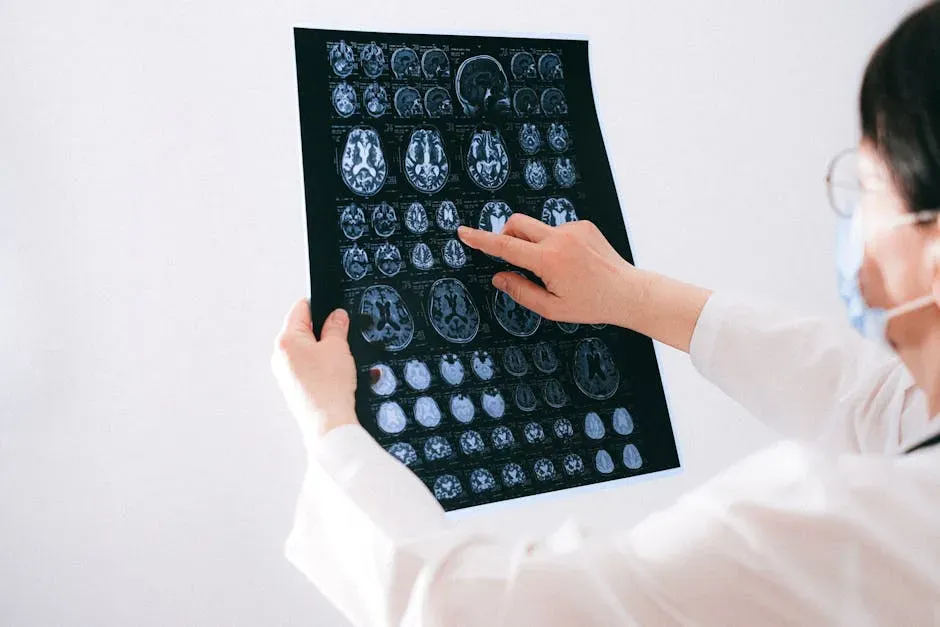
Conditions like obsessive‑compulsive disorder, Tourette syndrome, or certain frontal lobe injuries give a raw, sometimes heartbreaking window into how brain changes can warp a person’s sense of control. People may feel driven to perform actions they desperately do not want, or they may lose the ability to inhibit impulses that they know are harmful. It becomes painfully clear that the capacity to choose is not evenly distributed, and that biology can seriously constrain what someone can realistically do.
These cases force us to rethink easy slogans like “you always have a choice.” When parts of the brain that support planning, inhibition, and self‑awareness are damaged, the space of real options can shrink dramatically. At the same time, many individuals with such conditions still show effort, reflection, and moral concern, suggesting that free will may come in degrees rather than all or nothing. Neuroscience does not erase responsibility, but it does encourage a more nuanced, compassionate understanding of why some choices are brutally harder for some people than for others.
Why Your Brain Might Need the Feeling of Free Will, Illusion or Not

Even if scientists eventually concluded that free will, in some ultimate sense, does not exist, the feeling of agency might still serve a powerful purpose. Believing that your actions matter tends to support motivation, long‑term planning, and resilience when life gets rough. When people feel completely powerless, they often slip into passivity, depression, or learned helplessness, which can be devastating for mental health.
In that light, the sense of free will could be seen as an evolved feature of how the brain organizes behavior, not a bug or a simple hallucination. Your internal story of being a decision‑maker helps you integrate memories, goals, and values into a coherent self. Even if that story smooths over some of the messy underlying mechanics, it may be one of the reasons humans can commit to careers, relationships, and causes that stretch across years or decades. Stripping people of that sense too casually, based on oversold lab results, risks doing more harm than good.
How New Technologies Keep Raising the Stakes
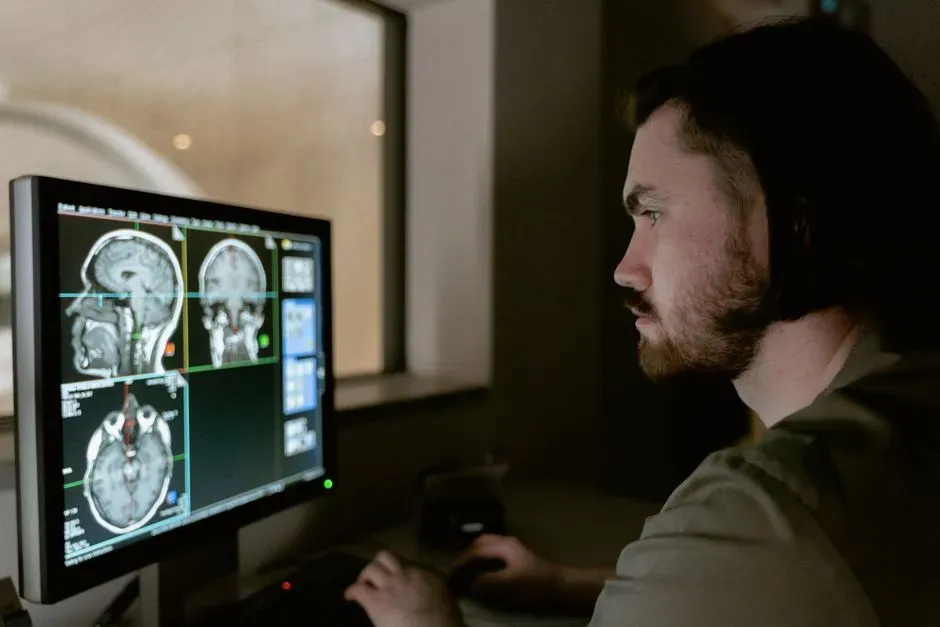
As neurotechnology advances, the free will debate is no longer just academic. Brain‑computer interfaces can already translate some patterns of neural activity into movement of a cursor or robotic arm, sometimes allowing users to act before they feel like they have consciously “decided” in the old‑fashioned way. This blurs the line between intention, preparation, and action even further, and forces designers to ask what kind of control feels natural and dignified to the user.
On top of that, machine‑learning tools can sometimes anticipate what you are likely to click, buy, or watch based on your past behavior, adding another layer of prediction on top of your biology. While that is not the same as reading your mind, it contributes to the uneasy feeling that our choices might be more steerable than we like to admit. The more external systems can nudge or forecast our behavior, the more urgent it becomes to clarify what kind of free will really matters and how to protect the parts of autonomy we care about most.
So, Do We Have Free Will? An Opinionated Middle Ground

If you are hoping for a clean yes or no, neuroscience is not going to hand it to you. The most defensible position right now, in my view, is that the folk idea of a completely unconstrained, ghost‑in‑the‑machine kind of freedom does not match what brains actually are. At the same time, the bleak claim that you are merely a helpless puppet of your neurons seems just as shallow and uninformed. The data point toward something more complicated: a layered system where unconscious processes, conscious reflection, and social contexts all shape what you end up doing.
Personally, I think the smartest move is to treat free will as a human‑scale concept that lives at the level of reasons, values, and self‑control, not at the level of individual spikes of neural activity. Your brain absolutely constrains you, but within those constraints, how you learn, reflect, and commit still matters enormously. That does not make you a magical exception to physics; it makes you a remarkably complex biological agent navigating a messy world. In the end, the most honest takeaway might be this: your freedom is real enough to be worth protecting and cultivating, even if it is not as absolute as your intuition once led you to believe. What kind of free will feels worth fighting for to you?