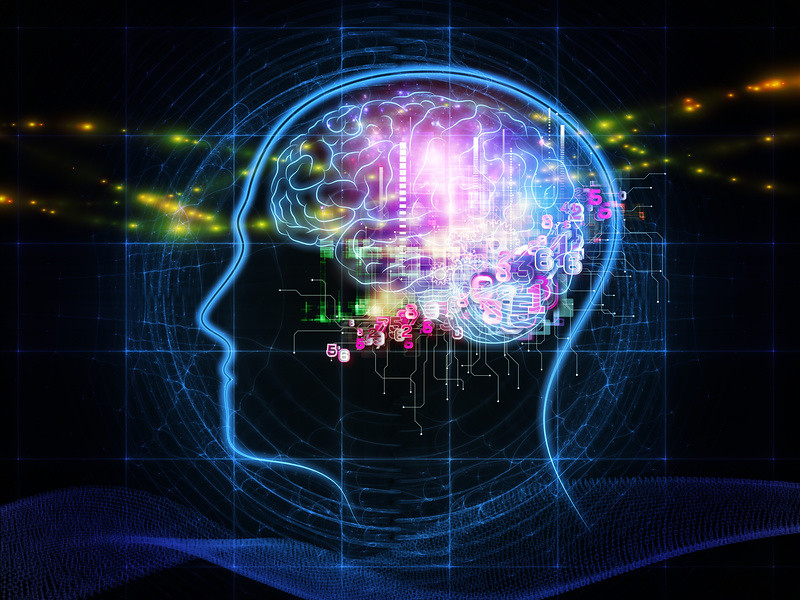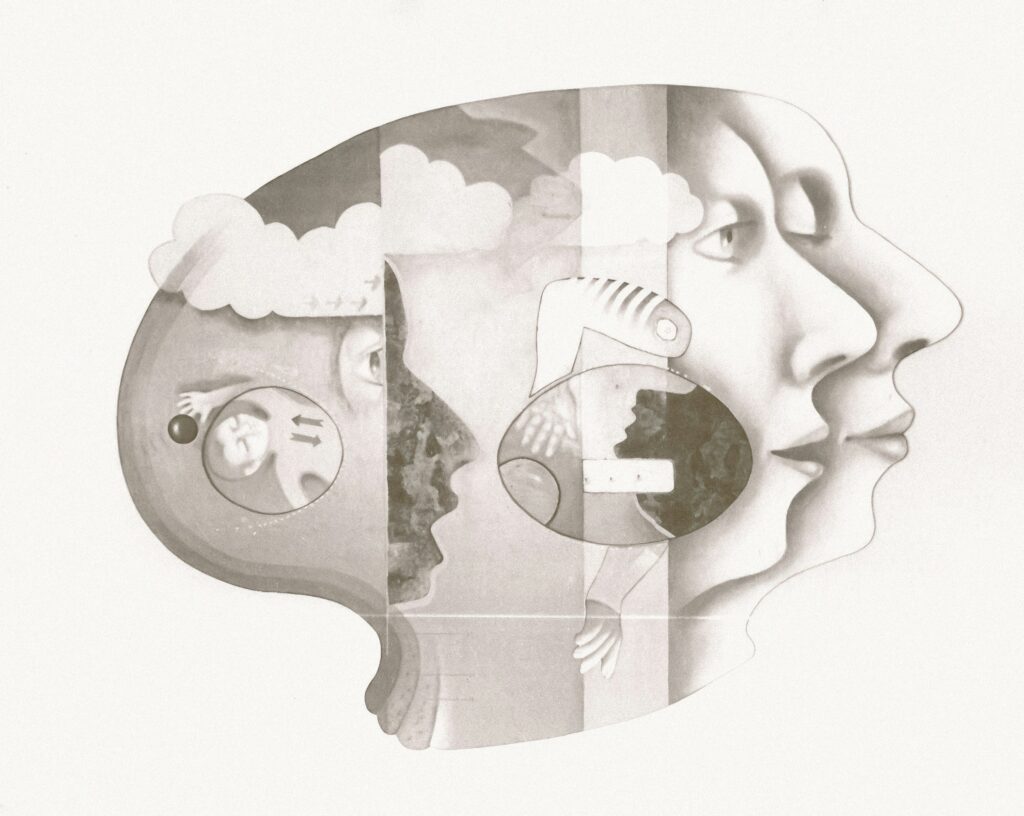

There’s a strange shiver that runs through you in those déjà vu moments, like your brain just lagged and the world briefly glitched. You look around, everything is normal, but you feel absolutely convinced you’ve been here before, heard this exact sentence, watched this exact gesture. It’s unsettling, a little spooky, and for a lot of people it feels almost supernatural, as if time just folded in on itself. Yet modern neuroscience is increasingly blunt about it: that eerie familiarity is not a message from the universe, it is your brain mislabeling a brand‑new experience as an old one in real time.
The wild part is that this “glitch” is not a sign that your brain is broken, but a by‑product of how astonishingly fast and efficient your memory system usually is. Instead of being evidence of past lives or psychic flashes, déjà vu looks more and more like a filing error in the machinery that tells you what’s new and what’s already in your personal history. Understanding that opens up a surprisingly deep story about how memory works, why it sometimes misfires, and what that can tell you about your own mind. Once you see déjà vu as a memory bug in an otherwise brilliant system, the feeling becomes less mystical – but in some ways, even more fascinating.
That Creepy Flicker of Familiarity: What Déjà Vu Really Feels Like
Almost everyone I know has a personal déjà vu story, and they all sound a bit haunted. You might be mid‑conversation, coffee in hand, when suddenly every detail feels pre‑recorded: the angle of the sunlight, the way someone laughs, the exact words you are about to say. For a brief moment, it’s as if your life is a movie you’ve accidentally watched twice, and you sit there wondering whether you missed a memo from reality. The feeling is intense but slippery; try to grab it too hard and it vanishes, leaving you with a sense of having brushed against something strange.
What’s so striking is that during déjà vu, you usually know, logically, that you have not actually lived this scene before. You recognize the mismatch: your gut screams “this is familiar,” while your rational mind insists “this cannot be.” That clash alone is enough to unsettle you, because we like to imagine our brain as one unified voice, not two systems arguing in the background. It’s exactly this split – intense emotional familiarity with no real memory to back it up – that clues neuroscientists in: something in the memory machinery is briefly misfiring, tagging the present as if it already belonged to your past.
How Memory Usually Works: A Library That Never Closes

To understand why déjà vu happens, you first have to appreciate just how wild normal memory is. Your brain is not a video camera; it doesn’t record life as a continuous film. Instead, it stores fragments – key details, general layouts, emotional tones – and later reconstructs experiences on demand like a skilled storyteller filling in the gaps. The hippocampus, nestled deep in your temporal lobes, acts a bit like the head librarian of this operation, helping decide what gets stored, how it’s linked, and when it gets pulled back up.
Under the hood, your brain is constantly comparing what you are experiencing now with what you’ve experienced before, checking for patterns and similarities. That process runs so fast you never notice it, unless something glitches. Most of the time, it works beautifully: a familiar face in a crowd, the smell of your grandmother’s kitchen, the route back to your house. All of that relies on the brain correctly tagging an event as “new,” “familiar,” or “old.” When that tagging system stutters for a fraction of a second, you get déjà vu: a totally new moment that somehow gets slapped with the “already seen” label.
The Misfile Theory: When the Brain Tags the Present as the Past
The leading scientific idea about déjà vu is surprisingly down‑to‑earth: your brain is misfiling a new memory as an old one in real time. Think of walking into a room you’ve never been in before. In a split second, your brain is encoding that scene – shapes, colors, sounds – while also checking it against your huge archive of stored experiences. If, for some reason, the familiarity signal fires a little too early or too strongly, the present moment gets flagged as something you have already lived, even though it is literally just being written into memory right now.
This is like adding a brand‑new book to a library shelf and, at the exact same instant, stamping it “classic collection” as if it had been there for years. The content is new, but the label says “old,” and that mismatch is what you consciously feel as déjà vu. Some researchers think this may happen when two brain processes that are usually tightly coordinated – encoding what is happening and recognizing what has happened – slip slightly out of sync. The experience still unfolds in real time, but the brain’s file‑stamping system gets momentarily confused and tells you, convincingly, that this is a replay.
Familiarity vs. Recall: Knowing Without Really Remembering

One of the key insights from memory research is that there are at least two different flavors of remembering: familiarity and recall. Familiarity is that warm, vague sense that something has crossed your path before, even if you cannot say when or where, like seeing someone in a grocery store and being sure you have seen them, but drawing a blank on their name. Recall, on the other hand, is the richer, more detailed kind of remembering – being able to place that person as your neighbor from three apartments ago, with specific stories attached.
In déjà vu, familiarity hits you like a wave, but recall comes up empty. That’s weird enough that your conscious mind goes on high alert, trying to make sense of the contradiction. Neuroscientific work suggests that these two systems – familiarity and recall – are handled by partly overlapping but distinct neural circuits. When déjà vu happens, it is likely that the familiarity circuit has fired off inappropriately, while the recall system correctly reports that there is no past event sitting in the archive that matches. Your subjective “what on earth?” reaction is your consciousness watching these two internal reports disagree.
Why It Can Feel So Spooky: Brains Love Stories More Than Facts

Even after you hear the memory‑misfile explanation, it can still feel like déjà vu must mean something more. Humans are natural storytellers; when we bump into something that feels eerie or out of place, we reach for big explanations. Past lives, alternate timelines, psychic hints from the future – those stories scratch an itch that a quiet little brain glitch does not. The thing is, your brain does not just process data, it also constantly tries to weave that data into a meaningful narrative of who you are and how the world works.
So when your emotional system throws up a strong signal – this is deeply familiar! – your storytelling mind goes looking for a deep cause rather than considering that your internal labeling system just had a hiccup. I remember the first time I read a neuroscientist’s breakdown of déjà vu; part of me was relieved and part of me felt oddly deflated, like discovering how a magic trick works. But there is something strangely beautiful, too, in realizing that your brain is so complex that its simple bugs can feel like messages from another dimension.
What Triggers Déjà Vu More Often (And What It Probably Does Not Mean)

Interestingly, déjà vu tends to show up more in younger adults and seems especially common when you are tired, stressed, or in unfamiliar environments with lots of similar features, like new cities or hotels that resemble places you have stayed before. Those conditions put extra load on the brain’s pattern‑matching and memory‑encoding systems, which might make small misfires more likely. Some factors, like certain temporal lobe epilepsies or medications, can also increase déjà vu frequency, which is one reason doctors pay attention if someone reports having it constantly or in intense bursts.
For most people, though, the occasional déjà vu episode is not a sign of damage, decline, or hidden powers. If anything, it suggests that your familiarity detection system is working so aggressively that it occasionally overshoots, like a smoke alarm that sometimes beeps when you make toast. It is important not to load too much meaning onto it; there is no solid scientific evidence that déjà vu predicts the future, confirms cosmic destiny, or proves anything about past lives. It is a quirk, not a prophecy – interesting data about how your brain runs its internal software, not a secret script about your fate.
Living With the Glitch: How to Think About Déjà Vu Without Losing the Magic

Knowing that déjà vu is probably your brain misfiling a new memory as an old one in real time can be a bit of a buzzkill if you like the spooky version. Personally, I think the scientific story is even cooler. It means that in the middle of a normal Tuesday, you can briefly catch your brain in the act, watching the backstage mechanics of memory slip for a second. Most of the time, your mind is incredibly good at hiding its inner workings from you; déjà vu is one of those rare moments where the curtain twitches and you glimpse the gears.
If you want a practical takeaway, it might be this: when déjà vu hits, instead of panicking or reaching for mystical explanations, you can treat it as a reminder of how wildly complex your own brain is. You are running a live‑streaming pattern‑matching engine that occasionally double‑tags the timeline – and that is okay. At the same time, you do not have to strip away the sense of wonder entirely. There is something oddly poetic about a system so sophisticated that, now and then, it convinces you that a completely new moment has already been lived. Maybe the real magic is that a simple misfile can feel so profound.
Conclusion: A Glitchy Brain Is Still a Marvel, Not a Mystery Portal

In the end, déjà vu is one of those experiences where science quietly undercuts our grander myths while revealing something just as astonishing. The best evidence we have points to an ultra‑fast memory system momentarily mislabeling the present as the past, not to time loops or hidden destinies. That might sound disappointingly ordinary at first, but look closer: your brain is fast enough to encode, compare, and tag reality in a heartbeat, and occasionally that speed comes at the cost of a tiny, vivid error. To me, that tradeoff is worth it; I would rather have a brain that occasionally freaks me out with false familiarity than one that never dares to guess.
So the next time that eerie wave of “I’ve lived this before” washes over you, you can smile a little and think, there goes my neural filing system, jumping the gun again. You are not glimpsing fate, but you are feeling, in a raw and direct way, how your mind builds the story of your life out of messy, overlapping threads of memory. That story is still yours, and it is still magical, even if the magic comes from neurons rather than the cosmos. In a world where so much feels uncertain, isn’t it oddly comforting to know that some of the strangest moments of your day are just your own brain being a little too good at its job?