Astronomers and casual observers alike have reason to look up this month, as May brings a sequence of planetary pairings, lunar phases, and stellar patterns that unfold across both morning and evening skies. The period stands out because two of the brightest planets will draw noticeably closer each evening while a full moon arrives at its smallest apparent size of the year. These events offer reliable viewing opportunities from mid-northern latitudes without any special equipment, though clear horizons and timing remain essential.
Why May Stands Out for Planet Watchers
Venus and Jupiter dominate the western sky after sunset throughout the month, with their separation shrinking steadily from roughly 30 degrees in mid-May toward a tight conjunction in early June. This gradual approach creates a striking visual that grows more dramatic each clear evening, as the pair outshines every star nearby. Observers can track the change simply by noting their positions relative to the horizon shortly after twilight fades. The same window also reveals Mercury low in the west during the final days of May, adding a third planet to the scene for those with an unobstructed view.
Key Lunar Events Unfold in Quick Succession
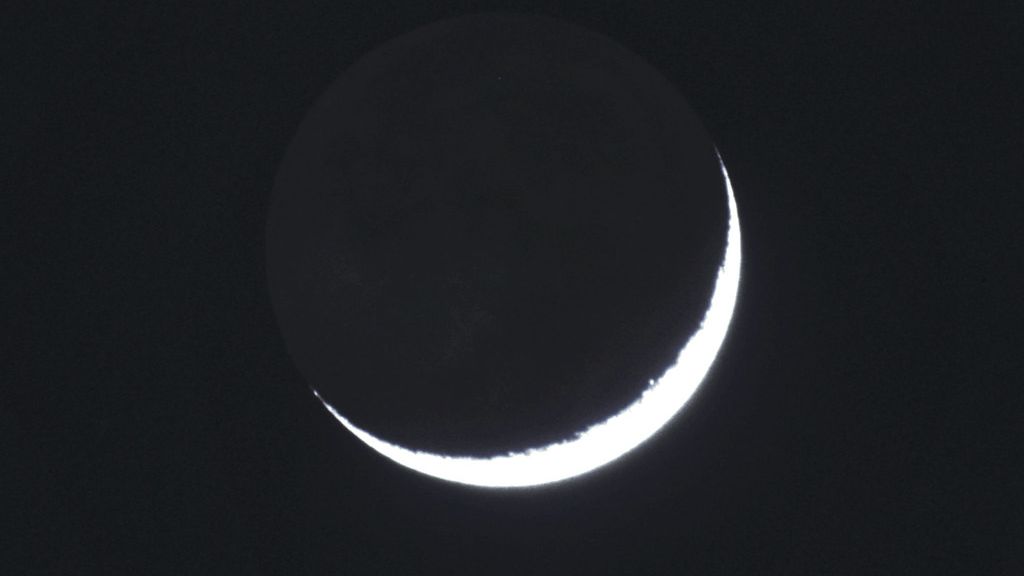
A thin waning crescent moon appears near Saturn and Mars in the eastern morning sky on May 15, roughly half an hour before sunrise. The following day marks the new supermoon at 20:01 UTC, the second in a series of five consecutive new supermoons. Just 24 hours later the moon reaches perigee, its closest approach to Earth for the month at 222,497 miles. These early events set the stage for the waxing phases that follow, including a first-quarter moon on May 23 and a full Blue Moon rising on the evenings of May 30 and 31. The full moon on May 31 will be the smallest of 2026, appearing at a distance of 252,360 miles from Earth. It will rise near the bright red star Antares in Scorpius, offering a distinctive color contrast against the lunar disk. Between these milestones the moon passes several notable stars, including Regulus in Leo on May 22, Spica in Virgo on May 26 and 27, and the paired stars Antares and Zubenelgenubi on May 28 and 29.
Constellations Overhead on May Evenings
The Big Dipper sits high overhead after dark, its pointer stars directing attention southward to Leo the Lion. Within Leo, the backward-question-mark shape known as the Sickle stands out, with Regulus marking its base. Higher still, the Spring Triangle connects three bright stars across different constellations: Arcturus in Boötes, Spica in Virgo, and Regulus in Leo. These patterns remain visible for several hours each night, providing steady reference points even as the moon moves through its phases.
What Matters Now
The most immediate viewing window opens in the west after sunset, where Venus and Jupiter continue their approach. Watch for the waxing crescent moon threading between them around May 19 and 20. Morning observers should check the eastern sky before sunrise for Saturn and the fainter Mars, which separate further as the month progresses.
Looking Ahead Through the Month
By the final week of May the evening planets will have narrowed to about nine degrees apart, setting the stage for their closest approach on June 8 and 9. Morning skies will show Saturn pulling ahead of Mars, while the full Blue Moon on May 31 closes the month with its unusually distant appearance. These predictable movements reward repeated observation, as each clear night reveals incremental shifts in position and brightness. The combination of planetary motion and lunar phases makes May a particularly accessible period for following the changing sky from one evening to the next.