Isaac Newton is usually remembered for falling apples and the laws of motion, not for quietly penciling in a supposed expiration date for the world: the year 2060. Yet in a set of papers that stayed hidden in private collections for centuries, the architect of classical physics turned his formidable mind toward biblical prophecy and drew a line under history less than forty years from now. This uneasy overlap between rigorous science and apocalyptic belief forces us to look more closely at how even the most rational thinkers are shaped by their time. In this article, we unpack what Newton actually wrote about 2060, how he arrived at that date, and what modern historians and scientists make of it. Along the way, we confront a deeper question: not whether the world will end on schedule, but why humans keep trying to put a date on the end at all.
A Physicist of Precision Working in an Age Obsessed with Prophecy
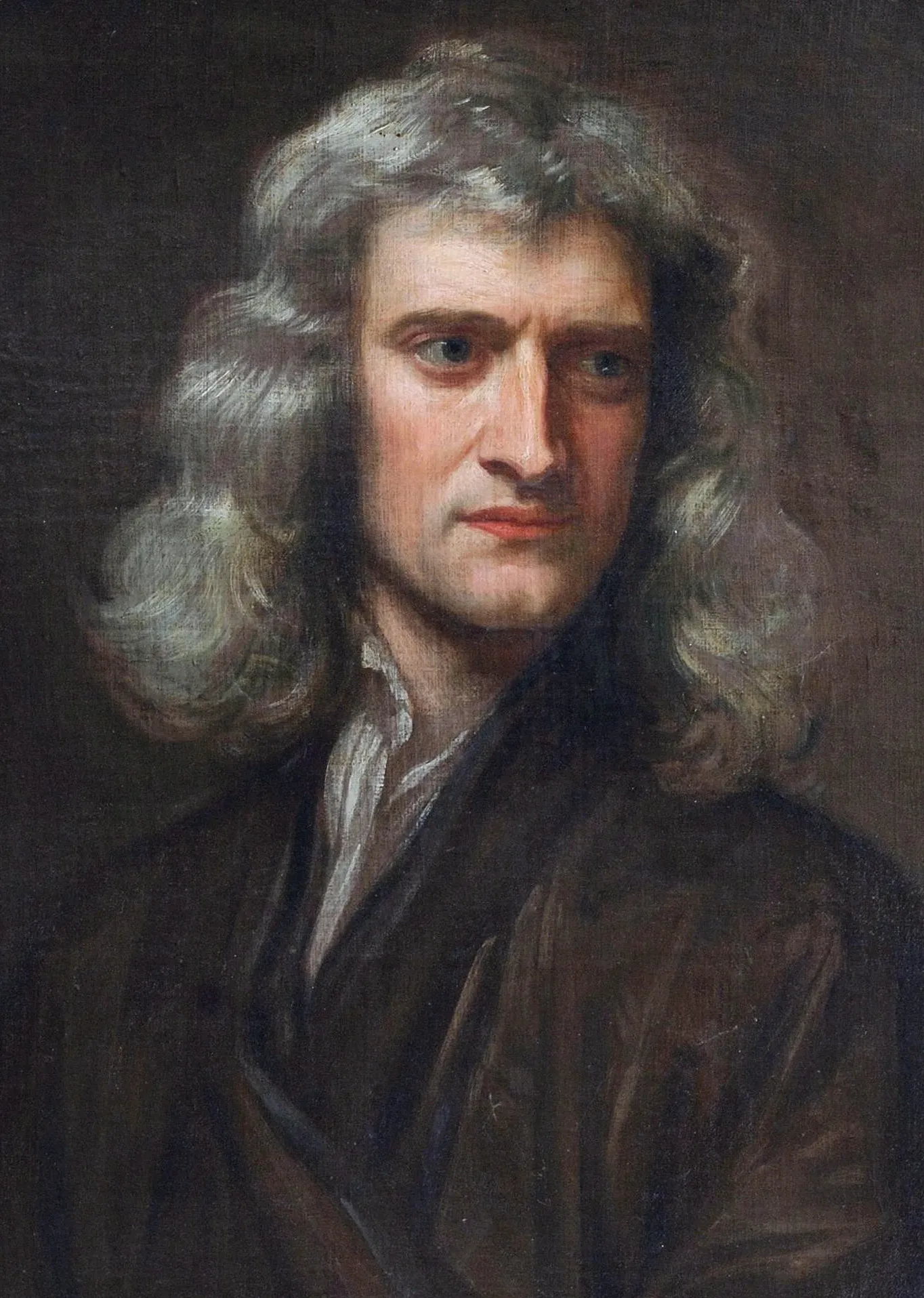
It can feel jarring to imagine the same person who derived calculus also poring over ancient visions of beasts and angels, but that was Newton’s world. Seventeenth‑century Europe was gripped by religious conflict, plagues, and political upheaval, and many people read these crises as signs that history was hurtling toward a final climax. Newton grew up in this atmosphere, steeped in scripture as much as in geometry, and he did not see a hard boundary between studying nature and studying sacred texts.
In his view, the universe was a coherent creation whose underlying rules should be discoverable, whether through experiments with prisms or close reading of biblical prophecy. That mindset helps explain why he invested staggering effort in topics that today would be filed under theology rather than physics. To him, timing the “end of days” using calculations was another way of uncovering divine order, not a distraction from science. The strange part is not that he tried, but that his calculations would lie dormant for so long before reemerging in our far more secular age.
How Newton Actually Got to the Year 2060
Newton did not “see” 2060 in a vision, and he did not treat it as a mystical revelation; he treated it like a problem in applied chronology. Working mainly from the Book of Daniel and the Book of Revelation, he focused on symbolic time periods such as the “time, times, and half a time” and the “1,260 days” mentioned in prophetic passages. Rather than read these literally as days, he, like many commentators before him, interpreted them as years and began anchoring them to specific historical events.
One of Newton’s approaches was to tie the start of this 1,260‑year span to what he saw as a major corruption or transformation of early Christianity, often associated in his era with developments in church power in the early medieval period. By adding the symbolic 1,260 years to a chosen starting point in the seventh or eighth century, he ended up with dates that clustered around the mid‑twenty‑first century, including 2060 as a not‑before date for a decisive end to current human history. Importantly, in his surviving notes, he framed 2060 more as the earliest possible time for such an end, rather than a guaranteed deadline set in stone.
Not a Wild Prophecy, but a Guardrail Against Wilder Ones
There is a twist that often gets lost when the 2060 date is mentioned in isolation: Newton was pushing back against even more aggressive end‑times predictions. In his day, preachers and pamphleteers were regularly announcing dates only a few years away, which stoked fear and disappointment as each one passed. Newton believed that careless predictions damaged both religion and reason, and he wanted to put a brake on the cycle of excitement and disillusion.
By placing the potential end well beyond his own lifetime and far from the frenzy of short‑term alarms, he was, in a sense, cooling the conversation down. His calculations were meant to show that talk of the imminent end of the world was premature according to his reading of scripture. In that light, 2060 was less a sensational headline and more a cautionary line drawn by someone who preferred sober, long‑range thinking over emotional, near‑term panic. From a modern perspective, that makes the prediction sound almost like an early form of debunking, even if we now question the entire exercise.
What the Manuscripts Reveal About Newton’s Private Obsessions
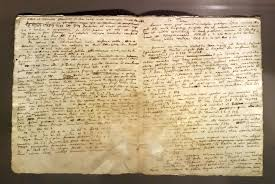
The papers that contain the 2060 date were not polished books for public consumption; they were working notes, drafts, and often messy calculations. For a long time they were scattered in private hands after being sold at auction in the twentieth century, which meant that only a small number of scholars even knew what they contained. When major institutions later acquired and cataloged them, a far more complicated portrait of Newton emerged, one where physics, alchemy, theology, and history were intertwined in a single restless intellect.
Reading through these documents, historians find a mind that refused to accept easy boundaries between disciplines. Newton applied the same careful cross‑checking and chronological rigor to biblical timelines that he applied to astronomical observations. At the same time, the very existence of these speculative prophetic calculations reminds us that even the greatest scientific thinkers have blind spots and passions that do not fit neatly with their public image. That tension between public genius and private obsession is part of what makes the 2060 prediction so enduringly fascinating.
How Modern Historians and Scientists Interpret Newton’s 2060 Date
When the 2060 prediction resurfaced in the early twenty‑first century, it was tempting for media outlets to frame it as a bizarre contradiction: the rational father of physics moonlighting as an apocalyptic prophet. Historians of science, though, tend to see it less as a contradiction and more as a clue to how knowledge worked in Newton’s time. For them, the key is that Newton did not switch off his analytical habits when he opened a Bible; he brought his full methodological seriousness to bear, even if the starting assumptions now seem alien to many scientists.
Contemporary physicists generally view the prediction as historically interesting but scientifically irrelevant, because it is not testable in the way his laws of motion are. The date tells us much more about religious and intellectual culture in the seventeenth century than about the actual fate of the planet. In classrooms and museums, the story is often used to show students that scientific giants were also products of their eras, entangled in philosophical and spiritual debates that shaped how they interpreted evidence. It is a reminder that scientific brilliance does not automatically insulate anyone from broader cultural currents or personal convictions.
Deeper Significance: When Scientific Minds Chase Apocalyptic Timelines
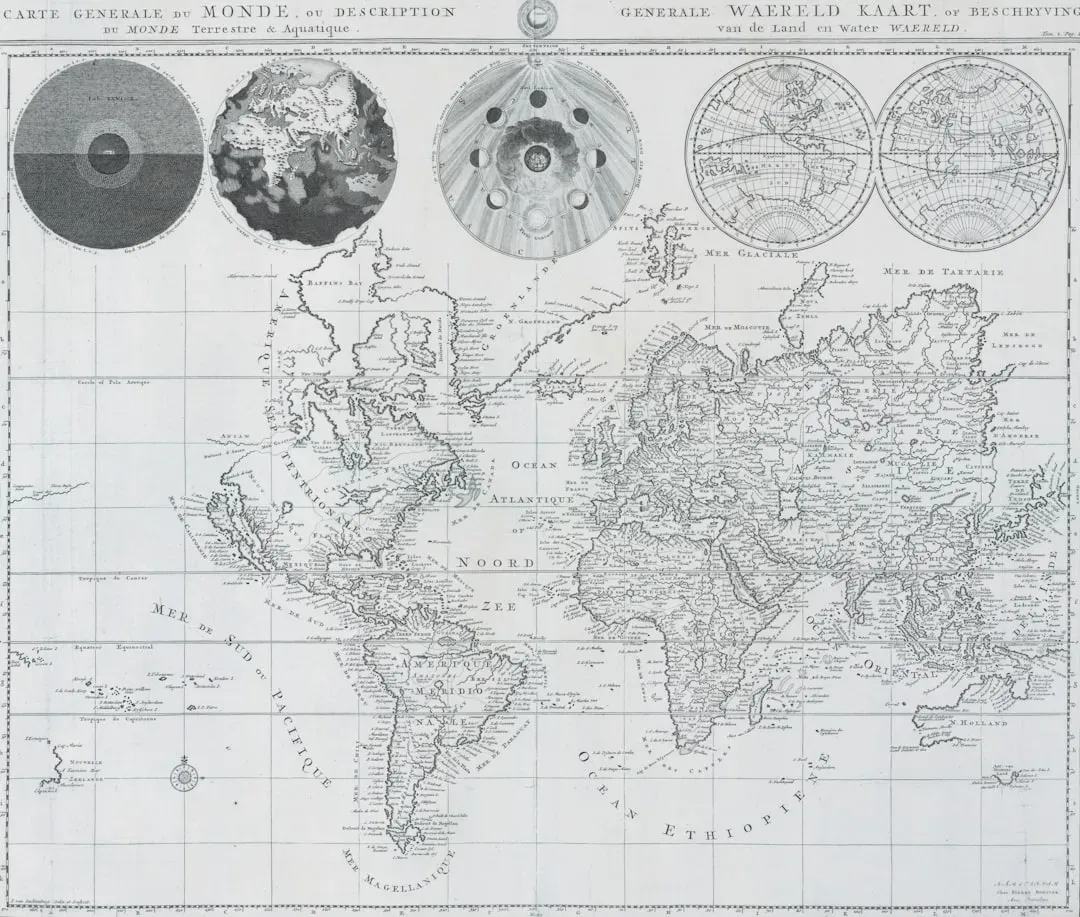
The real scientific and cultural significance of Newton’s 2060 calculation lies not in the number itself, but in what it reveals about the human drive to find order in chaos. Newton brought mathematical tools to a domain that today sits far outside mainstream science, yet his impulse was recognizably scientific: identify patterns, connect them to real events, and test interpretations against a coherent framework. The difference is that modern science insists on empirical data from the natural world, whereas Newton was willing to treat sacred texts as a kind of data set.
Comparing his approach with later scientific standards highlights just how much the boundary between evidence and belief has shifted. In Newton’s era, it was intellectually respectable to move back and forth between astronomy and eschatology, while today those two activities are sharply separated. His 2060 date therefore acts like a fault line, marking the transition from a world where science and prophecy overlapped to one where they are expected to stay in different conversations. That shift has enormous consequences for how societies talk about future risks, whether we are discussing climate change, asteroid impacts, or technological disruption.
Why 2060 Resonates in a Century Already Full of Existential Threats
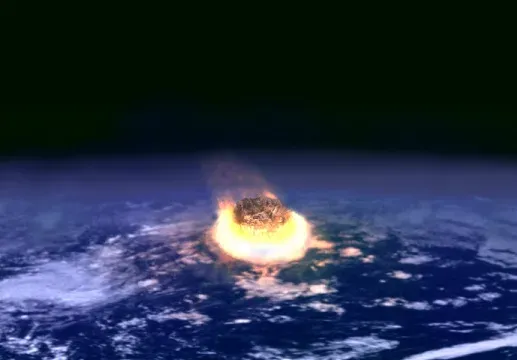
Hearing that a legendary scientist pointed to 2060 as a potential end date lands differently in a century full of very real global risks. Our timelines for danger now come from climate models, demographic forecasts, biodiversity loss projections, and long‑term energy scenarios. Those analyses sometimes highlight tipping points clustered in the mid‑twenty‑first century, roughly the same period Newton singled out for entirely different reasons. It is hard not to feel a chill when such unrelated calculations converge on a similar slice of time, even though the logic behind them could not be more different.
Yet folding Newton’s prediction into discussions of modern risk can be misleading if we blur the distinction between evidence‑based projections and faith‑based timelines. Climate scientists, for example, can point to measurable trends, physical laws, and testable models that update as new data arrive. Newton’s 2060 date does not change or improve when a new satellite launches or a new sediment core is drilled. Still, the emotional impact of his number reminds us how powerful and unsettling any specific deadline for catastrophe can be, whatever its origin.
What We Can Learn From an End Date That Probably Means Nothing
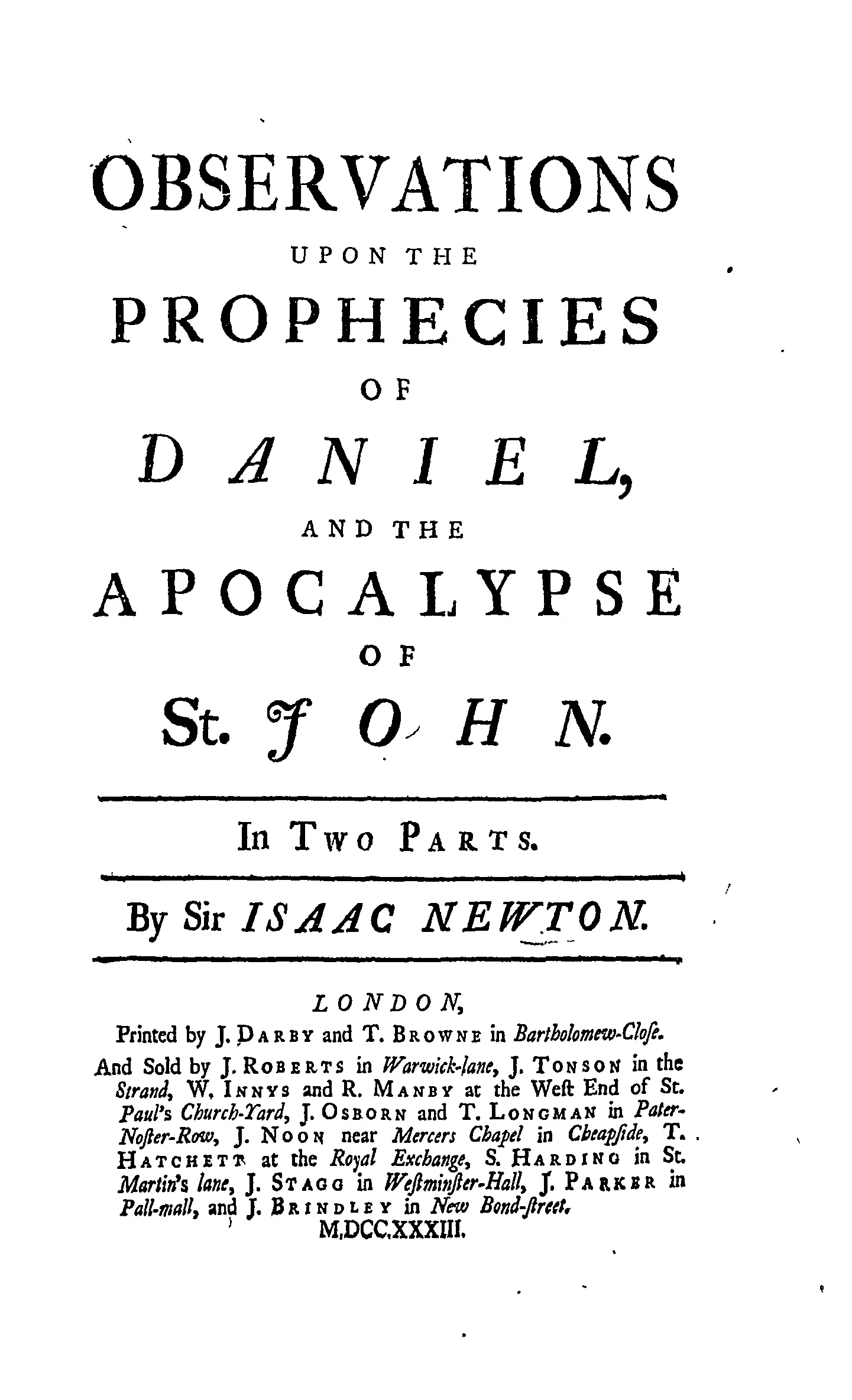
For all the drama attached to 2060, many historians stress that Newton might be among the first to warn us not to overreact to his own speculation. He was wary of sensational claims and spent considerable energy arguing against reckless date‑setting. Seen from that angle, his calculation becomes less a ticking clock and more a cautionary tale about overconfidence in any single way of reading the future. Human beings have a long record of predicting imminent endings that never arrive on schedule, from ancient millenarian movements to recent doomsday cults.
What makes Newton’s case distinct is that it blends genuine scientific brilliance with a flawed predictive framework, all inside one mind. That combination invites some humility as we consider our own forecasts, even when they are rooted in solid data. We, too, may be blurring lines between evidence and hope in ways we will only fully recognize centuries from now. The lesson is not to stop forecasting, but to stay transparent about assumptions and open about uncertainty whenever we project the fate of our world.
Staying Curious About the Future Without Chasing Doomsday
Encountering Newton’s 2060 prediction can trigger a mix of fascination and unease, but it can also be an invitation to sharpen how we think about the long‑term future. Rather than treating any single date as destiny, we can focus on understanding the processes that genuinely shape planetary change: atmospheric chemistry, plate tectonics, evolution, technological choices, and social decisions. That shift in attention moves us from passive spectators of a supposed timetable to active participants in an ongoing experiment called Earth. It feels less like waiting for a curtain to fall and more like tending a complex, fragile garden.
On a practical level, readers can explore digitized archives of Newton’s theological and scientific writings, visit science museums that place his work in context, or follow research from climate and Earth‑system scientists who are mapping real planetary thresholds. Supporting science education, critical thinking, and public access to research helps build a culture that is less vulnerable to sensational predictions and more equipped to weigh genuine risks. Newton’s 2060 date may never mean anything for the actual survival of the planet, but engaging with the story behind it can make us better, more thoughtful observers of the only world we have.
Suhail Ahmed is a passionate digital professional and nature enthusiast with over 8 years of experience in content strategy, SEO, web development, and digital operations. Alongside his freelance journey, Suhail actively contributes to nature and wildlife platforms like Discover Wildlife, where he channels his curiosity for the planet into engaging, educational storytelling.
With a strong background in managing digital ecosystems — from ecommerce stores and WordPress websites to social media and automation — Suhail merges technical precision with creative insight. His content reflects a rare balance: SEO-friendly yet deeply human, data-informed yet emotionally resonant.
Driven by a love for discovery and storytelling, Suhail believes in using digital platforms to amplify causes that matter — especially those protecting Earth’s biodiversity and inspiring sustainable living. Whether he’s managing online projects or crafting wildlife content, his goal remains the same: to inform, inspire, and leave a positive digital footprint.